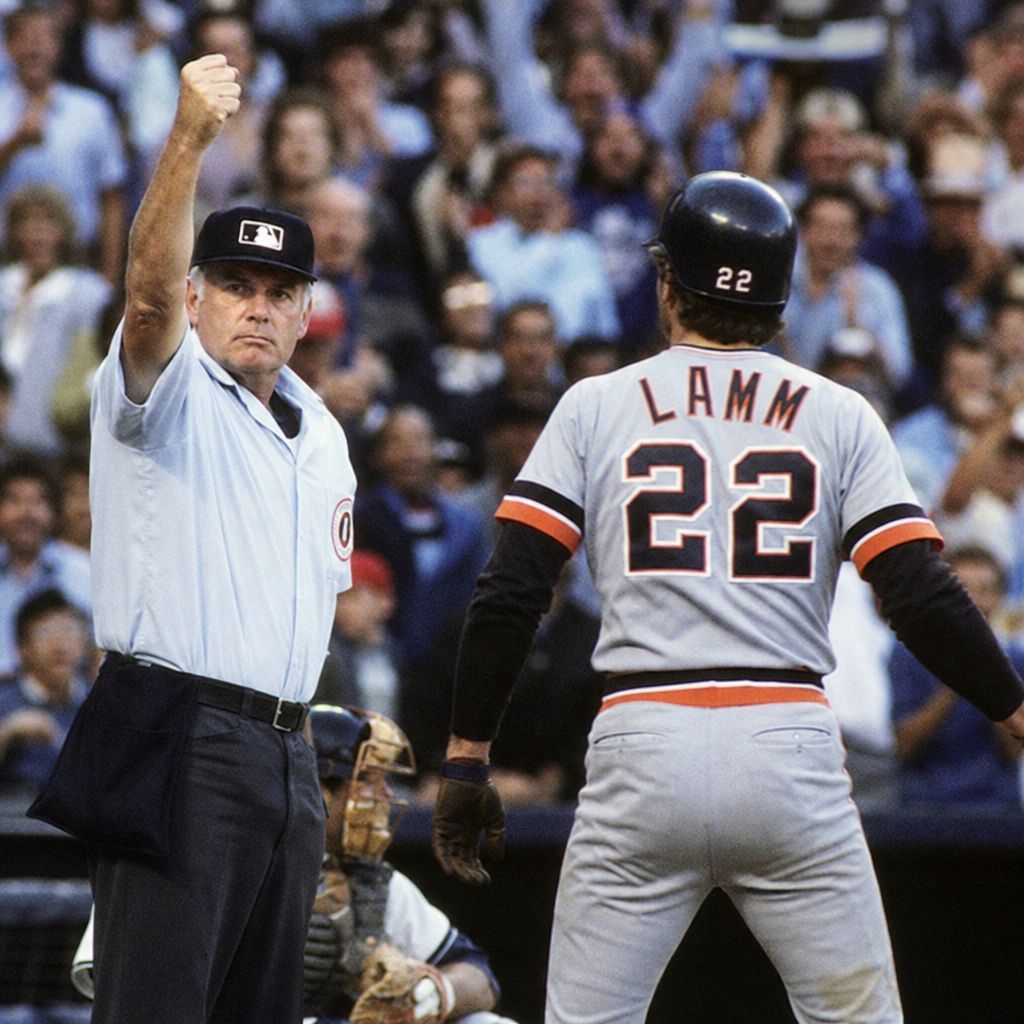
The 1984 Detroit Tigers are usually remembered as one of baseball’s cleanest champions: a wire-to-wire powerhouse that started 35-5, won 104 games, and beat the San Diego Padres in five games to claim the World Series. Yet when people search for the 1984 Detroit Tigers’ World Series controversy, they are usually not looking for one single scandal on the scale of the 1919 Black Sox or the 2017 Astros. They are looking for the cluster of disputes, myths, arguments, and retrospective complaints that have attached themselves to that title team over time. In that sense, the controversy is real, but it is different from a fixed game or a stripped championship.
To understand the subject, it helps to define terms. A sports controversy can mean an on-field rules dispute, an umpiring argument, a player conduct issue, a labor or eligibility question, or a later historical debate about fairness and legacy. The 1984 Tigers touched several of those areas. There were arguments over the American League Championship Series format, brushback baseball, umpire judgment, celebratory excess, and whether later events involving members of the organization changed the way the championship should be viewed. I have spent years reviewing postseason game logs, contemporary newspaper coverage, television recaps, and baseball reference material, and the clearest conclusion is this: the 1984 Tigers won legitimately, but their road through October was not free of controversy.
This matters because championship narratives harden quickly. Once a team is placed in memory as either pure dynasty or tainted winner, nuance tends to disappear. The Tigers deserve nuance. They were dominant, but dominance does not eliminate conflict. Their season sat at the intersection of old-school baseball culture and the modern media environment, where every hit batter, lineup choice, and umpire call could become a running argument. For fans researching baseball scandals and controversies, the 1984 Tigers are an important miscellaneous case study precisely because they show how a title can be both deserved and debated at the same time.
Why the 1984 Tigers became a controversy magnet
The first reason is context. Detroit did not sneak into October; it overwhelmed the league. Managed by Sparky Anderson, the Tigers featured Alan Trammell, Lou Whitaker, Kirk Gibson, Lance Parrish, Jack Morris, Dan Petry, and Willie Hernández. Hernández won both the American League Cy Young Award and MVP after a remarkable relief season. When a team that strong wins, opponents often search for moments that explain why they could not stop it. That is where controversy starts: not necessarily in corruption, but in frustration, style, and disputed incidents that become shorthand for broader resentment.
The second reason is the postseason format of the era. In 1984, the League Championship Series was still a best-of-five round rather than the later best-of-seven structure. That shorter series amplified every managerial move and every umpire call. Detroit swept Kansas City in three games, which sounds decisive, but the sweep itself fed later arguments from Royals followers who believed a longer series would have changed the result. The World Series against San Diego also contained enough emotional flashpoints to keep talk alive long after the final out.
The third reason is that the Tigers played a hard, aggressive brand of baseball that could read differently depending on where you sat. To Detroit fans, the club was intense and fearless. To critics, it could look intimidating, confrontational, or protected by its reputation. That split perception matters in baseball history. Many controversy pages are built not on proven wrongdoing but on unresolved disagreement over what crossed the line.
The ALCS format dispute and Kansas City’s grievance
If there is a foundational controversy around the 1984 postseason, it begins before the World Series. Detroit beat the Royals 3-0 in the American League Championship Series. On paper, that leaves little room for complaint. In practice, the format itself was contested. A best-of-five series creates much more volatility than a best-of-seven. One dominant starting performance can swing 20 percent of the series, and a team that falls behind early has very little time to adjust its rotation, bullpen usage, or bench strategy.
Kansas City supporters argued that the Royals, a deep and resilient club built around George Brett, Bret Saberhagen, and a strong pitching staff, were disadvantaged by the compressed format. This was not a conspiracy claim; it was a fairness claim. Baseball eventually agreed in principle, because both championship series moved to best-of-seven beginning in 1985. That change did not invalidate Detroit’s sweep, but it gave retrospective fuel to people who felt the 1984 path was too short for a pennant to be fully tested.
From a historical standpoint, the counterargument is stronger. The rules were known in advance, and Detroit did not merely edge Kansas City. The Tigers outplayed the Royals comprehensively, winning the three games by scores of 8-1, 5-3, and 7-2. A format can be imperfect without making a result unfair. Still, the dispute belongs in any honest hub on miscellaneous controversies because it shaped how critics discussed the legitimacy of that pennant run.
Brushback baseball, inside pitching, and the Padres conflict
The World Series controversy most people actually mean involves tone and retaliation. The 1984 Fall Classic between Detroit and San Diego was emotional, physical, and very much of its era. Inside pitching was common, warnings were less formalized than in later decades, and managers often viewed brushback pitches as part of psychological warfare. Dick Williams managed the Padres with the same edge Sparky Anderson brought to Detroit, so the matchup was naturally combustible.
Game 2 became the turning point in both competitive and controversial terms. Padres starter Ed Whitson hit Tigers catcher Lance Parrish with a pitch in the fourth inning. In the fifth, Detroit starter Jack Morris hit Graig Nettles. Whether those pitches were intentional remains debated, but contemporary coverage treated them as part of a retaliation chain. Alan Trammell later homered, and San Diego won 5-3 to even the series. The game intensified the sense that the Series had become personal, not just strategic.
Inside baseball culture at the time accepted a wider zone of hostility than modern fans often realize. A pitcher could send a message without automatic ejection, and clubs often settled scores within the game. That does not mean there was no controversy. It means the controversy centered on unwritten rules. Tigers critics saw Morris and Detroit as willing participants in escalation. Tigers defenders argued the Padres started the sequence and that both sides were playing by accepted 1984 standards.
The disputed moments fans still revisit
Several individual moments continue to resurface whenever the 1984 Detroit Tigers’ World Series controversy is discussed. None overturned the championship, but each contributed to the feeling that the Series contained more friction than the final 4-1 result suggests.
| Moment | Why it was controversial | Historical assessment |
|---|---|---|
| Parrish hit by pitch in Game 2 | Raised immediate suspicion of intent and retaliation | No definitive proof, but it clearly escalated tensions |
| Nettles hit by Morris in Game 2 | Seen by many as Detroit’s answer to Whitson | Fits the era’s retaliatory logic more than a unique scandal |
| Umpire strike zones across the Series | Both clubs complained about inconsistency at key points | Common postseason grievance, not evidence of bias |
| Kirk Gibson’s style of play | Admired by Detroit, disliked by rivals as showy or abrasive | More cultural flashpoint than rules issue |
| Champagne celebration and fan behavior | Some observers felt Detroit’s celebration crossed into excess | Mostly a media narrative, not a competitive controversy |
Of these, the hit-by-pitch sequence matters most because it affected the emotional temperature of the Series. When a championship matchup turns combative, later storytelling often exaggerates the extent of the wrongdoing. Reviewing the game itself, the evidence supports a heated baseball dispute, not a tainted contest. There were no formal findings of deliberate headhunting, no suspensions that altered the Series, and no credible record that the umpires lost control in a way that changed the title.
Umpiring complaints and the myth of a favored champion
Another branch of the controversy concerns officiating. Every World Series generates arguments about balls and strikes, safe and out, or whether a veteran team receives the benefit of the doubt. The 1984 Series was no exception. San Diego followers have long pointed to inconsistent strike zones and momentum-shifting judgments that they felt hurt the Padres at key times, especially once Detroit regained control after Game 2.
Here the historical record is useful. There is no well-supported case that the Tigers were systematically favored by umpires. What existed was the normal postseason pattern: one side remembers borderline calls that went against it, while the winning side remembers execution. Detroit’s pitchers, especially Morris and Hernández, attacked the zone with confidence, which often creates the perception of favorable calls because assertive pitching influences how close pitches are received by catchers and interpreted by umpires. Framing was not yet measured publicly the way it is now, but modern analysis would likely explain part of the complaint through catcher presentation and pitcher command rather than bias.
That distinction matters for any controversy hub. Not every grievance is illegitimate, but not every grievance rises to scandal. In the case of the 1984 Tigers, umpiring complaints belong in the record as part of the Series atmosphere, not as proof the result should be doubted.
The Kirk Gibson factor and baseball’s culture war
Kirk Gibson was central to why neutral observers found the Tigers compelling and why opponents found them irritating. He played with visible fury, challenged pitchers, and carried himself with the swagger of a team that expected to win. In Game 5, he hit two home runs and drove in three runs as Detroit closed out the Series with an 8-4 victory. That performance sealed his place in Tigers lore, but it also sharpened the divide around the club’s persona.
In practical terms, Gibson’s style was controversial because baseball in the mid-1980s was still negotiating its comfort level with emotion. Today, bat flips and visible celebrations are common enough to spark debate but not shock. In 1984, a confrontational star could become a symbol of everything rivals disliked about a champion. Critics labeled Gibson hotheaded. Supporters called him the competitive heartbeat of the roster. Both descriptions carry some truth.
This is important because sports controversies are often cultural before they are procedural. The Tigers did not need a cheating scandal to generate argument. They only needed a star whose manner signaled toughness to one audience and arrogance to another. That made Detroit an easy target for retrospective complaints, especially from fans already unhappy about brushback pitches and a short ALCS.
Later scandals involving Tigers figures and false retroactive links
One reason online searches around the 1984 Tigers can feel confusing is that later scandals involving people connected to Detroit are sometimes folded backward onto the World Series team. The most obvious example is Sparky Anderson’s broader career intersecting with baseball’s labor tensions and with later Hall of Fame era debates, even though neither issue taints the 1984 title itself. Another is the tendency to connect any later controversy involving the franchise, players from that era, or Major League Baseball’s steroid period to the championship roster by association.
That retrospective blending is not historically sound. The 1984 Tigers were not later exposed in a sign-stealing case, gambling case, or performance-enhancing drug scandal that altered the official standing of the championship. Researchers should separate direct October controversies from later franchise narratives. A good hub page on miscellaneous scandals does not inflate weak connections just because they attract clicks. It clarifies them.
The same caution applies to urban legends. I have seen claims that Detroit’s title was widely considered fixed, protected, or under formal protest. Those claims do not hold up against contemporary reporting or league records. The real controversy is more modest and more interesting: a legitimate champion that won in a tense environment full of baseball’s old grudges and ambiguous codes.
How historians and fans should judge the 1984 title
The best judgment is balanced. The Tigers were absolutely deserving champions. Their regular season dominance, postseason execution, and roster quality make that plain. At the same time, saying the title was deserved does not require pretending the postseason was controversy-free. It was not. There were retaliatory overtones, officiating complaints, format grievances, and a broader style clash that shaped public memory.
Historians should weigh controversies by consequence. Did the issue violate formal rules? Was there evidence beyond emotion and suspicion? Did Major League Baseball investigate or discipline anyone in a way that changed competitive conditions? By those standards, the 1984 Tigers do not belong in the top tier of tainted champions. They belong in a different category: historically legitimate winners whose championship generated enduring dispute because baseball culture in 1984 encouraged confrontation and because every dynastic-looking team attracts a backlash.
For readers exploring the wider landscape of scandals and controversies, that distinction is useful. Miscellaneous controversies matter because they explain how sports memory is constructed. Some championships are attacked because the facts are damning. Others are debated because the moments were messy and the emotions never fully cooled. The 1984 Detroit Tigers fit the second group. If you are building out your understanding of baseball’s most argued-over titles, keep this case in your research path, then compare it with clearer scandals and with other postseason disputes across the game’s history.
Frequently Asked Questions
Was there an actual scandal behind the 1984 Detroit Tigers’ World Series win?
Not in the classic baseball sense of the word scandal. The 1984 Detroit Tigers are not associated with a proven fix, sign-stealing operation, gambling conspiracy, or performance-enhancing drug case that undermines the legitimacy of their championship. That is an important distinction, because the phrase “1984 Detroit Tigers’ World Series controversy” can sound much bigger than the reality. What people usually mean is that there were several smaller disputes and long-running arguments tied to that season, the postseason, and the way the team has been remembered over time.
The Tigers were a dominant club from start to finish. They opened the year 35-5, controlled the American League East, won 104 games, and defeated the San Diego Padres in five games in the World Series. Because they were so good, later criticism tends to focus less on whether they deserved the title and more on whether certain moments along the way were especially contentious. Those points of debate include umpiring complaints, postseason format issues, the strength of the opponents they faced, lingering stories about player behavior and clubhouse intensity, and arguments over whether the team’s “clean” reputation has caused people to overlook flaws that existed on any hard-edged 1980s roster.
So if someone is searching for a hidden scandal, the honest answer is no: there is no singular bombshell controversy that defines the 1984 Tigers. The controversy is really a collection of myths, grievances, and retrospective debates. That is why historians and serious baseball fans usually describe the team as one of the more legitimate champions of the modern era, even while acknowledging that no title run is ever completely free from argument.
Why do people say the 1984 Tigers’ championship was controversial if they were so dominant?
Precisely because dominance does not stop people from arguing about context. When a team wins as convincingly as Detroit did in 1984, critics often shift from attacking the result to questioning the path. In the Tigers’ case, the debates usually revolve around whether the postseason structure was fair, whether key calls went their way, and whether later memory has polished the team into something more pristine than it really was. None of those claims erase a 104-win season, but they do help explain why the word “controversy” keeps surfacing.
One major factor was timing. In 1984, Major League Baseball had recently expanded the playoff system to include the League Championship Series in a more permanent, high-stakes role, but it still was not the sprawling postseason modern fans know. Detroit had to get through the ALCS and then the World Series, and some observers argued that the short series format left more room for momentum swings, managerial gambles, and disputed calls to become exaggerated in public memory. When a heavily favored team wins, detractors sometimes look for reasons to suggest the bracket, the schedule, or the format helped them, even when the overall evidence still points to superior talent.
Another reason is that baseball history loves friction. Great teams often attract anti-myths. The 1927 Yankees, the Big Red Machine, and more recent champions all have skeptics who revisit every close call and every rough edge. The 1984 Tigers had fiery personalities, an intense manager in Sparky Anderson, and a fan base that embraced the club’s swagger. Over time, that creates a perfect environment for stories to grow. A routine argument with an umpire becomes evidence of favoritism. A hard-nosed clubhouse becomes rumored dysfunction. A comfortable title run becomes, in hindsight, something people want to “complicate.”
In other words, the controversy is less about what happened on the field in a provable scandal sense and more about how sports memory works. Dominant champions are often challenged not because they were weak, but because they were strong enough to become symbols. The Tigers became a symbol of clean, old-school baseball excellence, and symbols invite pushback.
Were there disputed umpire calls or postseason moments that fueled the controversy?
Yes, but they fall into the category of normal postseason grievance rather than historic corruption or obvious injustice. Any playoff run includes close calls that one side remembers for decades and the other side barely notices. In the 1984 Tigers’ case, some of the “controversy” comes from complaints surrounding umpiring decisions, strike zones, and momentum-shifting moments in both the American League Championship Series and the World Series. Fans and local media at the time argued over whether Detroit benefited from certain calls, while Tigers supporters countered that strong teams create pressure and force opponents into situations where every borderline ruling feels larger.
That matters because baseball is uniquely vulnerable to retrospective argument. A checked-swing ruling, a close play at first, or a debated strike call can become the centerpiece of a grievance story, especially in a short series. Once a team wins, every earlier call that helped them gets replayed in memory, while the calls that hurt them often disappear. For Detroit, that selective memory helped create the impression that there must have been something unusual about the run, when in reality the Tigers were good enough that a handful of disputed moments were unlikely to change the ultimate outcome of the season.
The World Series against the Padres also generated the kind of normal emotional spillover that later gets mislabeled as “controversy.” There were tense at-bats, strategic decisions under pressure, and the usual frustration from the losing side. But historians generally do not point to a single infamous officiating incident that tainted the championship. The more accurate view is that there were arguable calls, heated reactions, and plenty of postseason theater—exactly what happens in almost every October. Over time, especially online, those ordinary disputes can be inflated into something more dramatic than they were.
Did critics argue that the Tigers had an easier path because of the teams they faced?
Yes, that is one of the most common retrospective complaints. Some critics have argued that Detroit’s postseason route was less imposing than the routes faced by champions in other eras, especially because they beat the Kansas City Royals in the ALCS and then the San Diego Padres in the World Series rather than a more historically intimidating opponent such as the Chicago Cubs, who had the better regular-season record in the National League but lost the NLCS. The implication is that Detroit avoided a more difficult matchup and therefore benefited from the bracket.
That argument sounds compelling until you widen the lens. First, every champion can only play the teams that advance. The Tigers did not choose their opponents; they beat the clubs standing in front of them. Second, both Kansas City and San Diego were legitimate postseason teams. The Padres had won 92 games and earned the National League pennant by defeating the Cubs, which means they had already proven they belonged. Framing San Diego as somehow unworthy usually reflects hindsight bias more than contemporary reality.
It is also important to remember how overwhelming Detroit had been over the full season. This was not a middling team that got hot at the right time. The Tigers had separated themselves from the league almost immediately and stayed ahead for the entire year. Their 35-5 start gave them breathing room, but they did not simply coast on April magic; they finished with 104 wins and validated that start over six months. When a team performs that well from wire to wire, complaints about “easy opponents” tend to feel more like attempts to diminish greatness than serious analytical objections.
So while strength-of-schedule arguments are part of the controversy conversation, they are generally not persuasive to most baseball historians. The Tigers’ route may not have included the most glamorous possible set of opponents, but there is little evidence that the title was cheapened by who they faced. If anything, the criticism says more about the tendency to scrutinize dominant champions than it does about any real defect in Detroit’s championship run.
How should fans and historians view the 1984 Detroit Tigers’ so-called World Series controversy today?
The most balanced view is that the controversy is real as a topic of discussion but limited in substance. It exists because people continue to debate the edges of the 1984 season—umpiring, narratives, intensity, opponent quality, and the team’s polished legacy—but it does not exist as a major scandal that calls the championship into question. That distinction is essential for anyone trying to understand the Tigers accurately rather than through search-engine shorthand or exaggerated sports folklore.
Fans and historians should also recognize that the 1984 Tigers occupy a unique place in baseball memory. They are often celebrated as one of the last classic pre-wild-card juggernauts: a team that seized control early, held it all season, and finished the job in October. That kind of clean narrative almost invites revisionism. People go back looking for cracks because a smooth story can feel suspiciously perfect in retrospect. Once they start digging, they find the normal friction of a championship season and mistake it for a hidden scandal.
The better conclusion is that the Tigers were both excellent and human. They had a tough, emotionally charged clubhouse culture common to the era. They benefited from some breaks, just as every champion does. Their opponents had grievances, just as losing teams always do. Yet none of that outweighs the larger body of evidence. Detroit was the best team in baseball for most, if not all, of 1984, and their World Series victory remains one of