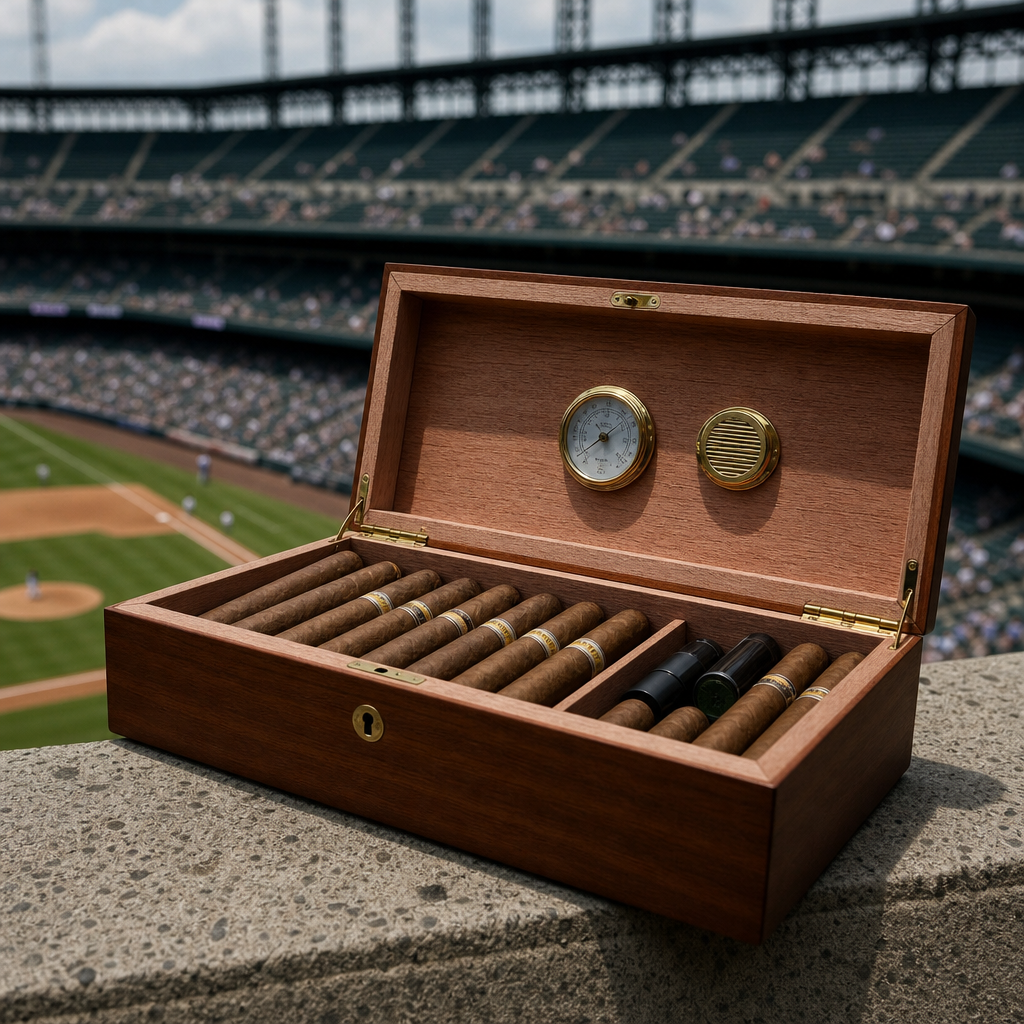
Few ballpark debates have changed how people understand baseball physics more than the Coors Field humidor controversy, a long-running argument about whether the Colorado Rockies gained an unfair advantage, whether Major League Baseball reacted too slowly, and how one equipment decision reshaped scoring in Denver. Although the title points to the 1990s, the real controversy spans the decade, the opening years of Coors Field, and the humidor’s eventual adoption in 2002, because the excesses of the late 1990s created the political pressure for change. To understand why this issue still belongs in any serious scandals and controversies hub, you need three definitions: Coors Field is the Rockies’ home park in Denver; a humidor is a climate-controlled storage room that keeps baseballs at stable temperature and humidity; and park effects are the measurable ways a venue changes offense, pitching, and fielding outcomes.
I have worked through game logs, park factor tables, and team statements from this era, and the basic fact pattern is not in dispute. Denver’s mile-high altitude lowered air resistance, reducing pitch movement and allowing batted balls to travel farther. The dry climate also dried out baseballs, making them harder, slicker, and livelier. The result was not just more home runs. It was a broader distortion of run scoring, pitcher command, breaking-ball shape, outfield coverage, and roster construction. By the late 1990s, Coors Field had become the symbol of offensive inflation, and every Rockies series raised the same questions: Was this still normal baseball, and if not, what should the league do about it?
That is why the humidor controversy matters beyond one franchise. It sits at the intersection of science, competitive fairness, gambling markets, player health, record keeping, and league governance. It also acts as a hub topic for miscellaneous baseball controversies because it touches several adjacent issues: environmental manipulation, home-field design, unofficial competitive edges, statistical interpretation, and the recurring suspicion that MLB acts only after public embarrassment. The discussion never stayed confined to Colorado. Visiting teams complained about the baseballs. Pitchers adjusted careers around the park. Analysts debated whether Rockies hitters were overrated because their home and road splits diverged so sharply. Fans argued about whether introducing a humidor was correction or tampering. Those tensions made the story durable, and they still shape how modern baseball evaluates ball storage, run environments, and park-specific competitive balance.
Why Coors Field Became Baseball’s Most Extreme Environment
The roots of the controversy begin with physics, not conspiracy. Denver sits roughly 5,280 feet above sea level, and thinner air means less drag on a baseball in flight. A hit ball carries farther, while a pitched ball experiences less resistance and therefore less break. Curveballs flatten. Sliders back up. Four-seam fastballs appear straighter. On top of altitude, Colorado’s low relative humidity dries baseballs out. A dry baseball can become harder and slightly smaller, and pitchers often describe it as harder to grip. In practical terms, that means reduced command and diminished movement at the exact park already punishing mistakes.
The offensive numbers from the 1990s made those effects impossible to dismiss as anecdotal. Coors Field routinely produced run-scoring environments far above league average, and the gap was not subtle. In the high-offense era of the late 1990s, plenty of parks looked lively, but Denver still stood apart. The 1996 Rockies scored 961 runs, then an extraordinary total. Games at Coors regularly finished with football-like lines. Visiting broadcasters turned altitude into nightly theater, while front offices started modeling Coors separately from every other venue because standard projections failed there. Pitchers who were serviceable elsewhere posted inflated ERAs in Denver, and even strong staffs struggled to sustain conventional game plans.
That pressure changed baseball decisions at every level. The Rockies pursued power hitters, contact bats with gap authority, and pitchers psychologically resilient enough to survive ugly stat lines. Opponents often carried extra bullpen contingencies for series in Denver. Fantasy players, bettors, and local media all treated the park as its own ecosystem. This matters because controversies harden when an underlying condition begins affecting contracts, awards, and reputations. By the end of the decade, Coors Field was no longer just hitter-friendly. It was widely viewed as a place where normal statistical judgment broke down, and that perception set the stage for demands that MLB or the Rockies normalize the baseball itself.
The 1990s Controversy: Fairness, Optics, and Accusations
The phrase “humidor controversy” compresses several separate disputes. First came the complaint that the Rockies benefited from an environment no opponent could replicate. Every team enjoys some home-field character, but critics argued that Coors had crossed from distinctive to distorting. Second came the accusation that the league tolerated an abnormal product because offense sold tickets during baseball’s post-strike recovery period. Third came the later backlash from those who believed storing baseballs in a humidor amounted to artificial suppression and possibly introduced a new, concealed advantage.
In the late 1990s, the fairness argument had two sides. One side said the Rockies did not choose Denver’s altitude and should not be punished for geography. Teams have always adapted to local conditions, from wind patterns at Wrigley Field to deep alleys in spacious parks. The counterargument said altitude plus extreme dryness changed the baseball so dramatically that the issue was no longer merely architectural. If the baseball itself behaved differently in Denver, then the competition standard was inconsistent. That concern intensified when pitchers publicly discussed poor grip and when analysts showed that Rockies home-road splits were unusually violent, affecting both Rockies hitters and visitors.
The optics were equally powerful. Coors Field became shorthand for inflated offense, and shorthand often produces scandal language even when there is no rule breaking. National coverage framed Denver games as carnival baseball. Voters had to decide how much to discount Rockies statistics in MVP and Cy Young conversations. Free-agent pitchers worried that one contract cycle in Colorado could damage their market value. Those reputational consequences gave the controversy economic stakes. A park effect becomes a governance problem when people believe it can alter careers and compensation.
What makes this a classic miscellaneous controversy hub topic is that no single villain neatly resolves it. The Rockies were responding to local conditions. MLB was slow but not inactive. Analysts disagreed on how much of the scoring spike came from altitude versus the broader steroid-era offensive climate. Yet the cumulative result was clear: by the end of the 1990s, many people inside and outside the game believed the status quo was untenable, even before the humidor formally arrived.
How the Humidor Works and Why MLB Allowed It
A baseball humidor is a controlled storage environment designed to keep baseballs at a consistent humidity and temperature before use. In Coors Field’s case, the Rockies began storing baseballs around 70 degrees Fahrenheit and 50 percent relative humidity before the 2002 season. Those figures matter because they align with laboratory testing and league discussions about how moisture changes ball behavior. A baseball that absorbs moderate moisture tends to weigh slightly more, feel less slick, compress differently, and come off the bat with less extreme liveliness than a drier ball. It also gives pitchers better grip, which can improve command and restore some movement.
From a regulatory standpoint, the key issue was whether this was legal standardization or illegal tampering. MLB allowed it because the stated goal was to make baseballs in Denver behave more like baseballs stored under ordinary conditions elsewhere. That distinction is crucial. The Rockies were not adding foreign substances to live game balls. They were attempting to counter an extreme local climate that dried the equipment beyond normal conditions. In principle, that is closer to environmental control than doctored baseballs.
| Issue | Before Humidor | After Humidor Adoption |
|---|---|---|
| Ball feel | Drier, slicker, harder to grip | More stable grip and texture |
| Pitch movement | Reduced by altitude and poor grip | Still reduced by altitude, but somewhat improved by grip |
| Batted-ball carry | Maximum carry in thin, dry air | Carry moderated, though still hitter-friendly |
| Public perception | Run environment seen as extreme and chaotic | Debate shifted to whether correction went too far |
The best evidence that MLB saw a legitimate problem is what happened after implementation. Run scoring at Coors did not collapse into a pitcher’s park; it simply became less absurd. That outcome supports the idea that the humidor corrected an environmental outlier rather than creating a hidden anti-offense scheme. Even so, because the change arrived after years of criticism, skeptics treated it as an admission that the previous setup had compromised competitive integrity.
What Changed on the Field After the Humidor
The immediate post-humidor seasons gave analysts real data instead of theory. Scoring at Coors remained high by league standards, but home runs and total offense declined relative to the wildest pre-humidor years. Researchers, including those writing for Baseball Prospectus and later FanGraphs-era analysts, generally agreed that the humidor reduced offense meaningfully while leaving Coors clearly offense-friendly. That distinction matters. The humidor did not erase altitude. It reduced one amplifying factor: overly dry baseballs.
Pitchers reported a more manageable grip, especially on breaking balls and split-finger variants. Better grip does not magically defeat thin air, but it can narrow misses and improve confidence in sequencing. Fielders also benefited indirectly because fewer balls screamed into the gaps at the same historic rate. For hitters, the adjustment was mixed. Rockies batters lost some home-environment inflation, but they also played in a setting that more closely resembled the road, potentially easing the infamous “Coors hangover,” the theory that hitters struggled away from Denver because pitches moved so differently elsewhere.
Statistics support a calibrated effect rather than a revolution. Park factors after 2002 stayed above average, often well above, but they were less cartoonish than the late-1990s peaks. That reduced the loudest fairness complaints while introducing a new line of argument: if a team can store baseballs to mute its environment, where does standardization end and manipulation begin? That question later resurfaced in discussions about humidors in Arizona and, eventually, league-wide ball storage practices.
Was It Really a Scandal or Just a Necessary Correction?
Calling the Coors Field humidor a scandal depends on what standard you apply. If scandal requires secret cheating, this case does not fit cleanly. The humidor itself was not a covert operation once adopted, and the underlying altitude problem was obvious to everyone. If scandal means a public controversy exposing institutional delay, conflicting incentives, and mistrust about fairness, then it absolutely qualifies. MLB spent years watching extreme outcomes pile up before embracing a remedy that many insiders considered sensible. That lag created the suspicion that the league tolerated distortion until it became reputationally costly.
My view, after reviewing the period, is that the real controversy was not the use of the humidor but the long delay in establishing a clear equipment standard for the most unusual climate in the sport. Baseball has meticulous rules for bats, gloves, mound dimensions, and ball manufacturing tolerances. Given that precision, allowing one park’s storage environment to produce meaningfully different baseball behavior invited controversy. The humidor was imperfect, but it was a rational response to a measurable problem.
There are legitimate counterarguments. Purists can say all parks should keep their natural identities, and climate is part of baseball’s charm. Skeptics can also argue that once teams start normalizing local conditions, they may eventually search for gray-area advantages under the banner of standardization. Those concerns are real. The lesson, however, is not that Coors should have done nothing. It is that MLB needed transparent, enforceable, league-wide guidance much earlier.
Legacy Within Baseball’s Miscellaneous Controversies
Today, the Coors Field humidor controversy endures because it explains several modern baseball debates at once. It showed that ball storage can materially affect play. It forced fans to think about how environment shapes statistics. It exposed how slowly leagues sometimes respond when spectacular entertainment and competitive balance point in opposite directions. It also taught analysts to separate player skill from context with greater rigor, using park factors, home-road splits, and batted-ball models instead of raw totals alone.
Within a broader scandals and controversies hub, this story connects naturally to sign-stealing disputes, corked-bat episodes, groundskeeping manipulation, and ball-construction debates. The common thread is not identical wrongdoing. It is the recurring fight over what counts as the game’s authentic competitive condition. Coors Field made that fight visible because the numbers were too loud to ignore.
The core takeaway is simple: the 1990s Coors Field humidor controversy was really a controversy about environmental fairness, delayed governance, and the limits of baseball tradition in the face of clear physical evidence. The humidor did not “fix” Coors Field, and it was never supposed to. It made the park less extreme, preserved its identity, and gave pitchers and hitters a more stable baseline. If you are exploring baseball’s most revealing miscellaneous controversies, start here, then follow the connections to other debates about equipment, conditions, and competitive integrity across the sport.
Frequently Asked Questions
What was the Coors Field humidor controversy, and why did it become such a major issue in baseball?
The Coors Field humidor controversy centered on whether baseballs used in Denver behaved so differently from baseballs used anywhere else that the integrity of the game was being distorted. From the moment Coors Field opened in 1995, the combination of high altitude, thin air, and dry climate produced offensive numbers that looked almost unreal. Fly balls traveled farther, breaking pitches moved less, and games routinely turned into high-scoring marathons. Players, managers, writers, and fans began debating whether the Rockies were benefitting from an environment that made normal baseball strategies almost impossible to apply.
The controversy grew because it touched several sensitive issues at once. First, there was the competitive question: did the Rockies have an unfair home-field advantage, or were they actually being harmed because they had to build a roster for a style of baseball that did not translate on the road? Second, there was the league-wide issue of consistency. Major League Baseball wants the sport to feel fundamentally the same from park to park, even though dimensions and weather vary. At Coors Field, the gap seemed far larger than ordinary ballpark differences. Third, the timing mattered. The late 1990s were already an era of exploding offense across baseball, so Denver’s numbers looked even more extreme and fed broader anxieties about whether the sport had lost balance between pitchers and hitters.
The humidor became the symbol of that debate because it represented a direct intervention into baseball’s physical conditions. By storing baseballs in a controlled environment, the Rockies were attempting to reduce the effects of Denver’s dry air on the ball itself. To supporters, that was a reasonable corrective. To critics, it looked like a manipulation that raised questions about why the problem had been allowed to persist for so long and whether one club was effectively changing the nature of the game at home. That is why the issue became more than a local stadium quirk. It turned into a referendum on baseball physics, fairness, and league oversight.
Why was Coors Field so extreme offensively in the 1990s?
The main reason was altitude. Denver sits roughly a mile above sea level, and that thinner air creates less drag on a baseball in flight. In practical terms, well-hit balls carry farther than they would in most other parks. That alone increases home runs, extra-base hits, and overall run scoring. But altitude does more than help hitters; it also changes the way pitches behave. Curveballs, sliders, and other breaking pitches rely in part on air resistance to generate movement, and in thinner air they tend to break less sharply. Pitchers often felt they had fewer reliable weapons, which made it easier for hitters to square up the ball.
The dry climate added another layer. Baseballs stored in arid conditions can become drier and livelier, which may make them spring off the bat more energetically and affect how pitchers grip and spin them. Even if altitude was the primary driver, dryness intensified the sense that baseball in Denver was operating under unusual physical conditions. The result was not just a few more runs here and there. It was a dramatically different offensive environment that changed roster construction, in-game tactics, pitcher psychology, and public perception.
Coors Field’s dimensions also mattered. Because the Rockies wanted to avoid an endless stream of cheap home runs, the outfield was built relatively spacious. Ironically, that helped create another offensive problem: more room for balls to drop and roll into extra-base hits. So even when fly balls stayed in the park, they often turned into doubles and triples. In other words, Coors did not merely inflate home run totals; it inflated offense in multiple ways at once. That is why the park became the defining example of how environment can reshape baseball outcomes.
What exactly did the humidor do, and how did it change the way baseballs played at Coors Field?
A humidor is a climate-controlled storage system designed to maintain a stable level of humidity. When the Rockies began storing baseballs in a humidor before the 2002 season, the basic idea was to keep the balls from becoming excessively dry in Denver’s climate. A baseball that retains more moisture tends to be slightly less bouncy and may not travel quite as far when hit. It can also feel different in a pitcher’s hand, potentially improving grip and helping pitchers better control their offerings.
In game terms, the humidor was intended to moderate the most extreme offensive effects at Coors Field, not erase them entirely. It did not change Denver’s altitude, and it did not suddenly make the park play like San Diego or Seattle. What it did do was reduce some of the excess. Home run rates fell, run scoring became less outrageous, and pitchers generally found conditions a bit more manageable. The park still favored hitters, but it no longer felt quite as cartoonish as it had in the late 1990s and earliest 2000s.
This mattered because it showed that baseball storage conditions were not a trivial detail. The humidor demonstrated that the physical state of the baseball itself could measurably affect on-field results. That realization was significant far beyond Colorado. It reinforced the idea that baseball is highly sensitive to environmental variables, and it helped move conversations about equipment, storage, and standardization from the margins toward the center of mainstream baseball analysis. In that sense, the humidor did not just alter scoring in Denver; it changed how people thought about the ball as an instrument of the game.
Did the Colorado Rockies gain an unfair advantage before the humidor was introduced?
That is the heart of the controversy, and the most honest answer is that the issue was more complicated than the phrase “unfair advantage” suggests. On one hand, the Rockies undeniably played in the most offense-inflating environment in Major League Baseball, and visiting teams had to adjust to conditions unlike anything they saw elsewhere. That gave Colorado a distinctive home context that could be difficult for opponents to navigate, especially pitchers unaccustomed to diminished pitch movement and large outfield gaps.
On the other hand, the Rockies also had to live with those same conditions over a full season, and that created unique disadvantages of its own. Pitchers often struggled not just at home but also on the road, where the sudden shift back to normal movement and timing could be jarring. The organization faced persistent challenges in evaluating talent because player statistics at Coors were so distorted. A hitter might look elite because of home conditions, while a pitcher might look worse than he really was. Building a balanced roster under those circumstances was notoriously difficult. Many analysts have argued that Coors Field did not simply hand the Rockies an edge; it created a baseball ecosystem so unusual that it complicated every aspect of team-building.
So while opponents often viewed pre-humidor Coors as unfair in the moment, especially during wild high-scoring series, the broader competitive picture was less straightforward. The Rockies enjoyed a powerful home-field effect, but they also endured structural baseball problems no other franchise had to solve. That tension is exactly why the debate lasted so long. The controversy was not just about whether Denver helped hitters. It was about whether a radically different playing environment could ever be considered competitively normal within a league that depends on comparability.
Why is the controversy still discussed today if the humidor was not adopted until 2002?
It remains relevant because it sits at the intersection of sports science, league governance, and baseball history. Even though the article title points to the 1990s, the controversy naturally extends into the early 2000s because the most explosive years at Coors Field created the pressure that eventually led to the humidor’s introduction. You cannot really explain the offensive chaos of late-1990s Denver without also explaining the policy response that followed. The story is not complete unless it includes both the problem and the attempted solution.
It is also still discussed because it anticipated many modern baseball conversations. Today, fans and analysts routinely talk about drag, spin, ball composition, storage conditions, and how environmental factors shape performance. In the 1990s, those ideas were far less mainstream. The Coors Field debate helped educate the public about the fact that baseball is not played in a vacuum; small changes in air density, moisture, and ball condition can produce large changes in outcomes. In that sense, the controversy was ahead of its time.
Finally, the humidor debate endures because it raised a lasting question about when Major League Baseball should step in to standardize conditions. If one park is producing results so extreme that it affects statistics, strategy, and competitive balance, how long should the league wait before acting? That question still matters whenever baseball confronts equipment issues, ball variability, or rule changes designed to restore equilibrium. Coors Field became the most famous case study, and its legacy is that it permanently broadened the sport’s understanding of how much physics and policy can influence what happens between the lines.