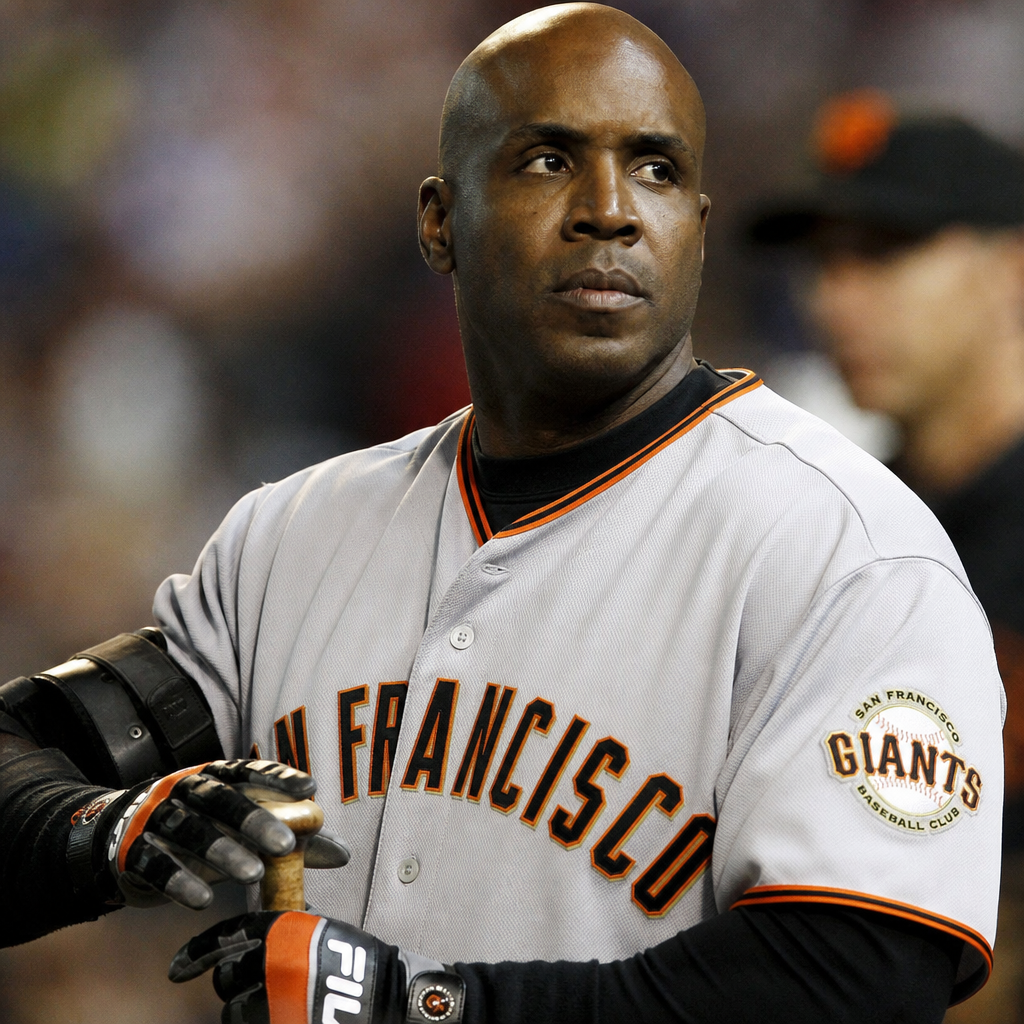
Barry Bonds remains one of baseball’s most polarizing figures because his career fused unmatched production, historic records, and a controversy that still shapes how fans discuss greatness. When people ask why “The Rise and Fall of Barry Bonds” matters, they are really asking how a player can dominate a sport, alter its record book, and still stand outside its most celebrated institutions. Bonds is the career home run leader, a seven-time National League Most Valuable Player, an eight-time Gold Glove winner, and the owner of statistics that place him among the most complete players ever to step on a field. At the same time, his name is inseparable from performance-enhancing drug allegations, federal investigations, and a Hall of Fame debate that has lasted for decades.
To understand Barry Bonds, it helps to define the key terms around his story. “Rise” refers not simply to his ascent into stardom, but to his transformation from the gifted son of Bobby Bonds into an all-around force with the Pittsburgh Pirates and later the San Francisco Giants. “Fall” does not mean he suddenly stopped producing. In fact, some of his most staggering numbers came late in his career. The fall was reputational: public trust eroded, media relations collapsed, and his achievements became contested territory. “Controversy” centers on allegations that Bonds used anabolic steroids and other banned substances during an era when Major League Baseball lacked the testing structure it later adopted. “Records” refers both to the statistics he officially owns and the argument over whether fans and historians should treat those records differently.
I have worked through Bonds’s career records, investigative timelines, and league policy changes many times, and his case consistently stands apart because there is no simple box for it. He was already a Hall of Fame-caliber player before any steroid accusation emerged. He also became the defining symbol of baseball’s Steroid Era, fairly or unfairly, because his body changed, his numbers exploded, and federal evidence connected him to BALCO, the Bay Area Laboratory Co-Operative. That combination is why this article serves as a hub within scandals and controversies coverage. Bonds’s story touches labor law, media ethics, record legitimacy, league governance, fan identity, and the long afterlife of public scandal in American sports.
It matters now because baseball still lives with the consequences. Hall of Fame voting standards remain inconsistent. Fans still compare Bonds’s 762 career home runs with Hank Aaron’s 755 and debate moral legitimacy versus official recognition. Young readers encountering his name often know the accusation before they know the player. A complete account has to hold both truths at once: Barry Bonds was one of the greatest baseball players ever, and Barry Bonds became the central face of a credibility crisis that damaged the sport’s trust with the public.
From baseball bloodline to superstar ascent
Barry Lamar Bonds was born on July 24, 1964, into a baseball family with elite pedigree and strong expectations. His father, Bobby Bonds, was a three-time All-Star with power and speed, while his godfather was Willie Mays, the standard for complete excellence in center field. That lineage gave Bonds both opportunity and pressure. After starring at Arizona State, he was drafted by the Pittsburgh Pirates in 1985 and reached the majors in 1986. Early in Pittsburgh, he was talented, lean, and dynamic rather than mythic. He hit for power, stole bases, drew walks, and played excellent defense in left field.
By the early 1990s, Bonds had become the best all-around player in the National League. He won MVP awards in 1990 and 1992 with the Pirates and helped power division-winning clubs that also featured Bobby Bonilla and Doug Drabek. His combination of on-base skill and athleticism was rare even before his later home run totals redefined expectations. In 1990 he hit 33 home runs, stole 52 bases, and posted an OPS over 1.000. In 1992 he led the league in on-base percentage and slugging while adding Gold Glove defense. These were not empty numbers built on one skill. They showed a player controlling every major phase of the game.
When Bonds signed with the San Francisco Giants before the 1993 season, the move was both personal and strategic. He returned near the franchise connected to Mays and entered a larger media market. In his first Giants season, he won another MVP after batting .336 with 46 home runs and 123 runs batted in. From that point, Bonds was not merely a star. He was the player opponents game-planned around more than anyone else, because he could change a game with patience as much as power. That distinction matters. Before he became a home run monument, he was already redefining what a modern offensive superstar looked like.
The records that made Bonds incomparable
The easiest way to explain Barry Bonds’s baseball value is to start with records that are not close calls. He won seven MVP awards, more than any player in major league history. He hit 762 career home runs, passing Hank Aaron in 2007 after breaking Mark McGwire’s single-season record of 70 with 73 home runs in 2001. He also drew 2,558 walks, the most ever, including a record 232 walks in 2004 and an astonishing 120 intentional walks that same year. Pitchers often preferred to put him on base rather than risk contact, even with runners already aboard.
Advanced statistics strengthen rather than weaken his case. Bonds finished with a career on-base percentage of .444 and a slugging percentage of .607, producing a 1.051 OPS. Baseball-Reference credits him with 162.8 WAR, placing him among the top position players ever. Those numbers matter because they show value beyond headline home runs. A player cannot accidentally reach that level through one hot stretch or one isolated advantage. Bonds paired strike-zone mastery with bat speed, pitch recognition, and a swing built for lift to left-center and right-center alike.
| Record or honor | Barry Bonds total | Why it matters |
|---|---|---|
| Career home runs | 762 | Official all-time major league record |
| Single-season home runs | 73 in 2001 | Broke Mark McGwire’s 70 and reset the modern ceiling |
| MVP awards | 7 | Most in MLB history, showing sustained dominance |
| Career walks | 2,558 | Most ever, reflecting fear and discipline |
| Intentional walks in one season | 120 in 2004 | One of the clearest signs of unmatched offensive threat |
The 2001 to 2004 stretch remains one of the most overwhelming peaks any hitter has produced. In 2001 Bonds batted .328 with a .515 on-base percentage and .863 slugging percentage. In 2002 he raised his on-base percentage to .582. In 2004 he reached .609, a number that looks almost fictional in the modern game. I have reviewed many great offensive seasons, and Bonds’s peak stands out because teams were actively trying not to pitch to him, yet he still created more value than players receiving normal opportunities. That is a different level of dominance from simply hitting many home runs.
The controversy: steroids, BALCO, and the credibility crisis
The scandal surrounding Bonds cannot be separated from the steroid environment of late-1990s and early-2000s baseball. During that period, offense surged across the league, home run totals jumped, and public suspicion grew. The BALCO investigation became the key turning point. Federal investigators examined the Bay Area Laboratory Co-Operative for distributing performance-enhancing substances to athletes, including designer steroids created to evade detection. Bonds was linked to BALCO through trainer Greg Anderson, a central figure in his personal conditioning circle.
In 2003 Bonds testified before a grand jury and said he had never knowingly used steroids, claiming that substances provided to him were represented as flaxseed oil and arthritis balm. That statement became one of the most disputed parts of his legacy because many observers found it implausible, while supporters argued that athletes often rely heavily on trainers and may not fully understand what they are given. The broader public, however, had already begun to reach a verdict based on visual evidence, late-career power spikes, and the widening federal case around BALCO.
His changing physique fueled the controversy. Photos from his Pirates years compared with his later Giants peak showed a visibly larger frame, broader shoulders, and a different facial structure. Medical experts and anti-doping specialists have long noted that appearance alone cannot prove steroid use, but in the court of public opinion it became powerful circumstantial evidence. Baseball’s weak testing policies at the time only intensified the backlash. Fans felt the league had profited from the home run boom and then shifted blame onto individual stars when scrutiny became unavoidable.
Bonds was never suspended by Major League Baseball for a failed steroid test under the later policy framework, and that fact is important for accuracy. But it did not shield him from lasting reputational damage. In 2007 he was indicted on charges related to alleged false statements and obstruction of justice arising from his grand jury testimony. He was convicted in 2011 on an obstruction charge, though that conviction was later overturned on appeal in 2015. Legally, that outcome mattered. Culturally, it changed very little. By then, many fans, writers, and former players had already fixed Bonds in their minds as the emblem of baseball’s dishonesty problem.
Media battles, fan division, and the meaning of his fall
Bonds’s fall was accelerated by his relationship with the press. He could be brilliant and candid, but he was also combative, guarded, and often openly contemptuous of reporters. In scandal coverage, personality matters because unlikeable public figures receive less grace when allegations emerge. Bonds rarely built the reservoir of goodwill that softens judgment. As a result, every milestone he approached, especially the home run records, became framed not as celebration alone but as a referendum on whether baseball should honor him.
When Bonds tied and passed Hank Aaron’s career home run total in 2007, the reaction captured the split in full. Giants fans celebrated history at Oracle Park, while many national observers treated the moment with visible discomfort. Aaron himself appeared on the scoreboard in a congratulatory message, a measured act that acknowledged the official record without ending debate. Commissioner Bud Selig attended key milestones despite ongoing criticism of the era he had overseen. That image told the larger story: baseball could not deny Bonds’s achievements, but it could not present them without unease.
The Hall of Fame debate became the long echo of that conflict. Under Baseball Writers’ Association of America voting, Bonds stayed on the ballot for the full ten years and never reached the required 75 percent. His highest total was 66 percent in 2022. Voters essentially split into camps. One argued that the Hall must reflect the best players and the full history of the game, including its compromised eras. The other argued that character clauses and the need to protect institutional credibility required exclusion. Both positions have logic, which is why the argument has endured.
Bonds’s case also raised a broader fairness question: why isolate one star when multiple players from the period faced accusations, confessions, or suspicious statistical jumps? The answer is partly scale. Bonds broke the most sacred records, so his controversy became the most visible test case. In that sense, his fall was not a collapse in skill or impact. It was the conversion of excellence into permanent dispute. He reached the summit and discovered that baseball’s highest honors depend on trust as much as production.
Legacy in baseball history and why this hub matters
The most honest assessment of Barry Bonds is that his legacy is dual and indivisible. He was an inner-circle all-time great before the steroid allegations, and his late-career numbers pushed him into territory no clean narrative can comfortably absorb. That tension is exactly why he remains essential within any scandals and controversies hub covering miscellaneous sports flashpoints. His story connects record legitimacy, institutional accountability, celebrity image management, legal exposure, and the problem of judging past eras by rules that were unclear, unevenly enforced, or deliberately ignored.
For readers exploring this subtopic more broadly, Bonds provides a template for analyzing other controversies. Ask what was known at the time, what rules existed, who benefited, and how public memory changed after the fact. Distinguish official records from moral judgments. Separate legal outcomes from reputational outcomes. Notice how league leadership, media incentives, and fan loyalties shape scandal narratives. These are practical tools for reading every major controversy, whether the issue is doping, sign stealing, gambling, or governance failure.
The rise and fall of Barry Bonds ultimately shows that records can be permanent while meaning remains contested. His numbers are in the books. His plaque is not in Cooperstown. Both facts define modern baseball. If you are building a deeper understanding of sports scandals, start here, then follow the connected cases across this hub with the same discipline: look at evidence, context, incentives, and consequences before deciding what legacy should mean.
Frequently Asked Questions
Why is Barry Bonds considered one of the greatest players in baseball history despite so much controversy?
Barry Bonds is widely considered one of the greatest players ever because his on-field production was extraordinary by almost any standard. He is Major League Baseball’s all-time home run leader, won seven National League MVP awards, earned eight Gold Gloves, and combined elite power with plate discipline, speed, and defensive value in a way very few players ever have. Before the steroid allegations became the defining part of his public story, Bonds had already built a Hall of Fame-level career with the Pittsburgh Pirates and then elevated his numbers even further with the San Francisco Giants. He was not just a home run hitter; he was a complete player who could change a game in multiple ways. What makes his legacy so complicated is that the debate around performance-enhancing drugs does not erase the magnitude of what he accomplished, but it does alter how many people interpret those accomplishments. That tension is exactly why he remains such a central figure in baseball history.
What records did Barry Bonds set that still define his legacy?
Barry Bonds’ legacy is inseparable from the records he set, especially his 762 career home runs, which stand as the most in MLB history, and his single-season mark of 73 home runs in 2001. Those numbers placed him above icons such as Hank Aaron and Roger Maris in the record book and ensured that his name would remain part of every major conversation about baseball greatness. Beyond home runs, Bonds also posted remarkable on-base percentages, drew an enormous number of walks, and forced opposing teams to pitch around him in ways that reflected his unique dominance. His seven MVP awards remain another defining achievement, showing that his excellence was recognized repeatedly over a long span rather than tied to just one peak season. When people talk about the rise of Barry Bonds, they are really talking about a player who did not simply compile impressive numbers, but one who reshaped offensive expectations and forced the sport to rethink what sustained dominance could look like.
How did the performance-enhancing drug controversy affect Barry Bonds’ reputation?
The performance-enhancing drug controversy transformed Barry Bonds from an all-time great into one of the most polarizing figures in sports. Allegations that he used steroids, particularly through his connection to the BALCO investigation, cast doubt over the legitimacy of his late-career power surge and turned every milestone into a public argument. For many fans, the issue was not just whether Bonds broke records, but whether those records should be celebrated in the same way as those set by players seen as competing without chemical assistance. The controversy also changed the tone of media coverage around him, making suspicion, legal scrutiny, and moral debate just as prominent as his athletic achievements. Even though Bonds was never convicted of a crime that erased his records or formally removed him from baseball history, the damage to his reputation was immense. His fall, in the public sense, came not from a lack of talent or performance, but from the belief that his pursuit of baseball immortality became inseparable from one of the sport’s most controversial eras.
Why is Barry Bonds not in the Baseball Hall of Fame?
Barry Bonds is not in the Baseball Hall of Fame primarily because many voters have been unwilling to overlook the steroid cloud that hangs over his career. Hall of Fame voting is not based only on statistics; it also involves judgments about integrity, sportsmanship, and a player’s overall place in the game’s history. Bonds’ numbers clearly meet and exceed the normal standard for induction, which is why his exclusion continues to spark debate. Supporters argue that he belongs because he was one of the best players the sport has ever seen and because the so-called steroid era affected baseball far more broadly than one individual. Critics argue that honoring him with a plaque in Cooperstown would amount to rewarding conduct they believe undermined fair competition. As a result, Bonds stands in a uniquely controversial position: recognized by many as one of the greatest players in history, yet still denied baseball’s most symbolic form of institutional approval.
Why does the story of Barry Bonds still matter in baseball today?
The story of Barry Bonds still matters because it forces baseball to confront difficult questions about greatness, fairness, memory, and how records should be judged. His career represents a collision between undeniable talent and enduring suspicion, and that makes him impossible to ignore in any serious discussion of baseball history. Bonds is a reminder that statistics alone do not settle legacy debates, especially when trust in the conditions behind those statistics has been damaged. His rise reflects the heights an athlete can reach through skill, discipline, and sustained excellence, while his fall shows how public perception can permanently reshape the meaning of achievement. Modern conversations about Hall of Fame standards, performance-enhancing drugs, historical context, and the treatment of controversial stars all circle back to Bonds in some way. That is why “The Rise and Fall of Barry Bonds” remains more than a biography title; it captures one of the defining moral and competitive debates in modern sports.