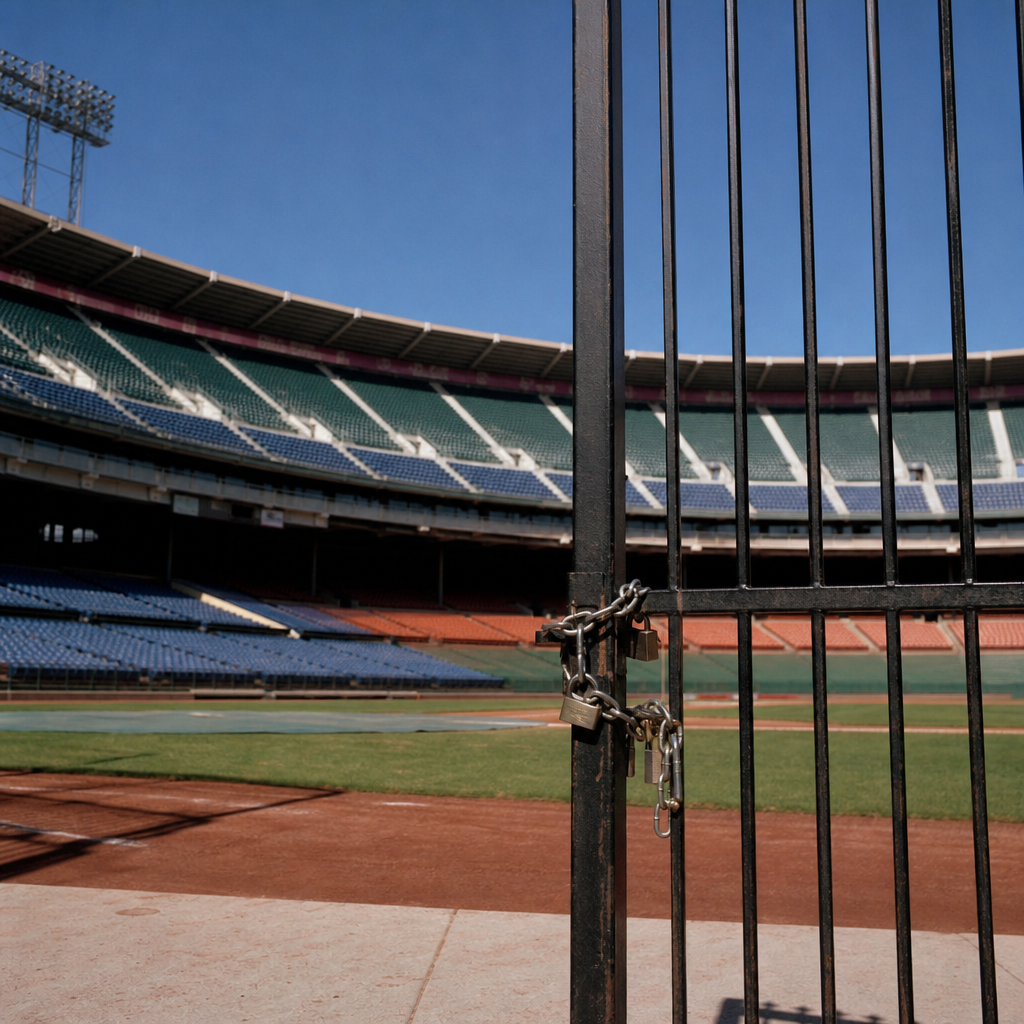
The 1990 lockout in Major League Baseball marked the first work stoppage in the sport since the 1972 players’ strike and offered an early blueprint for the labor battles that would define the decade. Although it delayed Opening Day by only a week and ended without canceling the season, the dispute exposed deep disagreements over salary structure, revenue distribution, arbitration, and who controlled the game’s economic future. For anyone studying baseball scandals and controversies, this episode matters because it sits at the intersection of money, power, public trust, and institutional change.
In MLB labor history, a lockout means owners shut down the sport by refusing to let players work until a new collective bargaining agreement is reached. That is different from a strike, in which players withhold their labor. The distinction is important because it shows who is applying pressure and how negotiations are framed in public. In 1990, owners used the lockout to force movement on a package of economic reforms they believed necessary to control rising costs. Players, represented by the Major League Baseball Players Association, saw those proposals as an attack on free-market gains they had spent nearly two decades building.
I have worked through old bargaining documents, news coverage, and the practical economics behind roster construction, and the 1990 fight stands out because it was not a single-issue dispute. It was a layered conflict over salary arbitration eligibility, minimum salary levels, anti-collusion protections, pension concerns, and a proposed revenue-sharing and pay system that looked to players like a salary cap in another form. That complexity is exactly why the lockout belongs in a broad hub on miscellaneous controversies. It connects labor law, franchise finance, competitive balance arguments, media narratives, and the long buildup to the much more damaging 1994–95 strike.
The controversy also matters beyond baseball history. Modern fans often hear owners claim that payroll restraint is needed for competitive balance, while players argue that restrictions suppress earning power without guaranteeing parity. The same themes heard today were fully visible in 1990. Understanding this lockout helps explain why MLB still lacks a formal salary cap, why the union remains unusually powerful compared with other North American sports, and why labor mistrust has remained one of the game’s most persistent sources of conflict.
What caused the 1990 MLB lockout?
The immediate cause of the 1990 MLB lockout was the expiration of the collective bargaining agreement at the end of 1989 and the owners’ decision to lock out players in spring training. The deeper cause was a clash between two economic models. Owners wanted stronger cost controls, more predictable payroll growth, and mechanisms that would narrow the gap between high-revenue and low-revenue clubs. Players wanted to preserve free agency, arbitration rights, and open salary competition, especially after winning major victories against owner collusion in the late 1980s.
Collusion is essential context. In the 1985, 1986, and 1987 offseasons, owners were found to have illegally coordinated to limit free-agent offers. Arbitrators ruled against them, and the damages eventually cost ownership groups hundreds of millions of dollars in settlements and penalties. That history made the union highly suspicious of any owner proposal that claimed to be about stability or fairness. From the players’ perspective, ownership had already been caught suppressing the market through illegal coordination. In that environment, requests for new payroll restraints were never going to be treated as neutral policy ideas.
Owners argued that salary growth was outpacing revenues for too many clubs. They pushed proposals that included a revenue-sharing system and pay classifications that would have grouped players in ways the union believed would depress salaries. They also looked for changes to salary arbitration, a process that lets eligible players and clubs submit salary figures to a neutral panel. Arbitration had become one of the main engines of salary growth because comparable player pay rose as stars signed larger deals. Owners wanted to reduce that upward pressure.
Players resisted because the union’s core philosophy, shaped by Marvin Miller and maintained under Donald Fehr, was straightforward: once a player had earned contractual and market rights, those rights should not be traded away for vague promises of systemwide health. The MLBPA had spent years establishing salary arbitration, free agency after six years of service, and stronger pension and benefit protections. Any rollback threatened not only current earnings but also the union’s long-term leverage.
How the negotiations unfolded
The lockout began on February 15, 1990, when owners closed spring training camps after bargaining failed to produce a new agreement. That timing was strategic. Spring training is when players report, routines begin, and local media attention turns sharply toward baseball. By shutting camps, owners increased immediate pressure without yet losing regular-season gate revenue. The union responded with a firm public stance: players would not accept disguised cap mechanisms or major erosion of arbitration and free agency principles.
Commissioner Fay Vincent played an important role, though the commissioner in labor disputes has often been constrained by the owners he officially serves. Vincent was not a purely independent mediator, but he understood that a prolonged shutdown would damage the sport’s credibility. Negotiations continued through late February and March, with federal mediators involved as positions shifted incrementally. Like many labor talks, progress did not come through one dramatic concession. It came through packaging issues together so both sides could claim meaningful gains.
The eventual settlement was reached on March 19, 1990. Opening Day was pushed back by one week, and each team’s 162-game schedule was preserved by building more doubleheaders into the calendar. That detail matters because it softened the financial impact compared with a canceled-games dispute. Fans were inconvenienced, but the season remained intact, television inventory was largely maintained, and clubs did not absorb the catastrophic losses that later accompanied the 1994–95 strike.
The agreement raised the minimum salary from $68,000 to $100,000, a significant jump that benefited lower-paid major leaguers. It also improved pension contributions and preserved the broad architecture of arbitration and free agency. Owners did not get a salary cap. They did secure some movement on revenue sharing and procedural issues, but the central union victory was clear: the market system survived. In practical terms, the lockout ended as a compromise on secondary economic items and a defeat for owners on their largest structural goal.
The key economic issues at stake
The 1990 lockout can be understood best by separating the rhetoric from the actual economics. Owners publicly emphasized competitive balance and cost certainty. Players emphasized labor rights and market compensation. Both sides had legitimate interests, but their preferred solutions reflected where each sat in baseball’s revenue chain.
| Issue | Owners wanted | Players wanted | Why it mattered |
|---|---|---|---|
| Salary structure | More restraint and predictability | Open market pricing | Determined how fast payrolls could grow |
| Arbitration | Less upward salary pressure | Preserve eligibility and leverage | Affected pay for experienced young players |
| Revenue sharing | Transfers to support smaller markets | No hidden cap effects | Linked club finances to payroll policy |
| Minimum salary | Limit overall labor cost growth | Increase base pay substantially | Important for roster fringe and early-career players |
| Benefits and pension | Manage long-term obligations | Expand protections | Critical to total compensation, not just salary |
Competitive balance was the most politically effective owner argument. Small-market clubs could plausibly say they struggled to match the payroll power of large-market rivals such as the Yankees, Mets, Dodgers, and Red Sox. But the union’s rebuttal was strong: revenue disparities were primarily a problem among owners, not a justification for restricting player earnings. If clubs wanted greater balance, they could share local revenues more aggressively or reform ownership-side economics. They did not need to limit labor rights.
From a baseball operations standpoint, arbitration was especially significant. Teams gain six years of club control before free agency, and arbitration affects salaries in the later controlled years. If owners could weaken arbitration, they could suppress pay for a large class of productive players who had not yet reached the open market. The union knew that if arbitration became less potent, free agency alone would not protect middle-tier players nearly as well. That is why the fight was not just about stars; it was about the salary ladder across the roster.
Why the union held firm
The MLBPA entered 1990 as the strongest union in American professional sports, and that strength did not happen by accident. It had been built over decades through disciplined bargaining, careful grievance strategy, and a clear understanding that economic rights are easier to lose than regain. Donald Fehr, who succeeded Miller as executive director, was less publicly mythic than his predecessor but highly effective in legal and tactical terms. He understood that owners often pursued incremental concessions that, taken together over time, could transform the market.
Players also had a recent memory of winning. The collusion cases had validated their belief that ownership would restrict salaries whenever possible. That experience hardened internal solidarity. Veteran stars had obvious reasons to protect free agency, but journeymen and arbitration-eligible players also understood what was at stake. A system that looks only slightly more restrictive on paper can reduce earnings substantially across hundreds of careers.
Another important factor was precedent from other leagues. The NFL and NBA had each gone through recurring labor battles over restraints, movement rights, and compensation systems. Baseball players saw what happened when leagues successfully embedded stronger central controls. They were determined not to let MLB drift in that direction. Because baseball had no salary cap and a historically independent union culture, the 1990 negotiations became a defense of institutional identity as much as a bargaining round.
In my experience studying sports labor disputes, unions hold best when the issue can be explained simply inside the clubhouse. In 1990, the simple explanation was this: owners were asking players to trust the same side that had recently been caught colluding against them. That message needed no elaborate theory. It was concrete, recent, and persuasive.
Immediate effects on the 1990 season and public perception
The lockout’s direct impact on the season was limited but real. Spring training routines were disrupted, exhibition schedules were affected, and Opening Day moved from April 2 to April 9. Teams made up the full slate through schedule compression, which increased wear on pitchers and reduced flexibility later in the season. Still, because no regular-season games were lost permanently, the public response was more frustrated than furious.
That relative calm should not be mistaken for approval. Fans were already becoming wary of baseball’s repeated labor crises. The sport had a strike in 1972, another in 1981, collusion scandals in the mid-1980s, and now a lockout in 1990. Each event chipped away at trust. One reason the 1994–95 strike later hit so hard is that it did not arrive in isolation. It landed after years of accumulated skepticism.
Media framing in 1990 often split along familiar lines. Some columnists sided with owners on the theory that payroll inflation threatened small-market viability. Others emphasized that baseball was thriving as an entertainment product and that labor should not bear the cost of ownership’s structural problems. Both narratives contained some truth, but the stronger factual point was that owners had not demonstrated that suppressing player pay would solve competitive imbalance. Without broader revenue reform, restraint alone would simply shift income from players to clubs.
The settlement therefore produced an unusual public verdict. Fans got baseball back quickly, but nobody really believed the underlying issues were resolved. The lockout ended the immediate standoff while preserving the deeper mistrust that would resurface four years later.
The lockout’s long-term legacy in MLB labor history
The lasting significance of the 1990 lockout is that it clarified the lines each side would defend for the rest of the decade. Owners learned that a direct push for cap-like controls would face fierce resistance. Players learned that preserving market rights required constant vigilance, not occasional mobilization. The conflict also showed that MLB’s labor peace could be restored temporarily through compromise on salaries and benefits without settling the structural fight over revenue distribution.
That unresolved tension fed directly into the 1994–95 strike, when owners again sought stronger systemwide controls and players again refused. The later strike was far more destructive, wiping out the World Series for the first time since 1904 and causing lasting damage to attendance, ratings, and civic attachment. In retrospect, 1990 looks like the warning shot: a shorter stoppage that announced the same philosophical divide in a less catastrophic form.
For a hub on miscellaneous baseball controversies, the 1990 lockout is especially useful because it connects so many adjacent topics. It links to collusion, antitrust exceptionalism, franchise relocation politics, stadium financing debates, commissioner authority, and the economics of competitive balance. It also reminds readers that not every baseball controversy is about on-field cheating or personal misconduct. Some of the most consequential scandals are institutional, unfolding across boardrooms, bargaining tables, court filings, and public messaging campaigns.
The key takeaway is simple. The 1990 MLB lockout was a short stoppage with long consequences. It preserved the union’s core gains, denied owners a cap-style breakthrough, and revealed that baseball’s business conflicts were not temporary misunderstandings but recurring battles over who captures the sport’s growing revenues. If you are exploring scandals and controversies across MLB history, start here and follow the labor thread outward. It explains more of modern baseball than many better-known flashpoints.
Frequently Asked Questions
What caused the 1990 MLB lockout, and why did it happen before the season began?
The 1990 MLB lockout grew out of a larger power struggle between team owners and the Major League Baseball Players Association over the financial rules that governed the sport. Owners wanted a system that would slow the rapid rise in player salaries and give clubs more cost certainty. Players, led by a strong union, saw those proposals as an attempt to weaken free-market gains they had spent years fighting to secure. The key issues included salary arbitration, minimum salary levels, anti-collusion protections, and the owners’ push for more direct control over player compensation.
It happened before the season because owners chose a lockout as a pressure tactic during collective bargaining. Unlike a strike, where workers refuse to perform, a lockout is initiated by management. By shutting down spring training and delaying preparations for Opening Day, owners hoped to force a settlement on terms more favorable to them. The timing mattered: spring training is when players ramp up physically, clubs organize rosters, and anticipation for the season begins to build. Interrupting that schedule created urgency without immediately sacrificing regular-season revenue on a large scale. That is one reason the lockout is often viewed as a calculated economic maneuver rather than a sudden breakdown in labor relations.
What were the main economic issues at the center of the dispute?
The dispute was fundamentally about who would control baseball’s evolving economic system. Owners argued that player salaries were rising too quickly and that smaller-market clubs needed more predictable payroll structures to remain competitive. Players countered that owners were overstating financial distress and using “competitive balance” arguments to justify rollbacks in labor rights. At the center of the talks were proposals affecting salary arbitration, which gave eligible players a formal way to contest pay; the minimum salary, which mattered greatly to younger and less-established players; and the overall structure of compensation growth across the league.
Revenue distribution was another major concern, even if it was not resolved in a fully transformative way during this specific standoff. Baseball at the time was increasingly shaped by unequal local revenues, especially from television and market size. That meant labor negotiations were no longer just about individual contracts; they were about the underlying business model of the sport. Owners wanted greater flexibility and cost discipline. Players wanted to preserve the market mechanisms that allowed talent to be paid according to value. In that sense, the 1990 lockout was not just a disagreement over one contract cycle. It was an early battle over whether MLB would operate more like an open labor market or a tightly managed economic system controlled by ownership.
How was the 1990 lockout resolved, and what was the immediate impact on the season?
The lockout ended after the two sides reached a new labor agreement that allowed spring training to resume and the regular season to move forward with only a brief delay. Opening Day was pushed back by about a week, but the season itself was preserved. That limited on-field damage is one reason the 1990 lockout is sometimes overshadowed by later labor crises. Still, the resolution mattered because it showed that even a relatively short stoppage could reveal how fragile the relationship between owners and players had become.
In practical terms, the settlement addressed several compensation-related issues and avoided the kind of prolonged shutdown that would have threatened the full schedule. For fans, the immediate impact was inconvenience and uncertainty rather than total disruption. For the sport’s internal politics, however, the consequences were far more significant. The lockout demonstrated that labor conflict was no longer an occasional flare-up but a recurring structural feature of MLB’s business environment. It also reinforced the union’s ability to resist owner-driven reforms that players believed would undermine salary growth or bargaining power. So while the season survived with minimal cancellation, the underlying tensions absolutely did not disappear.
Why is the 1990 lockout considered important in the history of baseball labor relations?
The 1990 lockout is important because it served as an early template for the labor warfare that would define Major League Baseball throughout the decade. It made clear that disputes over economics were becoming more frequent, more strategic, and more ideological. Owners were increasingly willing to use shutdowns and structural proposals to reshape the game’s labor market. Players were equally determined to defend gains won through decades of bargaining and litigation. That combination set the stage for future confrontations, including the much more destructive 1994–95 strike.
Historically, the lockout also showed that baseball’s labor fights were no longer just about isolated grievances. They were about governance, leverage, and the long-term distribution of industry revenue. Questions about arbitration, free agency, salary floors, payroll restraint, and owner coordination all pointed to a bigger issue: who really controlled the economics of the sport. For students of baseball controversies, this matters because the lockout was not a scandal in the tabloid sense, but it was absolutely a controversy that shaped public trust, competitive policy, and the business identity of MLB. It exposed a sport trying to reconcile its romantic image with the realities of a modern entertainment industry.
How did the 1990 lockout affect fans, players, and the broader perception of MLB?
For fans, the lockout was a warning sign. Even though the season was not lost, the dispute reminded the public that baseball’s leadership and workforce were locked in a recurring struggle over money and power. That can erode goodwill, especially in a sport that depends heavily on tradition, continuity, and emotional attachment. Fans may tolerate negotiations in the abstract, but they tend to react negatively when business conflict interrupts the rhythms of spring training and Opening Day. The 1990 episode introduced many observers to the idea that labor instability could become a regular part of the baseball calendar.
For players, the lockout underscored the importance of union solidarity. It showed that even established labor rights could come under pressure in each new round of bargaining. For owners, it revealed both the usefulness and the limits of aggressive tactics. They could create urgency through a lockout, but they still had to deal with a union that was experienced, organized, and highly skeptical of salary restraints disguised as reform. In terms of MLB’s broader image, the lockout contributed to a growing perception that the sport was entering an era where financial conflict could overshadow the game itself. That perception became even more damaging later in the decade, but the seeds were clearly visible in 1990. In hindsight, the lockout mattered not because it destroyed a season, but because it exposed how vulnerable baseball had become to deep and recurring labor strife.