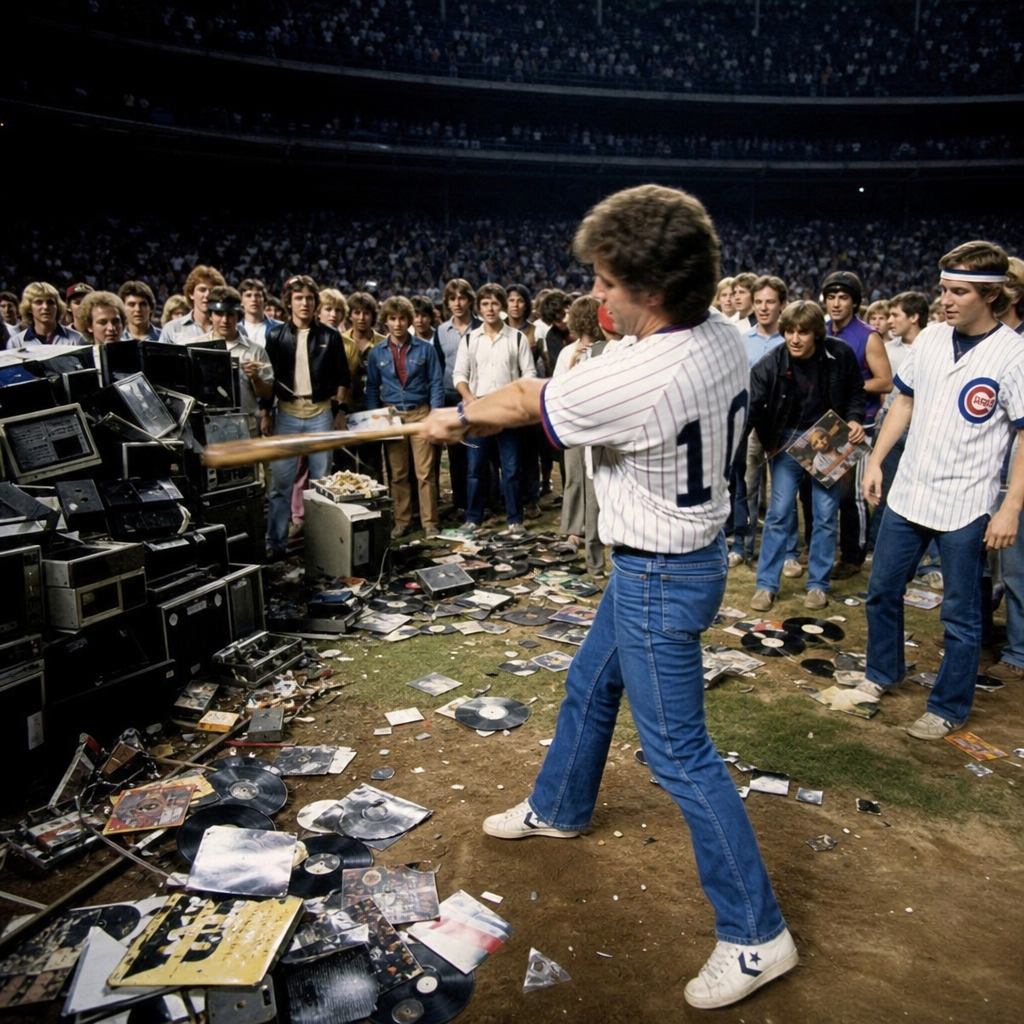
Disco Demolition Night remains one of the strangest and most revealing scandals in American sports because it was never only about baseball, and it was never only about music. Staged between games of a Chicago White Sox doubleheader on July 12, 1979, the promotion invited fans to bring disco records to Comiskey Park for destruction. What followed was a riotous field invasion, a forfeited game, and a cultural flashpoint that still shapes how people discuss sports promotions, popular music backlash, and the politics hidden inside mass entertainment. As a hub within scandals and controversies, this story matters because it connects several “miscellaneous” threads at once: crowd control failures, marketing stunts gone wrong, race and sexuality in pop culture, anti-establishment radio tactics, and the way a single night can alter a franchise’s public identity for decades.
To understand Disco Demolition Night, it helps to define the core elements. The Chicago White Sox were trying to boost attendance during a difficult era for the club and for Major League Baseball’s in-stadium appeal. Disco, by 1979, was commercially dominant but also facing a sharp backlash from rock audiences, radio programmers, and cultural critics. The event’s main promoter, Chicago DJ Steve Dahl, had built his brand around mocking disco after his station switched formats and dismissed him. Team owner Bill Veeck, famous for inventive and reckless baseball promotions, saw an opportunity to fill seats. The idea sounded simple: fans could buy admission for 98 cents if they brought a disco record, those records would be collected in a crate, and Dahl would blow them up on the field between games. In practice, it mixed combustible symbolism with weak operational planning.
The night matters far beyond novelty. I have worked through enough sports crisis case studies to recognize a recurring pattern: leaders assume a joke will remain a joke, underestimate the crowd’s emotional investment, and confuse attention with control. Disco Demolition Night fits that pattern exactly. It also sits at the center of a deeper argument. Was it just anti-disco fun, or did it carry racial and homophobic undertones because disco was rooted in Black, Latino, and gay club culture? Serious historians and music critics say the latter cannot be ignored. That is why this event remains relevant as a hub topic. It links baseball operations, media provocation, urban identity, and the ethics of promotional spectacle in one unforgettable controversy.
How Disco Demolition Night Was Organized and Why It Drew Such a Crowd
The White Sox of the late 1970s were aggressively promotional because they needed customers. Bill Veeck understood that baseball teams did not sell only wins; they sold experiences, noise, and civic theater. He had used exploding scoreboards, unusual giveaways, and publicity stunts before. Steve Dahl, meanwhile, had become a ratings phenomenon in Chicago radio by channeling resentment toward disco after WDAI shifted from rock to disco programming. His “anti-disco” persona was theatrical, but it tapped into a real audience mood. Putting Dahl and Veeck together created instant attention.
The mechanics of the promotion were clear and fatally insufficient. Fans were told they could attend for 98 cents with a disco record. Organizers expected a lively crowd, but not the scale that arrived. More than 47,000 fans entered, and thousands more reportedly remained outside. Comiskey Park was not prepared for a crowd behaving less like a conventional baseball audience and more like an audience at a rebellion-themed concert. Many came for the demolition rather than the White Sox-Tigers doubleheader. That distinction mattered because it changed the social contract in the stadium. Instead of baseball being the main event with entertainment attached, the stunt became the main event and the games became background material.
The records collected from fans were piled into a container in center field. Between games, Dahl entered in military-style gear and whipped up the crowd. When the crate exploded, pieces of vinyl scattered, a crater opened in the turf, and thousands of spectators rushed the field. Some danced, some stole bases, some lit fires, and some simply joined the chaos because collective action lowers inhibition fast. Police eventually restored order, but the playing surface was unusable. The White Sox had to forfeit the second game to Detroit.
What Happened on July 12, 1979: A Clear Timeline of the Riot
The first game of the doubleheader proceeded amid an already unstable atmosphere. Fans threw records like frisbees, drank heavily, and treated the stands as part pep rally and part antagonistic party. Security response was uneven from the start. Staff could remove individual troublemakers, but the volume of rowdy behavior signaled a system under strain. Anyone experienced in event operations can see the warning signs: objects flying, aisle congestion, crowd behavior shifting from spectatorship to participation, and a promotion built around destruction as a shared emotional release.
After the first game ended, Dahl took the field in a Jeep, playing to the anti-disco persona that made him famous. He led chants, hyped the explosion, and created the emotional countdown. When the records were detonated, the moment worked as show business but failed as crowd management. The blast itself was modest compared with what followed. Fans poured over barriers and onto the grass. Once a few hundred got onto the field, others interpreted that breach as permission. In crowd psychology, visible rule-breaking often causes a rapid collapse of compliance, especially when authority appears outnumbered.
Players fled for safety. Umpires and team officials assessed the field and the risk level. The damage included burn marks, debris, and holes in the turf, but the bigger issue was that order had broken down. The American League later upheld the White Sox forfeit. That ruling matters because it codified the event not merely as an embarrassing interruption but as an operational failure affecting competitive integrity. Baseball could tolerate eccentric promotions; it could not allow a club to compromise an official game environment.
| Element | What was planned | What actually happened |
|---|---|---|
| Attendance | A strong promotional crowd | Overcapacity pressure and thousands outside |
| Record collection | Novelty prop for a brief stunt | A symbolic focal point for mass anger and excitement |
| Between-games entertainment | Short comedic demolition | Field invasion, fires, debris, and police intervention |
| Baseball outcome | Doubleheader completed as scheduled | Second game forfeited to Detroit |
The Cultural Clash Behind the Backlash to Disco
Any accurate account of Disco Demolition Night has to explain why “disco” triggered such intensity. By the late 1970s, disco had moved from underground clubs into mainstream radio, film, and retail. Acts associated with the style dominated charts, and the success of Saturday Night Fever turned disco into a commercial empire. For many rock listeners, the genre symbolized corporate excess, repetitive production, and the shrinking space for album-oriented rock on FM radio. That explanation is real but incomplete.
Disco’s roots lay in Black, Latino, and gay communities, especially in clubs where dancing, remixing, and DJ culture created forms of freedom not always available in public life. The backlash therefore carried social meanings that exceeded taste. Not every anti-disco fan was motivated by racism or homophobia, but the movement created a safe umbrella under which those prejudices could operate. The slogan “disco sucks” often sounded broader than a critique of rhythm patterns or record-label economics. When people publicly destroyed records linked to artists from marginalized communities, the symbolism was impossible to separate from the politics of the era.
This is why historians resist framing the night as harmless comedy. Steve Dahl has long argued that his act targeted a music format, not identities. That point deserves acknowledgment. Yet intent does not erase impact, and cultural events are judged by context as well as personal motives. In 1979 America, when gay rights faced resistance and urban racial politics were tense, staging a mass destruction ritual around a genre associated with minority nightlife carried obvious implications. The event became a collision between sports entertainment and a broader social backlash that baseball was not equipped to interpret responsibly.
Why Baseball Became the Stage for a Music War
Baseball in the 1970s was vulnerable to spectacle because the sport was competing with television, football, and changing urban leisure patterns. Owners and promoters treated the ballpark as a laboratory for attention. Bill Veeck was a genius at understanding that a baseball ticket could be sold through novelty, humor, and disorderly fun. In many cases, that instinct worked. Fans remember inventive promotions because they make a team feel alive. But the same instinct can blur the line between audience engagement and institutional recklessness.
Comiskey Park was especially suited to this kind of gamble. The White Sox were not the Yankees or Dodgers, and the club needed identity. Disco Demolition Night offered a shortcut to relevance by connecting the team to a current media feud. That is a lesson repeated in later controversies across sports: when a franchise borrows an external cultural fight to generate buzz, it also inherits the conflict’s emotional volatility. The baseball field became a stage because it was available, visible, and symbolically public. Once the stadium invited fans to enact a musical grievance physically, the sport lost control of the message.
The event also showed the limits of separating promotions from governance. A team may treat a stunt as a marketing exercise, but the league, players, umpires, and city police experience it as a risk environment. Modern clubs run promotions through legal review, security modeling, and insurance scrutiny partly because of lessons drawn from nights like this one. Disco Demolition Night helped prove that brand creativity without operational discipline can damage everyone involved, from the home team to the visiting club to the league office.
Legacy, Criticism, and What This Scandal Still Teaches
Disco Demolition Night survives because it works on three levels at once: absurd entertainment story, genuine sports scandal, and cultural case study. Its baseball legacy is concrete. The White Sox forfeited a game, and the franchise became attached to a cautionary tale that still surfaces whenever promotions go too far. Its music legacy is equally lasting. Many people treat the night as a symbolic marker in the decline of disco’s mainstream dominance, even though the genre’s sounds continued to evolve into dance-pop, house, and club music. In Chicago especially, that evolution matters; the city later became central to house music, a direct descendant of disco culture.
The criticism has sharpened over time. Earlier retellings often emphasized comedy and chaos while minimizing the racial and sexual politics around the anti-disco movement. More recent scholarship and journalism have corrected that imbalance by placing the event within the histories of nightlife, radio format wars, and backlash politics. That broader reading is more persuasive because it explains why the story still provokes debate. If it were only a goofy baseball promotion, it would not retain such interpretive power more than four decades later.
For readers exploring miscellaneous scandals and controversies, this event is an ideal hub because it touches nearly every category that makes a sports scandal significant: failed planning, institutional accountability, media amplification, symbolic violence, and long-term reputational damage. The main lesson is simple. Promotions are never just promotions when they mobilize identity, resentment, and crowd behavior at the same time. Sports organizations that ignore that fact court disaster. If you are mapping the most important controversies in baseball culture, start here, then follow the connected stories about fan disorder, radio influence, and the politics hidden inside entertainment history.
Frequently Asked Questions
What was Disco Demolition Night, and why did it become so famous?
Disco Demolition Night was a promotional event held at Comiskey Park in Chicago on July 12, 1979, between games of a White Sox doubleheader against the Detroit Tigers. Fans were encouraged to bring a disco record in exchange for discounted admission, and the records were collected with the promise that they would be blown up on the field between games. On the surface, it looked like a wild, attention-grabbing baseball promotion designed to boost attendance during a difficult period for the White Sox and for Major League Baseball more broadly. What actually happened, however, turned a gimmick into one of the most infamous nights in sports history.
After the records were detonated, thousands of fans rushed the field. The crowd damaged the playing surface, set fires, stole bases, and created conditions that made it impossible to safely play the second game. As a result, the White Sox were forced to forfeit. The event instantly entered American pop-culture history because it was not just a baseball disaster. It became a symbol of the tensions surrounding disco music, youth culture, race, class, sexuality, and changing ideas about who popular culture belonged to in the late 1970s.
Its lasting fame comes from that layered meaning. People still remember the visual chaos of exploding records and a field overrun by fans, but historians and cultural critics continue to revisit the event because it captured a moment when a backlash against a musical genre also reflected broader social anxieties. That is why Disco Demolition Night is remembered not merely as a failed promotion, but as a revealing flashpoint in American cultural history.
Why was there such a strong backlash against disco in the late 1970s?
The backlash against disco built over several years and had multiple causes. At the most basic level, disco became so commercially dominant that many listeners simply grew tired of it. By the late 1970s, disco was everywhere: on radio stations, in clubs, in films, in fashion, and at the top of the charts. Once a genre becomes that visible, overexposure often creates resentment, especially among fans who feel their own musical tastes are being pushed aside. For many rock fans, disco came to represent a slick, corporate, repetitive sound that threatened the authenticity they associated with rock music.
But the anti-disco movement was never only about taste. Disco had deep roots in Black, Latino, and gay club culture, and its mainstream rise brought those communities’ influence into the center of American entertainment. That visibility made some audiences uncomfortable. As a result, the slogan “disco sucks” often carried meanings that went beyond criticism of music. In many cases, it became a coded rejection of the people and spaces associated with disco’s success. Not every critic of disco was motivated by prejudice, of course, but the movement as a whole cannot be understood without acknowledging that race, sexuality, and cultural identity were part of the reaction.
Disco Demolition Night became the most notorious expression of that backlash because it literalized destruction. Instead of merely mocking disco, the event turned anti-disco sentiment into a public ritual in a packed stadium. That symbolic act gave the backlash a theatrical force, but it also exposed the uglier impulses behind it. Looking back, many scholars argue that the event revealed how quickly a pop-culture dispute could tap into deeper tensions already present in American society.
Who organized Disco Demolition Night, and what were they trying to achieve?
Disco Demolition Night was organized by Chicago White Sox promotions executive Mike Veeck and radio personality Steve Dahl. Their goal was straightforward from a marketing perspective: create a sensational event that would draw a large crowd, energize the fan base, and generate publicity for both the team and Dahl’s anti-disco radio persona. Steve Dahl had built part of his public image around mocking disco after his own radio career was affected by changing music formats, and his anti-disco shtick connected with listeners who were eager to join the trend. The White Sox, meanwhile, were known for experimental and sometimes outrageous promotions under owner Bill Veeck’s influence, so the event fit the team’s broader approach to entertainment.
In business terms, the promotion worked almost too well. The discounted admission offer attracted a far larger crowd than officials were prepared to manage. Many attendees seemed more interested in the spectacle than in the baseball games themselves. That imbalance was crucial. Once the event became the main attraction, the game environment changed, and crowd control became far more difficult. What the organizers intended as a rowdy but manageable stunt spiraled into something much bigger once thousands of people were packed into the stadium, many of them highly energized and, by many accounts, intoxicated.
The organizers were trying to create attention, not a riot. Still, the planning clearly underestimated the emotional charge of the anti-disco message and the practical risks of combining a volatile crowd, a destructive centerpiece, and limited security. That is one reason the event continues to be studied: it shows how sports promotions can fail when spectacle overtakes judgment. Even if the original aim was publicity rather than chaos, the structure of the event made chaos far more likely than organizers seemed willing to admit.
What exactly happened that night, and why was the second game forfeited?
The evening began with enormous attendance, far beyond what the White Sox typically drew. Fans arrived carrying disco records, which were collected in preparation for the between-games demolition. The first game of the doubleheader was played, but the atmosphere around the ballpark was already unusually charged. There were reports of rowdy behavior throughout the night, and the event increasingly felt like a mass anti-disco rally attached to a baseball game rather than a baseball game with a novelty promotion.
Between games, Steve Dahl entered the field in military-style gear, adding to the theatrical tone of the event, and the pile of records was blown up. The explosion itself was dramatic, but it immediately triggered a much bigger problem. Thousands of fans rushed onto the field. Some danced, some tore up chunks of turf, some lit small fires, and others grabbed equipment and souvenirs. The scale of the field invasion overwhelmed security. The stadium environment shifted from loud and unruly to outright uncontrollable.
Because the field was damaged and the conditions were unsafe for players, umpires and officials determined that the second game could not be played. Major League Baseball later ruled that the White Sox had to forfeit the game to the Tigers. The forfeit made the night even more historically significant because it turned a promotional embarrassment into an official competitive consequence. In baseball’s record books, Disco Demolition Night is not just remembered for disorder in the stands; it directly altered the outcome of a scheduled major league contest.
Why does Disco Demolition Night still matter in discussions about sports, music, and culture?
Disco Demolition Night still matters because it sits at the intersection of entertainment, identity, and institutional responsibility. In sports history, it serves as a cautionary tale about promotions that chase publicity without fully considering crowd behavior, symbolism, and safety. Teams today still use themed nights, giveaways, and viral stunts to attract fans, but Disco Demolition Night remains one of the clearest examples of what can happen when a promotion invites people to participate in destruction and hostility rather than celebration.
In music and cultural history, the event matters because it is often treated as a public climax of the anti-disco movement. Yet that shorthand is incomplete unless it also recognizes the deeper social meanings involved. Disco was tied to communities that had historically been marginalized in mainstream culture, so the public demolition of disco records carried more than musical meaning. It raised enduring questions about whose culture gets dismissed as shallow, whose spaces are mocked, and how backlash movements can hide social prejudice beneath claims of taste or authenticity.
The event also remains relevant because it shows how American culture often processes change through spectacle. A baseball stadium became the stage for a conflict that was really about much more than a pennant race or a playlist. That is why Disco Demolition Night continues to appear in documentaries, books, and essays: it reveals how sports can become a mirror for larger national tensions. Decades later, it still helps explain the complicated ways popular culture, media performance, and social division can collide in one unforgettable night.