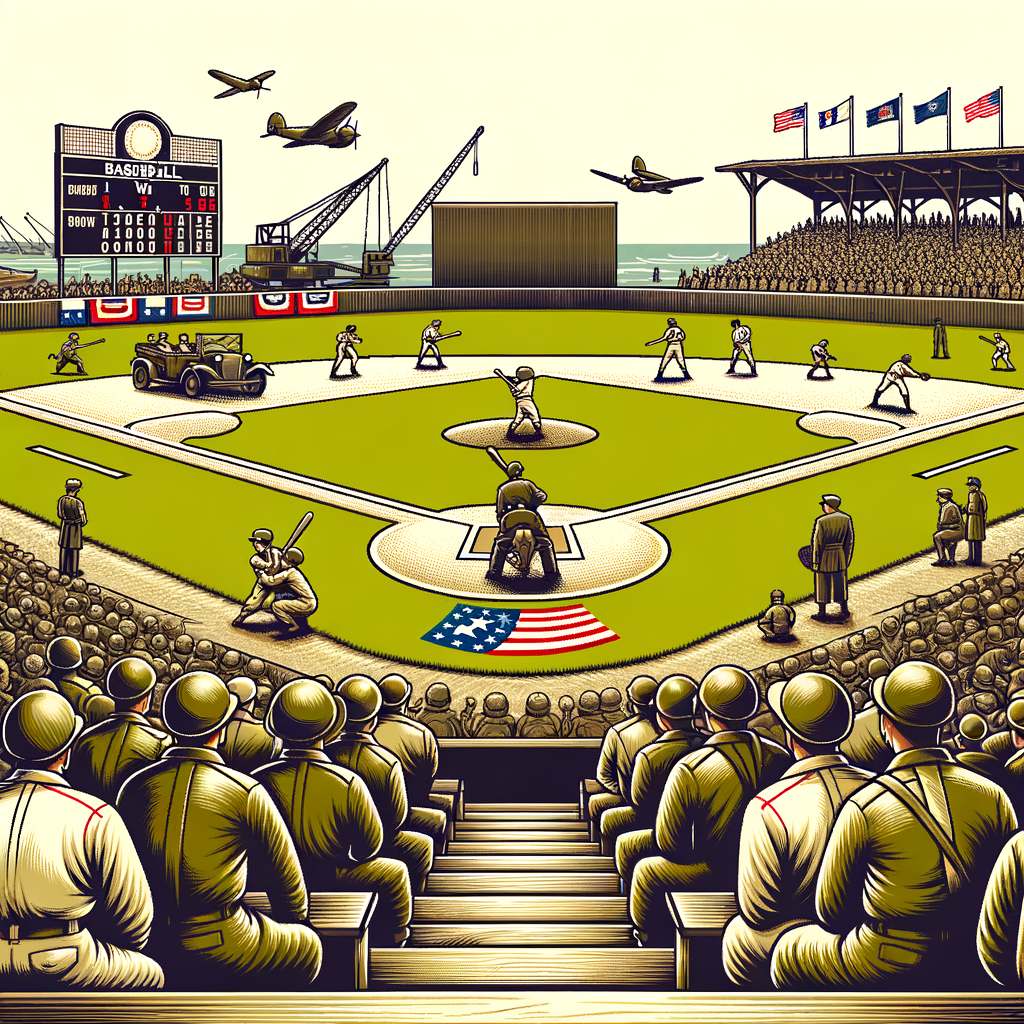
Baseball, often referred to as America’s pastime, experienced a profound transformation during World War II. As the world grappled with conflict, baseball in the United States was not immune to its effects. The war era, spanning from 1941 to 1945, posed considerable challenges not only to players and organizations but also to the fans who cherished the game. This period revealed the game’s adaptability and resilience, marking a significant chapter in its history. Despite the draft depleting rosters and travel restrictions complicating schedules, baseball endeavored to maintain a semblance of normalcy and provide morale-boosting entertainment. The sport’s journey through wartime, illustrated by unique changes and adaptations, underscores its cultural significance. By fostering unity and providing a distraction from the harsh realities of the era, baseball cemented itself as an enduring symbol of American life. How did the sport adapt? What roles did it play in maintaining morale? We will explore these questions and more as we delve into the dynamic world of wartime baseball during World War II.
Changing Dynamics and Player Drafts
The onset of World War II had an immediate impact on Major League Baseball (MLB), particularly with the U.S. entering the war after the attack on Pearl Harbor in December 1941. The military draft siphoned off a significant portion of the talent pool, as over 500 major and minor league players were called to serve. This exodus included some of the brightest stars of the time, such as Ted Williams, Joe DiMaggio, Bob Feller, and Hank Greenberg. Teams faced difficulties assembling competitive rosters. The talent drain meant that older players, those previously retired, or younger, less experienced players had to fill the void left by those who went to war. Organizations such as the Cincinnati Reds and the New York Yankees scrambled to adapt to the loss of their key players. The shift in player dynamics led to an influx of players from the minor leagues or those categorized as ‘4-F’ because they were deemed unfit for military service for various reasons, including medical conditions.
The inclusion of female players in auxiliary leagues such as the All-American Girls Professional Baseball League (AAGPBL) highlighted a significant shift during this period. Established in 1943 by Philip K. Wrigley, the AAGPBL showcased exceptional talent and drew considerable crowds, effectively proving that women’s participation added depth and vibrancy to the sport. This league also acted as a temporary diversion and strengthener of community ties, while serving as an alternative source of entertainment during the war years when male players were limited. While the major leagues tried their best to continue operations, the contributions of women players to baseball during the war years remain an inspirational chapter in the sport’s history.
Operational Challenges and Innovative Solutions
With many eligible players drafted into military service, MLB teams faced the daunting task of maintaining operations and keeping the sport alive. The war effort prompted restrictions on travel, materials, and labor, necessitating innovative solutions for continued play. Baseball executives, determined to keep the baseball season alive, engaged in creative problem-solving. One significant change was the alteration of travel schedules. Due to gasoline and rubber rationing, teams often played extended series in specific regions, reducing the need for exhaustive travel across the country. Night games became more common, allowing industrial workers to attend after their shifts, thus sustaining faster-paced life rhythms during wartime.
Material shortages also affected the game. Baseballs, bats, and other equipment required careful allocation due to the war’s drain on resources. Teams were forced to improvise, using makeshift materials. Interestingly, these challenges did not obstruct the advent of intriguing and competitive seasons. Instead, they contributed to a sense of community, as local support for teams increased dramatically with fans rallying around makeshift tools and adapted circumstances. Rationing affected every level of the sport, prompting managers, players, and fans alike to cultivate resilience and creativity in the face of adversity.
Players as Soldiers and Morale Boosters
The sport’s role extended beyond entertainment; it became a key player in the sphere of morale-boosting. Many baseball players not only joined the U.S. military forces but also played exhibition games to enhance troops’ morale. These games provided brief escapades from the perils soldiers faced daily, offering mental respite and fostering camaraderie among service members. Numerous DiMaggio, Feller, and Williams exhibitions were instrumental in uplifting spirits during tumultuous times. These activities reaffirmed baseball’s dual purpose as a competitive sport and psychological bolstering tool amongst the armed forces and home-front audiences.
The game, too, managed to portray a sense of normality amid wartime shifts. By holding regular seasons, albeit with alterations, baseball reinforced the idea that American life would persist despite challenges. The entertainment and involvement of players provided a semblance of continuity, a reminder of life beyond war. This authenticity of the sport fostered a deeper connection among fans, reinforcing the belief that baseball was far more than just a game; it was an embodiment of hope and reassurance.
Leadership and Contributions Outside the Diamond
Baseball also saw its leadership taking active roles in the wartime effort. Notably, baseball executives and team owners contributed to the war effort by participating in war bond drives, initiating campaigns, and lending their organizational skills to national causes. For instance, commissioner Kenesaw Mountain Landis coordinated league efforts to back the military, including broadcasting war loan drives through live games. Moreover, baseball parks functioned as venues for war-related activities, further deepening its imprint on the community’s communal activities. Managers and staff volunteered in various civil defense initiatives, highlighting baseball’s holistic integration within societal functions during the wartime.
The role baseball played during World War II went beyond game scores and player statistics. It functioned as an emotional anchor in uncertain times, a comforting reminder of structure and tradition amid upheaval. The game’s administration and community outreach underscored the wide-reaching influence of sports as a social institution capable of bridging divides and sustaining national morale.
Legacy and Lasting Influence
Wartime baseball left an enduring legacy, one that transcended competitive achievements. The sacrifices and challenges of that era laid the foundation for significant post-war benefits. Returning veterans, bolstered by collaborative spirit and competitive fire, resumed their careers with renewed vigor. The demonstrations of skill and integrity shown by wartime players underscored the importance of teamwork, adaptability, and perseverance — values cherished during conflicts and in new era baseball.
In the aftermath of the war, baseball continued to grow, drawing lessons and inspiration from those testing years. The integration of women through the AAGPBL showcased a layer of inclusivity previously unexplored, impacting future sporting paradigms across the country. Wartime adjustments also spurred refinements in training methodologies and strategic planning, influencing the sport’s broader evolution. These elements continued to resonate and mold baseball’s narrative, highlighting this period as an essential chapter of development within the sport.
Conclusion
World War II was an era of unrelenting challenges, yet baseball managed to endure, adapt, and thrive. Its evolution during this period signifies more than maintaining an entertainment outlet; it illustrates the cultural, psychological, and social fortitude vested within the game. Wartime baseball served as both a mirror and a memento of the American spirit — steadfast, resolute, and innovative. From showcasing the tenacity exhibited by leagues through player adaptability, to expanding interests and roles by integrating women and rejuvenating veteran athletes, the sport’s wartime journey shows its depth and relevance. Indeed, this chapter is more than a testament; it reflects how deeply interwoven baseball is with the fabric of American life.
The ability to maintain operations amid extenuating circumstances set the stage for post-war prosperity and redefined the essence of adaptability. The sport’s contributions extended beyond mere entertainment — acting as a symbol of perseverance, continuity, and hope. The echoes of wartime adjustments continue to influence baseball, reminding us of how the game evolved during a pivotal era of global history. As we reflect on the transformative impact World War II had across facets of life, wartime baseball stands as a beacon of endurance and unity, fostering pride and strength throughout challenging times.
Frequently Asked Questions
1. How did World War II impact the player rosters in Major League Baseball?
The onset of World War II had a significant effect on player rosters in Major League Baseball (MLB). As the United States entered the war, the draft saw countless young men enlisted into military service, severely depleting the pool of eligible baseball talent. Many players, including some of the game’s biggest stars like Ted Williams, Joe DiMaggio, and Bob Feller, swapped their baseball uniforms for military ones. The war effort required their service, drastically altering team lineups and the quality of the game on the field.
With so many athletes serving in the armed forces, MLB teams had to be resourceful in filling their rosters. This led to opportunities for older players who had retired, as well as those who might not have previously had the chance to play at such a high level. Younger athletes, those who might have been overlooked in more competitive times, found themselves stepping onto the diamond to fill in the gaps. Additionally, some teams even turned to local leagues and sought potential replacements from high schools, demonstrating the league’s adaptability in such challenging times.
2. Were any special adjustments made to keep baseball going during the war?
Yes, several adjustments were necessary to keep baseball operational during World War II. One of the most notable changes was the introduction of “night games.” Although nighttime games were already being held, their frequency increased significantly during the war. This decision was driven by the necessity to accommodate the schedules of workers who had to contribute to the war effort during the day. Playing under artificial light meant games could be attended by factory workers and others involved in wartime industries, maintaining an audience for the sport despite the widespread call to duty.
Additionally, travel restrictions and gas rationing required further accommodation. Teams limited travel to nearby cities when possible to conserve resources, and oftentimes series of games were played consecutively in the same location to minimize travel needs. These adjustments exemplified baseball’s flexibility and determination to continue serving as a morale booster for the American public during such challenging times.
3. How did baseball contribute to the war effort during World War II?
Baseball played a multifaceted role in supporting the war effort. One of the key ways was through organizing countless fundraisers and exhibition games, the proceeds from which were often directed towards war bonds and other war-related charities. These events not only collected money for vital purposes but also raised awareness and fostered a sense of community and purpose among attendees.
Moreover, baseball players themselves played a role in lifting the spirits of both troops overseas and civilians on the home front. Major League Baseball became a medium through which patriotic themes were promoted, such as the famous rally cry “Baseball for Victory.” Teams and leagues often collaborated to distribute free tickets to servicemen and their families, striving to provide them with the joy and relaxation that only the beloved game could offer. The league’s outreach extended well beyond the field as players participated in morale-boosting events, including radio broadcasts and personal appearances, reinforcing the cultural significance of baseball during these unstable times.
4. How were the baseball games affected by the war’s conclusion?
The conclusion of World War II in 1945 marked a significant turning point for baseball. Many of the players who had been serving abroad returned to the United States, replenishing the rosters with their talent and reinvigorating the sport at the major league level. Fans eagerly awaited their return, bringing a newfound excitement to the stadiums that had missed the caliber of play the stars provided.
As veterans rejoined their teams, stadiums were often packed to capacity by enthusiastic crowds, eager to witness the reestablishment of baseball as it had been before the war. The league’s infrastructure and strategic operations resumed with even greater vigor, mirroring the nation’s overall post-war recovery and upbeat spirit. With the war over, gasoline and travel restrictions were lifted, allowing teams to resume traveling as they had before the conflict, further connecting cities across the country through the shared love of the game.
5. What were the long-term effects of World War II on baseball?
The long-term effects of World War II on baseball are multifaceted. The war years were instrumental in embedding a deep sense of unity within the sport. This ushered in changes that reinforced the national pastime’s standing as a central thread within the American cultural fabric. The resilience displayed during wartime reinforced baseball’s importance, helping to preserve its popularity in the post-war era and even contributing to its growth internationally.
World War II also indirectly accelerated racial integration in baseball. Returning servicemen and broader societal shifts encouraged a reevaluation of racial policies, leading to Jackie Robinson breaking the color barrier in 1947 with the Brooklyn Dodgers. This monumental move forever changed the landscape of the sport, solidifying its role as a vehicle for social change.
Additionally, the expansion of night games, which began out of wartime necessity, continued to play an integral part in baseball’s scheduling, expanding its accessibility to fans throughout the country. The organizational and logistical adaptations that major league teams made in response to wartime challenges laid the groundwork for modern sports management, reflecting how the war years contributed to a more sophisticated and resilient baseball ecosystem. Ultimately, World War II left an indelible mark on the game, shaping the course of baseball well into the future.