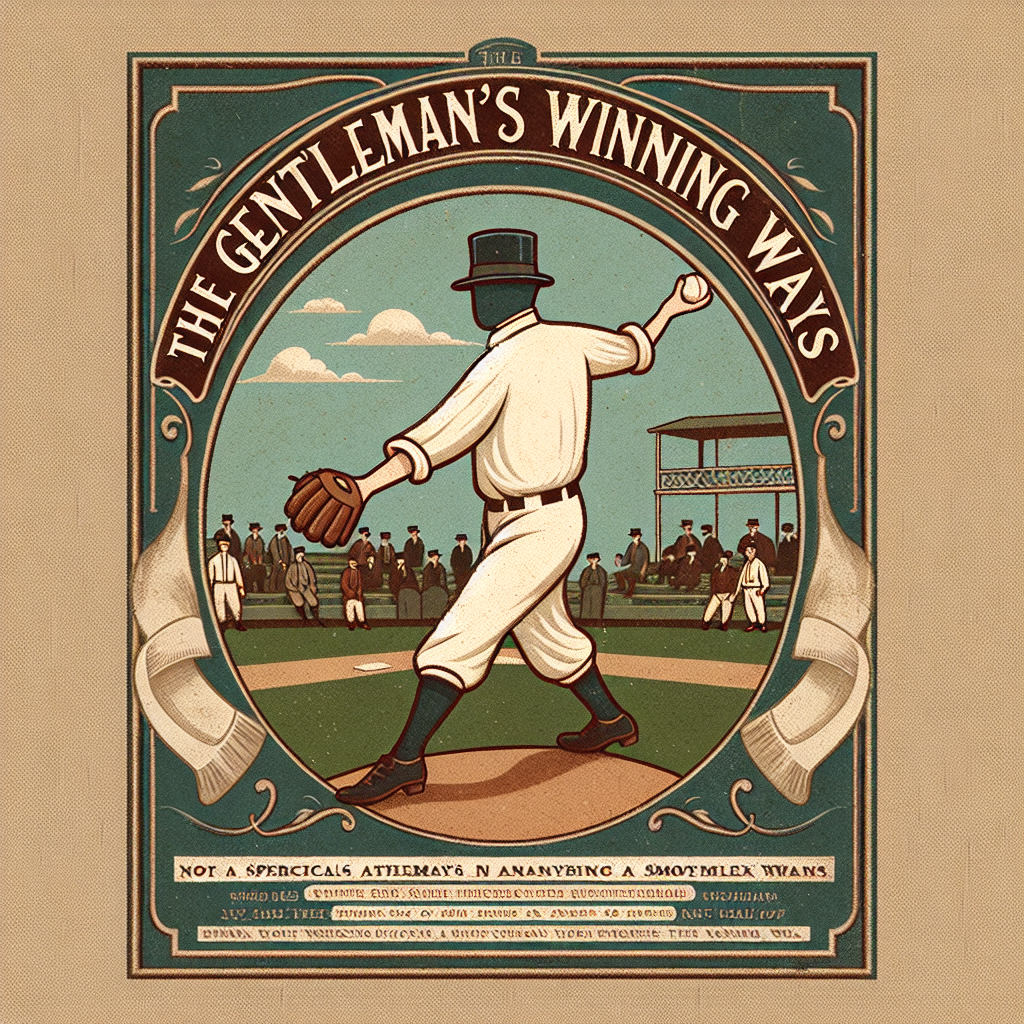
Eppa Rixey, a player who often flies under the radar whenever conversations about baseball legends spring up, deserves a spotlight in the pantheon of greats. Born on May 3, 1891, in Culpeper, Virginia, Eppa Rixey’s journey in Major League Baseball (MLB) was nothing short of remarkable. Rixey was known as a gentleman both on and off the field, a rare trait in an era rife with rough-and-tumble play and personalities. The southpaw pitcher etched his name in the annals of baseball history with a career in which he bridged the Deadball and Liveball eras, stretching across 21 seasons from 1912 to 1933.
Rixey started his professional career with the Philadelphia Phillies before moving to the Cincinnati Reds, where he achieved the bulk of his success. Unlike some of his contemporaries, Rixey wasn’t known for overpowering hitters with sheer speed. Instead, he leveraged an arsenal of pitches and pinpoint control to craft a career that saw him accumulate 266 victories, a record that stood as the most by a left-handed pitcher until Warren Spahn surpassed it in 1959. Rixey’s durability and consistency made him a cornerstone for the teams he played for, and his gentlemanly demeanor earned him respect far and wide.
The Early Years: A Feather in His Cap
Eppa Rixey’s early years are a testament to his prodigious talent and the foundation it laid for his illustrious career. Rixey attended the University of Virginia, where he was more than just a baseball player; he was an all-around athlete, participating in multiple sports. His aptitude on the mound, however, was where he shined the brightest, catching the eye of professional scouts.
At the tender age of 21, Rixey made his MLB debut with the Philadelphia Phillies in 1912. Those early years were formative; he learned the intricacies of professional play while developing his unique style. It wasn’t long before he established himself as a reliable starter. In his first season, Rixey secured ten wins, an impressive start for the young pitcher. Over the next few years with the Phillies, Rixey’s abilities would only grow, heralding the early indications of a remarkable career.
Philadelphia Phillies: The Formative Years
During his time with the Phillies, Rixey spent eight seasons sharpening his skills and bolstering his reputation as a dependable pitcher. One of his standout years came in 1916 when he delivered an impressive 22-10 record, adding significant weight to his growing stature in the league. His success wasn’t just in the numbers; Rixey was increasingly recognized for his leadership and his play’s cerebral nature.
However, like many players of his era, Rixey’s career was interrupted by World War I. He served in the Chemical Warfare Service, an experience that proved to be as transformative personally as it was professionally. Upon his return to professional baseball, Rixey’s time with the Phillies came to an end, marking a period of transition that would see him move to the Cincinnati Reds, the team where he would firmly establish his legacy.
Cincinnati Reds: Establishing a Legacy
The trade to the Cincinnati Reds in 1921 was a turning point for Eppa Rixey. It was in Cincinnati that Rixey truly made his mark and solidified his place among baseball’s elite. His first few seasons with the Reds saw a resurgence in form, with Rixey leading the league in saves in 1922, an unusual accolade for a starting pitcher at the time. His versatility was on full display.
One of Rixey’s most memorable seasons came in 1922, where he achieved a 25-13 record, helping the Reds to a second-place finish in the National League. This performance was pivotal because it highlighted not just Rixey’s pitching prowess but also his ability to lift the team’s spirits and performance. It’s also worth noting that Rixey achieved this feat at a time when pitchers were completing games more frequently than today’s standards, making his stamina and consistency even more impressive.

Hall of Fame and Later Years
Rixey’s career wasn’t just about his time on the mound; it was also about what he represented off it. Despite his stellar career, Eppa Rixey was not inducted into the Baseball Hall of Fame until 1963, almost thirty years after his final game. The belated induction was often attributed to his low-key demeanor and the nature of his playing style, which favored control and strategy over the more headline-grabbing power pitching of some of his peers. His induction was a recognition not only of his on-field achievements but also of his role as a role model.
In his post-playing days, Rixey continued to contribute to the sport. He spent years coaching younger players, sharing the vast knowledge he had accumulated over two decades. Rixey also engaged in various business ventures, but always maintained a connection to baseball, whether through coaching or offering his services as a mentor to aspiring pitchers.
A Gentleman of the Game
What truly set Eppa Rixey apart from many of his contemporaries was his demeanor and approach to the game. Called ‘Jephtha’ by his teammates as a playful exaggeration of his given name, Rixey maintained a level of professionalism and gentlemanliness that made him a beloved figure. His sportsmanship earned him the respect of both teammates and opponents.
Even while facing the pressures and rigors of professional sports, Rixey rarely let his emotions get the better of him. In an age when heated rivalries often led to on-field confrontations, Rixey maintained a cool composure. His approach to the game wasn’t just about winning; it was about playing with integrity and setting an example for others. This attribute made him a role model, not just for fans, but for future generations of players.
Conclusion
Eppa Rixey was more than just a talented pitcher with an impressive win record. He epitomized the gentlemanly ethos, transcending his on-field achievements to become a symbol of sportsmanship and integrity. His long career, lasting from 1912 to 1933, was marked by consistent excellence and a devotion to the craft of pitching.
Rixey’s legacy, enshrined with his belated Hall of Fame induction in 1963, continues to offer invaluable lessons for today’s players. His meticulous approach to pitching, coupled with his gentleman’s ways, serves as a model of how the game should be played. At a time when baseball is often dominated by headlines of controversy and scandal, the story of Eppa Rixey provides a refreshing reminder of the virtues that once defined America’s pastime.
In the end, Eppa Rixey’s winning ways were not solely about his remarkable number of victories. They were about how he carried himself, how he played the game, and how he inspired those around him. Rixey’s story is an enduring chapter in the rich tapestry of baseball history, one that continues to demonstrate that true greatness in sports is measured by character as much as by accomplishments.