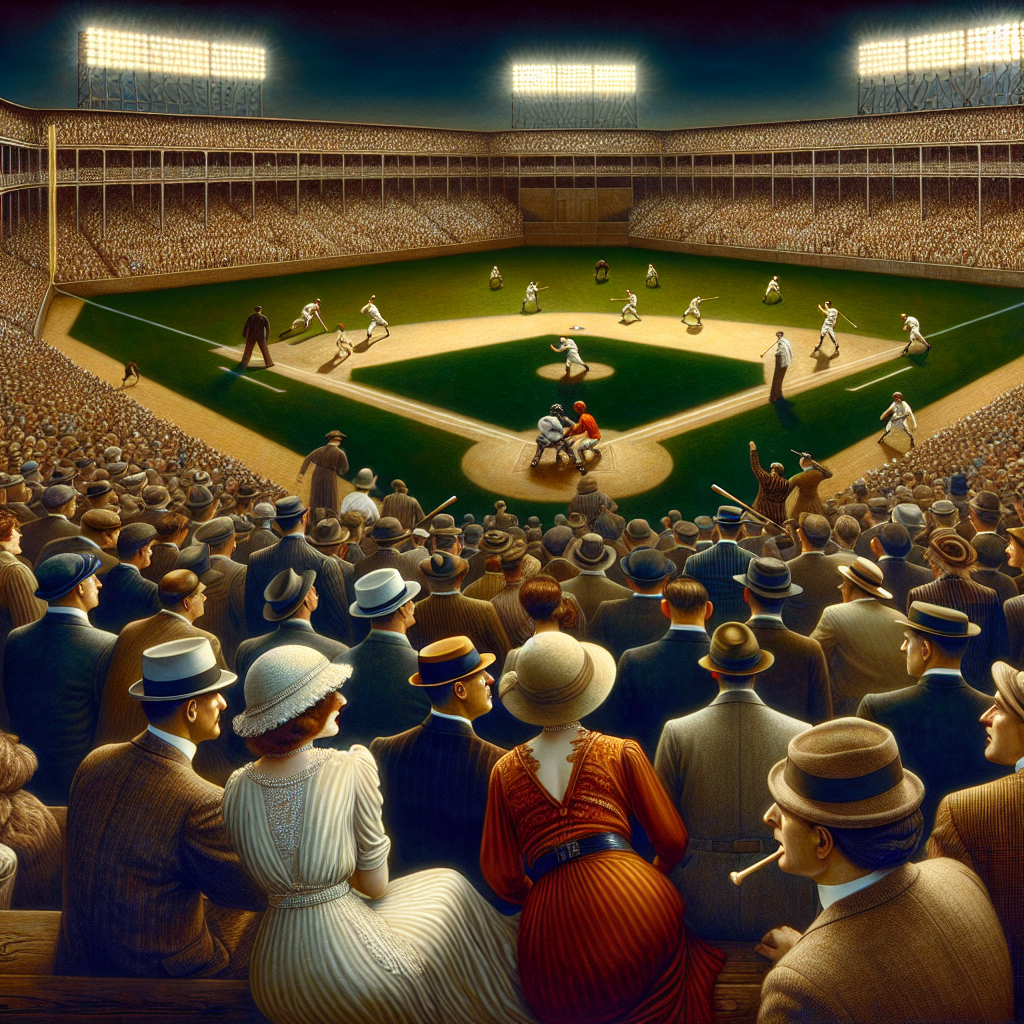
The Roaring Twenties was a period marked by profound transformation and cultural evolution across the United States. It was an age where jazz music, fashion revolutions, and technological advancements redefined everyday life. Amidst this backdrop of rapid change, baseball emerged as a unifying force that resonated with the American public. As the nation grappled with the aftermath of World War I and the economic boom of the era, baseball offered both a reflection of societal shifts and a respite from them. From urban development to racial integration discussions, baseball played a critical role, transcending the realm of mere sport to become a pivotal cultural phenomenon.
During the 1920s, urbanization swept across America. The migration from rural areas to burgeoning cities was spurred by industrial growth and new job opportunities. This shift not only changed the demographic landscape but also redefined leisure activities. Baseball, often dubbed America’s pastime, found new life within these bustling metropolises. Parks and stadiums became landmarks where diverse groups converged, fostering communal experiences centered around the game. Attendance at baseball games surged, signaling the sport’s embedded place within the fabric of urban life. Its rise mirrored society’s transition from agrarian roots to an urban future, illustrating how cultural aspects evolved alongside economic and technological progress.
Baseball as a Cultural Phenomenon
Baseball was more than just a game during this dynamic decade; it was a cultural phenomenon capturing the imagination of millions. The roaring stadiums and clinking turnstiles portrayed an undying fervor among the American public. Episodes of heroism and skill demonstrated by iconic figures like Babe Ruth further cemented baseball’s legendary status. Ruth, known for his charisma and awe-inspiring home runs, personified the excitement and unpredictability of the era.
Press coverage and radio broadcasts extended baseball’s reach beyond the city’s borders, drawing rural audiences into the fold. As radios became household staples, broadcasts united fans far and wide, turning them into passionate baseball enthusiasts. This explosion of media attention not only expanded baseball’s influence but also contributed to its mythos. Players transformed into larger-than-life characters, embodying the hopes and dreams of a society in flux. The sport’s impact on culture went beyond entertainment, influencing everyday expressions and embedding itself deeply into the cultural dialogue of the time.
The Economic Impact of Baseball
The 1920s saw economic prosperity that arrived on the coattails of industrialization and innovation. Such affluence was mirrored in the booming business of baseball. Teams began to leverage this economic shift, investing in better facilities, equipment, and talent. The construction of modern stadiums like Yankee Stadium epitomized this economic surge, setting new standards for sports venues and enhancing fan experiences.
Baseball was no longer just a game; it was a substantial industry with widespread economic implications. The commercialization of the sport was characterized by increasing ticket sales, memorabilia, and endorsements. Players became household names, commanding significant salaries, a testament to their pivotal roles in popularizing the sport. This commercialization also reflected broader economic trends, where consumerism and mass culture gained prominence. As baseball integrated into entertainment and business, it epitomized both the aspirations and consumerist tendencies of the roaring twenties, symbolizing an era defined by innovation and spending.
Baseball and Social Change
Baseball’s role extended beyond economics and entertainment into the realm of social change. At a time when the United States was grappling with deeply entrenched racial segregation, baseball provided a platform for dialogue about racial barriers. Despite the separation in Major and Negro leagues, the sport became a focal point in the larger conversation about racial equality.
The Negro Leagues, which thrived during this period, showcased remarkable talent and drew substantial crowds. Players like Satchel Paige and Josh Gibson became legends in their own right. Their remarkable performances highlighted the inequities of segregation, slowly shifting public perception and setting the stage for future integration. Though mainstream baseball would not integrate until the late 1940s, the 1920s planted seeds of change, reflecting broader currents in society seeking greater inclusivity and fairness.
The Rise of Baseball Icons
In the 1920s, baseball saw the emergence of players whose talents and personas left an indelible mark on the sport and society. Babe Ruth, considered a quintessential sports icon, redefined expectations with his record-breaking career. Ruth’s compelling personality and extraordinary talent not only catapulted him into stardom but also embodied the spirit of an era characterized by daring and novelty.
Alongside Babe Ruth were other notables like Lou Gehrig and Ty Cobb, whose prowess further enriched the game’s history. These figures transcended their on-field accomplishments, becoming symbols of ambition, resilience, and the American dream. They inspired countless others, proving that in baseball, as in life, greatness could be achieved through determination and skill. The narratives surrounding these players elevated baseball’s status as an integral part of American culture, exemplifying the aspirations and evolving identity of a nation in transition.
Baseball’s Influence on Media and Entertainment
As the 1920s progressed, baseball’s influence permeated into media and the broader entertainment industry. The sport’s presence in newspapers expanded, with dedicated sports sections featuring stories about games, players, and strategy. The burgeoning field of sports journalism brought to life the drama and intricacies of baseball, captivating readers across the country.
Moreover, films and stage productions began to depict baseball as well, drawing parallels between the sport’s narrative arcs and universal themes of triumph and defeat. These interpretations contributed to a shared cultural lexicon, further embedding baseball into the American consciousness. The cross-pollination between sports and entertainment reinforced baseball’s status as not merely a pastime, but a central narrative thread of the era. The narrative and metaphorical connections made between baseball and life’s broader lessons cemented the game’s status as both inspiration and escapism for a society navigating rapid change.
Globalization and Baseball’s Reach
As the decade unfolded, the seeds for baseball’s globalization were planted. While still primarily an American phenomenon, the sport began garnering international attention. Exhibition games, particularly those involving major league teams, introduced baseball to audiences worldwide. This in turn fostered global curiosity and appreciation for the sport.
The spread of baseball overseas in the 1920s, albeit limited, laid the groundwork for future international expansion. It illustrated the universal appeal of the game, transcending national and cultural borders. By the decade’s end, baseball had firmly established itself not just as America’s pastime, but as a burgeoning global sport, one capable of transcending its origins and resonating with diverse audiences worldwide.
Conclusion: Baseball’s Legacy in the Roaring Twenties
As the 1920s drew to a close, baseball emerged not just as a sport, but as a symbol of an era marked by change, prosperity, and complexity. The game mirrored society in its dynamism and growth, reflecting both the triumphs and tensions of the time. Baseball’s evolution during this vibrant decade encapsulates broader cultural shifts—urbanization, economic dynamics, social progress, and the rise of media and entertainment.
The legacy of baseball in the Roaring Twenties is one of transformation, marked by a growing consciousness around issues of inclusion, identity, and innovation. The sport’s formidable impact during this era laid the foundation for its role in shaping American values and identity in the decades that followed. As a microcosm of its time, baseball during the 1920s was integral in fostering a sense of community and continuity amidst societal change, leaving an enduring imprint on both the sport itself and the society that embraced it.
Frequently Asked Questions
1. How did baseball become a significant cultural aspect during the Roaring Twenties?
During the Roaring Twenties, baseball didn’t just find its place as America’s pastime; it became a cultural cornerstone that mirrored the nation’s rapidly changing landscape. This era was all about breaking out of tradition, and that’s exactly what baseball did. It was a time when cultural reforms, economic prosperity, and technological innovation were sweeping through the United States like a tidal wave. Baseball served as a microcosm of these wider societal changes. The sport itself began to evolve during this decade, with innovations in play styles and strategies, as well as growing professionalism. It reflected the broader societal shifts like the jazz age’s spontaneity and creativity.
But what truly cemented its cultural significance was the ability of baseball to unite people across divides of race, class, and geography. Stadiums became melting pots where fans from different walks of life shared in the excitement and drama of the game. Players like Babe Ruth became larger-than-life figures who exemplified the era’s ideals of success and notoriety. The radio was a newfound technology that broadcast games to the farthest corners of the country, making baseball an omnipresent force. It wasn’t just a game; it was an escapist fantasy and a shared passion at a time when people were eagerly testing new boundaries and experiences.
2. What role did economic conditions play in baseball’s popularity in the 1920s?
The 1920s, often dubbed the “Roaring Twenties,” were marked by booming economic prosperity that had a ripple effect across all aspects of American life, including baseball. With the end of World War I, the American economy soared, and people enjoyed newfound prosperity and leisure time. This economic upswing allowed many Americans to spend disposable income on entertainment, and baseball games became the perfect leisure activity.
This economic optimism allowed baseball to thrive not only as a sport but also as a business. Owners invested in bigger and more intricate ballparks, which could accommodate more fans eager to catch a game. Ticket sales surged, and ballparks became lively hubs of activity on weekends and holidays. Additionally, advertising revenues soared as companies linked their products with the game’s burgeoning stars. Concessions also found their footing, with vendors profiting from snacks and beverages sold to fans during games.
The radio also played a pivotal role in capitalizing on the economic mood. Broadcasts brought the game into living rooms across the country, allowing those who couldn’t attend in person to feel part of the baseball community. This increased exposure meant merchandising vultures and dealmakers capitalized on the popularity of baseball icons like Babe Ruth, creating an economy surrounding memorabilia and endorsements.
3. How did baseball reflect the social changes occurring in America during the 1920s?
Baseball in the 1920s was a mirror held up to the social transformation sweeping through America. The decade was marked by a realignment of societal norms – gender roles were being questioned, race relations were a daily topic, and the urban-rural divide was more pronounced than ever. In baseball, these social currents found expression and sometimes a counter-narrative.
The sport remained divided by race, with MLB staying an all-white league despite the talents emerging from Negro League teams. Negro League baseball allowed African American communities to carve out their space and identity in a segregated society, highlighting both the progress and persistent inequalities of the era. Figures like Satchel Paige and Cool Papa Bell rose to prominence, challenging preconceived notions about race and sport.
The role of women surged in baseball as well. Though it was still rare to see women on the teams creatively participating in baseball, the league saw women stepping in public roles as fans and commentators, an embodiment of the broader emancipation women were experiencing socially and politically with new rights, like voting. The sport provided a platform where changing roles and societal expectations were both reinforced and contested.
4. In what ways did technological advancements during the 1920s impact baseball?
The 1920s were a time of technological marvels, and baseball was not untouched by these advancements. Chief among these was the rise of the radio, which revolutionized how fans engaged with the game. Radio broadcasts brought the excitement of the ballpark directly into homes, cars, and local hangouts, making baseball an even more integral part of community life across the nation. It changed how the sport was consumed, making it accessible to those who lived far from major cities with professional teams.
Technology in ballparks also saw innovation. Lights were eventually introduced, though more prominently in the following decades, paving the way for night games, which made baseball more accessible to working-class fans. The introduction of improved materials for equipment enhanced player performance and safety, subtly yet significantly altering the dynamics of the game.
Furthermore, advances in transportation enabled teams to travel more quickly and efficiently across the country, leading to the expansion of leagues and competition. As players became more accessible and visible to fans in different regions, the national appeal of the sport only grew, pulling the fabric of a diverse nation a little closer together through shared baseball fever.
5. How did athletes like Babe Ruth influence baseball and society during this decade?
Babe Ruth became the embodiment of baseball’s influential power in the 1920s. Known as “The Sultan of Swat,” Ruth shattered home run records and drew massive crowds to stadiums. He wasn’t just a baseball player; he was a cultural phenomenon. His prowess on the field and charismatic personality dazzled fans and made him a household name, elevating him to a status akin to a modern-day celebrity.
Ruth’s impact went beyond just his bat swings. He redefined the style of play itself. Prior to his home run exploits, baseball emphasized strategy and finesse over power. Ruth’s long, towering home runs captivated the public’s imagination and shifted the game’s emphasis towards power hitting. His style begot a new era in baseball that prioritized the “big play,” resonating with a society that was all about going big and bold.
Outside the ballpark, Ruth’s life was equally influential. He embodied the lavish, fast-paced lifestyle of the era. Attendees at games sought to glimpse him not just for his sportsmanship but for his larger-than-life persona. His endorsements elevated players into public figures with financial clout, setting the stage for athletes to become influential cultural icons. In many ways, he symbolized the roaring optimism and excess that the 1920s are known for, intertwining his legacy with that of the nation during this transformative time.