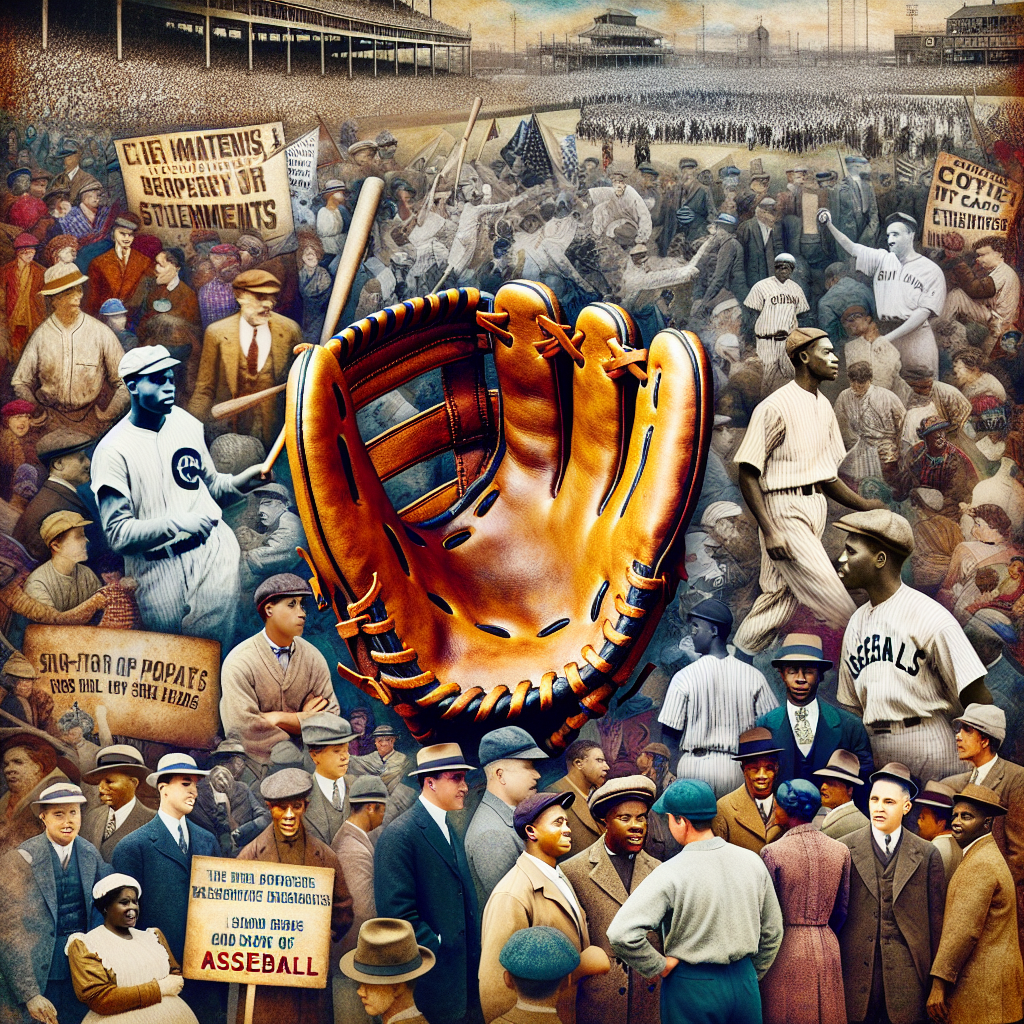
Baseball, often lauded as America’s pastime, offers more than just entertainment; it serves as a mirror reflecting societal shifts and upheavals across time. Since its official inception in the mid-19th century, baseball has been intertwined with American culture and societal development in complex ways, often spearheading or accompanying significant social movements. Far from being merely a sport, baseball has frequently acted as a prominent cultural force, capable of influencing attitudes and playing a pivotal role in societal changes.
The breadth of baseball’s societal impact can be seen throughout its rich history. From its influence on racial integration to its role in women’s empowerment, baseball has continuously mirrored the evolving social landscape of the United States. By examining key eras and events, we can better understand how baseball has served as both a catalyst for and a reflection of broader social movements. This article explores the historical relationship between baseball and societal change, highlighting notable instances where baseball significantly contributed to social movements.
Understanding baseball’s symbiotic relationship with social developments underscores its importance beyond the diamond. As the nation grappled with issues such as racial equality, gender rights, and economic hardships, baseball not only witnessed these transformations but often led by example or mirrored societal evolution in profound ways. By delving into specific historical cases, this article presents a nuanced perspective of baseball’s role in influencing and reflecting societal changes.
Baseball’s Role in Racial Integration
One of the most significant social movements impacted by baseball was the fight for racial equality. The integration of Major League Baseball (MLB) was a landmark moment in American history, symbolizing a broader move towards racial unity and equality. Before 1947, African American players were barred from MLB due to segregation laws and prejudices that permeated American society.
The groundbreaking moment came when Jackie Robinson broke the color barrier by joining the Brooklyn Dodgers. This was not just a milestone for baseball but also a monumental step in the broader civil rights movement. Robinson’s courage and talent challenged prejudiced notions and laid the groundwork for significant societal change. His successful integration into MLB helped foster an environment conducive to the civil rights advancements that followed in the coming decades. The impact of Robinson’s debut reached beyond the field, resonating deeply within communities and further motivating activists fighting against racial segregation.
Robinson’s legacy is celebrated for sparking a dialogue that transcended baseball. The courage he displayed not only strengthened the civil rights movement but also marked baseball as a pivotal arena where racial integration was visible, embedding a message of inclusivity that inspired countless Americans. As a testament to its impact, players, teams, and fans annually commemorate Jackie Robinson Day on April 15th, underscoring the timeless influence of that historic step.
Women in Baseball: Breaking Gender Barriers
Although primarily male-dominated, baseball has also played a role in the advancement of women’s rights and gender equality. The All-American Girls Professional Baseball League (AAGPBL), founded during World War II, was a significant milestone in challenging gender norms and offering women a platform to demonstrate their athletic prowess.
As many male players enlisted, leaving professional teams short-staffed, the AAGPBL provided entertainment and filled the void, establishing itself as an innovative step toward gender inclusion. The league not only allowed women to play competitively but also demonstrated to the public that women could excel in sports traditionally dominated by men. This facilitated a broader acceptance of women in sports, adding momentum to the societal push for gender equality.
The success of the AAGPBL laid the groundwork for future generations, encouraging the pursuit of equality on and off the field. The legacy of these pioneering women remains influential, inspiring modern pushes for inclusivity across various sports and industries. Today, women continue to break gender barriers, building upon the foundations set by women who excelled in the AAGPBL.

Economic Influence of Baseball
Baseball has also played a substantial role in shaping the economic landscape. Complementing its cultural and social impact, baseball’s economic influence is undeniable, as it emerged as a significant industry in its own right. The sport has fueled economic development through different avenues, from stadium construction and tourism to media rights and merchandising.
Major League Baseball teams act as economic catalysts within their cities, fostering job creation and contributing significantly to local economies. The ripple effect of baseball extends to various sectors, including hospitality, retail, and transportation. Cities hosting major baseball events often experience a surge in visitors and revenue, illustrating the sport’s substantial economic contribution.
Moreover, baseball’s revenue-generation strategies have evolved to embrace new technologies and revenue streams. Broadcast rights and digital platforms have become vital components of economic strategy, ensuring baseball’s continued financial relevance and growth. This economic dynamism reflects broader trends in the entertainment sector, with baseball remaining at the forefront of adapting to modern business landscapes, showcasing its enduring significance.
Baseball’s Response to Social Justice Issues
In the contemporary era, baseball’s impact on social movements continues, especially concerning social justice issues. Players today actively use their platform to advocate for change, echoing broader societal concerns and embodying a spirit of activism seen across professional sports.
Instances such as player protests and charity work serve as modern extensions of baseball’s historical engagement with social issues. Athletes use their influence to engage audiences on matters like racial injustice, police brutality, and equality, continuing the legacy of activism initiated in earlier eras. Major League Baseball’s commitment to diversity, equity, and inclusion programs further illustrates the league’s alignment with current social justice movements.
This modern movement showcases baseball’s role as both an influencer and reflector of social objectives. By promoting dialogue and awareness, baseball and its players contribute to ongoing conversations around vital societal issues, demonstrating an enduring legacy of advocacy and leadership.
The Evolution of Baseball’s Cultural Significance
The cultural significance of baseball in American society cannot be understated. From serving as a unifying force during times of national strife to acting as a medium for cultural exchange, baseball continually evolves as a pillar of American identity and values.
Baseball’s reach goes beyond the U.S., fostering international appeal and spreading American culture globally. The game acts as a cultural ambassador, promoting values of teamwork, competition, and resilience. Its rich past is intertwined with pivotal American experiences—from wartime bonding to immigrant adaptation—highlighting its adaptability and significance across different epochs.
The stories and legends surrounding baseball contribute to its mystique, with figures like Babe Ruth, Hank Aaron, and Jackie Robinson becoming cultural icons. Their contributions, immortalized within and beyond the sport, elevate baseball’s cultural importance, proving its status as more than mere entertainment.
Moreover, festivals, memorabilia, and media dedicated to baseball further encapsulate its pervasive cultural footprint. Through films, literature, and folklore, baseball continues to inspire, inform, and reflect cultural narratives, solidifying its place in the broader tapestry of American life.
Conclusion: The Lasting Impact of Baseball on Social Movements
As we explore baseball’s history, its role as a catalyst for societal change becomes undeniably clear. Far from being confined to fields and stadiums, baseball’s influence has permeated broader cultural, economic, and social spheres, continually reflecting and impacting significant social movements.
Historically, baseball has addressed and adapted to the needs of its society, often acting as a microcosm where the greatest societal challenges and triumphs are both mirrored and instigated. Whether breaking racial barriers, empowering women, supporting economic growth, or pushing for social justice, baseball embodies an enduring force that aligns with progressive societal evolution.
The interconnectedness between baseball and society holds poignant lessons. It reveals the potential of sports to transcend entertainment, highlighting their capacity to unite, inspire, and drive change. From past legends to present-day activism, baseball’s influence remains palpable, reinforcing its status as an essential element in America’s social fabric.
As the sport moves forward, it will undoubtedly continue to shape and reflect society’s evolving landscape, upholding its legacy as an instrument of social change and unity. For fans and historians alike, baseball’s impact on social movements remains a compelling narrative—one that underscores its profound and lasting influence on American culture and society at large.
Frequently Asked Questions
1. How has baseball historically reflected broader social movements in America?
Baseball has historically operated as much more than just a sport; it is a canvas against which the landscape of American society’s profound shifts are painted. This game has mirrored many societal changes since its formal inception in the mid-19th century. Take, for instance, the integration of baseball in the late 1940s, epitomized by Jackie Robinson breaking the color barrier in Major League Baseball (MLB) in 1947. Robinson’s entry into the all-white league was not only a vital moment in sports history but also a watershed in the broader civil rights movement. This historic feat underscored baseball’s capacity to enact change and challenge racial segregation off the field.
Moreover, during the tumultuous 1960s and 1970s, a time marked by social upheavals, baseball players became more outspoken about social issues. Figures like Curt Flood took stands against unfair labor conditions, challenging the reserve clause that bound players to teams indefinitely, which was a catalyst for the modern free agency system. Baseball, in these instances, has not only reflected societal changes but has often driven them, bridging gaps and amplifying calls for equality and justice.
2. In what ways did baseball play a role during the civil rights movement?
Baseball was a seminal platform during the civil rights movement, serving as both a symbol of integration and a battleground for racial justice. Central to this was the breaking of the color barrier by Jackie Robinson when he joined the Brooklyn Dodgers. His presence in Major League Baseball was a powerful statement against segregation and a beacon of hope for African Americans fighting for equal rights across sectors.
The sport’s integration provided a tangible example of what was possible if society embraced diversity and equality. Robinson’s experience highlighted the challenges of discrimination, but also showcased how perseverance and talent could challenge systemic racism. His courage inspired generations of individuals both within and beyond the realm of sports. The very act of integrating baseball illuminated the potential for racial integration in other areas of American life.
Additionally, black players’ successes and the slow dismantling of racial barriers in sports helped add momentum to the broader civil rights movement by proving that integrated communities could thrive when skin color was no longer a barrier to participation.
3. How did baseball respond to women’s rights movements throughout history?
The intersection of baseball and the women’s rights movement is both a story of exclusion and gradual inclusion. Historically, baseball, like many other sports, was predominantly male-dominated. Women were often relegated to the sidelines, not seen as fit to partake in the “male” world of professional sports. However, women gradually began staking their claim, mirroring the societal shifts toward gender equality.
In the early 20th century, women found opportunities in barnstorming leagues and amateur complexes, but it was during World War II that women truly came into baseball’s spotlight. With many men off fighting in the war, the All-American Girls Professional Baseball League (AAGPBL) was established. This paved the way for women to showcase their athletic prowess, gaining visibility and challenging gender norms. The league’s existence during a pivotal time of societal transformation was a testament to how women could excel in traditionally male-dominated sports.
Although the AAGPBL folded in the 1950s, it left an indelible mark on baseball’s history, showcasing that the sport could indeed be inclusive. The progress continues with women now occupying roles as coaches, executives, and even umpires, reflecting the ongoing journey for gender equality seen in society at large.
4. What impact did labor movements have on baseball?
Labor movements have had a significant impact on baseball, shaping the modern game and influencing labor rights across various industries. In the early days of Major League Baseball, players were subject to the reserve clause, which restricted their movement between teams and essentially tied them to a single team for their entire careers. This clause reflected the broader labor struggles Americans faced: lack of mobility, inadequate compensation, and unilateral power held by employers.
One of the most significant moments in baseball’s labor history was the determination of Curt Flood, a talented player who, in 1969, refused a trade, challenging the reserve clause and embarking on a legal battle that reached the Supreme Court. Although he lost the case, his actions sowed the seeds for the eventual liberation of players and the advent of free agency in the mid-1970s. Free agency transformed baseball into a more equitable industry, allowing players to negotiate their contracts and sign with teams of their choosing.
The victories achieved in baseball’s labor movements trickled down to set precedents in the labor rights landscape overall, highlighting how organized efforts and unified voices could yield significant changes in any field, shaping equitable futures for all workers.
5. How has baseball been a platform for addressing social and political issues beyond sports?
Baseball has consistently served as a platform for addressing broader social and political issues, often providing athletes with the opportunity to use their public personas to champion causes beyond the confines of the sport. Players have frequently utilized their visibility to speak on matters such as civil rights, labor rights, and equality, prominently positioning baseball as a microcosm of societal change.
Notable examples include the activism of figures like Roberto Clemente, who actively championed for Latinx and Hispanic rights and used his platform to address poverty and inequality in his native Puerto Rico. Aaron’s breaking of Babe Ruth’s home run record was not just a sports milestone but also a triumph over prejudice and racism that many African Americans faced.
In recent years, the rise of social media has further amplified the voices of baseball players, allowing them to align themselves with movements like Black Lives Matter and environmental activism. Teams have also joined efforts to bring awareness to social causes, demonstrating a shift in collective consciousness and responsibility. The platform of baseball thus transcends the realm of entertainment, underscoring the sport’s legacy as a catalyst for social awareness and change.