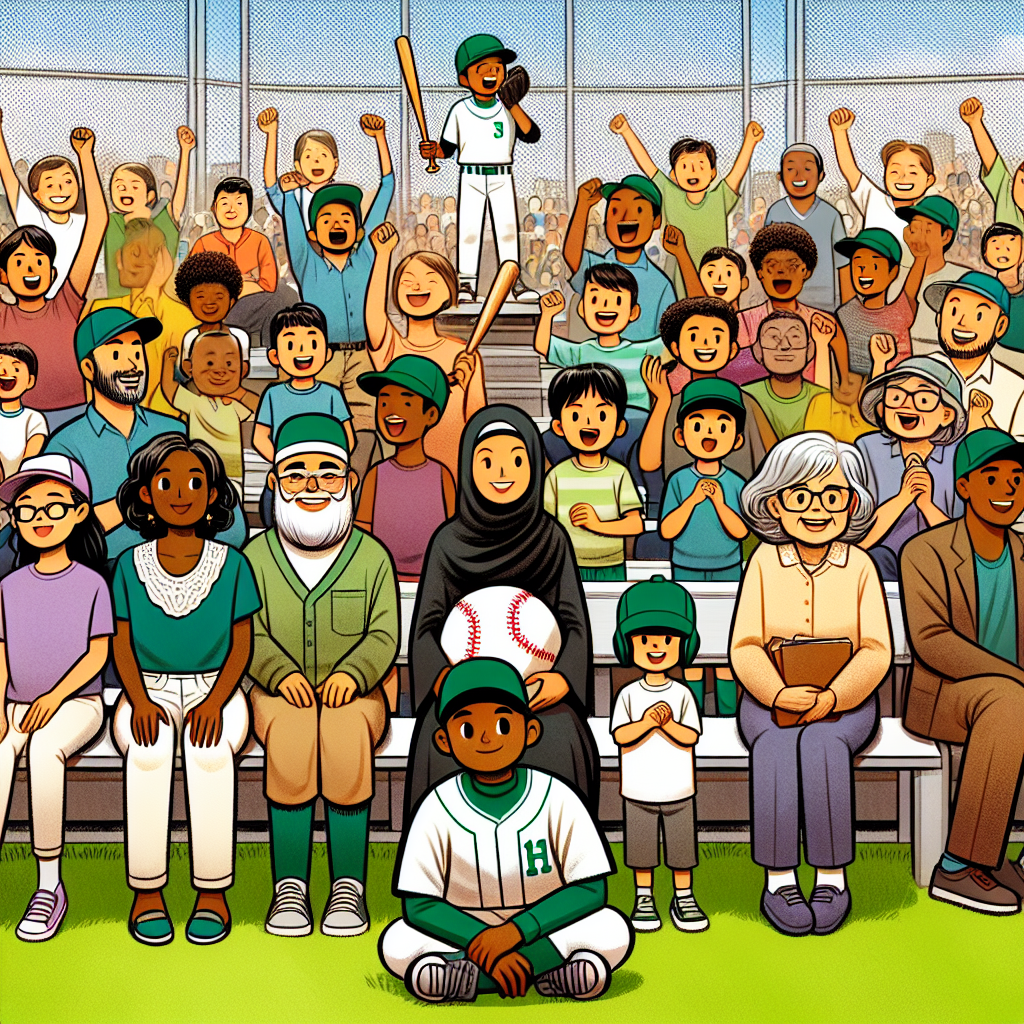
Baseball, often dubbed America’s pastime, has woven itself into the very fabric of American society, resonating with families across generations. Its roots run deep, tracing back to the mid-19th century when the game was embraced not just as a sport but as an emerging cultural phenomenon. Over time, baseball has evolved into more than just a game; it has become an integral part of American life, influencing family dynamics and cultural identities.
The sport’s connection to American families can be traced to its accessibility and the ability to bring people together. From little league games on sunny Saturday afternoons to summer nights at the ballpark, baseball has been a staple of family tradition. Families gather around the TV or radio, creating cherished memories and bonds over pitching duels and homeruns. The simplicity of the game makes it accessible to all, often serving as a first introduction to sports for many children. Its ubiquity in daily life has made baseball an enduring symbol of American culture, resonating with young and old alike.
Moreover, baseball’s impact extends beyond simply offering entertainment. It is a conduit for shared experiences and values, often mirroring the evolution of American society. Over the years, it has reflected critical social changes, including integration and acceptance. As such, the game has played a significant role in shaping family values and providing a lens through which major societal shifts are viewed and understood. The stories of legendary players who broke barriers serve as powerful narratives that inspire and unite families, reinforcing societal ideals of perseverance and equality.
Baseball’s Role in Family Dynamics
Baseball’s influence on family dynamics is profound, underscoring the sport’s ability to bridge generational divides. Across the decades, it has fostered connections between parents and children, grandparents and grandchildren, offering a shared language understood by all. Baseball provides a common ground where age differences are momentarily set aside, focusing instead on the shared enjoyment of the game. For many families, rituals such as attending a game, collecting cards, or casual catch in the backyard are essential bonding experiences that enrich family life.
Baseball also teaches life lessons that resonate within the family structure. It emphasizes teamwork, resilience, and the importance of both individual roles and collective goals. As children learn these values, they carry them into family interactions, mirroring the discipline and collaboration required on the field. Parents often find baseball a useful tool in parenting, reinforcing these values outside the confines of the diamond, contributing to holistic child development.
At the community level, neighborhood teams and leagues foster social interaction and community bonding, strengthening familial ties. As families rally behind their local teams, they engage with their neighbors, building a support network grounded in shared enthusiasm. This communal approach enhances the sense of belonging and solidarity among families, exemplifying baseball’s capacity to unite diverse groups over a shared passion.
Baseball and Tradition
The tradition of baseball in the American family is storied and robust. It serves as a bridge between past and present, with each generation adding to a tapestry of memories and experiences. The game has an unparalleled ability to evoke nostalgia, whether through the crack of the bat, the sight of a perfectly maintained diamond, or the announcer’s familiar call. These sensory triggers transport us back to our earliest experiences with the game and the family members who introduced us to it, often those who have passed on.
In its purest form, baseball is a ritualistic experience. It is marked by consistency and repetition—hallmarks of family traditions. The year’s rhythm revolves around the baseball season, starting with spring training and culminating in the World Series. Families mark these events in their calendars, gathering to watch games, predict scores, and celebrate victories. Such consistency gives life structure, weaving traditions that are handed down, forming threads that connect generations.
This transfer of tradition is not just about the game itself but the shared time and experiences it facilitates. For many families, baseball represents more than a pastime; it is a living heritage enriched with personal and cultural significance. By engaging with baseball, families continue a dialogue with history, honoring the paths tread by ancestors while simultaneously making new memories that are unmistakably their own.

Baseball’s Influence on Cultural Identity
Baseball plays a crucial role in shaping and expressing cultural identity within the American family. The diversity of the game’s players and fans reflects the multicultural tapestry of the United States itself. Each player’s journey—from international stars to hometown heroes—offers a narrative that highlights different cultural backgrounds and experiences, resonating with families who see their own stories in these broader arcs.
For immigrant families, baseball has often served as an avenue for integration and assimilation into American society. The game offers a common ground where language and cultural barriers are momentarily set aside. Families new to the country find comfort in the universality of baseball—a sport whose simplicity and excitement transcend linguistic divides, offering a path to connection and acceptance. The shared passion of the fans creates a powerful sense of community, providing new Americans with an entry point into the wider social conversation.
Baseball’s representation of American ideals—from the perseverance of Jackie Robinson breaking racial barriers to the enduring spirit of players who rise above personal adversities—serves to reinforce family identities. It tells stories of hope, struggle, and triumph that parallel family histories, crafting a narrative that grounds cultural identity firmly within the American spirit.
Modern Challenges and Opportunities
While baseball remains ingrained in American culture, the modern family faces new challenges in maintaining this tradition. With the fast-paced nature of contemporary life and the proliferation of digital entertainment options, baseball competes for attention with various other pursuits. Ensuring the sport remains relevant and engaging to younger generations is vital to preserving its role within the family construct.
Baseball organizations have responded to these challenges by embracing technology, seeking innovative ways to connect with a digital audience. Interactive platforms and apps enable families to engage with the sport in new, dynamic ways. From fantasy leagues to virtual game experiences, technology provides opportunities for families to remain involved even when physically distant from the ballpark.
Moreover, baseball’s efforts to reach a global audience enhance its relevance. By attracting international talent and fans, the sport continues to evolve, providing fresh narratives and excitement that appeal to diverse generations. The internationalization of the game offers American families an opportunity to partake in a global community, sharing their baseball traditions while learning from others around the world.
The Enduring Legacy of Baseball
Despite modern challenges, baseball’s legacy within American families persists, demonstrating its resilience and adaptability. Its symbolism as a timeless sport reflects unwavering values—family, unity, and tradition. These attributes draw families together, offering solace in familiarity amidst ever-changing societal landscapes.
The stories that families recount about baseball often go beyond scores and statistics. They recount tales of cherished gatherings, memorable performances, and the life lessons learned through the sport. These narratives shape family identities, embedding baseball into the collective memory, where it occupies a revered space as both tradition and legacy.
In essence, baseball’s personal and cultural significance is indelibly etched into the history of American families. As new generations emerge, families face the task of ensuring that this rich heritage is passed down. Encouraging participation, emphasizing shared experiences, and celebrating baseball’s role in forming cultural connections remain central to sustaining baseball’s legacy within the family framework.