
The 2002 Anaheim Angels season stands out as a remarkable chapter in Major League Baseball history. Overcoming numerous challenges and long odds, the Angels embarked on an unforgettable journey characterized by extraordinary performances and the magical rally monkey phenomenon that captured the hearts of fans. For a team with historically low expectations, their 2002 season turned into a fairy tale full of dramatic twists and memorable moments. This article dives deep into that incredible season, exploring the key figures, pivotal games, and the unprecedented charm that led the Anaheim Angels to their first-ever World Series title.
Setting the Stage: Pre-season Struggles and Roster Adjustments
Entering the 2002 season, the Anaheim Angels were not on many people’s radar as potential champions. The team had endured a disappointing 2001 campaign, finishing with a record of 75-87. Morale among the fans was low, and expectations for the new season were tempered. However, the front office made several key roster adjustments intended to bolster the team’s chances.
General Manager Bill Stoneman, along with field manager Mike Scioscia, worked diligently during the off-season to assemble a competitive team. They focused on bolstering the pitching staff, adding vital players such as Kevin Appier and Aaron Sele. The aim was clear: build a reliable rotation and improve the bullpen. Additionally, an emphasis was placed on solidifying the lineup with the additions of free agents like Brad Fullmer.
Despite these strategic moves, skepticism remained. Pundits questioned whether the Angels had done enough to challenge the dominant teams in the American League. Yet, the members of the roster, familiar faces and new additions alike, were determined to make their mark. Spearheaded by the leadership of players such as Garret Anderson and Troy Glaus, the team vowed to prove the doubters wrong and change the narrative surrounding the franchise.
The Early Season Grind
As the 2002 season commenced, the Anaheim Angels faced tough competition right from the get-go. April brought mixed results, with a record that positioned them mid-pack within the AL West. The inconsistency seen in the early games raised concerns, but the team’s resilience began to shine through. The month of May saw a substantial turnaround.
The Angels began to find their rhythm as various players stepped up in key moments. Tim Salmon, popularly known as “King Fish,” started delivering clutch performances that sparked crucial wins. Meanwhile, the bullpen began to solidify, with Brendan Donnelly emerging as a reliable force in late-inning situations.
What set this team apart was their collective ability to grind through challenging situations. The grittiness displayed on the field mirrored the backroom efforts of the coaching staff, who relentlessly worked on strategy and player development. The budding confidence and chemistry cultivated within the clubhouse started translating into a growing sense of belief among the fanbase.
The Midseason Surge: A Team Coalescing
By midseason, it was apparent that the 2002 Anaheim Angels were a force to be reckoned with. The team went on a red-hot streak during the summer months, riding the waves of improved performances across the board. Stars emerged, but it was the collective team effort that stood out.
Garret Anderson’s bat sizzled through July and August, bolstering an offensive lineup that also saw contributions from David Eckstein and Darin Erstad. Anderson’s ability to come through in high-pressure situations was particularly noteworthy, making him a pivotal figure in the Angels’ success.
The pitching staff continued to deliver exceptional outings. Jarrod Washburn, anchoring the rotation, consistently shut down opposing lineups. The emergence of Francisco Rodriguez, later affectionately known as “K-Rod,” added a devastating weapon to the bullpen. The young rookie showcased a lightning-fast arm accompanied by composure beyond his years.
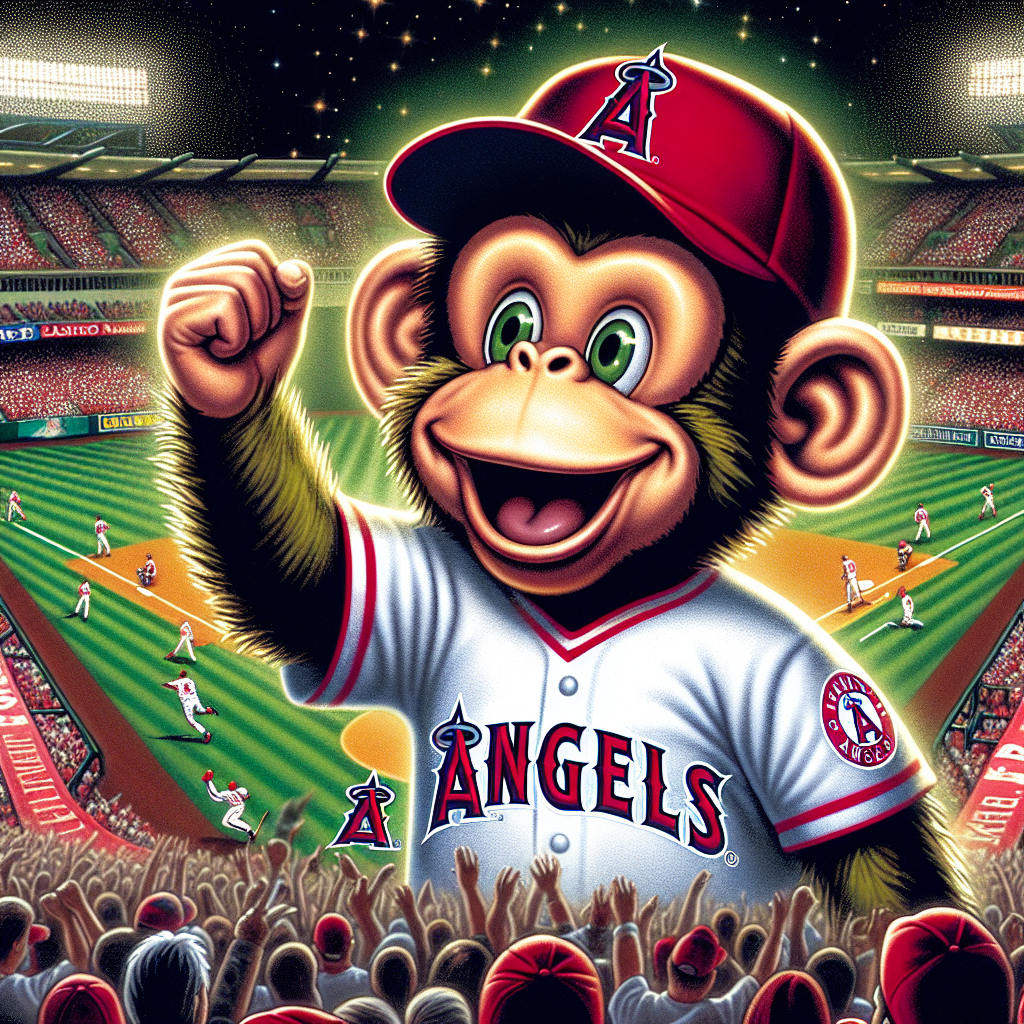
During this period, a lighthearted but eventually iconic symbol of the Angels’ season emerged—the Rally Monkey. Originally shown on the Angel Stadium jumbotron to incite energy and cheers, the mascot quickly became a rallying symbol. The team’s success often coincided with appearances of the Rally Monkey, turning it into a fan favorite and a good luck charm synonymous with the 2002 campaign.
Postseason Bound: Clinching the Playoffs
As the regular season drew to a close, the Anaheim Angels had amassed a record that garnered them a spot in the postseason. Their final regular-season tally of 99-63 was a remarkable turnaround from the prior year’s mediocrity, and it cemented them as one of the formidable contenders in the playoffs.
The road to the playoffs was not without its dramatic moments. A pivotal series against the Texas Rangers, where every win was crucial, highlighted their determination. Game after game, the Angles found ways to win, often in thrilling, come-from-behind fashion. The clubhouse atmosphere brimmed with optimism and unwavering belief.
The LA area began to buzz with excitement as the postseason approached. Fans who had long suffered from heartbreaks and near-misses felt a renewed sense of hope. The Rally Monkey continued to energize the crowd, symbolizing the undying spirit of the team. It was clear that this squad was unlike any previous Angels team.
October Glory: The Path to the World Series
The postseason journey for the Anaheim Angels began with the Division Series against the formidable New York Yankees. Experts predicted a difficult series for the Angels, but the team proved its mettle by winning the best-of-five series 3-1. The highlight came in Game 4 when the Angels exploded for eight runs in the 8th inning, overcoming a late-game deficit in a way that epitomized their resilient spirit.
Advancing to the American League Championship Series (ALCS), the Angels faced off against the Minnesota Twins. This series, marked by tension and exhilarating plays, was ultimately won by the Angels in five games. Adam Kennedy’s remarkable performance in Game 5, where he hit three home runs, became a legendary moment in Angels’ lore.
With the Twins out of the way, the stage was set for the World Series. The Angels would face the San Francisco Giants, a formidable opponent with a potent lineup led by Barry Bonds. The build-up was intense, with anticipation at an all-time high among the fans as the Angels prepared to make their bid for their first World Series title.
The World Series: A Classic Battle
The 2002 World Series between the Anaheim Angels and the San Francisco Giants is considered one of the most thrilling Fall Classics in recent history. The series extended to a full seven games, providing dramatic and memorable moments along the way. The first few games saw alternating wins, setting the stage for a climactic finale.
Game 6, often remembered as the turning point, featured a stunning comeback by the Angels. Down 5-0 in the 7th inning, the Angels rallied to score six runs in the last three innings, clinching a 6-5 victory. Scott Spiezio’s crucial three-run homer remains an iconic moment, epitomizing the team’s never-quit attitude.
The decisive Game 7 did not disappoint. Behind strong pitching from rookie John Lackey and key hits from Garret Anderson, the Angels secured a 4-1 victory. The final out was a ground ball to shortstop David Eckstein, triggering a celebration that erupted both on the field and across Anaheim. The Angels were crowned World Series champions for the first time in franchise history.
Conclusion: The Legacy of the 2002 Anaheim Angels
The triumph of the 2002 Anaheim Angels remains a profoundly inspirational story within the annals of Major League Baseball. It is a testament to perseverance, teamwork, and the magic that can emerge when a group of players comes together with a shared purpose. From pre-season doubters to the exhilarating highs of October, the Angels’ journey encapsulated all that is beautiful about the game of baseball.
Beyond the statistics and records, it is the stories of individual heroics and collective grit that define the legacy of this team. Players like Troy Glaus, Garret Anderson, and Francisco Rodriguez etched their names in baseball history, while the influence of Mike Scioscia’s leadership cannot be understated. The Rally Monkey continues to be a cherished memory, symbolizing the indomitable spirit of the 2002 Angels.
The impact of that season extends beyond the diamond. It revitalized a fanbase and created an enduring connection between the team and its supporters. The victory parade, attended by thousands, showcased the deep communal pride and joy shared by the city of Anaheim and Angels fans everywhere.
Frequently Asked Questions
1. What was the ‘Rally Monkey Magic’ that became synonymous with the 2002 Anaheim Angels?
The ‘Rally Monkey Magic’ became an iconic symbol of hope and inspiration for the 2002 Anaheim Angels. This quirky yet endearing phenomenon began when a video clip of a monkey jumping as a sign for fans to rally was played on the stadium scoreboard. As the Angels found themselves trailing during games, the sight of the rally monkey video would electrify the crowd, invoking a palpable surge of energy and belief. This monkey quickly transformed into a symbol of perseverance and unity, embodying the Angels’ underdog spirit. The rally monkey gained cult status and had a charmed life of its own, appearing on merchandise and even in fans’ chants. It became an essential part of the Angels’ narrative and an emblematic representation of their miraculous season.
2. How did the Anaheim Angels defy expectations during the 2002 season?
The 2002 Anaheim Angels defied expectations in numerous ways, launching a campaign that nobody saw coming. The team had historically been overshadowed by other more successful franchises and had not been viewed as serious contenders. However, the Angels embraced their underdog status, turning skepticism into fuel for a remarkable journey. Managed by Mike Scioscia, the team’s resilience was evident throughout the season, led by strong performances from stars like Troy Glaus, Garret Anderson, and rookie standout John Lackey. The Angels reflected excellence both offensively and defensively, executing a style of play that capitalized on their strengths and focused on teamwork over individual accomplishments. Their persistence paid off with a playoff berth and ultimately led them to a World Series victory against the San Francisco Giants, a series remembered for its extraordinary comebacks and sheer determination.
3. What were some key moments in the Angels’ 2002 postseason run?
The 2002 postseason was packed with key moments that highlighted the Angels’ pathway to triumph. In the ALDS, the Angels faced the formidable New York Yankees and surprisingly triumphed in four games. A particularly memorable moment came in Game 3 when the Angels battled back from a deficit to win, turning the tide of the series. In the American League Championship Series (ALCS), they squared off against the Minnesota Twins. Game 5 was crucial, as Adam Kennedy’s improbable three-home-run performance secured the Angels an improbable victory, sending them to the World Series. The World Series itself was a theater of high drama, with Game 6 serving as one of the most critical points. Down 5-0 in the seventh inning, the Angels staged an incredible comeback, eventually seizing the game and the momentum to clinch the championship in Game 7. Each moment was defined by grit, teamwork, and a hint of rally monkey magic.
4. How did the fans react to the success of the 2002 Anaheim Angels?
Fans of the Anaheim Angels were overwhelmingly supportive and ecstatic throughout the 2002 season. The emergence of the rally monkey as a talismanic figure, combined with the team’s dramatic performances, galvanized a passionate fanbase that became an integral part of the team’s success. There was an ethos of belief and camaraderie that extended beyond just the players. Fans filled Edison International Field (now Angel Stadium) with a sea of red, their roaring cheers and chants echoing the rallying spirit of the team. The final victory in the World Series sparked a massive celebration in Anaheim and beyond, with Angels fans finally getting to revel in the joy of a championship that had eluded the franchise since its inception. For fans, the 2002 Angels were more than just a team; they embodied a dream realized, one that resonated with the community and left an enduring legacy.
5. What impact did the 2002 season have on the future of the Anaheim Angels?
The 2002 season significantly impacted the future trajectory of the Anaheim Angels, reshaping perceptions of the franchise and instilling a winning culture. This championship season elevated the Angels’ profile within the MLB, attracting a new generation of fans and giving the team a stronger presence both locally and nationally. The success solidified Mike Scioscia’s reputation as a strategic mastermind and underscored the importance of a cohesive, teamwork-oriented approach to baseball. Corporate interest and investment in the team increased as the Angels transitioned into a new era with greater resources and fan engagement. The echoes of their World Series victory in 2002 continued to inspire subsequent Angels teams, embedding a belief that success is attainable with resilience and unity. The rally monkey magic from that incredible year remained a beloved part of the Angels’ lore, often invoked in moments of need to recall the triumphs of 2002.