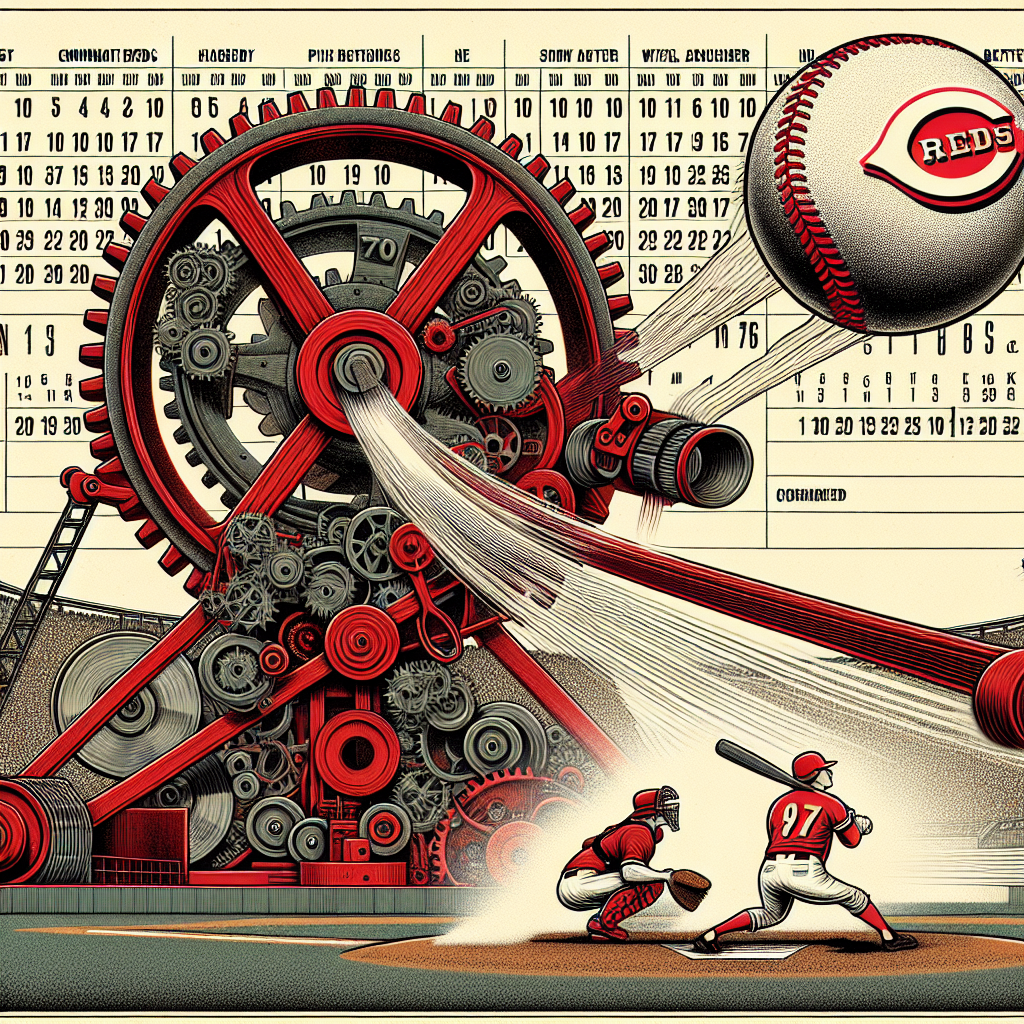
Baseball in the 1970s witnessed a force unlike any other in Major League Baseball (MLB) history: the Cincinnati Reds, famously known as “The Big Red Machine.” This team didn’t just play baseball; they orchestrated a symphony of speed, precision, and power. Their impeccable coordination and talent made them an unstoppable force, redefining the game and leaving an indelible mark on the sport’s history. From their dazzling offense to their airtight defense, the 70s era Reds were the epitome of excellence and teamwork.
The legendary Big Red Machine comprised of players who are now enshrined in baseball’s Hall of Fame and witnessed numerous record-breaking moments that still echo through ballparks today. Their dominance wasn’t a flash in the pan but a well-calibrated machine running at full steam year after year. Let’s explore this legendary roster, their exceptional stats, and the unforgettable moments that define the Cincinnati Reds’ golden era of the 1970s.
The Star-Studded Line-Up
The core of the Big Red Machine was its roster, an unmatched assembly of talent and skill. Johnny Bench, the indomitable catcher, electrified fans with his powerful swings and unparalleled defense. Bench’s ten Gold Glove Awards and 389 home runs highlight a career that set new standards for catchers.
Then there was Pete Rose, “Charlie Hustle,” whose relentless pursuit of excellence and versatility across the field made him a cornerstone of the Reds’ success. Rose’s 4,256 career hits remain a testament to his consistent generational performance.
Joe Morgan, the diminutive second baseman, brought a blend of speed and power that was seldom seen. His two MVP awards and ten All-Star selections underscore his impact on the game.
Alongside them was Tony Pérez, whose clutch hitting endeared him to the Cincinnati faithful, and Dave Concepción, whose defensive wizardry at shortstop solidified the Reds’ infield. This formidable line-up synergistically created an unbreakable unit that consistently delivered high performance on the field.
Offensive Prowess
The Reds’ offensive juggernaut was a marvel of the 1970s. In 1975 and 1976, the Reds notably dominated the National League by leading in runs scored, batting average, and other critical offensive metrics. The Reds’ 1976 campaign, in particular, saw them score 857 runs, the most in the league, while achieving an astounding .280 team batting average.
What made their offense so daunting was not just the sheer power but also the strategy and intelligence behind each play. Walks, stolen bases, and hit-and-run tactics were part of an orchestrated effort to keep the opposition guessing and runners moving. This intelligence was perfectly embodied by Joe Morgan, who, despite his size, consistently reached base with his keen batting eye and speed.
The Reds’ ability to adapt and focus depending on the situation made them an offensive force which other teams found incredibly challenging to counter. They weren’t just one-dimensional sluggers but a well-rounded, versatile offensive group that could win games in multiple ways.
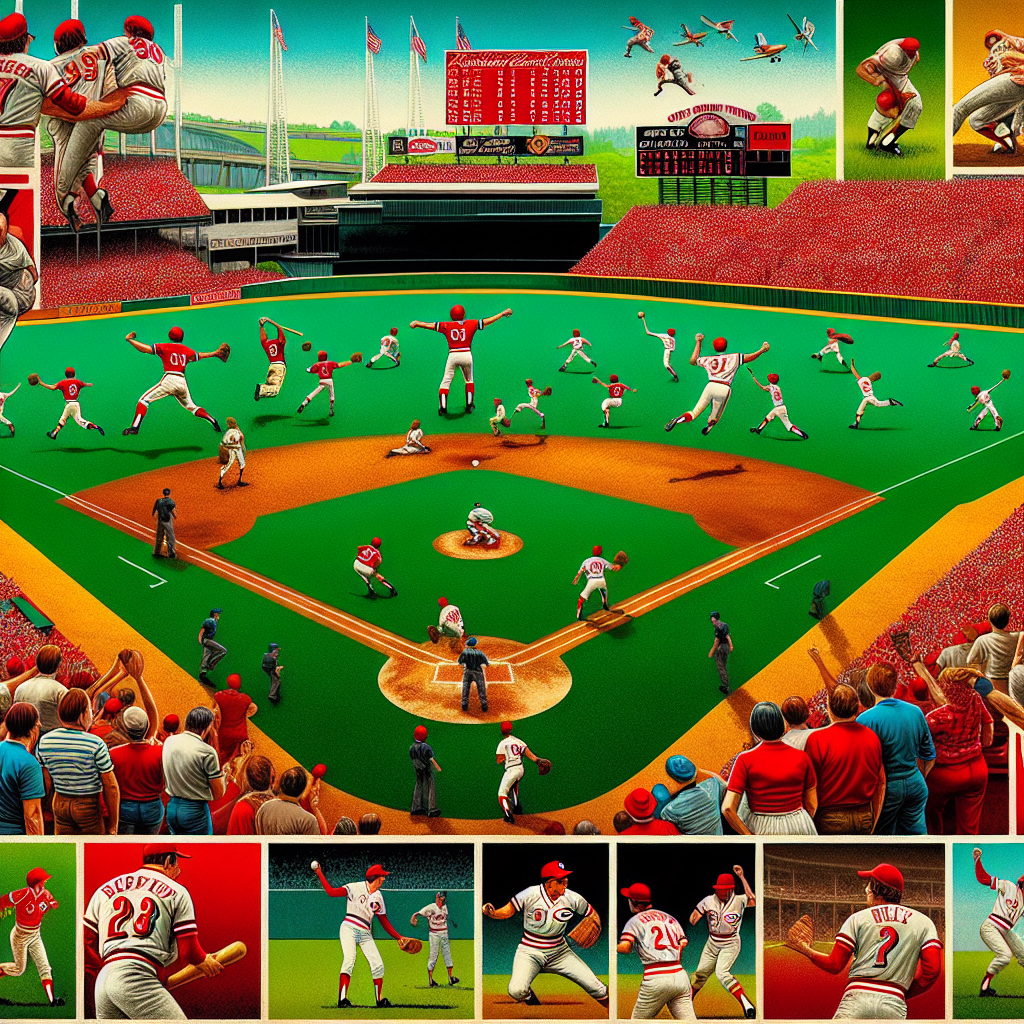
Pitching and Defense: The Unsung Heroes
While the batting prowess of the Big Red Machine often takes center stage, their pitching and defense played a pivotal role in their dominance. The pitching staff, led by stalwarts such as Jack Billingham, Don Gullett, and Clay Carroll, provided the consistency and reliability needed to support the high-powered offense.
Billingham’s control and poise on the mound, combined with Gullett’s blazing fastball and fierce competitiveness, gave the Reds formidable options every time it was their turn in the rotation. In the bullpen, Rawly Eastwick and Pedro Borbón locked down games with regularity, providing crucial holds and saves.
Defensively, the Reds were practically airtight. The duo of Joe Morgan and Dave Concepción up the middle was a nightmare for base runners. Their combined range and glove work curtailed countless hits from becoming runs. George Foster’s presence in the outfield, along with Cesar Geronimo, added an extra layer of defensive security.
The synergy between pitching and defense culminated in 1975 and 1976, with the Reds statistically ranking among the league leaders in defensive efficiency, demonstrating that they were a complete package that excelled in all facets of the game.
The Glory Years: 1975 and 1976
The peak of the Big Red Machine’s dominance occurred during consecutive World Series championships in 1975 and 1976, etching their names as one of the greatest teams of all time. The 1975 World Series, a seven-game classic against the Boston Red Sox, is often hailed as one of the best in history.
Game 6, in particular, remains iconic, featuring Carlton Fisk’s dramatic, game-ending home run. However, it was the resilience and relentless effort of the Reds that eventually secured them the championship in a nail-biting Game 7. Johnny Bench, Pete Rose, and Joe Morgan all played pivotal roles, showcasing their clutch performances under pressure.
The 1976 season may have been even more impressive, as the Reds went a perfect 7-0 in the postseason, sweeping the Philadelphia Phillies in the National League Championship Series (NLCS) and the New York Yankees in the World Series. The crowning moment saw Johnny Bench delivering with his MVP-winning performance, capping off the season in style.
This back-to-back World Series triumph cemented the legacy of the Big Red Machine and underscored the team’s dominance in that era, marking them as not just champions but legends of the game.
Post-1976: The Gradual Decline
After the euphoric highs of 1976, the inevitable decline began for the Big Red Machine. The departure of key figures, age catching up with others, and the introduction of free agency all took their toll. The 1977 season saw the Reds still competitive but not quite at the supreme levels of previous years. Despite winning 88 games, they finished second in the NL West, behind the Los Angeles Dodgers.
The following years saw the departure of Tony Pérez and Pete Rose, two cornerstones of the team, and the gradual erosion of the dominant core that had propelled them to greatness. New players came and went, but the magic of the mid-70s began to fade.
By the early 1980s, the Big Red Machine, as it was known in its peak, had transitioned into a new era. The team experienced a mix of rebuilding phases and occasional playoff pushes but never recaptured the same dominance.
Yet, despite this decline, the impact of the Big Red Machine on baseball remained indelible. The strategies, teamwork, and individual brilliance of the 70s era Reds continued to influence the game and how teams were built and played.
The Legacy of the Big Red Machine
The legacy of the Big Red Machine extends far beyond their record-breaking moments and championships. They changed the way baseball was played and perceived. The blend of power, speed, and defensive expertise they exhibited set a new blueprint for constructing championship-caliber teams.
Their legendary status is cemented not just in their statistics but in the memories of fans who witnessed their greatness. Ark Sparked many future athletes’ love of the game, their influence can be seen in the Hall of Fame, where many of their stars have been enshrined, and in the respect they receive from players and analysts to this day.
The Big Red Machine also left an indelible mark on Cincinnati itself. The city, often overshadowed by larger markets, reveled in the success of their team, and the 1970s remain a golden era for Reds fans. The team’s commitment to excellence and teamwork reflects in the continued fan support and pride associated with the Reds franchise.
Conclusion
The Big Red Machine of the 1970s wasn’t just a dominant baseball team; they were a cultural phenomenon that captured the essence of what makes sports thrilling and inspiring. Their consistent excellence, ability to perform in the clutch, and the harmonious synergy among their players set them apart as a unique chapter in baseball history.
From the high-octane offense led by future Hall of Famers, to the pitching prowess and defensive brilliance, the Reds set out to achieve greatness and did so with flair and determination. The back-to-back World Series victories in 1975 and 1976 were crowning achievements that enshrined them in the annals of baseball lore.
Though the golden era of the Big Red Machine faded into history, its legacy continues to inspire and captivate. They represent an ideal—a perfect fusion of talent and teamwork that every subsequent team strives to emulate. As we look back, the Big Red Machine remains a perfect snapshot of baseball at its best, a testament to the heights that dedication, strategy, and sheer talent can achieve.