The Introduction of Baseball to Japan
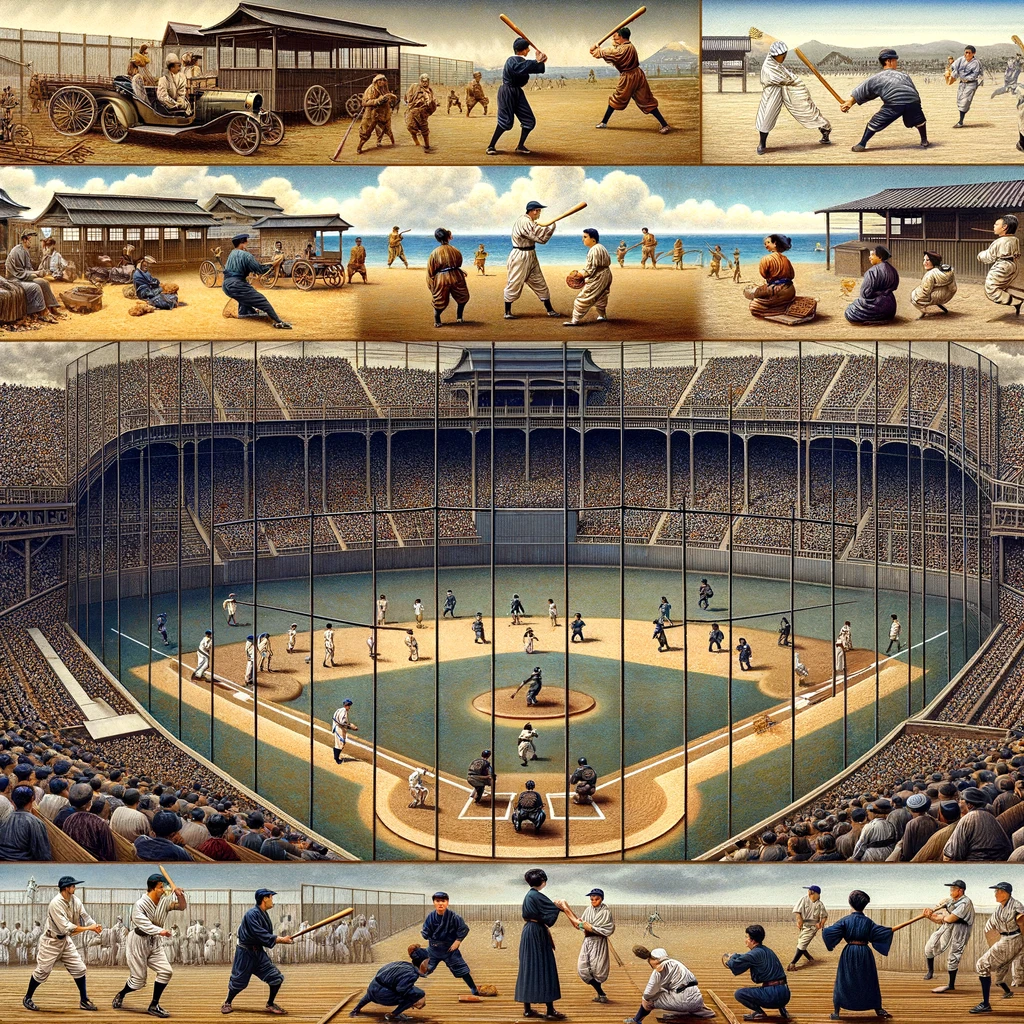
Baseball, a sport deeply rooted in American culture, found its way to the shores of Japan during the Meiji era, a period of cultural enlightenment and Westernization from 1868 to 1912. Introduced by American educators, notably Horace Wilson, a teacher in Tokyo, baseball quickly resonated with the Japanese spirit, intertwining with the country’s societal transformation. The appeal of baseball in Japan during the Meiji period can largely be attributed to its alignment with the government’s push for modernization. Embracing baseball was seen as a step towards adopting Western practices and ideologies, thus fostering a spirit of perseverance and teamwork among the Japanese youth. By the late 19th century, baseball had become a fixture in Japanese colleges and universities, laying the foundation for a deeply-rooted baseball culture.
Early Development and the University Leagues
The early development of baseball in Japan saw the formation of university teams, which played a crucial role in popularizing the sport. Keio University and Waseda University, two of Japan’s most prestigious institutions, were among the first to establish baseball teams. Their rivalry, known as the Sokeisen series, began in 1903 and became a cornerstone of early Japanese baseball, drawing large crowds and increasing the sport’s visibility. This period also witnessed the establishment of baseball leagues within Japanese universities, which significantly contributed to improving the level of play and organizing the sport. By promoting competitions and fostering talent, university baseball became a seminal part of Japan’s baseball landscape, often serving as a stepping stone to professional careers in the sport.
The Birth of Professional Baseball
The transition from amateur to professional baseball in Japan was a pivotal moment in the sport’s history. In 1934, a watershed event occurred when a team of American All-Stars, featuring the legendary Babe Ruth, toured Japan, playing exhibition games against Japanese teams. This tour was immensely popular and is credited with inspiring the creation of the first professional baseball league in Japan. In 1936, the Japanese Professional Baseball League (JPBL) was established, consisting of initially six teams. The league was divided into two divisions in 1950, forming the structure that would evolve into Nippon Professional Baseball (NPB), comprising the Central League and the Pacific League. This professionalization marked a new era in Japanese baseball, providing a platform for showcasing local talent and fostering a deeper connection with the sport among the Japanese populace.
The Post-War Era and the Growth of Nippon Professional Baseball
The post-war era heralded a golden age for baseball in Japan, as the nation turned to sports as a means of recovery and unity. Nippon Professional Baseball, in particular, emerged as a symbol of hope and resilience, playing a significant role in lifting the spirits of the Japanese people. The 1950s and 60s are often regarded as a period of rapid growth for professional baseball, with the sport achieving unprecedented levels of popularity. Teams like the Yomiuri Giants, managed by the iconic Shigeo Nagashima and later featuring the home run king Sadaharu Oh, began to dominate the league, capturing the imagination of fans across Japan. The Giants’ success helped propel baseball to the forefront of Japanese sports, making it a staple of national identity.
The Role of High School Baseball
Parallel to the professional scene, high school baseball in Japan has commanded a significant following. The National High School Baseball Championship, commonly known as Koshien, after the stadium where it is held, is a nationwide tournament that has taken place annually since 1915 (with interruptions only due to major events like World War II). Koshien represents more than just a competition; it symbolizes the pursuit of excellence, discipline, and teamwork. It has become a cultural phenomenon, capturing the country’s attention and highlighting the deep emotional connection many Japanese have with baseball.
Baseball in Contemporary Japan
Today, baseball remains one of Japan’s most popular and influential sports, deeply embedded in the country’s culture and society. The Nippon Professional Baseball league continues to thrive, with teams enjoying fervent support from fans across all age groups. Japanese players have also made significant inroads in Major League Baseball (MLB) in the United States, further elevating the profile of Japanese baseball on the global stage. Figures like Ichiro Suzuki, Hideki Matsui, and more recently Shohei Ohtani, have become international ambassadors of the sport, showcasing the high level of talent developed in Japan. The success of the Japanese national baseball team in international competitions, including the World Baseball Classic, has also contributed to the sport’s prominence. These achievements underscore the global competitiveness of Japanese baseball and its continuing evolution as a powerhouse in the sport.
The Cultural Impact of Baseball in Japan
The impact of baseball in Japan extends beyond the diamond. It has influenced Japanese culture in various ways, fostering a sense of community, perseverance, and pride. Baseball manga and anime, such as “Touch” and “Diamond no Ace,” have become cultural staples, inspiring future generations of players and fans. Moreover, the sport’s emphasis on discipline and teamwork reflects broader societal values, making its integration into Japanese life seamless and profound. Baseball’s journey in Japan, from its introduction in the Meiji era to its current status as a beloved pastime, is a testament to the sport’s adaptability and enduring appeal. Through periods of societal change and challenges, baseball has remained a constant, evolving with the times while maintaining its essence.
Technological Innovations and Baseball
The infusion of technology into sports has been a global trend, and Japanese baseball has been no exception. The use of data analytics and advanced metrics has become widespread within NPB teams. Techniques like sabermetrics, originally popularized in MLB, are now utilized to assess player performance and strategic decisions. This analytical approach has altered player evaluation, training methodologies, and in-game tactics, contributing to the sport’s evolution in Japan. Moreover, technology has also enhanced the fan experience. Online streaming, social media platforms, and mobile apps have made baseball more accessible, allowing fans to follow their favorite teams and players more closely than ever before. Virtual reality (VR) experiences and augmented reality (AR) applications provide innovative ways for fans to engage with the sport, blending traditional baseball enjoyment with cutting-edge technology.
International Impact and Exchange
The flow of players between Japan and Major League Baseball has become one of the most noteworthy aspects of baseball’s international dimension. Japanese players moving to MLB is not only a testament to their high level of skill but also an indication of the sport’s global interconnectedness. Conversely, foreign players continue to make significant contributions to NPB teams, adding to the league’s competitive quality and international flavor. This exchange extends beyond individual players to include coaching philosophies, training methods, and organizational practices. Japanese baseball has both influenced and been influenced by the global baseball community, leading to a richer, more diverse sporting culture.
Youth Baseball and the Future
Youth baseball in Japan plays a critical role in the sport’s future. Little League and junior high school competitions serve as proving grounds for the next generation of talent. These early stages of development are crucial for instilling the fundamentals of the game and the values associated with baseball: teamwork, discipline, and respect. Through youth leagues, tournaments, and baseball academies, Japan continues to nurture promising players who may one day shine on the professional stage or even internationally. The widespread popularity of youth baseball also ensures a continual renewal of interest in the sport, with young players aspiring to reach the heights of NPB stardom or to follow in the footsteps of Japanese players who have succeeded in MLB. This cycle of inspiration and aspiration is vital for sustaining baseball’s prominence in Japan’s cultural and sporting landscape.
Challenges and Opportunities
Despite its enduring popularity, Japanese baseball faces challenges. Like many sports leagues worldwide, the NPB has had to navigate issues related to demographic changes, economic fluctuations, and the impact of global events like the COVID-19 pandemic. The league’s ability to adapt to changing circumstances, from enhancing fan safety to adjusting game schedules, reflects its resilience and commitment to preserving baseball’s place in Japanese society. At the same time, opportunities abound for Japanese baseball to grow further. Expanding international presence, leveraging technology for fan engagement, and fostering the development of young talent are just a few areas where Japanese baseball can continue to evolve. The sport’s integral role in Japan’s culture provides a strong foundation for facing these challenges and seizing these opportunities. As we look to the future, baseball in Japan stands at a crossroads of tradition and innovation. The game’s rich history and deep cultural roots provide a sense of continuity, while the adoption of new technologies, the increasing international exchange of players and ideas, and a focus on youth development point towards a dynamic future. Baseball remains a mirror reflecting broader trends in Japanese society, symbolizing resilience, adaptation, and the enduring pursuit of excellence.
Frequently Asked Questions
1. How did baseball become popular in Japan during the Meiji era?
The introduction of baseball to Japan can be traced back to the Meiji era, a transformative period in which Japan was actively seeking to learn from the West to modernize its society. Baseball was introduced by Horace Wilson, an American educator who taught at Kaisei Gakko in Tokyo. He used baseball as a way to engage his students, and its popularity spread quickly from there. The Meiji era was marked by a spirit of newness and adaptation, and baseball, with its strategic planning and team collaboration, appealed greatly to the Japanese people. It aligned well with the cultural values of discipline, respect, and teamwork, making it more than just a game; it became a part of the cultural fabric. Furthermore, the structured nature of baseball mirrored the military discipline that was also being emphasized in Japan at the time, which likely contributed to its rapid adoption and enduring success.
2. What role did universities play in the expansion of baseball in Japan?
The Japanese university system was pivotal in the spread of baseball beyond the initial introduction in the Meiji period. Once baseball was introduced to secondary schools and university circles, it gained a firm foothold. Prestigious universities like Waseda and Keio were instrumental in nurturing the sport, both developing skilled players and forming organized teams. University leagues began to emerge, fostering a spirit of healthy competition and helping to refine the style and rules of the game to fit Japanese culture. These teams not only competed amongst themselves but also played matches against foreign teams, further solidifying baseball’s status as a major spectator sport. The intercollegiate games quickly became a popular event, with competitions drawing large crowds. Universities, thus, were not just platforms for higher learning but also became breeding grounds for what would become major league baseball players, creating a developmental pipeline that would sustain the sport’s popularity through the generations.
3. How did Japanese society initially react to baseball, and how has its perception changed over time?
The initial reaction to baseball in Japan was one of enthusiasm. During the Meiji era, there was a societal shift towards Westernization, and embracing baseball was part of this change. Japanese people found it to be an enjoyable way to engage with the West while simultaneously creating a version of the game that reflected their own culture. Over time, as the sport was ingrained into school systems and communities, it became associated with national pride and identity. The game evolved to reflect Japan’s strategic prowess in sports, perfecting a style now known as ‘small ball,’ which emphasizes speed, agility, and technique over brute force. Over the decades, baseball came to be seen as a national treasure, representing perseverance, dedication, and teamwork. Today, baseball remains immensely popular, with Nippon Professional Baseball (NPB) leagues attracting large crowds and producing globally recognized talents, showing how deeply the sport has been woven into the societal fabric of Japan.
4. How did Japanese baseball evolve post-World War II?
After World War II, Japan underwent a period of significant change and reconstruction. In this landscape, baseball played a vital role in providing both entertainment and a sense of normalcy. The sport was part of the post-war recovery process, acting as an avenue for social reintegration. Professional baseball leagues, which had faced disruptions during the war, were reestablished and grew in prominence. American influence was particularly noticeable during the Allied Occupation, with left-over American military personnel playing a key role in popularizing the sport further. The 1949 creation of the Nippon Professional Baseball (NPB) league marked a pivotal development; it standardized rules and regulations, aligning them more closely with Major League Baseball. Baseball resumed its place not only as a leading sport but as a symbol of modern Japanese society. The cultural interplay post-war also saw the importation of coaches and players from the United States, while Japanese teams traveled overseas, resulting in an exchange of techniques and skills that have enriched both leagues ever since.
5. What are some significant cultural impacts of baseball on modern Japan?
Baseball’s cultural impact on modern Japan is profound, seen in everything from everyday language to values instilled in younger generations. Baseball games are widely attended and covered vigorously by media, making players local celebrities and role models. Professional games, much like in the U.S., are social events where people gather to enjoy not just the sport but the camaraderie and shared experience. Schools encourage baseball as a part of their physical education curriculum, linking it to ideas of diligence, perseverance, and self-improvement. Moreover, the annual National High School Baseball Championship, known as Koshien, has become a cultural phenomenon, representing youth dreams and aspirations, drawing massive television audiences across the country. For many young athletes, participating in Koshien is as defining an experience as attending university. These cultural impacts show how tightly baseball is sewn into the social and emotional fabric of Japanese life, making it an enduring symbol of national identity, aspirations, and competitive spirit.