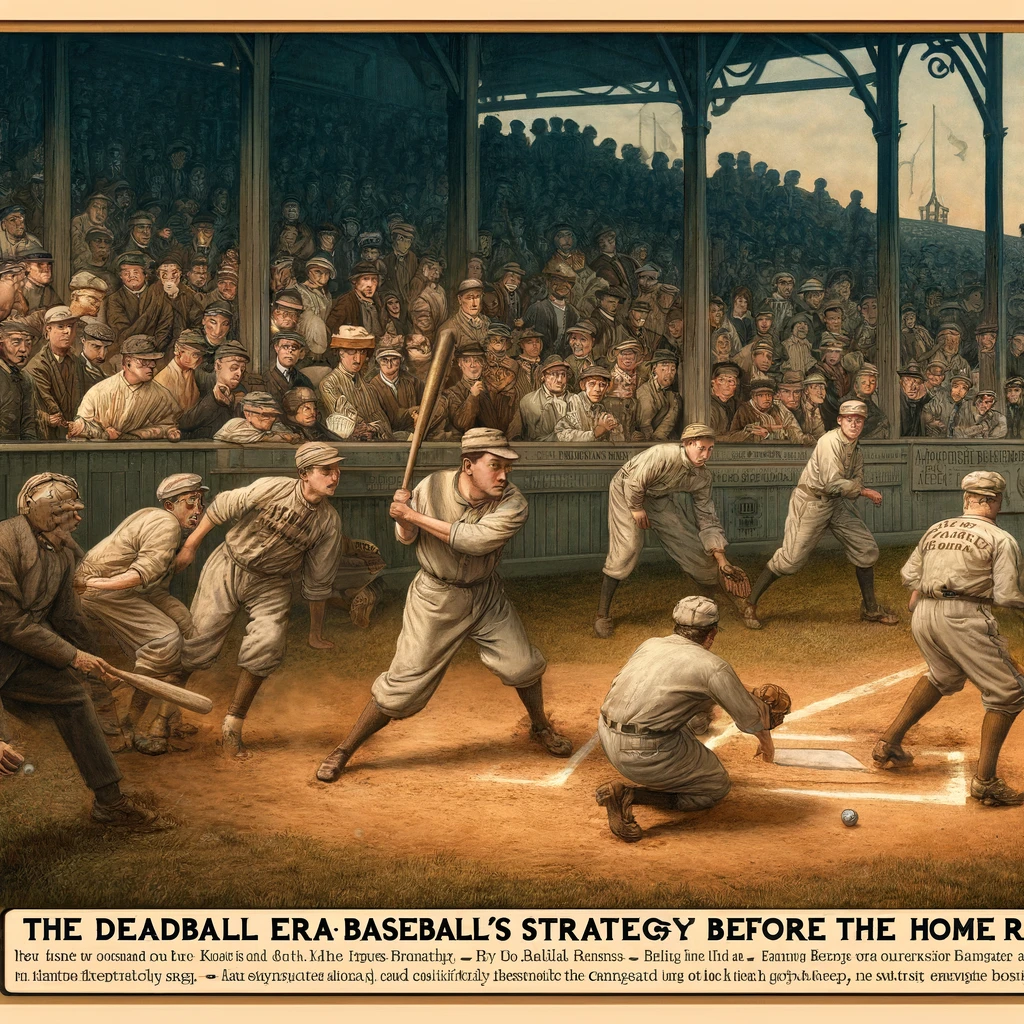
The Deadball Era, roughly spanning from 1900 to 1919, stands out as a distinctive phase in the history of Major League Baseball. This period, predating the explosive offensive game characterized by Babe Ruth’s career, was marked by low-scoring games, a greater emphasis on strategy, and the primacy of pitching and defense. Understanding the nuances of this era not only gives us insights into how the game has evolved but also highlights the origins of many strategies still employed in modern baseball.
Origins and Characteristics
The term “Deadball” refers to the nature of the baseball itself during this period. The balls were softer and became dirty, misshapen, and loose in stitches during the course of a game, making them harder to hit far. Coupled with the fact that balls were used until they were literally falling apart, this significantly reduced the possibility of home runs. The condition of the playing fields and ballparks, which were often larger than today’s dimensions, further suppressed high scoring games.
Pitchers enjoyed a dominant role in the Deadball Era, employing an array of tricks that would be outlawed in later years. They made liberal use of the spitball—a pitch where the ball was altered with saliva or other substances to affect its flight path—as well as other forms of what would now be considered tampering. Moreover, the lack of a rigorous foul strike rule allowed batters to hit foul balls intentionally to wear down pitchers and eke out walks.
Strategy Over Slugging
With runs at a premium, teams relied heavily on strategies like the “small ball” approach to manufacture runs. This method emphasized bunting, base stealing, hit-and-run plays, and other tactics that required speed, intelligence, and precise execution. Sacrifice hits were common, with players moving runners into scoring position even at the expense of an out. This was an era where a single run could often decide the outcome of a game.
Fielding also held significant importance. Since the ball was not leaving the park often, defensive plays and fielding efficiency became paramount. Players like Honus Wagner, Ty Cobb, and Tris Speaker made names for themselves not just at bat but with superior skills in the field as well. Their ability to cover ground and make strategic plays turned many would-be hits into outs.
Key Figures and Teams
Several players and teams left an indelible mark on the Deadball Era. Perhaps none is more notable than Ty Cobb, whose aggressive style of play and strategic mind exemplified the era. Cobb was not only a master of using the entire field for hits but also an adept base stealer, leading the league in steals six times during this period.
The 1906 Chicago White Sox, dubbed the “Hitless Wonders,” famously won the World Series despite having the lowest batting average in the American League. Their ability to leverage strong pitching and defense, along with timely hitting and aggressive base running, embodied the strategic nuances of Deadball baseball.
Impact on Modern Baseball
The strategies and styles developed during the Deadball Era have left a lasting legacy on modern baseball. The focus on pitching and defense remains crucial, even in an age dominated by home runs. The era also contributed to significant rule changes aimed at balancing the scales between offense and defense, including the introduction of a cleaner, harder ball and the eventual banning of the spitball.
Furthermore, the tactics of small ball, though less prevalent today, still surface, especially in close games or in situations where a single run can make a difference. The emphasis on speed, agility, and smart base running as seen in the Deadball Era continues to be valued qualities in players.
The Deadball Era of baseball may seem like a distant relic, particularly in today’s game dominated by power hitters and home runs. However, the strategic elements that defined this era—crafty pitching, aggressive base running, and sharp fielding—are timeless. As much as the game has evolved, the foundational strategies laid down during the early 20th century continue to influence how baseball is played. Delving into this period provides a fascinating glimpse into the roots of America’s pastime, revealing that sometimes, the most exciting plays come not from the swing of the bat but from the strategy behind the game.

In the Deadball Era, the game of baseball was significantly different from the spectacle it has become today. It was an era defined more by pitching duels and clever base-running than by the towering home runs that fill today’s highlight reels. The strategies and characteristics of the time reflect a version of the game where cunning and finesse were as valuable, if not more so, than sheer power.
The Art of Pitching
During the Deadball Era, pitchers wielded a considerable amount of power in the game, not only because of the state of the baseballs but also due to the lack of restrictions on pitching styles and techniques. Legends like Walter Johnson, Christy Mathewson, and Cy Young dominated the sport with their incredible skill and intellect. Johnson’s fast ball, Mathewson’s screwball, and Young’s stamina in pitching complete games were pivotal in their teams’ strategies.
Pitchers in this era often threw complete games and maintained a level of control and durability seldom seen in today’s game. The ability to pitch effectively for many innings was prized, and complete games were the norm rather than the exception.
Evolution of the Game and Rule Changes
As the Deadball Era progressed, several significant rule changes were implemented that began to transform the nature of the game. One of the most impactful was the banishment of the spitball in 1920, which came in response to increasing concerns over fairness and player safety. This rule change marked the beginning of a shift towards a more hitter-friendly game, culminating in what many call the “Live Ball Era” that followed.
The introduction of a newer, bouncier, and cleaner ball in 1920 also helped to shift the balance from pitcher-dominated play towards more explosive offensive showcases. This change made the ball easier to hit and travel farther, setting the stage for the home run to become a focal point of baseball’s appeal.
Cultural Impact and Popularity
Baseball during the Deadball Era also mirrored significant social changes in the United States. The game was becoming America’s pastime, weaving itself into the fabric of American life. It offered a form of community and entertainment during times of rapid industrialization and social change.
The strategy-heavy, slower-paced game of the Deadball Era had a wide appeal that crossed social and economic lines, providing common ground for people of different backgrounds. It was during this time that baseball solidified its role as a key part of American culture, with players becoming national icons and the game itself becoming a staple of American life.
Transition to Modern Baseball
The transition out of the Deadball Era into the more modern form of the game didn’t happen overnight. It was a gradual shift that saw the introduction of more dynamic batting, the rise of home run hitters like Babe Ruth, and the overall increase in game pace and scoring.
The legacy of the Deadball Era, however, remains intact. Today’s game still values the strategic elements that were critical during the early 20th century. The fundamentals of pitching, fielding, and base-running continue to be essential, even as the game has evolved to prioritize power and speed. Managers and players who can master these aspects of the game often find themselves at an advantage, much like their predecessors from over a century ago.
Conclusion
Exploring the Deadball Era provides more than just a historical overview of baseball; it offers insight into the roots of the strategic complexity that defines the sport today. The era’s emphasis on strategy, fines and craftsmanship over brute force is a testament to baseball’s rich and varied nature. As we appreciate today’s game with its dramatic home runs and fast-paced action, we also recognize the strategic battles of the past, which continue to shape the fundamentals of how baseball is played. The Deadball Era, with its unique blend of strategy and skill, remains an essential chapter in the ongoing story of America’s beloved pastime.