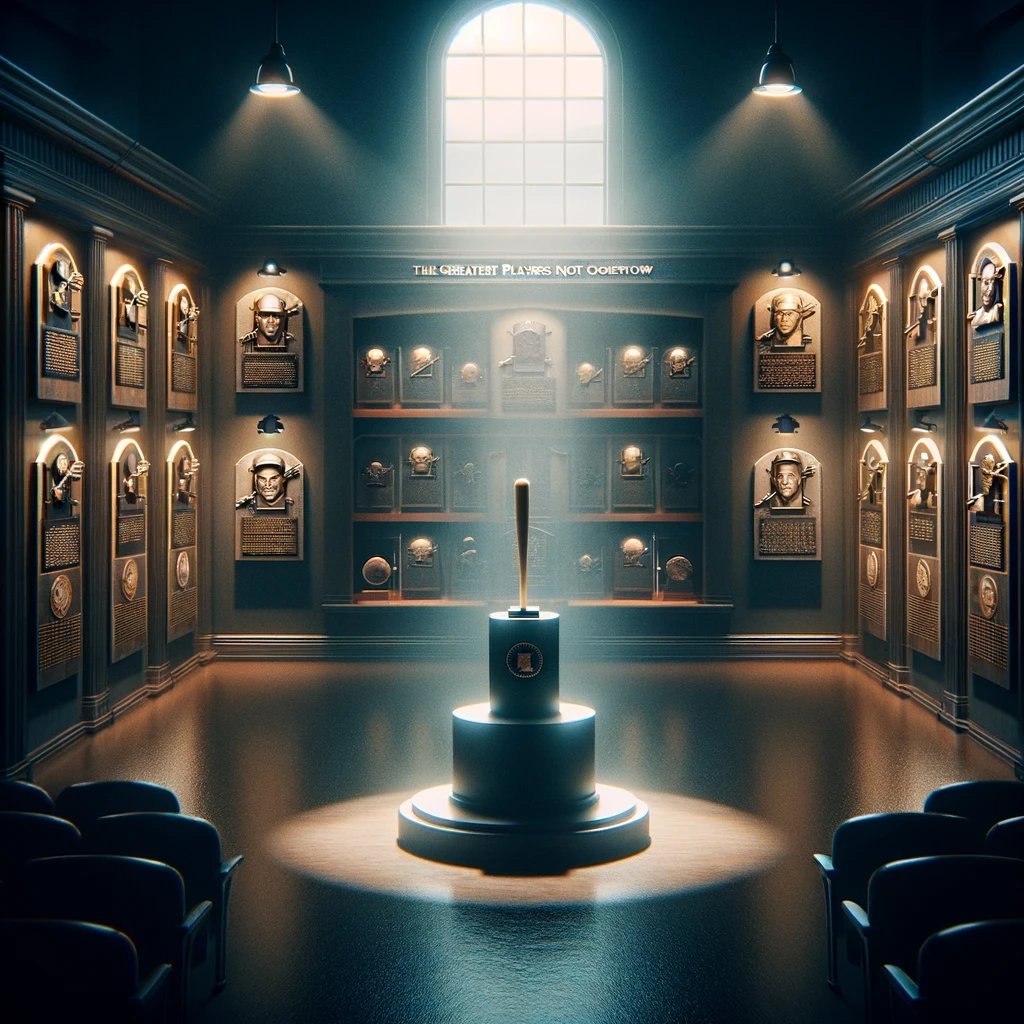
Baseball, America’s pastime, has a rich history filled with legendary players whose exploits on the field have become part of the sport’s lore. The National Baseball Hall of Fame in Cooperstown, New York, stands as a testament to these greats, enshrining players who have left an indelible mark on the game. However, for every player immortalized in Cooperstown, there are others whose absence raises questions and debates among fans and historians alike. This article delves into the stories of some of the greatest players who, for various reasons, have not found their place in the Hall of Fame.
The Criteria for Induction
Before discussing those who have been overlooked, it’s important to understand the criteria for induction into the Hall of Fame. Players become eligible for the Hall of Fame five years after retiring and must be named on 75% of the ballots cast by the Baseball Writers’ Association of America (BBWAA). The criteria for selection include the player’s record, playing ability, integrity, sportsmanship, character, and contributions to the team(s) on which the player played. While these guidelines seem straightforward, their interpretation can vary widely, leading to some notable omissions.
The Pitchers
Roger Clemens
Roger Clemens, one of the most dominant pitchers of his era, won seven Cy Young Awards and struck out over 4,600 batters. Despite these accomplishments, Clemens has been kept out of the Hall, largely due to allegations of performance-enhancing drug (PED) use. The debate over Clemens reflects a broader controversy regarding the era in which he played and how players suspected of PED use should be treated.
Curt Schilling
Curt Schilling, another elite pitcher, is known for his postseason heroics, especially during the 2004 World Series with the Boston Red Sox. Schilling’s exclusion is less about his on-field performance and more about his controversial off-field comments and political views, which have arguably swayed voters against him.
The Hitters
Barry Bonds
Barry Bonds, baseball’s all-time home run leader, is perhaps the most controversial Hall of Fame snub. Like Clemens, Bonds’ alleged PED use has overshadowed his on-field achievements, including seven MVP awards. The debate around Bonds is emblematic of the challenges in evaluating players from the so-called “steroid era.”
Pete Rose
Pete Rose, the all-time hits leader, remains ineligible for the Hall of Fame due to his lifetime ban from baseball for betting on games while he was a manager. Rose’s exclusion sparks debate over the relationship between a player’s off-field actions and their Hall of Fame candidacy.
The Managers
Buck O’Neil
Buck O’Neil, a significant figure in Negro League baseball and a beloved ambassador for the sport, was surprisingly not inducted during his lifetime. His contributions to baseball, both on and off the field, make his exclusion particularly noteworthy.
The Forgotten Stars
Shoeless Joe Jackson
Shoeless Joe Jackson, banned for his alleged role in the 1919 Black Sox Scandal, is another player whose on-field brilliance is overshadowed by controversy. Jackson’s lifetime .356 batting average is third-highest in baseball history, yet his involvement in the scandal has barred him from the Hall of Fame.
Minnie Miñoso
Minnie Miñoso, a trailblazer for Afro-Latino players, had a stellar career in both the Negro Leagues and Major League Baseball. His exclusion raises questions about how the Hall of Fame recognizes the contributions of players who broke racial and cultural barriers.
Lou Whitaker
Lou Whitaker, a key member of the Detroit Tigers for nearly two decades, is often overlooked despite his consistent performance and impact on the game. His case highlights how players who were not flashy superstars but were steady contributors can be undervalued in Hall of Fame considerations.

The Case for Inclusion
The debate over Hall of Fame inclusion often revolves around not just the statistics but the context and era in which a player competed. This context is crucial in understanding why some of these players are deserving of reconsideration for induction.
The Impact of Era and Context
The “steroid era,” for example, was a time of inflated offensive statistics. Players like Barry Bonds and Roger Clemens dominated during this period, and their exclusion raises questions about how we judge eras differently. Similarly, players from the Negro Leagues, like Buck O’Neil, played in a time when segregation prevented them from competing in Major League Baseball, impacting their recognition.
Changing Perspectives
As time passes, perspectives on what constitutes a Hall of Fame career also evolve. This evolution can be seen in the shifting attitudes towards players implicated in gambling or PED scandals. As new generations of voters and fans enter the baseball community, there is a chance for these players’ legacies to be reevaluated.
Statistical Oversights
Statistics are a major factor in Hall of Fame considerations, but they don’t always tell the whole story. Players like Lou Whitaker and Minnie Miñoso, whose career numbers may not be as flashy as some of their contemporaries, still had significant impacts on their teams and the game.
Advanced Metrics
The advent of advanced metrics in baseball has also changed how we evaluate a player’s career. Metrics like Wins Above Replacement (WAR) offer a more comprehensive look at a player’s value, potentially benefiting those who were underrated in traditional statistical analyses.
The Role of Character
The Hall of Fame’s criteria include character and sportsmanship, which can be subjective. This aspect has played a role in the exclusion of players like Curt Schilling, whose off-field behavior has been controversial. However, the question remains: should a player’s off-field actions outweigh their on-field achievements?
The Influence of Media and Public Opinion
The media and public opinion play significant roles in shaping the narrative around a player’s career. In some cases, players who were less media-friendly or who played in smaller markets have been overlooked, despite having Hall of Fame-worthy careers.
The Case of Gil Hodges
Gil Hodges, a beloved figure in baseball, especially with the Brooklyn and Los Angeles Dodgers, is often cited as a Hall of Fame snub. Hodges’ contributions to his teams, both as a player and a manager, as well as his character and leadership, make his absence notable.
The Future of the Hall of Fame
As we look to the future, the Hall of Fame will continue to be a topic of debate and discussion. The institution itself may evolve, perhaps expanding its criteria or changing its voting process to reflect the changing landscape of the sport.
The Role of Fans and Historians
Fans and historians play a vital role in keeping the conversation about Hall of Fame snubs alive. Their advocacy and research bring attention to players who might otherwise be forgotten and encourage ongoing reassessment of what it means to be a Hall of Famer.
Frequently Asked Questions
1. Why do some deserving baseball players get overlooked by the Hall of Fame?
One major reason deserving baseball players are overlooked by the Hall of Fame is the complex voting process and the subjective nature of human judgment. The voting committee primarily consists of members from the Baseball Writers’ Association of America (BBWAA), and personal biases or historical context can heavily influence their decisions. Some players may have played during a time when the full extent of their contributions wasn’t recognized due to the era’s statistics, records, or media coverage. Additionally, changes in the game over time can shift how certain skills and contributions are valued, meaning players from earlier eras might not get the appreciation they deserve compared to modern players. Unfortunately, others might be overlooked due to off-field controversies or issues that overshadowed their on-field achievements. Lastly, with only a few slots available each year, competition is exceptionally tight, leaving many greats in the shadows despite stellar careers.
2. Can a baseball player be inducted into the Hall of Fame after they’ve been overlooked initially?
Yes, while the standard pathway to induction involves being selected by the BBWAA, there are alternative routes. The Hall of Fame has established several committees intended to address those who might have been unfairly overlooked by the traditional voting process. These committees include the Veterans Committee and specific era-based committees focusing on different periods and groups in baseball history. These bodies review the careers of players who were once deemed not quite Hall of Fame material, providing a second chance based on revisited appreciation of their contributions. Additionally, the passage of time often offers a clearer perspective on a player’s impact, new appreciation for their skills, or even advances in statistical analysis that can shed light on their true worth. Thus, players originally overlooked still have opportunities for induction later, ensuring that time and reevaluation can right some past oversights.
3. Are there any examples of baseball legends who were overlooked and later enshrined?
Indeed, several baseball legends initially overlooked by traditional voting have later found their rightful place in the Hall of Fame. One notable example is Ron Santo, a nine-time All-Star and one of the greatest third basemen of all time, who was continually passed over for induction during his eligibility years. However, his contributions and relentless passion for the game eventually earned him a posthumous induction by the Veterans Committee in 2012. This case highlights how achievements can be re-evaluated and celebrated long after a player’s career ends. Similar stories can be seen with others like Jim Rice, who waited many years before his induction in 2009, even after a stellar career with the Boston Red Sox. These cases signify that while the road to Cooperstown may be long and winding, eventual recognition of exceptional talents is possible and often happens with the shift in perceptions over time.
4. How does statistical analysis play a role in evaluating overlooked baseball players for the Hall of Fame?
Statistical analysis has revolutionized how baseball talent is assessed and appreciated. As the understanding of the game evolves, so too does the appreciation for different skill sets and contributions that were previously undervalued or misunderstood. Sabermetrics and advanced stats like WAR (Wins Above Replacement) have allowed for a more comprehensive evaluation of a player’s value, transcending traditional metrics like batting average or home runs. For players who were once overlooked, these advanced statistics can shine a light on hidden contributions, like defensive prowess, base-running efficiency, or on-base capabilities that weren’t always apparent in historical contexts. Consequently, these deeper insights can bring to light the significance of their roles, presenting compelling cases for those formerly overshadowed by more glamorous figures. By quantifying aspects of baseball previously reliant on anecdotal evidence, statistical analysis creates a fairer platform for all-time recognition.
5. What impact does a player’s personality or off-field behavior have on Hall of Fame consideration?
The Baseball Hall of Fame is not solely about on-field performance; character, sportsmanship, and integrity are often considered essential factors. Players with impeccable records may find themselves overlooked if they’ve had significant controversies or behavior perceived as detrimental to the game. Such was the case with players like Pete Rose, whose gambling issues have overshadowed his incredible on-field achievements, leading to ongoing debates about his rightful place in Cooperstown. Moreover, ongoing scrutiny can delay or prevent deserving candidates from early recognition, as public perception plays a role in the voting process, and some voters believe that the Hall of Fame should represent the ideal of both athletic prowess and commendable character. Nevertheless, over time, discussions about what weight should be given to personal conduct versus career achievements continue to evolve, highlighting this as a complex and ever-changing aspect of Hall of Fame evaluations.