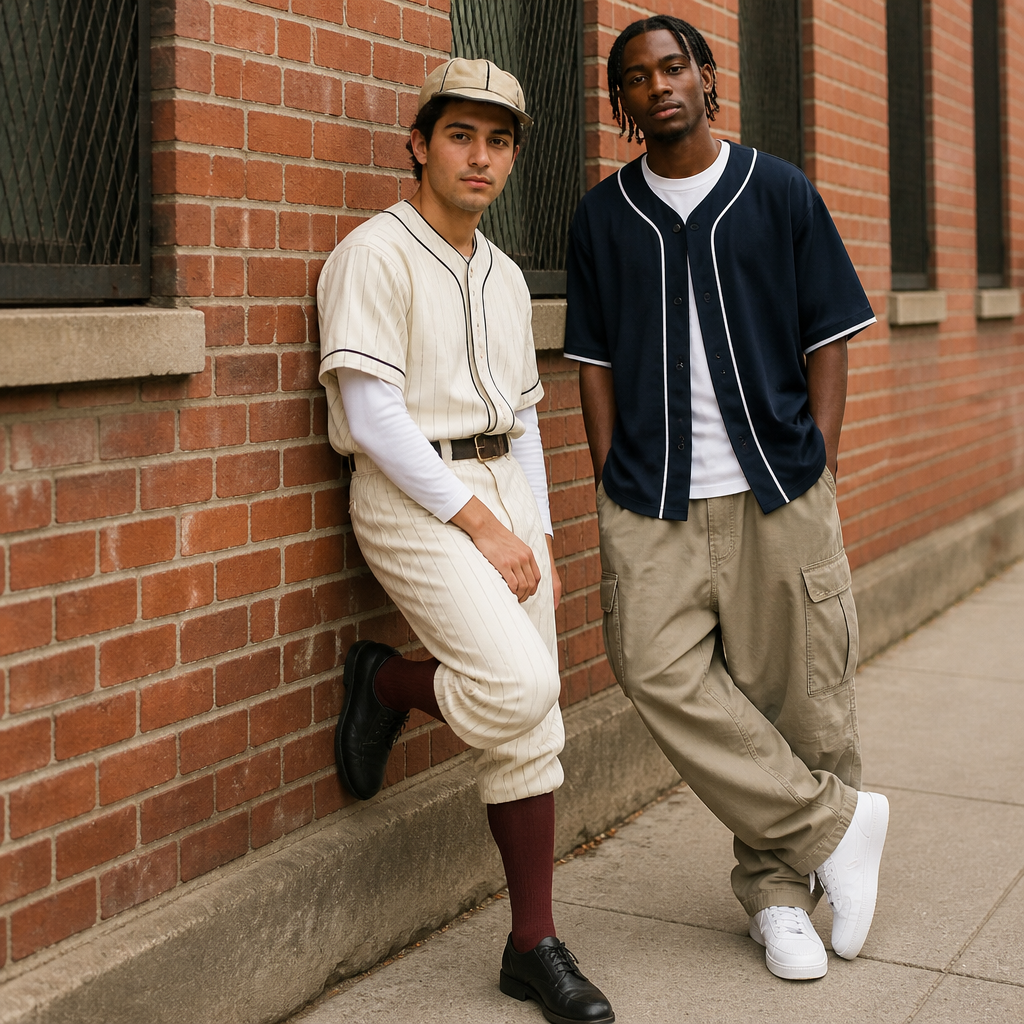
Baseball uniforms have shaped American fashion for more than a century, moving from heavy wool flannels on dusty diamonds to satin jackets, fitted caps, varsity-inspired outerwear, and today’s streetwear collaborations. In the broad story of baseball and society, clothing is one of the clearest ways the sport escaped the ballpark and entered daily life. A baseball uniform is more than a set of game-day garments. It is a coded system of identity built from colors, insignias, numbers, lettering, fabrics, and silhouettes that signal team loyalty, city pride, class aspiration, nostalgia, and personal style. When people ask how baseball became part of culture and fandom, the answer often starts with what fans wore, collected, copied, and passed down.
I have worked with sports heritage collections and apparel archives long enough to see a consistent pattern: people may not remember a box score, but they remember a Brooklyn script across the chest, the pinstripes of the Yankees, or the clean white home look of the Cardinals. Those design elements matter because baseball arrived at the same moment mass manufacturing, department stores, newspaper photography, and later television made visual symbols nationally recognizable. Uniforms became one of the first truly scalable fashion systems in American sport. They helped standardize logos, popularize licensed merchandise, and normalize the idea that fans could express belonging through branded clothing. That influence now reaches from Little League fields to luxury runways.
This hub article explains how baseball uniforms evolved, why specific design features became cultural landmarks, and how fandom turned team apparel into mainstream dress. It also maps the larger culture-and-fandom landscape under the baseball and society topic: local identity, race and integration, media visibility, gendered consumption, nostalgia markets, collecting, and the rise of streetwear collaborations. Understanding baseball uniforms means understanding how Americans use clothing to tell stories about place, memory, and allegiance.
From nineteenth-century practicality to the classic uniform code
Early baseball uniforms were built for function before fashion. In the mid-nineteenth century, clubs wore matching garments to distinguish teams and create discipline, but the look was inconsistent by modern standards. Knickerbocker-style pants, belts, stockings, and caps appeared in varying combinations, often made from wool because it was durable and widely available. By the late nineteenth and early twentieth centuries, manufacturers including Spalding and Reach helped standardize production. Teams adopted buttons, collars, piping, and more regularized striping. Wool flannel became the signature fabric because it handled repeated wear and held dye well, even though it trapped heat and absorbed sweat.
Several conventions from that era still define baseball aesthetics. Home whites and road grays emerged partly from laundering realities during rail travel. Script wordmarks identified cities or clubs. Stockings and stirrups added visible team color. Numbers, introduced gradually in the 1910s and 1920s and normalized in the 1930s, improved player identification for spectators and reporters. These were not minor details. They created a legible visual language that newspapers, trading cards, scorebooks, and later television could reproduce. Once a fan learned that a cap, an interlocking monogram, or a sleeve patch carried meaning, the uniform became a wearable emblem rather than simple workwear.
That shift matters for fashion history because baseball developed a repeatable formula: a clean silhouette, limited but bold color blocking, and a strong logo placement across chest or crown. American consumers learned to read sportswear branding through baseball first. Long before sneaker culture or designer drops, people were already responding to scarcity, team changes, commemorative patches, and style differences between authentic and imitation garments.
How baseball uniforms influenced mainstream American style
Baseball fashion spread because the uniform translated easily into everyday wardrobes. The cap was the most successful item. It protected players’ eyes, displayed a team mark clearly, and adapted to casual wear with almost no modification. By the postwar period, baseball caps were common outside stadiums, worn by workers, students, suburban dads, and children who did not necessarily follow a team closely. The cap became a national accessory because it sat at the intersection of utility and symbolism. It was inexpensive, adjustable, and immediately expressive.
Jerseys followed a different path. For decades, adults were less likely to wear full button-front team jerseys casually, but youth leagues, school athletics, and movie representations normalized baseball silhouettes in broader dress. Raglan sleeves inspired the classic baseball tee. Satin warm-up jackets and nylon dugout jackets fed into varsity and outerwear trends. Pinstripes, block lettering, chenille patches, and felt appliqué moved into high school, collegiate, and workwear styles. In the 1980s and 1990s, replica jerseys and fitted caps accelerated this crossover, especially as hip-hop, sports marketing, and televised highlights made player imagery central to youth culture.
Baseball also influenced how Americans think about “heritage” clothing. A flannel jersey, a wool cap with green underbrim, or a midcentury satin jacket carries authenticity cues that modern brands repeatedly borrow. Companies such as Ebbets Field Flannels built businesses on accurate reproductions, while heritage labels and contemporary designers mined old team graphics for texture and credibility. In practical terms, baseball taught fashion brands that history sells when it is tied to a recognizable symbol and a story about place.
Teams, cities, and the power of visual identity
Baseball uniforms became cultural anchors because they represented cities as much as rosters. The Yankees’ pinstripes project continuity, discipline, and power. The Dodgers’ script evokes migration from Brooklyn to Los Angeles and a long media afterlife tied to Jackie Robinson, Sandy Koufax, Fernando Valenzuela, and West Coast cool. The St. Louis Cardinals’ birds-on-bat logo is among the most distinctive chest emblems in American sport because it is literal, balanced, and legible from a distance. Even nonfans can identify these marks, which is the point: the best uniform design escapes specialist audiences.
In my experience, fans often buy apparel to represent a city first and a team second. That is why local typography, color palettes, and historical marks matter so much. The Detroit Old English D, the Chicago Cubs’ roundel, and the Boston Red Sox wordmark do more than identify franchises. They function as civic shorthand. This is especially visible in diasporic communities. A person living far from home may wear a cap to signal origin, family loyalty, or neighborhood affiliation. Clothing becomes a portable hometown.
Uniform changes can therefore provoke unusually intense reactions. When clubs alter fonts, move from traditional materials to synthetic shine, or introduce alternate jerseys, fans debate authenticity because they are really debating who gets to define civic memory. The successful redesigns respect core visual DNA while updating performance details. The failures usually ignore established symbols in favor of trend chasing. Baseball culture forgives innovation when it is anchored in lineage.
Fandom, merchandising, and the licensed apparel economy
Modern baseball fandom cannot be separated from merchandising. Once Major League Baseball and manufacturers refined licensing agreements in the twentieth century, team apparel became a major consumer category. What changed was not only supply but legitimacy. Fans could now purchase products that looked official, used protected logos, and connected them visibly to the game. Authentic jerseys, replica jerseys, batting practice caps, commemorative patch editions, and throwback lines created tiers of participation at different price points.
The economics shaped culture. A child in a Little League uniform experienced baseball as lived identity. An adult in a fitted cap participated in a lighter but still meaningful version of that identity. Collectors pursued deadstock jackets, game-worn jerseys, and era-specific tags because scarcity and provenance added value. Retailers from sporting goods chains to mall stores to online specialty shops widened access, while league-wide branding standards ensured consistency. Majestic dominated on-field uniforms for years; New Era became synonymous with caps; Nike now occupies a central role in official outfitting and lifestyle crossover.
Merchandise also structures fan rituals. Opening Day purchases, postseason patches, City Connect debates, Hall of Fame throwbacks, and heritage nights all create recurring moments when clothing becomes the medium of participation. This hub is useful because each of those subjects branches into larger culture-and-fandom articles about collecting, commercialization, authenticity, and memory.
| Era | Key Uniform Material | Popular Fan Item | Cultural Impact |
|---|---|---|---|
| 1900s–1940s | Wool flannel | Pennants and simple caps | Established team symbols and city identity |
| 1950s–1970s | Flannel shifting to synthetics | Satin jackets and souvenir caps | Brought baseball style into casual postwar wardrobes |
| 1980s–1990s | Polyester knits | Replica jerseys and fitted caps | Linked sportswear with hip-hop, youth retail, and mass licensing |
| 2000s–today | Performance polyester blends | Streetwear collaborations and throwbacks | Merged fandom, nostalgia, and fashion collecting |
Race, integration, and who got represented in baseball style
No serious discussion of baseball uniforms and culture can ignore race. Jackie Robinson’s Dodgers uniform is one of the most important garments in American history because it symbolizes both integration and the burden placed on one athlete to transform a national institution. Negro Leagues uniforms carry equal significance, though they were long underrepresented in mainstream merchandise and museum storytelling. In recent years, broader recognition of teams such as the Kansas City Monarchs, Homestead Grays, and Birmingham Black Barons has corrected part of that imbalance through licensed apparel, exhibitions, and documentary work.
Representation matters because apparel tells the public whose history is worth wearing. For decades, mainstream retail centered a narrow canon of white-majority franchises and star players. Expanded Negro Leagues licensing and storytelling have diversified the visual archive available to fans. At the same time, Latino influence on baseball style has been immense, from the popularity of specific players’ jersey sales to the cultural energy around teams with deep ties to Latin American and Caribbean communities. Fernando Valenzuela’s Dodgers era, for example, reshaped fan apparel demand in Los Angeles and connected baseball clothing directly to Mexican American identity.
There are limits and tensions here. Commercial recognition can flatten complicated histories into collectible graphics. The best cultural work pairs apparel with context: exhibitions, oral histories, and education about segregation, migration, labor, and community baseball. Uniforms open the door, but responsible interpretation must walk through it.
Streetwear, nostalgia, and the modern revival
Baseball’s strongest contemporary fashion presence is in streetwear and nostalgia-driven design. Mitchell & Ness helped legitimize throwback jerseys as premium lifestyle goods. New Era’s fitted cap became a cornerstone of urban fashion, especially from the 1990s onward, when colorway experimentation, regional identity, and music-video visibility turned the cap into a collectible object. More recently, collaborations involving MLB marks and brands such as Supreme, Kith, Aimé Leon Dore, and Fear of God have shown that baseball iconography still carries status in fashion markets that value story, exclusivity, and recognizable symbols.
The appeal is not accidental. Baseball graphics are clean, archival, and adaptable. A vintage-style felt logo sits naturally on wool outerwear. A script wordmark works on hoodies and varsity jackets. Pinstripes offer instant visual texture. Even people who rarely watch games respond to these elements because they read as Americana with enough edge to avoid looking costume-like. Designers use baseball references to signal authenticity, urbanity, and continuity with twentieth-century sports culture.
Nostalgia is powerful, but it succeeds only when details are right. Serious fans notice crown shape, batterman placement, sleeve trim width, tackle-twill quality, and whether a throwback reproduces the original font faithfully. That insistence on accuracy is part of what keeps baseball fashion influential. It forces brands to respect archive-based design rather than rely on generic retro styling. For readers exploring baseball and society, this opens paths into articles on collecting, memory, branding, and the secondary market for vintage sportswear.
Why this hub matters for culture and fandom
Baseball uniforms are a practical entry point into the larger study of culture and fandom because they connect nearly every social dimension of the game. Through uniforms, you can trace industrial manufacturing, labor, media growth, race relations, migration, local identity, gendered marketing, youth participation, nostalgia, and consumer capitalism. The same jersey can be athletic equipment, family heirloom, collectible asset, protest symbol, and fashion statement depending on who wears it and why. Few objects reveal the social life of baseball so efficiently.
The main takeaway is simple: baseball did not influence American fashion by accident. It did so through durable design codes, powerful city symbolism, mass licensing, and decades of fan adoption across generations. From wool flannels to streetwear, the uniform became a language Americans use to express belonging and memory. If you want to understand baseball’s place in society, start with what people wear, then follow the stories stitched into every logo, stripe, and cap. Explore the rest of this culture-and-fandom hub to go deeper into collecting, identity, media, and the communities that keep baseball style alive.
Frequently Asked Questions
How did early baseball uniforms influence American fashion beyond the field?
Early baseball uniforms helped establish one of the first widely recognized forms of coordinated American sports dress, and their influence reached well beyond the ballpark. In the late 19th and early 20th centuries, wool flannel jerseys, knicker-style pants, striped stockings, belts, caps, and felt insignias created a complete visual language of belonging, discipline, and local pride. At a time when mass media and photography were expanding, baseball players became some of the most visible public figures in the country, and their uniforms offered a model of masculine style that was practical, recognizable, and distinctly American. Fans did not simply watch the game; they absorbed its colors, silhouettes, and symbols.
What made these uniforms so influential was their blend of utility and identity. Team lettering across the chest, city names, contrasting trim, and stitched logos turned clothing into public branding long before modern lifestyle marketing existed. This shaped how Americans thought about apparel as a statement of affiliation. School teams, factory leagues, civic clubs, and youth organizations borrowed heavily from baseball’s visual codes, helping spread athletic-inspired dress into everyday life. Even outside organized sport, caps, striped socks, and lettered jackets began to signal energy, youth, and participation in modern American culture.
Just as important, baseball uniforms popularized the idea that clothing could connect a person to a larger story. Wearing team colors or a cap was not only about function; it was about being seen as part of a community. That emotional connection became a foundation for later fashion trends, from varsity wear to sports licensing to today’s streetwear collaborations. In that sense, early baseball uniforms did more than clothe athletes. They taught Americans how fashion could communicate loyalty, aspiration, and shared identity in a highly visible way.
Why are baseball caps and jerseys considered lasting staples in American style?
Baseball caps and jerseys have endured because they combine simplicity, symbolism, and adaptability better than almost any other category of clothing. The baseball cap, in particular, evolved from a practical on-field necessity into one of the most universal accessories in American fashion. Originally designed to shade players’ eyes and create a uniform look, the cap became a portable emblem of team identity through its shape, color, and front-facing insignia. Over time, people began wearing caps not just to support teams, but to express hometown pride, regional identity, personal taste, and even nostalgia.
Jerseys followed a similar path. On the field, they were designed for clarity, durability, and instant recognition, featuring numbers, lettering, trim, and logos that made players legible to fans and media. Off the field, those same features made jerseys visually powerful. They are easy to style, immediately recognizable, and loaded with cultural meaning. A jersey can signal sports fandom, vintage taste, urban style, or appreciation for design history all at once. Their oversized fit, bold typography, and graphic layout also made them especially compatible with later trends in hip-hop, casualwear, and street fashion.
Another reason for their staying power is that caps and jerseys are unusually democratic garments. They cross age, class, and geographic boundaries with ease. A fitted cap can be worn with jeans, outerwear, tailoring, or sneakers, while a baseball jersey can function as fan gear, statement piece, or collectible object. Because these items balance heritage and versatility, they continue to survive changing fashion cycles. Their roots in baseball give them authenticity, while their visual flexibility allows each generation to reinterpret them in new ways. That is why they remain not just sports apparel, but core pieces of American style.
What role did mid-century baseball apparel, like satin jackets and varsity-inspired outerwear, play in fashion history?
Mid-century baseball apparel played a major role in turning sportswear into mainstream American fashion. As baseball became deeply woven into postwar popular culture, garments associated with the sport began appearing in schools, neighborhoods, and youth culture with increasing frequency. Satin jackets, team warm-ups, wool varsity jackets, and baseball-style outerwear translated the aesthetics of the dugout and locker room into everyday clothing. These pieces retained clear ties to athletic identity, but they also became fashion symbols of youth, coolness, and belonging.
Satin jackets were especially important because they introduced a bolder, more stylized version of baseball-related dress. Their glossy texture, bright team colors, striped ribbing, and embroidered insignias made them visually striking in a way that earlier flannel uniforms were not. They were practical enough for casual wear, yet expressive enough to stand out in public. As a result, they became associated not only with sports fandom, but also with school spirit, car culture, neighborhood identity, and later retro Americana. Varsity-inspired jackets had a similar effect, reinforcing the connection between athletic achievement and everyday style while helping define a classic American silhouette.
From a fashion history perspective, these garments mattered because they helped normalize the idea that athletic clothing could be aspirational and socially meaningful. They bridged performance wear and lifestyle wear decades before that distinction became standard in the industry. Their influence can still be seen in bomber jackets, letterman jackets, striped trims, chenille patches, and heritage sports branding used by contemporary labels. In many ways, mid-century baseball apparel provided a blueprint for the modern fashion system’s fascination with nostalgia, authenticity, and sport-derived design language.
How did baseball uniforms become part of streetwear and contemporary fashion collaborations?
Baseball uniforms became part of streetwear through a gradual cultural shift in which sports clothing stopped being confined to spectatorship and became a tool for self-styling. This process accelerated in the late 20th century as music, especially hip-hop, reshaped how Americans wore and understood sports apparel. Jerseys, fitted caps, batting jackets, and team-branded pieces were embraced not only for their connection to baseball, but for their graphic impact, oversized silhouettes, regional symbolism, and built-in authenticity. A baseball item could reference a city, an era, a team legacy, and a fashion attitude at the same time, which made it ideal for streetwear’s layered approach to meaning.
Fitted caps became particularly important because they were both collectible and highly personal. Wearing a specific logo or colorway could communicate local allegiance, style knowledge, and cultural belonging. Jerseys also gained new life when worn as statement garments rather than fan uniforms. Their lettering, numbers, piping, and patchwork translated seamlessly into a streetwear environment that values bold branding and heritage references. Designers recognized this appeal and began reworking baseball-inspired garments through premium materials, limited editions, archival graphics, and collaborations with leagues, teams, and legacy sportswear companies.
Today’s collaborations build on more than a century of visual history. Fashion labels draw from old flannel scripts, chest logos, sleeve patches, caps, and dugout jackets because these details carry emotional and cultural weight. Baseball offers a rich archive of Americana, nostalgia, civic identity, and craftsmanship, all of which are highly valuable in contemporary fashion. What makes these collaborations successful is that they do not treat the uniform as costume. Instead, they reinterpret its core elements—team insignia, typography, color blocking, and ceremonial significance—for modern wardrobes. That is how baseball moved from sport to lifestyle to high-visibility streetwear: not by abandoning tradition, but by continually recontextualizing it.
Why does the design of a baseball uniform matter so much in the broader story of American identity and fashion?
The design of a baseball uniform matters because it condenses major themes in American life into a single set of garments. A uniform is never just fabric and stitching. In baseball, it communicates region, class aspiration, ethnic integration, civic pride, commercial branding, and historical memory all at once. Colors identify teams and cities. Lettering styles evoke era and personality. Numbers individualize players within a collective structure. Caps and insignias function as instantly recognizable symbols that can travel far beyond the game itself. Because baseball has long been framed as a national pastime, the clothing associated with it naturally became a powerful mirror of how Americans see themselves.
Fashion historians and cultural observers pay close attention to baseball uniforms because they reveal how style and identity become public. When a team updates its script, changes its palette, introduces a patch, or revives a throwback look, it is making a statement about heritage and belonging. Fans respond strongly because these details feel personal. A baseball uniform can connect generations, linking a contemporary wearer to family memory, hometown loyalty, or a larger national mythology. Few garments operate with that kind of emotional reach while also remaining commercially influential and visually adaptable.
In the broader fashion story, baseball uniforms matter because they helped teach America how to wear symbolism. They showed that clothes could express allegiance, nostalgia, ambition, and group identity in ways that were immediate and legible. From wool flannels to modern performance fabrics, from dugout practicality to runway reinterpretation, the baseball uniform has consistently shaped how Americans understand casual dress and collective style. Its importance lies not only in what players wore on the field, but in how those visual codes entered schools, streets, stores, and everyday wardrobes across the country.