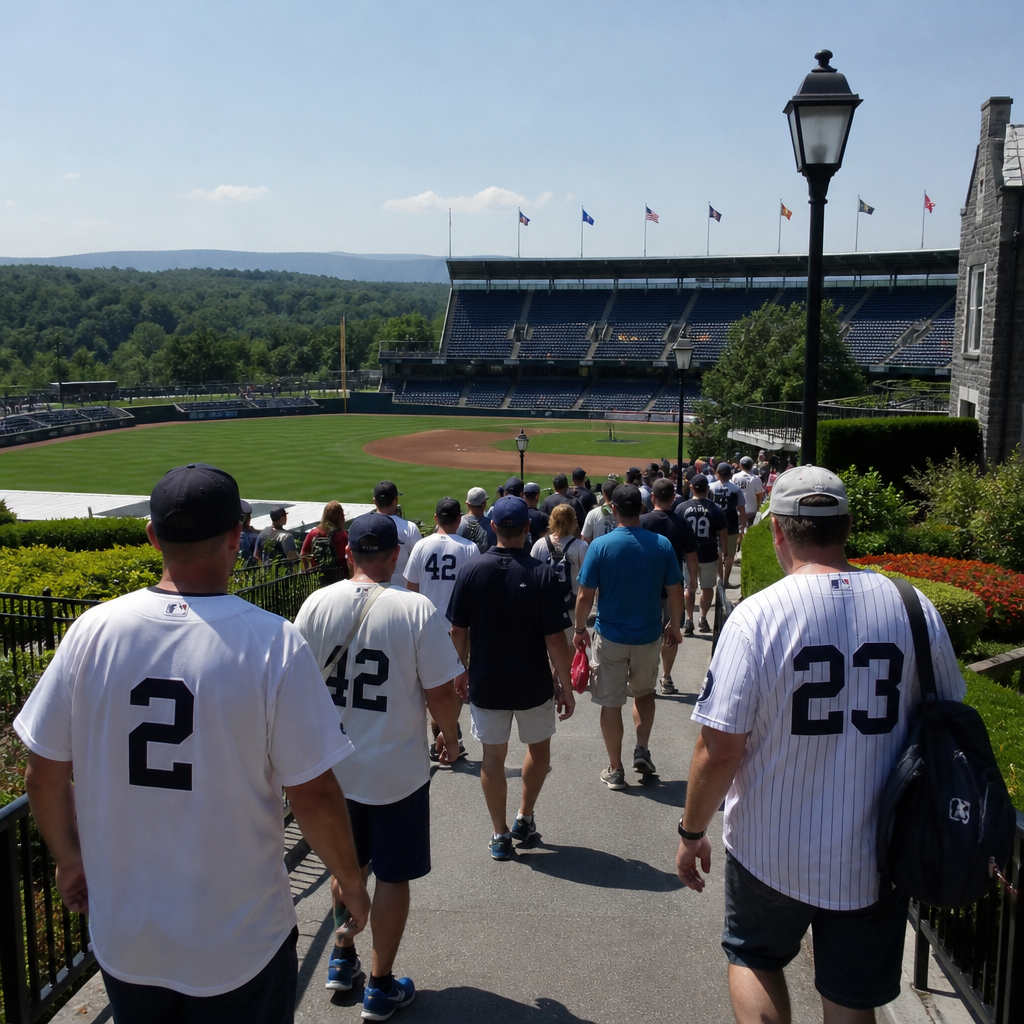
Baseball tourism turns stadiums, spring training parks, roadside museums, and the National Baseball Hall of Fame in Cooperstown into pilgrimage sites because fans do not simply consume games; they travel to places that make the sport feel tangible, local, and inherited. In this context, baseball tourism means travel motivated primarily by baseball experiences, while pilgrimage site describes a destination treated with ritual seriousness, emotional meaning, and repeat visitation. I have seen this dynamic firsthand in packed concourses at Fenway Park, on quiet mornings outside Doubleday Field, and in the patient lines at Hall of Fame plaques where visitors read every name as if taking attendance at a family reunion. The topic matters because baseball tourism reveals how fandom moves beyond entertainment into identity, memory, regional pride, and civic economics. It also explains why “culture and fandom” is the right frame for understanding the sport’s social reach: fans collect ballparks the way some travelers collect cathedrals, and they visit Cooperstown seeking authenticity, continuity, and belonging. That makes this subject a hub for related questions about nostalgia, ritual, memorabilia, media, community, and the commercialization of devotion.
Unlike ordinary leisure travel, baseball trips are structured around symbols and stories. A fan may plan an entire summer around seeing all 30 Major League ballparks, timing visits to rivalry weekends, giveaway nights, or historic anniversaries. Another may prioritize minor league parks, Negro Leagues landmarks, or former stadium sites marked only by plaques and neighborhood memory. Cooperstown operates as the clearest example of sacred geography in American sport because it combines museum authority, ceremonial induction, and a walkable village that reinforces the feeling of stepping into baseball’s official memory. Yet the same logic appears elsewhere: Wrigley Field is valued for ivy and neighborhood continuity, Dodger Stadium for its midcentury setting, and spring training in Arizona and Florida for intimacy between players and spectators. Baseball tourism matters economically as well. Teams, cities, and heritage institutions depend on destination spending for tickets, lodging, dining, transportation, and retail. More important, these journeys show how fans convert statistics, broadcasts, and legends into lived experience, making baseball culture something people can literally travel through.
Why Ballparks Became Sacred Destinations
Ballparks became pilgrimage sites because they concentrate history, architecture, and shared ritual in one place. A cathedral is recognizable not only by what happens inside it but by how people behave there; old ballparks inspire the same change in conduct. Fans arrive early to walk the perimeter, photograph gates, read statues, and locate famous sightlines before first pitch. At Fenway Park, the Green Monster is not just an outfield wall but an object of reverence, discussed in tones usually reserved for landmarks. At Wrigley Field, the marquee, rooftop views, and ivy create a continuity that helps visitors feel they are entering an ongoing story rather than a disposable venue. Even newer parks deliberately borrow this sacred vocabulary through brick facades, local food traditions, team museums, and monuments placed along approach paths.
The emotional power of these sites rests on repetition and inheritance. Many baseball tourists are reenacting family practices: a father keeping score with a child, siblings revisiting a park their grandparents loved, friends taking an annual road trip after opening day. The game’s slower pace supports this kind of meaning making because spectators have time to talk, point, compare memories, and teach rituals between pitches. Stadium design reinforces it. Sightlines toward city skylines, preserved architectural quirks, retired numbers, and in-park halls of fame all signal that baseball values continuity. In my experience, even fans of rival clubs often lower their voices at certain spots, such as the Jackie Robinson Rotunda at Citi Field or the statues outside Busch Stadium, because those spaces are presented as commemorative rather than merely commercial.
Scarcity also shapes ballpark tourism. Historic parks are finite, demolished parks are irreversible losses, and team eras end quickly. That creates urgency. People travel to Oakland’s Coliseum because they know it represents a vanishing stadium type; they visit Kauffman Stadium for fountains that distinguish it from more generic retro parks; they seek out Rickwood Field because it connects the present game to Black baseball history in a surviving physical setting. Tourism grows where architecture and memory overlap. A box score can be found anywhere, but the exact angle of the upper deck, the neighborhood smell outside the gates, and the way light falls across the infield at dusk can only be experienced onsite.
Cooperstown and the Power of Official Memory
Cooperstown became the center of baseball pilgrimage because it offers something no stadium alone can provide: an official, concentrated narrative of the sport. The National Baseball Hall of Fame and Museum functions as archive, shrine, classroom, and civic anchor. Its plaque gallery gives fans a simple ritual sequence—enter, search for heroes, pause before unfamiliar names, and leave with a revised mental map of baseball history. That ritual matters because museums shape legitimacy. When a player, executive, manager, or pioneer is enshrined, the destination gains another reason for return visits, especially during induction weekend, when the village absorbs tens of thousands of fans and becomes a temporary capital of baseball conversation.
Cooperstown’s influence extends beyond the Hall itself. The village environment intensifies the experience by compressing retail, lodging, memorabilia culture, and pastoral imagery into a walkable setting. Visitors can move from exhibits on Babe Ruth or Roberto Clemente to storefronts selling scorebooks, pennants, and vintage-style caps, then to Doubleday Field, where place and myth intertwine. Historians rightly note that the Abner Doubleday origin story is not factual; the Mills Commission’s early twentieth-century account has long been discredited. Yet the power of Cooperstown does not depend on literal origins. It depends on accepted symbolism. Fans go there because the town has become the accepted ceremonial home of baseball, and ceremonies shape social truth even when origin myths are contested.
What makes Cooperstown especially significant within culture and fandom is its ability to merge elite recognition with ordinary participation. A visitor looking at Satchel Paige artifacts or reading about the All-American Girls Professional Baseball League is not passively consuming nostalgia. They are being invited into debates about inclusion, labor, race, statistics, media, and mythmaking. Strong museums do this well: they preserve reverence while broadening interpretation. Cooperstown succeeds when it reminds visitors that baseball memory is curated, not automatic, and that fandom deepens when people understand whose stories were once centered, whose were excluded, and how the canon keeps evolving.
The Rituals, Routes, and Economics of Baseball Travel
Baseball tourism works because it combines repeatable rituals with flexible itineraries. Fans typically organize trips around one of four patterns: a single marquee game, a multistadium road trip, a seasonal event such as spring training or Hall of Fame induction, or a heritage journey focused on museums and historic sites. Each pattern creates different spending behaviors and different emotional rewards. A weekend series in Boston may emphasize neighborhood bars and premium tickets, while a Midwest road swing through Milwaukee, Chicago, St. Louis, and Kansas City emphasizes drivable distance, regional food, and stadium variety. Spring training encourages low-stakes proximity: backfield workouts, autograph opportunities, and relaxed conversation with other travelers who treat February and March as an annual reunion.
| Baseball tourism type | Main motivation | Typical destinations | What fans value most |
|---|---|---|---|
| Ballpark-chasing trip | Visit multiple venues | MLB cities, minor league circuits | Architecture, local traditions, completion goals |
| Heritage pilgrimage | Connect with history | Cooperstown, Negro Leagues Museum, former stadium sites | Authenticity, artifacts, storytelling |
| Spring training travel | Access and intimacy | Grapefruit League, Cactus League | Player proximity, practice viewing, warm weather |
| Event-centered visit | Attend a singular occasion | Opening Day, All-Star Week, induction weekend | Atmosphere, rarity, shared celebration |
The economic footprint is significant because baseball travelers spend beyond the ticket. Destination analysts typically track direct spending on hotels, restaurants, parking, transit, retail, and attractions, then estimate indirect effects through supplier activity and wages. Teams and municipalities know this, which is why ballpark districts increasingly include mixed-use development, team stores, restaurants, and branded entertainment zones. The Battery Atlanta near Truist Park is a clear example of a stadium-adjacent district designed to capture visitor spending before and after games. San Diego’s Gaslamp-adjacent Petco Park benefits from a different model, where the city’s existing tourism infrastructure amplifies baseball demand rather than being built around it.
There are limits, and they matter. Public funding claims around stadium tourism are often overstated, and economists such as Roger Noll and Andrew Zimbalist have long argued that projected civic windfalls frequently exceed measurable returns. New parks can shift spending from one entertainment option to another rather than creating wholly new economic activity. Still, baseball tourism remains real at the visitor level. Fans will cross states for a rivalry, plan vacations around giveaway schedules, and extend trips to visit local museums or landmarks. The practical lesson is that baseball travel succeeds best where emotional meaning aligns with urban accessibility, distinctive place identity, and honest historical presentation.
Culture, Identity, and the Communities Built Around the Journey
Baseball tourism matters most as a cultural practice because it turns spectators into participants in a mobile community. Fans recognize one another through jerseys in airports, scorebooks in hotel lobbies, and conversations on transit lines heading to the park. That shared language lowers social barriers. I have watched strangers compare stadium rankings over breakfast and trade tips on the best standing-room sightlines by midafternoon. The trip itself becomes part of fandom. Visiting all 30 ballparks is a modern collecting ritual, complete with checklists, maps, commemorative pins, and social proof in online communities. Completion matters, but so does narration: each park becomes a story about weather, food, transit mishaps, extra-inning drama, or a home run seen from an unlikely seat.
This culture also preserves regional difference in an era of national media standardization. Baseball broadcasts can flatten experience, but travel restores local texture. A fan learns that St. Louis frames baseball as civic inheritance, that Philadelphia embraces combative loyalty, that Seattle pairs scenic beauty with a distinct Pacific Northwest sensibility, and that minor league towns often use promotions and mascots to blend humor with local pride. Food plays a serious role here. A Dodger Dog, a Chicago hot dog, garlic fries in San Francisco, or toasted ravioli near Busch Stadium are not trivial add-ons; they are edible forms of place attachment. Tourism researchers call this co-creation of experience: meaning emerges from the interaction between site, ritual, and visitor expectation.
Importantly, baseball pilgrimage can also correct the record. Interest in the Negro Leagues Baseball Museum in Kansas City, the Jackie Robinson Museum in New York, and preserved sites connected to industrial, immigrant, and women’s baseball histories shows that fans increasingly want fuller narratives. Heritage travel is no longer limited to monuments celebrating major league greatness. It includes searching for erased ballpark footprints, learning how redlining shaped team neighborhoods, and understanding why some communities lost franchises or public access to the game. That wider lens strengthens fandom because it replaces sentimental simplification with informed attachment. Fans do not need a perfect past; they need a history honest enough to deserve revisiting.
How Baseball Tourism Is Changing in the Digital Era
Digital media has expanded baseball tourism rather than replacing it. Stadium review channels, travel blogs, team apps, seat-view platforms, and social media communities make planning easier and expectations sharper. Fans now compare sightlines through tools like A View From My Seat, track visited parks with map apps, and buy timed museum tickets in advance. At the same time, digital abundance has made physical presence more valuable. When every highlight is instantly available, the reasons to travel shift toward atmosphere, material culture, and memory-making. People go for the pregame street scene, the organ music, the scoreboard animations, the plaque gallery, the batting practice home run that lands nearby, and the proof that they were there.
Teams and museums have adapted by designing experiences that photograph well without relying only on novelty. Good operators understand that visual shareability must be anchored to substance. The best ballpark tours include clubhouse access, press areas, and stories about maintenance, groundskeeping, and architecture, not just selfie points. Strong museums use digital interactives to deepen context rather than distract from artifacts. Accessibility improvements matter too. Mobile ticketing, captioned content, sensory guides, and clearer transit information make baseball travel possible for more people, which in turn broadens who gets included in fandom’s public rituals.
Looking ahead, the strongest baseball tourism destinations will be those that balance nostalgia with credibility. Fans can detect artificial heritage quickly. A brick façade alone does not create meaning; meaningful places explain why the local game mattered, who built it, who was excluded, and how traditions evolved. Cooperstown remains powerful because it combines ceremony with curation. Historic parks endure because their quirks are real. Newer venues can still become pilgrimage sites, but only if they accumulate memory honestly through great games, civic embeddedness, and interpretive care. For fans, the takeaway is simple: baseball travel is not just a leisure niche. It is one of the clearest ways the sport turns culture into place, and place back into loyalty. If you want to understand baseball and society, start by visiting a park, a museum, or Cooperstown, then pay attention to what people are really coming to honor.
Frequently Asked Questions
What does “baseball tourism” actually mean, and why is it different from simply attending a game?
Baseball tourism refers to travel motivated primarily by baseball experiences rather than by general leisure, business, or sightseeing. In practice, that means fans plan trips around major league stadiums, minor league parks, spring training complexes, historic fields, roadside attractions, team museums, and especially places such as the National Baseball Hall of Fame in Cooperstown. The key difference is intent. A person who happens to catch a game while on vacation is not necessarily a baseball tourist. A person who maps out an itinerary to visit Fenway Park, Wrigley Field, a spring training site in Arizona or Florida, and a regional baseball museum is engaging in baseball tourism because the sport itself is the reason for travel.
What makes this form of tourism especially powerful is that baseball is tied to memory, ritual, and place in a way few sports can match. Fans often want more than a ticket and a final score. They want to stand where famous moments happened, eat the local ballpark food, hear the crack of the bat in a historic setting, and connect family stories to physical locations. Baseball tourism turns abstract fandom into something tangible. It lets people move from watching the sport on screens to experiencing the environments that give the game texture, continuity, and meaning across generations.
Why are ballparks and Cooperstown often described as “pilgrimage sites” for baseball fans?
Ballparks and Cooperstown are described as pilgrimage sites because many fans approach them with a sense of ritual seriousness, emotional investment, and repeated return that goes beyond ordinary tourism. In religious or cultural pilgrimage, people travel to places that embody shared values, stories, and identity. Baseball works similarly for many fans. A visit to a legendary stadium or to the Hall of Fame is not just recreational; it can feel like a meaningful act of connection to history, family tradition, and personal memory.
Cooperstown is the clearest example because it functions as baseball’s symbolic center. Fans go there to see plaques, artifacts, uniforms, bats, scorecards, photographs, and exhibits that transform the game’s mythology into something visible and immediate. The trip often follows recognizable rituals: posing for photos, reading Hall of Fame plaques slowly, debating which exhibits matter most, buying souvenirs, and returning home with stories that reaffirm one’s identity as a fan. Historic ballparks work the same way. People do not visit only for convenience or entertainment. They go because these places represent continuity. They make baseball feel inherited, local, and real. That is why the language of pilgrimage fits so well: the journey itself matters, the destination carries symbolic weight, and repeat visits deepen its meaning.
How did Cooperstown become such an important destination in baseball tourism?
Cooperstown became central to baseball tourism because it evolved into the sport’s most recognized site of memory, preservation, and official recognition. The National Baseball Hall of Fame gives the village a status no ordinary museum town could claim. Even though historians have long debated simplified origin stories about baseball, Cooperstown’s symbolic role has only grown stronger because the Hall of Fame turned it into the place where the game’s history is organized, celebrated, and narrated for the public.
Its importance comes from a combination of institutional authority and emotional appeal. The Hall of Fame does not simply display old objects; it creates a structured encounter with baseball’s past. Visitors can trace eras, teams, players, social changes, and iconic moments in one setting. For many fans, seeing the plaques of legendary players is comparable to paying respects at a monument. Induction weekend intensifies that reputation by drawing thousands of fans who gather not just to witness ceremonies, but to participate in a communal affirmation of the sport’s legacy. The destination also benefits from scale. Cooperstown is small enough to feel intimate, walkable, and deliberately set apart from modern distraction. That atmosphere helps visitors experience the trip as special, intentional, and memorable rather than just another stop on a busy itinerary.
What kinds of places count as baseball tourism destinations besides major league stadiums and the Hall of Fame?
Baseball tourism includes a much wider range of destinations than many people first assume. Major league ballparks are the most visible examples, but fans also travel to spring training sites in Florida and Arizona, where the game feels more accessible and relaxed. These trips often let visitors see multiple teams in a short time, watch practices, collect autographs, and experience the seasonal anticipation that comes before Opening Day. For many travelers, spring training offers a more intimate version of the sport and becomes an annual ritual in its own right.
Minor league parks are another important part of baseball tourism because they highlight local culture, affordability, and regional identity. Fans may seek out distinctive stadium designs, quirky promotions, historic franchises, or towns with deep baseball roots. Beyond active ballparks, roadside museums, preserved fields, statues, grave sites of famous players, former Negro Leagues landmarks, college baseball venues, and team-specific museums all fit within the same tourism landscape. These destinations matter because they let fans assemble a broader map of baseball history. Instead of treating the game as a single national story, baseball tourism reveals how deeply the sport is woven into local communities, migration patterns, race relations, regional pride, and family tradition. That wider network of places is what makes baseball tourism feel expansive, layered, and endlessly repeatable.
Why do fans return to these baseball destinations again and again instead of visiting only once?
Repeat visitation is one of the strongest signs that baseball tourism functions like pilgrimage rather than ordinary sightseeing. Fans return because these places continue to offer new emotional and historical rewards. A ballpark can feel different depending on the season, the opponent, the people you travel with, or where you are in your own life. A first visit might be about checking a stadium off a list. A later visit might be about bringing a child, honoring a parent’s fandom, revisiting a treasured memory, or seeing how the place has changed while still remaining recognizably itself.
Cooperstown and other heritage sites also reward repeated visits because baseball history is not static in the minds of fans. New Hall of Fame inductees are added, exhibits change, anniversaries reshape attention, and personal perspective matures over time. A visitor who once cared mostly about star players may later become fascinated by labor history, equipment design, broadcasting, the Negro Leagues, women in baseball, or the architecture of old parks. The return trip becomes a way of deepening one’s relationship with the game. In that sense, baseball tourism is not just about collecting destinations. It is about renewing attachment. Fans come back because these sites help them feel part of a long, living tradition that links personal memory with a larger cultural story.