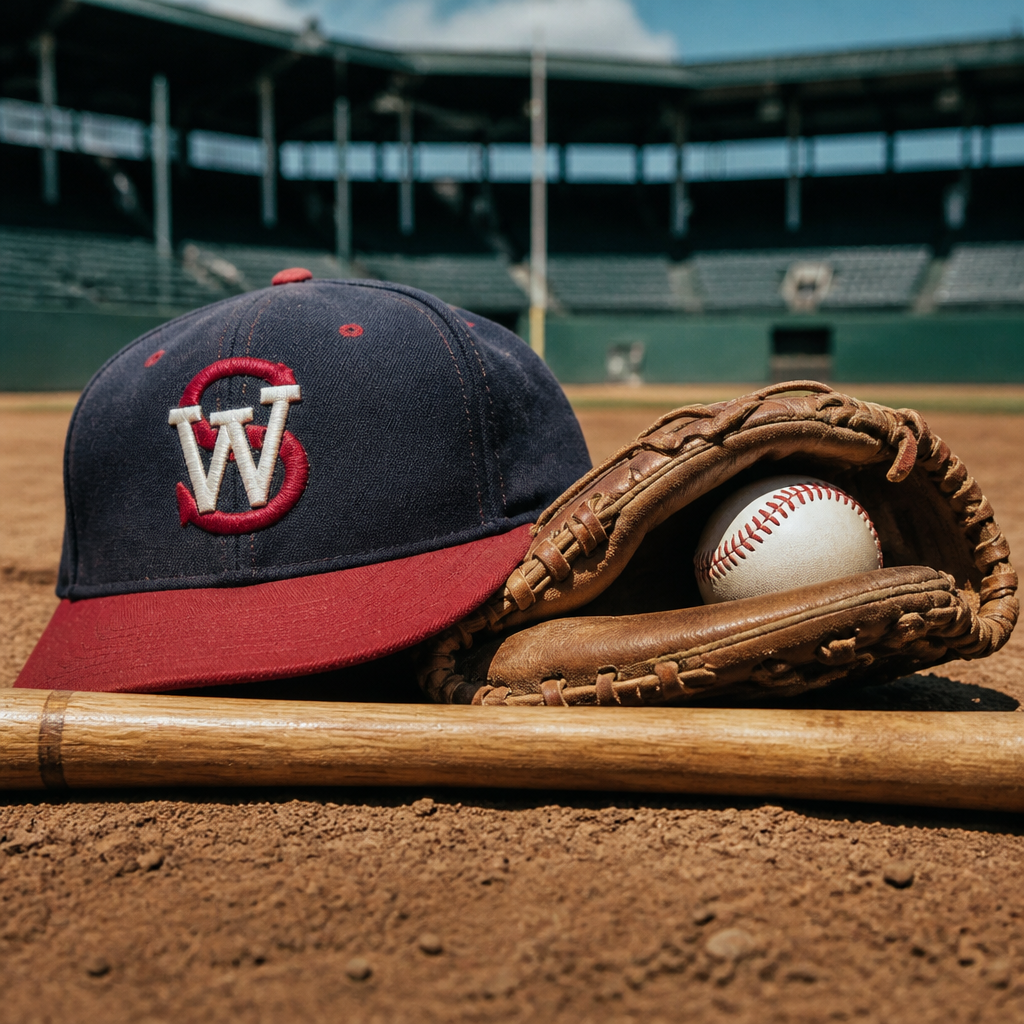
The second Washington Senators occupy a strange but essential place in baseball history: a team born from expansion, shaped by political symbolism, and ultimately remembered for becoming the Texas Rangers. For readers exploring relocated and defunct franchises, this story works as a hub because it connects nearly every major theme in the category: why leagues expand, why owners move clubs, how fans react when a city loses a team, and how a franchise can change identity without changing its legal lineage. In Major League Baseball, a franchise is the continuing business entity that holds player contracts, league membership, and historical continuity. A team name, ballpark, and city can change; the franchise itself persists. That distinction matters here. The original Washington Senators franchise moved to Minnesota after the 1960 season and became the Twins. To replace it, American League owners created a new Washington Senators club in 1961. That second Senators franchise lasted only eleven seasons in the capital before relocating to Arlington, Texas, in 1972 and rebranding as the Rangers.
I have always found the second Senators especially useful when explaining baseball history because they expose the gap between civic memory and franchise record books. Washington fans felt they were still supporting the Senators, but legally and competitively they were watching an expansion club starting from scratch. The roster, farm system, and ownership structure were new. Yet the uniforms, nickname, and city traditions borrowed heavily from the departed club. That tension makes the franchise a perfect case study for relocated and defunct teams. It also explains why many casual fans confuse the Senators with the Twins or assume the Rangers date to 1901. They do not. The Rangers trace their lineage to the 1961 expansion Senators.
This history matters beyond nostalgia. Franchise relocation affects public financing, regional media rights, labor markets, and the emotional economy of sports. Washington’s loss in 1971 foreshadowed later departures in other leagues, while Texas’s gain previewed the Sun Belt growth that reshaped professional sports. The second Senators were rarely successful on the field, but they reveal how baseball balanced tradition with market expansion during the postwar era. They also link to other essential stories in this subtopic, including the Athletics’ many moves, the Braves’ relocations, the Montreal Expos becoming the Nationals, the Seattle Pilots turning into the Brewers, and the original Senators becoming the Twins. Understanding this franchise gives readers a map for the wider world of baseball teams that disappeared, relocated, or survived under new names.
Why Washington Received a New Senators Team in 1961
The second Washington Senators existed because Major League Baseball did not want the nation’s capital left without a club. After owner Calvin Griffith moved the original Senators to Minnesota, political pressure rose quickly. Congress had long taken interest in baseball’s antitrust status, and league officials understood the optics of abandoning Washington. The American League responded by awarding the city an expansion franchise for the 1961 season, alongside the new Los Angeles Angels. Expansion was not simply a goodwill gesture. It was also a business move designed to preempt proposed rival leagues and to keep television and territorial influence in important markets.
The new Senators were awarded to Elwood “Pete” Quesada, a retired Air Force lieutenant general, with George B. McClellan and others in the ownership group. Their first general manager was Hall of Fame pitcher and executive Johnny Corriden briefly involved, but the central baseball architect became Mickey Vernon, the former Washington star who also managed the team. Like many expansion clubs, the Senators were assembled through an expansion draft that offered little elite talent. Existing teams protected their core players. The result was predictable: Washington fielded a roster heavy on veterans, role players, and unproven younger pieces. Expansion teams in that era were not designed to contend immediately.
The club played at Griffith Stadium, then later at Robert F. Kennedy Memorial Stadium after 1962. The move to the multipurpose RFK reflected a broader trend in American sports architecture, with round, concrete venues designed to host both baseball and football. While modern fans often criticize those facilities, RFK initially represented ambition and modernity. For Washington baseball, however, a new stadium could not solve structural weaknesses in talent acquisition, attendance, and ownership stability.
How the Second Senators Performed on the Field
The second Senators were, in blunt baseball terms, usually bad. They lost 100 games in their inaugural 1961 season, finishing 61–100 under manager Mickey Vernon. That result was ordinary for an expansion team, but sustained losing made it harder to build lasting momentum. From 1961 through 1971, the franchise never posted a winning record. Their best season came in 1969, when manager Ted Williams led them to an 86–76 finish, fourth in the newly formed American League East. That year remains important because it showed the club could be credible with sharper player development, smarter lineup construction, and improved pitching usage.
Williams, one of the greatest hitters in baseball history, brought instant legitimacy when he took the managerial job in 1969. He was direct, demanding, and unusually modern in some baseball judgments. He believed in the value of on-base skill and power, and players often said he could diagnose swing flaws with remarkable speed. Under Williams, outfielder Frank Howard became the franchise’s defining star. Howard, nicknamed “Hondo,” was enormous, charismatic, and one of the American League’s premier sluggers. He hit 44 home runs in 1968, 48 in 1969, and 44 again in 1970, giving Washington a genuine attraction even when the roster around him lacked depth.
Other notable Senators from this period included pitcher Camilo Pascual, acquired from Minnesota; infielder and future manager Dick Bosman; versatile veteran Don Lock in the early years; and later players such as Toby Harrah, who would become more closely associated with the Rangers. The farm system produced some useful talent but not enough impact players at once. In an era before free agency, weak drafting, thin player development pipelines, and modest financial commitment could trap a club in the second division for years.
| Season | Manager | Record | Notable Detail |
|---|---|---|---|
| 1961 | Mickey Vernon | 61–100 | Expansion debut season |
| 1962 | Mickey Vernon | 60–101 | Last season at Griffith Stadium |
| 1969 | Ted Williams | 86–76 | Best record in franchise history |
| 1971 | Ted Williams | 63–96 | Final Washington season |
The standings alone do not tell the full story. The Senators often played in a competitive environment shaped by Yankees wealth, Orioles excellence, and the expanding scouting reach of better-run organizations. They struggled to retain fan confidence because every step forward seemed temporary. The 1969 season, for example, did not launch a sustained rise. Instead, attendance remained unstable, and the club slid backward. That pattern is common in relocation histories: losing on the field rarely causes a move by itself, but it weakens the political and financial coalition needed to keep a team in place.
Why the Senators Left Washington for Texas
The relocation happened because owner Bob Short believed the franchise could not generate acceptable revenue in Washington and saw Arlington as a more favorable long-term market. Short bought the team in 1968 and quickly developed a reputation for impatience and aggressive public bargaining. He wanted a better stadium arrangement and stronger attendance. When those did not materialize to his satisfaction, he pursued relocation. Arlington offered a growing metropolitan region between Dallas and Fort Worth, public support for stadium development, and access to the booming Sun Belt economy that was attracting teams across professional sports.
Attendance is central to this story. The Senators were rarely a gate draw, and poor records depressed interest further. RFK Stadium, though newer than Griffith, was not an ideal baseball environment by modern standards, and the club lacked the multigenerational success that helps teams survive down years. Washington also faced competition for attention from politics, football, and a transient population. None of those factors made baseball impossible in the city, as the later Nationals proved, but they made the economics difficult for a weak franchise under unstable ownership.
The political backlash was fierce. Washington had already lost one Senators franchise a decade earlier. Losing the replacement team made the city look twice abandoned by the American League. Yet baseball owners approved the move. That vote reflected a hard truth in franchise history: leagues prioritize ownership consensus and market strategy over local sentiment unless legal or financial pressure changes the equation. Arlington promised growth. Washington offered uncertainty. In 1971, the move was approved, and the team became the Texas Rangers for the 1972 season.
The Final Game and the Meaning of a Franchise Exit
The final game in Washington, played on September 30, 1971, became one of the most memorable exits in baseball history. The Senators led the New York Yankees 7–5 in the top of the ninth inning when fans stormed the field before the game officially ended. Some tore up grass, grabbed bases, and carried off souvenirs. Order could not be restored. Under league rules, the Senators forfeited the game, and the official result became a 9–0 Yankees victory. The scene was chaotic, but it was also understandable: fans were expressing anger, grief, and powerlessness at the loss of their team.
I return to that game whenever discussing defunct and relocated franchises because it captures the emotional truth better than any financial report. A relocation is often described in neutral business language, yet for fans it feels like a civic rupture. The team takes memories, routines, and symbols with it. Children who learned the roster, families who bought tickets, workers who staffed the park, and neighborhoods built around game days all lose something real. Historians sometimes reduce moves to market efficiency. That is incomplete. The final Senators game reminds us that sports franchises are public institutions in private hands.
How the Senators Became the Texas Rangers
When the franchise moved to Texas, it did not become an expansion team or a new legal entity. It simply changed city, branding, and operating base. That continuity is why franchise records from the Senators years belong to the Rangers lineage. The Rangers inherited players, contracts, and organizational history, even as they marketed themselves as a fresh regional team. The new name referenced the Texas Rangers law enforcement tradition, giving the franchise a distinctly local identity. This is a common relocation strategy: preserve the business structure, replace the civic story.
The early Rangers were not instantly transformed on the field, but the move gave the franchise a larger geographic footprint and, eventually, stronger commercial potential. Arlington Stadium, converted from a minor league park, was imperfect but serviceable as a bridge venue. Over time, the Rangers developed stars, drew larger crowds, and embedded themselves in the Dallas–Fort Worth sports landscape. The real competitive breakthrough came much later, but that does not diminish the importance of the 1972 relocation. It created the institutional platform from which the modern Rangers eventually emerged.
Why This Team Matters in the Larger History of Relocated and Defunct Franchises
As a hub topic, the second Senators help readers understand several broader patterns. First, replacement teams rarely erase the trauma of an earlier move; Washington’s 1961 expansion club existed partly because the original Senators left, and that origin shaped public expectations. Second, weak expansion foundations often lead to prolonged losing, which then fuels relocation risk. Third, stadium politics matter, but they usually interact with ownership goals, media economics, and regional growth trends rather than acting alone. Fourth, franchise identity is more durable legally than culturally. The Rangers are the Senators’ continuation on paper, but most fans experience them as a Texas team with a separate story.
This framework is useful when studying other clubs in the same subtopic. The Seattle Pilots lasted one season before becoming the Milwaukee Brewers. The Montreal Expos moved and became the Washington Nationals. The Braves shifted from Boston to Milwaukee to Atlanta. The Athletics moved from Philadelphia to Kansas City to Oakland and later left Oakland. Each case involves different economics and politics, but the same core questions repeat: who owns the franchise, what market does the league want, what stadium terms are available, and how much leverage do fans really have?
The second Washington Senators deserve more than a footnote because they show all of those forces at work in compressed form. They were not champions, but they were historically consequential. If you are building knowledge around famous baseball teams, use this franchise as a reference point, then continue through the wider set of relocated and defunct clubs to see how often baseball’s map has changed.
Frequently Asked Questions
Why were there two different Washington Senators franchises in Major League Baseball?
There were two different Washington Senators because Washington, D.C., lost its original American League club and was immediately awarded a replacement team. The first Senators franchise had been a long-established part of the American League, but after the 1960 season it moved to Minnesota and became the Twins. Rather than leave the nation’s capital without a team, Major League Baseball created a new Washington Senators club as part of its early-1960s expansion plans. That new team began play in 1961.
This is why the “second Washington Senators” are often misunderstood. They shared the same city, the same familiar name, and much of the same public identity, but they were not simply a continuation of the original franchise. Legally and organizationally, they were a new expansion team. In practical terms, though, many fans experienced them as Washington’s attempt to start over after losing the original Senators. That overlap between official franchise history and emotional continuity is part of what makes the second Senators so important in baseball history. They represent both the promise of expansion and the instability that could still define the sport in that era.
How did the second Washington Senators fit into Major League Baseball’s expansion era?
The second Washington Senators were a classic product of baseball’s expansion era. In the late 1950s and early 1960s, Major League Baseball was under pressure to respond to population shifts, new media markets, and political concerns about the sport’s national footprint. Cities wanted teams, leagues wanted broader reach, and owners were increasingly aware that relocation and expansion could reshape the business of baseball. Washington became central to that conversation because it was not just another market; it was the capital of the United States. Leaving it without a team after the original Senators moved would have been symbolically awkward for the sport.
As a result, the second Senators became one of the clearest examples of how expansion could serve multiple purposes at once. They restored baseball to Washington, helped the American League grow, and gave MLB a way to manage public and political optics after an existing franchise left town. But like many expansion teams, they faced steep competitive challenges from the beginning. Expansion clubs usually started with thinner rosters, less established farm systems, and fewer advantages than long-standing teams. That meant the new Senators struggled on the field for much of their existence, even while they played a major role in the league’s larger strategy. Their history shows that expansion was not just about adding teams; it was also about balancing geography, politics, finances, and fan expectations.
Why did the second Washington Senators move to Texas and become the Rangers?
The second Washington Senators moved because of a combination of financial pressures, stadium concerns, and the growing appeal of new markets. By the late 1960s and early 1970s, many baseball owners were looking beyond tradition and focusing more aggressively on revenue opportunities. Washington had struggled to support a consistently successful team, attendance was often disappointing, and the club’s long-term outlook in the city looked uncertain. At the same time, Arlington, Texas, offered a different kind of opportunity: a fast-growing region, local governmental support, and the promise of a larger future for the franchise.
Owner Bob Short played a decisive role in the move. He had purchased the Senators and made clear that if the team could not secure a better financial situation in Washington, relocation was a real possibility. When a favorable stadium arrangement and market opportunity emerged in Texas, the franchise moved after the 1971 season and became the Texas Rangers in 1972. That transition is one reason the Senators are such an important case study in baseball relocation. The club did not vanish in a legal sense; it changed cities and identity while maintaining franchise continuity. In other words, the team’s records, business structure, and lineage carried forward into Texas, even though the Washington name and local connection did not. This makes the second Senators a perfect example of how a franchise can become something entirely different in public memory while remaining the same organization underneath.
How did Washington fans react to losing the second Senators?
Washington fans reacted with frustration, bitterness, and a sense of déjà vu. Losing one Senators team had already been painful enough, but losing a second one within little more than a decade deepened the city’s reputation as a vulnerable baseball market. For many fans, the relocation confirmed a fear that Washington was being treated as temporary or expendable despite its symbolic importance. The anger was not just about losing games on a schedule; it was about losing civic identity, tradition, and the possibility that the team might eventually become a winner if given time and support.
The emotional high point of that frustration came in the Senators’ final home game in 1971, which ended in chaos when fans stormed the field before the game could be properly completed. That moment has become one of the most memorable images in the history of franchise relocation. It captured the raw emotions that often surface when a team leaves: resentment toward ownership, grief over the end of a shared public institution, and a desire to express that pain in a visible way. In a broader historical sense, the reaction in Washington helps explain why franchise moves are rarely just business decisions in the eyes of fans. To owners and leagues, relocation may be about facilities, markets, and revenue. To supporters, it often feels like a civic betrayal. The second Senators’ exit remains one of the clearest illustrations of that divide.
What is the historical legacy of the second Washington Senators today?
The second Washington Senators matter because they sit at the intersection of several major baseball themes: expansion, relocation, franchise identity, and fan loyalty. On paper, they existed for only a relatively short period, from 1961 through 1971. But their story reaches far beyond those seasons because it connects the original Washington Senators, the rise of the Minnesota Twins, the birth of the Texas Rangers, and the long gap before Major League Baseball returned to Washington with the Nationals in 2005. Very few teams serve as such a useful bridge between different eras and different cities.
Historically, the second Senators are remembered less for winning than for what they reveal about how baseball evolved in the modern era. They show how expansion teams were often created to solve league-level problems, not just to satisfy local demand. They show how fragile a franchise could be even in an important city. They also show how a team’s public identity can disappear while its official lineage continues elsewhere. For readers interested in defunct and relocated franchises, that makes the second Senators especially significant. They are not just a footnote before the Rangers; they are a central example of how baseball’s map changed in the twentieth century, and how those changes affected communities, memory, and the sport’s sense of continuity.