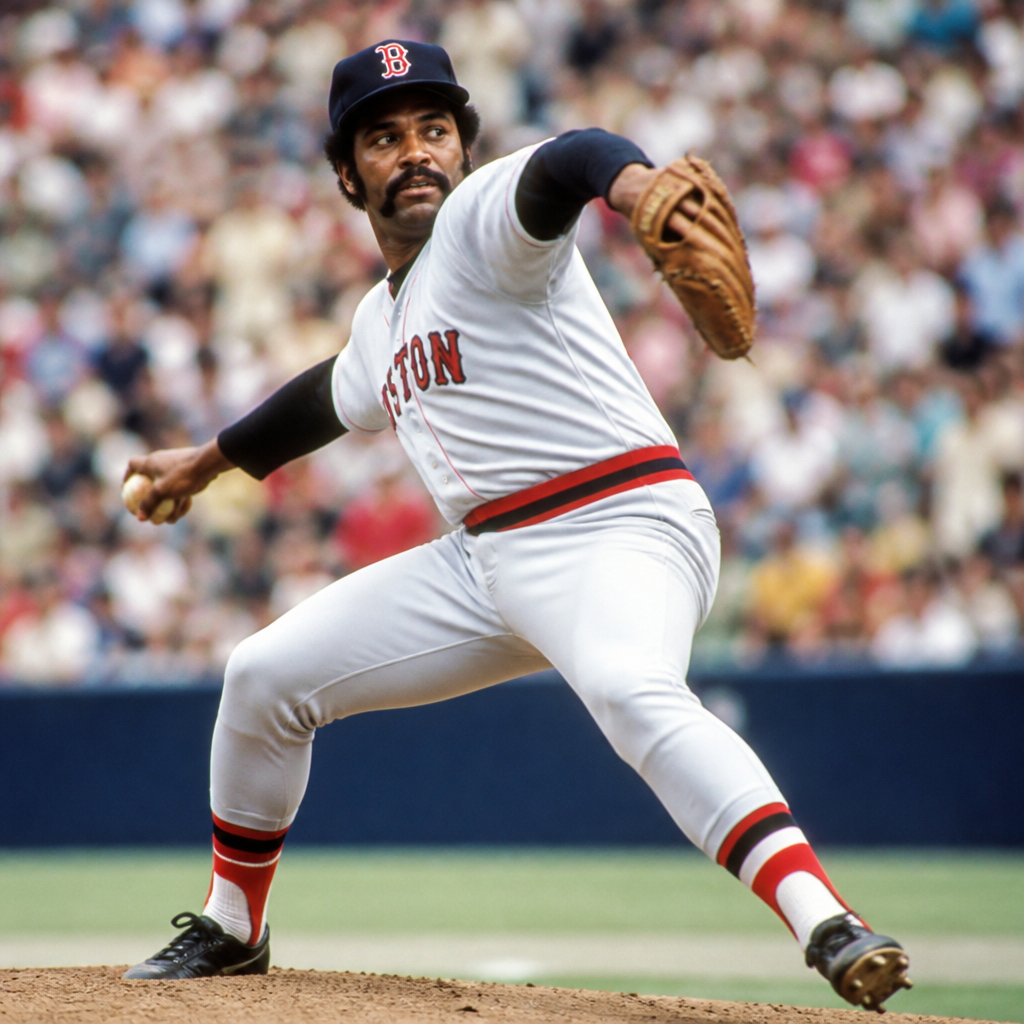
Luis Tiant remains one of baseball’s most distinctive legends because his results were excellent, his backstory was powerful, and his pitching delivery was unlike anyone else’s. In any serious discussion of legendary players, a strong player profile must explain not only statistics and awards, but also style, context, influence, and memory. Tiant offers all of that. Known widely as “El Tiante,” the Cuban-born right-hander became unforgettable through a twisting, turning motion that made hitters uncomfortable and fans lean forward before every pitch. He was not simply effective. He was theatrical, durable, adaptive, and deeply representative of baseball’s global history.
This player profile hub examines Luis Tiant as a complete subject: his early life, major league rise, signature mechanics, peak seasons, postseason reputation, and lasting place in the game. A player profile, in practical terms, is a central resource that connects performance with personality and historical importance. For a sub-pillar hub under Legendary Players, that matters because readers usually want more than a career line. They want to know why this player still comes up in conversations decades later, what made him different from peers, and where to go next if they are studying baseball history by era, team, or skill set.
I have worked on many historical player profiles, and Tiant is one of the clearest examples of why film study and context matter as much as box scores. His career numbers are strong on their own: 229 wins, a 3.30 ERA, more than 2,400 strikeouts, and major contributions for Cleveland, Minnesota, Boston, New York, Pittsburgh, and California. But those facts only open the door. Tiant’s significance also comes from the way he adjusted after injuries, the confidence he projected on the mound, and the emotional relationship he built with fans, especially in Boston during the 1970s.
He also matters because his story sits at the intersection of baseball and immigration, Cold War-era Cuban identity, and the changing shape of pitching. The son of Luis Tiant Sr., a famous Negro Leagues star, Tiant carried family baseball heritage into the majors while forging a style that was entirely his own. If this hub is doing its job, it should help readers understand three key ideas immediately: Luis Tiant was elite at his peak, memorable in ways numbers cannot fully capture, and essential to any broad study of player profiles within Legendary Players.
Early life, family background, and path to the majors
Luis Clemente Tiant Vega was born on November 23, 1940, in Marianao, Cuba. Baseball was part of his identity from the beginning because his father, Luis Tiant Sr., had starred as a pitcher in the Negro Leagues, including with the New York Cubans. That family connection gives Tiant’s profile unusual depth. He did not enter professional baseball as an isolated talent. He came from a household shaped by high-level competition, racial barriers, Caribbean baseball culture, and a lived understanding of what the sport could demand from a pitcher.
His route to Major League Baseball reflected the era’s complexity. Signed after developing in Cuba and Mexico, Tiant reached the Cleveland organization and debuted in the majors in 1964. In that period, movement between Cuban baseball and MLB had become politically complicated after the Cuban Revolution. For Tiant and other Cuban players, the professional journey was not just athletic. It involved separation, uncertainty, and the burden of building a life far from home. Those realities sharpen any honest player profile because they help explain his toughness and determination without drifting into mythmaking.
Tiant showed swing-and-miss stuff early. In 1968, with Cleveland, he went 21-9 with a 1.60 ERA, one of the best earned run average marks of the live-ball era. He led the American League in ERA and shutouts that season, proving he could dominate when command, deception, and stamina all aligned. That year matters enormously in any hub article because it marks the moment Tiant moved from promising arm to true star. It also arrived during the famous Year of the Pitcher, so his excellence must be read in context rather than inflated carelessly.
The delivery that defined El Tiante
The simplest answer to why Luis Tiant was unforgettable is his delivery. He turned his body dramatically away from the hitter, sometimes seeming to look toward second base or center field before unwinding toward home plate. That motion changed timing, hid the ball, disrupted visual pickup, and amplified uncertainty. Hitters did not just face velocity or movement; they faced delayed recognition. In pitching analysis, deception is the reduction of a hitter’s usable reaction window. Tiant created deception through posture, rotation, rhythm, and release concealment as effectively as many pitchers create it with pure speed.
What made the motion special was that it was not empty showmanship. Everything served a competitive purpose. By varying tempo, arm slot feel, balance point, and facial calm, Tiant controlled the at-bat before the ball reached the plate. He was known for a sweeping assortment that included a lively fastball in his earlier years, plus a curveball, slider, and changing speeds that became increasingly important as his career progressed. When shoulder trouble reduced some of his pure power, he reinvented himself rather than fading away. That adaptability is one of the strongest marks of a legendary player.
From a scouting perspective, Tiant is a textbook example of how delivery can become identity. Many pitchers have unusual mechanics, but few tie mechanics so closely to results, intimidation, and fan memory. Watch archival footage and the answer becomes immediate: he turned every pitch into an event. Broadcasters noticed it, opponents remembered it, and teammates trusted it in big games. For younger readers exploring player profiles, Tiant is a useful reminder that baseball greatness is not always standardized. The game has room for stylists, problem-solvers, and originals who succeed by being difficult to prepare for.
Peak performance, reinvention, and statistical profile
Tiant’s career was not a straight line, which makes his accomplishments more impressive. After his early dominance in Cleveland, injuries and inconsistency threatened his standing. Many pitchers who lose their top-end stuff never fully recover. Tiant rebuilt his approach. By the time he became a central figure for the Boston Red Sox in the 1970s, he was winning with intelligence, command, sequencing, and nerve. He posted 20-win seasons in 1972, 1974, and 1976, and he finished fourth in American League Cy Young voting in both 1974 and 1976.
His best-known Boston years show how to read statistics responsibly. Win totals matter, but so do innings, ERA+, complete games, and workload relative to era norms. Tiant threw 278.1 innings in 1976 and completed 21 games, numbers that look almost unreal by modern standards. Across his career he logged 187 complete games and 49 shutouts, evidence of both quality and endurance. ERA+ is especially useful here because it adjusts for league and ballpark context, and Tiant’s career mark of 114 confirms he was consistently better than league average over a long period.
| Category | Career Total | Why It Matters |
|---|---|---|
| Wins | 229 | Reflects longevity and repeated rotation value across multiple clubs |
| ERA | 3.30 | Strong run prevention over a long career in several environments |
| Strikeouts | 2,416 | Shows bat-missing ability beyond pitch-to-contact reputation |
| Complete Games | 187 | Demonstrates durability expected of frontline starters in his era |
| Shutouts | 49 | Highlights dominance when command and deception fully clicked |
| ERA+ | 114 | Confirms above-average effectiveness after adjusting for context |
Advanced metrics add nuance. Some analysts note that Tiant’s Hall of Fame case was stronger by traditional measures than by certain modern value systems when compared with inner-circle all-time greats. That is fair. He was not Walter Johnson, Tom Seaver, or Pedro Martínez. But that is the wrong threshold for understanding his place. The right conclusion is that Tiant combined star-level peaks, unusual longevity, and one of the most recognizable competitive styles the sport has produced. Within player profiles, that package makes him an ideal hub subject because every angle leads to another meaningful baseball conversation.
Boston icon, postseason performer, and fan connection
Luis Tiant became more than a productive pitcher in Boston. He became part of the franchise’s emotional identity. Signed after being released by Minnesota, he was initially viewed by some as a reclamation project. Instead, he revived his career and became one of the defining Red Sox players of the decade. Fenway Park suited him because he pitched with personality, edge, and visible conviction. Boston fans have always responded to players who compete with flair, and Tiant delivered that in abundance without losing command of the game’s technical demands.
His legend grew dramatically in the 1975 postseason. In the American League Championship Series against Oakland, he helped Boston advance. Then, in the World Series against Cincinnati’s Big Red Machine, Tiant was magnificent. He won Games 1 and 4 and threw complete games in both, allowing only one earned run across 18 innings in those starts. Even though Boston lost the series in seven games, Tiant’s poise under pressure became central to how that Fall Classic is remembered. When people discuss great postseason performances in defeat, his name deserves immediate mention.
There is also a human dimension to his Boston legacy that standard bios sometimes miss. Tiant’s charisma made him unusually accessible to fans. The grin, the cigar, the confidence, the pauses in his delivery, and the sense that he loved the duel all translated through television and from the stands. That matters in player-profile writing because sports memory is social. Fans pass down stories about players who made them feel something. Tiant did that. He was not merely observed; he was experienced, and that is why his legend stayed vivid long after his final major league appearance in 1982.
How Luis Tiant fits the Legendary Players hub
As a sub-pillar hub under Legendary Players, this page should guide readers toward the broader themes Tiant represents. First, he belongs in any cluster of articles about signature pitching deliveries, alongside pitchers whose mechanics altered hitter timing or public imagination. Second, he fits naturally into Cuban baseball history, where his career connects pre-revolution roots, exile-era realities, and later recognition of Latin American influence on Major League Baseball. Third, he is essential in Red Sox history, especially in any sequence covering the franchise between Ted Williams and the 2004 championship era.
He also connects well to articles on reinvention. Tiant is one of the clearest case studies in how a pitcher can survive diminished raw stuff by leaning on sequencing, command, and deception. For readers building knowledge through player profiles, that makes him a bridge between eras. Older baseball often celebrated complete games and craft; modern analysis emphasizes tunneling, release concealment, and attack plans. Tiant gives you both. His career can link naturally to deeper articles on 1968, the 1975 World Series, Cuban players in MLB, Fenway icons, and the history of pitching mechanics.
Any comprehensive hub should also be honest about debate. Tiant’s Hall of Fame candidacy generated strong support but did not result in election during his lifetime, which reflects how crowded historical comparisons can be. Reasonable analysts can disagree on his exact ranking among twentieth-century pitchers. What is not debatable is his importance as a baseball figure. He was excellent, original, and influential in the way memorable performers influence the sport: by giving future generations a model of craft with personality. If you are building a reading list on legendary player profiles, Luis Tiant belongs near the top.
Luis Tiant endures because he gives baseball history shape, motion, and character all at once. His profile teaches that a legendary player is not defined by one measure alone. Statistics establish credibility, but style creates memory, and resilience creates admiration. Tiant had all three. He won 229 games, dominated in peak seasons, carried heavy workloads, and delivered in October. Just as important, he did it with a mound presence so unusual that decades later people still recognize him instantly from a few seconds of film.
For readers using this page as a hub for Player Profiles within Legendary Players, Tiant offers an ideal standard. He connects family legacy, Cuban baseball history, tactical evolution, franchise identity, and postseason drama. He also demonstrates why close study matters. A quick summary might call him a very good pitcher with a famous windup. A complete profile shows something richer: an elite competitor who reinvented himself, thrilled fans, and left a permanent mark on the visual language of baseball. That is the difference between a name in a record book and a figure who remains alive in the sport’s collective memory.
If you are exploring legendary players more deeply, use Tiant as a starting point and a benchmark. Follow the paths that branch from his story: Cuban stars, inventive pitchers, Red Sox icons, and postseason heroes. The more you study Luis Tiant, the clearer it becomes why “El Tiante” was unforgettable—and why player profiles are at their best when they explain not just what a player did, but why people still care.
Frequently Asked Questions
Why is Luis Tiant considered such a distinctive figure in baseball history?
Luis Tiant stands out because he combined elite performance, unforgettable style, and a deeply compelling personal story in a way very few players ever have. On the field, he was far more than a colorful character with an unusual motion. He was an accomplished pitcher who won big games, logged heavy innings, adapted across different phases of his career, and proved himself against top competition over many seasons. His resume includes standout years with ace-level results, strong postseason moments, and the kind of durability that defined many of the best pitchers of his era.
What makes Tiant especially memorable, though, is that his legacy cannot be reduced to numbers alone. He was born in Cuba and carried with him a rich cultural identity at a time when the journeys of Latin American players were often not fully understood or appreciated by the broader baseball public. His nickname, “El Tiante,” became part of his mystique, but it also reflected how fully he occupied his own place in the game. Fans did not simply remember him because he won; they remembered him because no one looked like him on the mound, no one moved like him, and no one quite created the same sense of theater before releasing a pitch.
That combination of excellence and individuality is why he remains such a strong subject for any serious player profile. Tiant represents the kind of baseball legend whose impact comes from achievement, personality, visual identity, and emotional connection. He was effective enough to earn respect from historians and analysts, yet vivid enough to remain alive in baseball memory for generations of fans.
What made Luis Tiant’s pitching delivery so unforgettable?
Tiant’s delivery was one of the most recognizable and dramatic motions in baseball history. He did not simply wind up and throw; he seemed to transform the act of pitching into a kind of performance built on deception, rhythm, balance, and timing. His twisting, turning motion often involved a pronounced rotation of his body that took his face and upper torso away from the hitter before he came back through to deliver the ball. For batters, that created discomfort and uncertainty. For spectators, it created suspense. Every pitch felt like an event.
The reason this delivery matters so much is that it was not just visually unusual. It was functional. Tiant used movement, timing, arm angles, and body control to disrupt hitters’ expectations. His mechanics helped conceal the ball and interfere with a batter’s ability to pick up the pitch early. That gave his arsenal extra life, even when he was not simply overpowering hitters with raw velocity. In an era filled with great pitchers, Tiant found a way to separate himself through style that translated directly into competitive advantage.
His delivery also became central to how people remembered him because it was inseparable from his identity. Some pitchers are recalled mainly through statistics, others through championships, and others through a signature pitch. Tiant is remembered through motion itself. You can describe his career in numbers, but to truly understand why he left such a lasting impression, you have to picture him on the mound: the turn, the pause, the deception, and then the ball coming at the plate from a sequence hitters never forgot.
How good was Luis Tiant beyond the uniqueness of his style?
He was genuinely excellent, and that point is essential. Sometimes players with unusual flair get remembered in a way that can overshadow just how productive they were, but Tiant’s accomplishments hold up on their own. He was a high-level starting pitcher who could dominate lineups, carry a heavy workload, and succeed over an extended major league career. He had seasons in which he was among the best pitchers in baseball, and he consistently showed the traits teams prized most in frontline starters: competitiveness, adaptability, command of the moment, and the stamina to keep delivering deep into games.
Tiant’s best years showed both quality and quantity. He could miss bats, limit damage, and pitch with a savvy that allowed him to evolve as circumstances changed. Like many great pitchers, he was not defined by only one version of himself. He adjusted over time, making use of intelligence and craft as much as physical ability. That adaptability is one of the strongest signs of greatness because it shows that his success was not accidental or brief. He understood how to get hitters out, and he kept finding ways to do it.
His reputation also grew because he delivered in meaningful settings. Big-game pitchers are remembered differently, and Tiant earned that kind of memory. Fans and writers saw a competitor who embraced pressure rather than shrank from it. So while his delivery often becomes the headline, the deeper truth is that the delivery became legendary because it belonged to a pitcher whose results gave it lasting significance. If the performance had not matched the style, the style alone would not still command this much attention.
Why does Luis Tiant’s Cuban background matter when discussing his legacy?
Tiant’s Cuban background is a vital part of understanding both the man and the meaning of his career. Baseball has long been an international sport, but the experiences of players coming from Latin America, and especially from politically and emotionally complicated circumstances, often carried layers that box scores could never capture. Tiant’s story includes separation, identity, pride, and perseverance. Those elements shaped how fans understood him and why his career resonated beyond ordinary player appreciation.
When discussing Tiant seriously, it is important to recognize that he represented more than individual success. He was part of the broader story of Cuban and Latin American influence in Major League Baseball, and he brought visibility to that tradition through his excellence and charisma. For many fans, he embodied talent rooted in a baseball culture that was rich, passionate, and deeply respected. His presence in the major leagues reminded people that baseball history is not just an American story; it is also a Caribbean and Latin American story, and Tiant was one of its most memorable ambassadors.
This context also strengthens his emotional legacy. Fans were not only drawn to him because he was effective and entertaining. They connected with the fact that his journey reflected sacrifice and resilience. That gives his career a human dimension that enriches any profile of him. To write about Tiant only as a quirky pitcher with a famous windup would miss much of what made him significant. His background helps explain why he remains beloved, why his nickname carries such warmth, and why his memory endures across generations and communities.
What should a strong player profile include when explaining why Luis Tiant remains unforgettable?
A strong profile of Luis Tiant should go beyond awards, win totals, and earned run average and show how all the parts of his legacy fit together. The statistics matter because they establish that he was not merely memorable; he was legitimately great. Any thorough account should explain the caliber of his peak, his durability, his role as a frontline pitcher, and the moments that strengthened his standing in the game. Readers need that foundation in order to appreciate why he belongs in conversations about legendary players.
At the same time, a complete profile must give equal attention to style. Tiant’s delivery is not a decorative detail; it is central to his identity and to the way baseball remembers him. Describing the motion, its deception, and the reaction it inspired helps readers understand why footage and photographs of him remain so powerful. Baseball memory is often visual, and Tiant’s image on the mound is one of the clearest examples of that truth.
Context is just as important. A meaningful profile should place him within his era, explain the significance of his Cuban roots, and note how his story intersects with larger themes in baseball history such as migration, representation, adaptation, and personality in sport. Finally, it should address influence and memory: why fans still talk about him, why former players respected him, and why younger readers who never saw him pitch can still find him compelling. In Tiant’s case, unforgettable status comes from the full package: performance, originality, personal history, and the rare ability to remain vivid long after the final pitch.