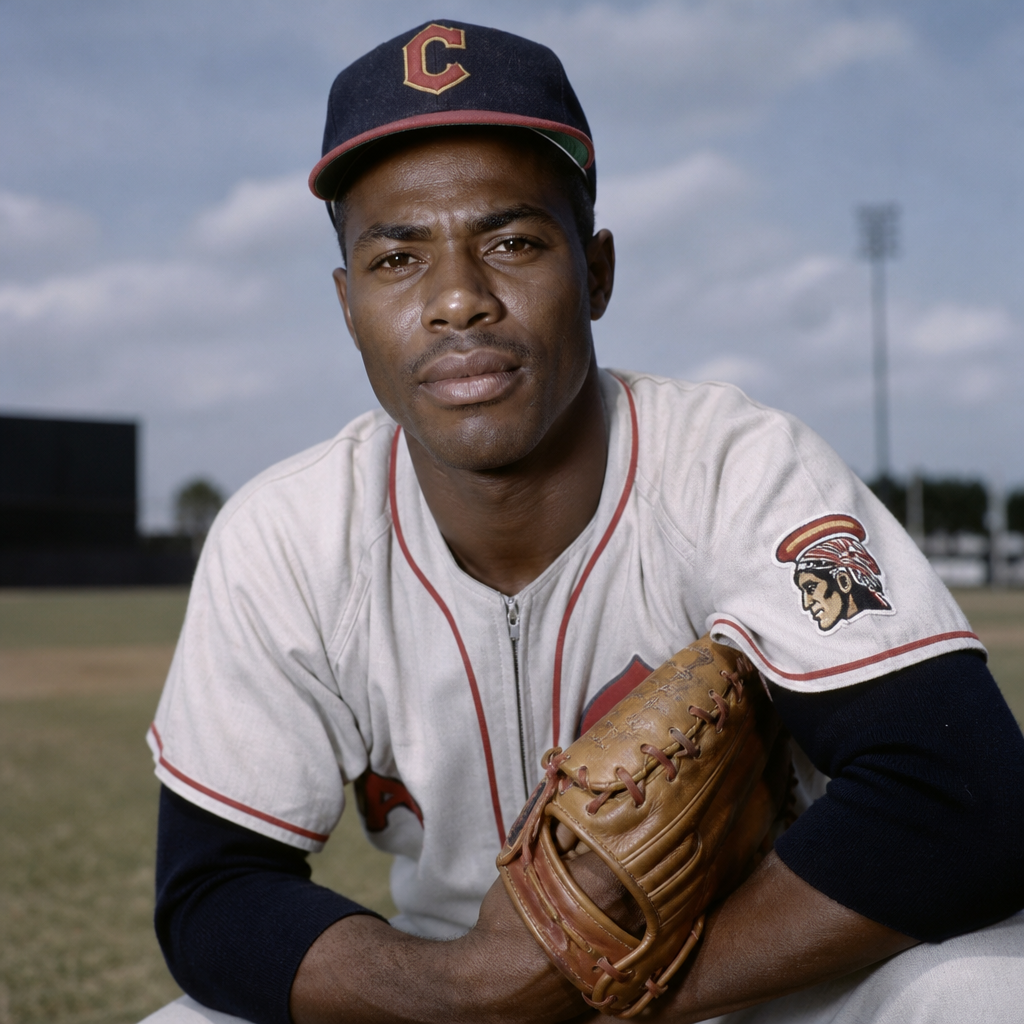
Leon Day stands among the most complete players in Black baseball history, yet his name is still too often missing from mainstream conversations about the game’s greatest pitchers. In any serious Negro Leagues player profile, Day deserves a central place because he was not simply a durable starter or an occasional star. He was a genuine all-around ace: a power pitcher, a precise control artist, an athletic defender, a dangerous hitter, and a leader who thrived in high-pressure games. For readers exploring legendary players, his career offers a clear view of the talent level, competitive structure, and cultural importance of the Negro Leagues.
When I have studied Negro Leagues player profiles, one fact becomes obvious very quickly: versatility mattered. Rosters were smaller, travel was exhausting, schedules were irregular, and top teams often balanced league play with exhibitions against white major leaguers and local clubs. In that environment, a player who could contribute in multiple ways carried enormous value. Leon Day did exactly that. He pitched with elite stuff, fielded his position well, ran the bases aggressively, and hit well enough that opponents had to account for him beyond the mound. That broad skill set is the core of his legacy.
Born on October 30, 1916, in Alexandria, Virginia, Day grew into one of the defining stars of Black baseball during the 1930s and 1940s. He spent key years with the Baltimore Black Sox, Newark Eagles, and other clubs in a career that crossed leagues, wartime interruptions, and the unstable business conditions that shaped the era. Because recordkeeping in the Negro Leagues was incomplete compared with Major League Baseball, some statistical debates remain. Even so, contemporary accounts, surviving box scores, Hall of Fame recognition, and testimony from fellow players all point in the same direction: Leon Day was elite.
This player profile hub article examines why Day matters, what made him different, and how to understand his place among legendary Negro Leagues players. It also serves a broader purpose for anyone researching player profiles under the Legendary Players topic. Day’s story connects pitching excellence, two-way skill, military service, championship baseball, and delayed historical recognition. Studying him does more than recover one great career. It helps explain how Black baseball produced complete athletes whose brilliance deserves the same level of analysis routinely given to stars from the American and National Leagues.
Leon Day’s early path and rise in Black baseball
Day began his professional career as a teenager, and from the start observers noticed his rare athleticism. He broke in with the Baltimore Black Sox, a club with deep significance in Negro Leagues history, and developed during a period when top Black teams played intense league schedules while also barnstorming widely. That environment was unforgiving. Pitchers had to face strong lineups repeatedly, adapt to uneven travel conditions, and stay sharp without the infrastructure available to major league clubs. Day’s rapid emergence under those circumstances says a great deal about his talent and toughness.
Scouts and opponents described a pitcher with velocity, command, and poise. He could overpower hitters, but he did not depend only on speed. He mixed pitches intelligently, changed eye levels, and worked with the confidence of a staff ace. That blend became his trademark. By the late 1930s and early 1940s, he had established himself as one of the Negro Leagues’ most respected arms, earning assignments in major showcase events, including East-West All-Star appearances. Those selections mattered. The East-West All-Star Game was one of Black baseball’s premier stages, and repeated inclusion signaled that peers, managers, and fans viewed Day as a top-tier performer.
His rise also reveals a crucial point for readers using this page as a player profiles hub: Negro Leagues greatness cannot be measured only by surviving seasonal totals. Reputation was built through league games, all-star competition, exhibitions against elite opponents, and pennant-race pressure. Day excelled in every setting. That complete record of performance is why historians rank him so highly.
What made Leon Day a versatile pitching ace
Leon Day is best remembered as a pitcher, but calling him only a pitcher understates his value. He was the kind of player a manager could trust to influence the game in several dimensions at once. On the mound, he featured a live fastball, sharp secondary offerings, and the command to attack hitters rather than nibble. Accounts from teammates and sportswriters consistently praise both his power and his intelligence. He understood sequencing before that term became common in modern analysis. He could challenge hitters inside, expand the zone when ahead, and induce weak contact when strikeouts were not necessary.
He was also an outstanding athlete. Day fielded his position at a high level, controlled the running game, and contributed with the bat. In an era when pitchers were often expected merely to survive at the plate, he offered real offensive value. That mattered in low-margin games. A well-executed bunt, a line drive single, or an extra base taken through speed could change the outcome of a contest that was already being shaped by his pitching. This is one reason many historians describe him as one of the most complete players in Negro Leagues history, not just one of the best pitchers.
Versatility also meant durability and adaptability. Day worked as a starter, handled showcase games, and pitched in the shifting demands of league and independent schedules. He was effective in environments where rest, travel, and support systems were far from ideal. In practical baseball terms, that is the mark of an ace: not only talent, but repeatable excellence under unstable conditions.
Key strengths that defined Day’s game
To understand Leon Day clearly, it helps to break his profile into specific strengths rather than rely on broad praise alone. The combination below explains why he stood out among legendary players.
| Strength | What It Meant on the Field | Why It Mattered |
|---|---|---|
| Fastball | Beat hitters with velocity and late life | Gave him swing-and-miss ability against top lineups |
| Command | Located pitches to both sides of the plate | Allowed him to control counts and limit damage |
| Athleticism | Fielded bunts, covered bases, ran well | Saved outs and added value beyond pitching |
| Hitting ability | Contributed with the bat instead of giving away at-bats | Created scoring chances in tight games |
| Composure | Stayed effective in all-star games and pennant races | Separated him from pitchers with talent but less consistency |
From my experience evaluating historical players, versatility can become a vague compliment unless tied to game actions. In Day’s case, the evidence is concrete. He could miss bats, manage innings efficiently, defend, and help manufacture offense. That package is rare in any era.
Leon Day and the Newark Eagles championship years
Day’s most famous team association came with the Newark Eagles, one of the premier Negro National League clubs. The Eagles were a talented, ambitious organization that featured stars such as Monte Irvin and Larry Doby. Within that setting, Day’s presence on the pitching staff was enormous. He gave Newark frontline quality and helped anchor a team capable of winning at the highest level. The 1946 season remains especially important because the Eagles won the Negro League World Series, a defining achievement in franchise history.
Although Day’s career cannot be reduced to one season, championship context matters in player profiles because it tests whether a star could drive winning, not just compile praise. With Newark, he proved that he could. The Eagles relied on him against strong opposition, and his reputation as a big-game pitcher only grew. Playing alongside future major league talent also helps modern readers calibrate his level. Day was not a standout on a weak team hidden from comparison. He was a star among stars.
His role with Newark highlights another important reality of Negro Leagues history: these clubs featured deep strategic baseball and elite talent despite limited financial security. Teams like the Eagles were rich in ability but often operated without the stable media coverage and archival support that preserved white major league careers in greater detail. That gap in documentation should never be mistaken for a gap in quality. Leon Day’s body of work with Newark helps correct that misunderstanding.
Military service, interruption, and resilience
Like many athletes of his generation, Day’s career was interrupted by World War II. He served in the military, including time in the European theater, and reportedly played a remarkable role in an Army all-star setting soon after the D-Day invasion period. Military service took prime athletic years from numerous Negro Leagues stars just as it did from white major leaguers such as Ted Williams and Bob Feller. For Day, the interruption is essential to any honest evaluation of his career totals and legacy.
What stands out is how strongly he returned. Losing competitive seasons can disrupt mechanics, conditioning, and momentum, especially for a pitcher. Yet Day remained an elite presence after the war and contributed to championship-level baseball. That resilience supports the long-held view that he was not merely gifted. He was disciplined, adaptable, and deeply competitive.
When building comprehensive player profiles, wartime context should never be treated as a footnote. It shaped careers, pennant races, and historical memory. In Day’s case, it likely cost him additional counting statistics and wider fame, while adding another layer to his story as a player who succeeded through disruption.
How Leon Day compares with other Negro Leagues legends
Comparisons are unavoidable in any Legendary Players hub, but they need care. Satchel Paige remains the most famous Negro Leagues pitcher because of his charisma, longevity, and later major league visibility. Bullet Rogan is often celebrated as the gold standard for two-way brilliance. Hilton Smith earned respect for consistency and command. Leon Day belongs in that company. He may not have the same name recognition as Paige, but in pure baseball terms he fits comfortably within the top tier of Negro Leagues pitchers.
What makes Day distinctive is the balance of his profile. Some great pitchers are remembered primarily for durability, others for pure stuff, and others for showmanship or postseason moments. Day combined multiple elite traits without obvious weakness. He had frontline velocity, legitimate all-around athleticism, and success in marquee games. Teammates and historians repeatedly emphasize that he could do everything well. That assessment is not sentimental revision. It is the most accurate summary of his skill set.
For readers moving through player profiles, Day offers a useful benchmark. If a player was respected by fellow stars, selected for major showcases, successful on championship clubs, and later honored in Cooperstown, that player belongs in the inner conversation of greatness. Day checks every one of those boxes.
Hall of Fame recognition and why his legacy still matters
Leon Day was inducted into the National Baseball Hall of Fame in 1995, late in life and far later than his achievements warranted. That delayed recognition reflects a larger historical failure to document and honor Negro Leagues players promptly. By the time many of these stars received formal acknowledgment, years of public memory had already been lost. Day’s induction helped restore his place, but it also underscored how much educational work remains.
His legacy matters because it expands the standard baseball story. He reminds modern audiences that elite pitching history is incomplete without the Negro Leagues. He also gives younger readers a richer picture of what greatness looked like before integration fully reshaped professional baseball. Day was not a novelty, not a symbolic figure, and not a player included only to round out history. He was a dominant competitor whose career stands up under serious scrutiny.
For a Player Profiles hub, that is the lasting takeaway. Leon Day represents the kind of player every baseball fan should know: skilled, versatile, resilient, accomplished, and essential to understanding the highest level of Black baseball. Explore related legendary player profiles, compare his career with other Negro Leagues aces, and use his story as a starting point for a deeper study of the stars who built baseball excellence under unequal conditions.
Frequently Asked Questions
Who was Leon Day, and why is he such an important figure in Negro Leagues history?
Leon Day was one of the most gifted and complete players to emerge from the Negro Leagues, and his importance goes far beyond simple win-loss records or reputation alone. He was a true ace in every sense of the word: a hard-throwing pitcher with excellent control, a poised competitor in big games, a strong fielder, and an unusually capable hitter for his position. That combination made him stand out even in an era filled with exceptional talent. Day played at a time when Black baseball featured many of the finest players in the world, yet segregation prevented them from receiving the same visibility, coverage, and statistical preservation as their white major league counterparts. As a result, players like Day were often celebrated by those who saw them firsthand but later undervalued in mainstream baseball history.
What makes Day especially important is that he was not a one-dimensional star. He could overpower hitters, but he also knew how to outthink them. He could carry a team as a starter, contribute as an all-around athlete, and rise to the moment under pressure. Teammates, opponents, and historians alike have pointed to his all-around brilliance as evidence that he belongs in any serious conversation about elite Negro Leagues players. His legacy helps modern readers understand that Black baseball was full of deeply skilled, strategically advanced, and highly competitive stars whose greatness deserves wider recognition.
What made Leon Day such a versatile and complete pitcher?
Leon Day’s versatility came from the rare way he combined physical talent, baseball intelligence, and all-around athletic ability. On the mound, he had the power to challenge hitters directly, but he was not simply a thrower relying on velocity. He also possessed refined control, which allowed him to change speeds, work different parts of the strike zone, and keep batters from getting comfortable. That balance of power and precision is one of the clearest signs of a truly elite pitcher. Day could dominate when he had his best stuff, but he could also win when he needed to pitch more strategically, which is often the mark of a complete ace rather than a streaky hard-thrower.
His value extended well beyond the basic act of delivering pitches. Day was athletic enough to help himself defensively, reacting well to balls in play and handling his position with confidence. He was also known as a dangerous hitter, which added another layer to his profile. In an era when many pitchers were expected simply to survive at the plate, Day could contribute meaningfully. That kind of all-around impact made him exceptionally valuable to his teams. He was the kind of player who could influence the game from multiple angles, and that broader contribution is a major reason why he is remembered as one of the most complete pitchers in Negro Leagues history.
How did Leon Day perform in big games and pressure situations?
One of the strongest elements of Leon Day’s legacy is his reputation for rising to the occasion. Great players often separate themselves not just through talent, but through how consistently they deliver when the stakes are highest, and Day built a strong reputation as a competitor who thrived in important moments. In showcase games, key league matchups, and contests against top opponents, he was known for maintaining poise and attacking hitters with confidence. He had the kind of mound presence that teammates trusted and opponents respected. That matters enormously when evaluating pitchers from the Negro Leagues, where scheduling, travel, and frequent high-level competition demanded both skill and resilience.
Pressure performance is especially meaningful in Day’s case because Negro Leagues stars often had to prove themselves repeatedly in front of mixed audiences, skeptical observers, and unstable baseball structures that did not always preserve their achievements properly. Day’s success in major moments helped build his standing among those who played with and against him. He was not merely compiling appearances; he was making a lasting impression in meaningful games. That reputation as a big-game pitcher is one of the reasons historians and baseball scholars continue to rank him so highly, even when the surviving statistical record is incomplete.
Why isn’t Leon Day as widely known today as some other baseball legends?
The biggest reason Leon Day is not more widely known is the long shadow of segregation and the historical neglect of Negro Leagues baseball. During his career, Black players were denied equal access to Major League Baseball, which meant that many of the greatest talents of the era performed outside the most heavily covered and institutionally supported league structure in the country. Newspapers gave uneven coverage, recordkeeping was inconsistent, and many remarkable performances were never preserved with the same care that followed white major league stars. As a result, players like Day did not become household names in the same lasting way, even though their talent was clearly recognized by informed contemporaries.
Another factor is that Day’s greatness was broad rather than simplified into one easy headline. Some players are remembered for a single iconic statistic, a singular mythic trait, or a larger-than-life media image. Day’s excellence was more layered. He was a complete baseball player whose value came from dominance, control, athleticism, hitting ability, and leadership all at once. That kind of greatness can be harder to compress into a simple popular narrative, especially when the surrounding historical system failed to spotlight it properly. Today, as more readers and researchers revisit Negro Leagues history with seriousness and respect, Leon Day is increasingly receiving the recognition he has long deserved.
How should modern fans evaluate Leon Day’s legacy among the greatest pitchers in baseball history?
Modern fans should evaluate Leon Day with an appreciation for both his talent and the historical barriers that obscured it. The first step is to understand that he was not merely good within a limited context; he was widely regarded as a top-tier talent among elite Black baseball competition. The Negro Leagues were filled with outstanding players, and standing out there required genuine excellence. Day’s reputation as a power pitcher with command, athleticism, and offensive ability places him in rare company. When historians describe him as one of the most complete pitchers of his era, that is not sentimental praise. It reflects the testimony of people who saw him, the competitive environment he dominated, and the broad skill set he brought to the field.
His legacy should also be viewed as part of the larger project of restoring Negro Leagues stars to their rightful place in baseball history. Comparing players across eras is never simple, especially when the statistical record is uneven, but Day clearly belongs in discussions of historically great all-around pitchers. He represents the type of player whose career reminds fans that baseball history is incomplete when it centers only on the segregated major leagues and ignores the brilliance that existed outside them. In that sense, honoring Leon Day is not just about recognizing one exceptional pitcher. It is about recognizing the full richness of the game and making sure that greatness, wherever it appeared, receives the respect it earned.