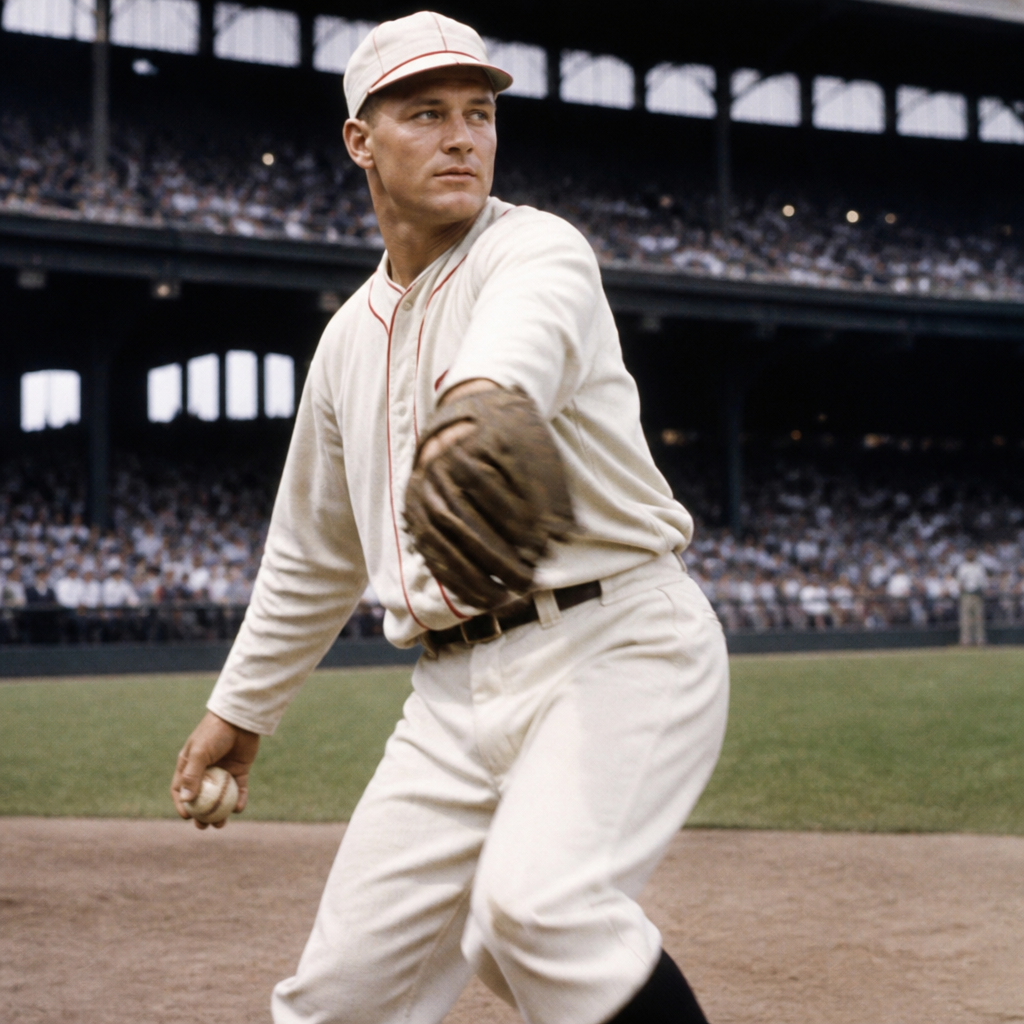
Kid Nichols remains one of baseball’s clearest examples of greatness hiding in plain sight, a pitcher whose 300 wins came so early and so relentlessly that modern fans often overlook what he achieved. In player profiles, the best subjects are not just famous names but careers that explain how the sport once worked, and Nichols does exactly that. He was the youngest pitcher to reach 300 victories, doing it in an era when starting pitchers carried workloads that seem almost impossible today. Understanding his career means understanding nineteenth-century baseball, the evolution of pitching strategy, and the standards used to judge legendary players across eras. For a “Legendary Players” hub, Nichols belongs near the center because his record combines durability, run prevention, adaptability, and historical importance.
Born Charles Augustus Nichols in 1869, he earned the nickname “Kid” because he broke into professional baseball while still young. He debuted in the major leagues with the Boston Beaneaters in 1890 and quickly became the staff anchor on one of the National League’s strongest clubs. A player profile of Nichols has to define the key measures that support his reputation. Wins, while team-dependent, still matter when a pitcher dominates for more than a decade. Earned run average measures how many earned runs a pitcher allows per nine innings, though dead-ball and nineteenth-century contexts must be considered. Complete games show how often a pitcher finished what he started, a central part of his value. Era-adjusted metrics such as ERA+ help modern readers compare him to later stars by accounting for league and park conditions.
Why does Kid Nichols matter now? First, his accomplishment has proved nearly untouchable. He reached 300 wins at age thirty, younger than any other pitcher in major league history. Second, his path illustrates the difference between baseball then and baseball now. Teams used smaller rotations, pitchers threw far more innings, and game management demanded stamina as much as pure stuff. Third, Nichols offers a useful hub subject for player profiles because his story connects to broader themes: Hall of Fame standards, historical rankings, changing pitcher usage, and how records survive across generations. I have worked through old pitching registers, league tables, and game logs on players from this period, and Nichols repeatedly stands out because the numbers are not inflated by one lucky season. They show sustained excellence, year after year, against the best competition available in his time.
Any complete player profile should answer simple questions directly. Who was Kid Nichols? A Hall of Fame right-handed pitcher who won 361 games from 1890 to 1906. What is his signature distinction? He is the youngest pitcher ever to record 300 wins. Why is he in the inner circle of historic pitchers? Because he combined elite longevity with peak performance, leading pennant-winning teams while posting run-prevention numbers that remained strong even after adjusting for his offensive environment. Those points make him an ideal hub figure for deeper articles on nineteenth-century stars, Boston dynasty teams, and the development of pitching as a craft.
Career Overview and the Road to 300 Wins
Nichols debuted with Boston in 1890 and immediately became indispensable. As a 20-year-old rookie, he won 27 games and threw 424 innings, a total that would be unthinkable in modern baseball. That season was not an outlier created by novelty or weak competition. It was the foundation of a run in which he won at least 30 games seven times. Between 1891 and 1898, he recorded win totals of 30, 35, 35, 34, 26, 30, 31, and 31. Those numbers were possible because teams relied heavily on top starters, but they still required remarkable consistency, command, and physical resilience.
His march to 300 happened with unusual speed because he reached elite status almost immediately. By the end of the 1898 season, he already had 290 wins. He crossed 300 in 1899, still only 30 years old. No pitcher before or since has reached that milestone younger. The feat becomes even more impressive when placed beside later legends. Walter Johnson, Grover Cleveland Alexander, Lefty Grove, and Tom Seaver all had extraordinary careers, yet none got there at Nichols’s age. In practical terms, Nichols built a Hall of Fame résumé before many great pitchers even reached their statistical prime.
Boston’s success helped, but context should not erase credit. Great pitchers on great teams still have to suppress runs, handle massive innings loads, and take the ball every few days. Nichols did all of that. The Beaneaters won multiple pennants during his tenure, and he was central rather than incidental. Staff ace is not just a label here; he was the pitcher managers counted on to stop losing streaks, win crucial series, and finish his own games.
How Good Was Kid Nichols at His Peak?
The short answer is that Kid Nichols was one of the best pitchers in baseball for more than a decade. He led the National League in wins three times, in earned run average once, and in shutouts multiple times. His career ERA was 2.96, and his ERA+ was 140, meaning he prevented earned runs at a rate 40 percent better than league average after adjusting for context. For a pitcher from the 1890s, when rules and offensive conditions changed rapidly, that is a powerful marker of quality.
Peak evaluation also requires looking beyond seasonal win totals. Nichols excelled at limiting damage in high-volume workloads. He completed 532 games in his career and threw 5,067.1 innings. Those innings were not empty accumulation. He allowed relatively few earned runs, kept his team in nearly every start, and remained effective as the league evolved. The pitching distance moved to sixty feet six inches in 1893, fundamentally changing pitcher-hitter dynamics. Some pitchers declined sharply under the new conditions. Nichols adjusted and kept winning at an elite level, which says a great deal about his baseball intelligence and mechanics.
From a scouting perspective, contemporary accounts described excellent control, a sharp curve, poise, and the ability to change speeds rather than simply overpower hitters. That matters because nineteenth-century aces had to survive without modern bullpen protection, pitch-count management, or advanced medical support. Nichols’s value came from command and efficiency as much as durability. He understood how to pace a game, induce weak contact, and work deep without unraveling.
| Career marker | Kid Nichols | Why it matters |
|---|---|---|
| Major league wins | 361 | Places him among the all-time leaders and confirms exceptional longevity |
| Age at 300th win | 30 | Youngest pitcher ever to reach the milestone |
| Career ERA+ | 140 | Shows run prevention far above league average after adjustment |
| Complete games | 532 | Reflects ace-level responsibility in his era |
| Innings pitched | 5,067.1 | Demonstrates workload and sustained effectiveness |
Style, Workload, and Era Context
Any responsible player profile has to explain the environment. Nichols pitched in the 1890s and early 1900s, when rotations were short, relief pitching was limited, fielding conditions were rougher, and offensive rules changed more often than modern fans realize. Pitchers were expected to finish games, and stars routinely surpassed 300 innings. That context helps explain his raw totals, but it does not diminish them. Everyone played under similar broad conditions, and only a small group turned that environment into Nichols-level dominance.
His workload was staggering even by nineteenth-century standards. He exceeded 400 innings four times and topped 300 innings in eleven seasons. Today, 200 innings signal a frontline starter. Nichols often doubled that while maintaining run prevention well above league norms. The physical challenge alone was immense. There were fewer recovery protocols, no MRI diagnostics, no specialized pitch-design labs, and no modern travel comforts. Durability was both a skill and a competitive advantage.
Another important context point is scoring environment. The 1890s could be volatile offensively, especially after the pitching distance change. Nichols’s ability to remain highly effective after that shift separates him from pitchers whose value was tied more closely to pre-1893 conditions. When I assess old pitchers, I look for evidence that they survived major structural changes in the game. Nichols passes that test clearly.
Team Success, Leadership, and Big-Game Value
Nichols was not compiling numbers for second-division clubs. He was the pitching backbone of Boston teams that won five National League pennants during the 1890s. Those clubs featured strong position players and good organizational support, but every dynasty needs a pitcher who stabilizes the schedule. Nichols gave Boston that stability. His starts created rhythm for the roster because teammates knew they were likely to get length, composure, and a chance to win.
Leadership from a pitcher in that era was practical rather than performative. It meant setting a pace, taking difficult assignments, and recovering fast enough to pitch again. Nichols handled that burden for years. He also contributed in postseason-style settings before the modern World Series structure fully matured. In the Temple Cup, an early championship series format, he pitched effectively and helped validate his reputation as more than a regular-season accumulator.
One reason Nichols works so well as a hub page subject is that his career opens doors to other player-profile questions. How should historians weigh pennants for pitchers? What does ace value look like before specialized closers and five-man rotations? How much credit belongs to the club versus the star? Nichols provides a strong case study because he clearly benefited from quality teams, yet the teams also depended heavily on his excellence.
Legacy, Hall of Fame Status, and Modern Relevance
Nichols was elected to the Hall of Fame in 1949, a deserved recognition that nevertheless came long after his playing days. His relative obscurity among casual fans says more about historical distance than merit. In serious all-time pitching discussions, he belongs comfortably in the conversation below the very top tier occupied by names like Walter Johnson and Cy Young but ahead of many more famous twentieth-century winners. His combination of 361 victories, a 140 ERA+, and extraordinary workload gives him one of the strongest résumés ever built by a right-handed starter.
Modern relevance comes from contrast. Baseball now protects pitchers with strict usage patterns, deep bullpens, and injury-prevention systems. That shift makes Nichols’s record as the youngest to 300 wins effectively unreachable. No contemporary pitcher gets enough starts or innings early enough in his career to threaten it. The record survives not because talent disappeared but because the sport changed.
For readers exploring player profiles under the Legendary Players umbrella, Nichols offers a model for evaluating greatness fairly. Start with the era, then examine dominance relative to peers, adaptability to rule changes, value to winning teams, and durability over time. By those standards, Kid Nichols was no curiosity from a primitive game. He was a fully legitimate all-time great whose achievements still define the upper boundary of pitching excellence.
The main takeaway is simple: Kid Nichols earned his place in baseball history through sustained superiority, not nostalgia. He won 361 games, reached 300 younger than any pitcher ever has, anchored championship-caliber clubs, and adjusted to major changes in how the game was played. Those facts make him essential reading for anyone building a serious understanding of legendary player profiles.
If you are mapping this subtopic, use Nichols as a starting point for related articles on nineteenth-century aces, Boston dynasties, Hall of Fame benchmarks, and the evolution of pitcher workload. His career connects all of them. Revisit the numbers, compare the context, and you will see why Kid Nichols remains one of the strongest cases for enduring pitching greatness in baseball history today.
Frequently Asked Questions
Who was Kid Nichols, and why is he such an important figure in baseball history?
Kid Nichols was one of the dominant pitchers of the 19th century and early Deadball Era, yet he is often less celebrated today than some of the bigger mythic names in baseball history. Pitching primarily for the Boston Beaneaters, Nichols built a career that combined remarkable durability, elite run prevention, and an almost unmatched ability to win at a relentless pace. He finished with 361 career victories, a total that places him among the winningest pitchers the game has ever seen.
What makes Nichols especially important is that his career helps explain how baseball once functioned. He pitched in a period when top starters were expected to work constantly, throw enormous inning totals, and finish the vast majority of their own games. Rather than succeeding in a specialized system built around bullpens, pitch counts, and five-man rotations, Nichols thrived in a baseball world that demanded volume as much as excellence. That context matters because it shows that his greatness was not simply about longevity. He was an elite pitcher by the standards of his own time, regularly ranking among league leaders in wins, earned run average, innings, and complete games.
His historical importance also comes from the way his achievements bridge baseball’s early development into a recognizable form of major league competition. Nichols was not just piling up numbers in obscurity; he was starring in the National League at a time when the sport was becoming more structured, more competitive, and more central to American culture. For anyone trying to understand how pitching greatness looked before modern baseball, Kid Nichols is one of the clearest and strongest examples.
How did Kid Nichols become the youngest pitcher to reach 300 wins?
Kid Nichols became the youngest pitcher to reach 300 wins because he combined precocious talent with extraordinary usage from the very beginning of his major league career. He debuted young, established himself quickly, and then spent year after year taking the ball constantly for strong Boston clubs. In an era when elite pitchers started far more often than modern aces, Nichols had repeated opportunities to accumulate victories, but he still had to be good enough to convert those opportunities into results. That is the part that truly separates him.
He did not merely hang around long enough to collect milestones. Nichols was winning in bulk while still in his twenties, posting season after season with huge victory totals. He reached 30 wins multiple times and was a fixture near the top of the league. Because he was both durable and highly effective at such a young age, his career win total rose much faster than it would for even a great modern pitcher. In today’s game, even Hall of Fame-caliber starters rarely receive enough decisions, innings, or starts early enough in their careers to threaten a record like that.
His age at 300 wins also reflects the structure of 19th-century baseball. Rotations were smaller, aces were expected to finish games, and managers leaned heavily on their best arms. Nichols was exactly the kind of pitcher a club would build around in that environment. When you put all of those factors together—youth, ability, team success, relentless workloads, and consistency—you get a pitcher who reached 300 victories sooner than anyone else ever has.
Why are Kid Nichols’s workload and win totals so difficult for modern fans to fully appreciate?
Modern fans naturally evaluate pitchers through the lens of today’s game, where innings are managed carefully, five-man rotations are standard, bullpens absorb much of the late-game burden, and preserving arm health is a central organizational priority. Kid Nichols pitched in an entirely different baseball ecosystem. He regularly threw inning totals that would be unthinkable now, made a huge number of starts each season, and completed his own games as a matter of routine rather than exception.
That difference in usage can make his raw numbers feel distant or abstract, but they were astonishing even in context. Nichols was not just surviving heavy workloads; he was thriving under them. He consistently delivered high-level performance while carrying responsibilities that would overwhelm almost any modern starter. The strain of that role makes his sustained effectiveness especially impressive. Winning 300 games quickly was not just a matter of opportunity. It required elite conditioning, resilience, command, and the ability to remain effective despite constant use.
Another reason modern fans can miss the scale of Nichols’s achievement is that baseball history often spotlights more easily marketable legends from later eras. Television, film, and modern media have elevated certain names, while many 19th-century stars remain less familiar. As a result, Nichols’s numbers can seem like artifacts rather than lived accomplishments. But when you study the competitive realities of his time, his career becomes much easier to appreciate. He was doing the hardest kind of pitching work his era demanded, and he was doing it at a historically great level.
Was Kid Nichols simply a product of his era, or was he truly one of the greatest pitchers ever?
Kid Nichols was absolutely shaped by his era, but that should not be confused with being merely a product of it. Every player in baseball history operates within the rules, strategies, schedules, and norms of his time. The proper question is whether a player dominated his own environment, and Nichols unquestionably did. He was one of the premier pitchers of his generation, a consistent winner, and a pitcher whose run prevention and endurance made him invaluable year after year.
His standing among the all-time greats is strengthened by more than just his win total. Nichols posted excellent earned run averages relative to his league, logged massive innings, and maintained that quality across a long career. He was elected to the Hall of Fame for good reason: his resume holds up not only as a curiosity from an older form of baseball, but as a record of sustained excellence. If a player is repeatedly among the best in his league, carries extraordinary workloads, and finishes with one of the highest win totals in major league history, that player belongs in any serious conversation about pitching greatness.
It is also worth noting that era-based skepticism can be unevenly applied. Many famous baseball legends benefit from romantic storytelling, while others from earlier periods are dismissed because their game looks unfamiliar to modern eyes. Nichols deserves the same respect granted to better-known icons. His career was not a statistical accident. It was the result of uncommon talent, consistency, and toughness over many seasons. In historical terms, he was not simply very good for his time; he was one of the defining pitchers in the evolution of the sport.
What does Kid Nichols’s career reveal about how baseball used to work?
Kid Nichols’s career is a window into a version of baseball that operated with very different assumptions about pitchers, roster construction, and game management. In his time, teams relied heavily on a few top starters rather than distributing innings across large staffs. The ace was expected to pitch deep into games, recover quickly, and take on a schedule that would now be considered extreme. Nichols’s success shows just how central a dominant pitcher could be to a franchise’s identity and fortunes.
His career also reflects a sport in transition. Baseball was becoming more organized and competitive, but it had not yet adopted the modern layers of specialization that define today’s game. Relief pitching was limited, statistical analysis was less formalized, and strategic decisions often centered on endurance and immediate practicality. A pitcher like Nichols was therefore judged not only by his quality but by his capacity to shoulder an immense share of the team’s workload. That helps explain why his win totals climbed so quickly and why those totals remain so difficult to compare directly to modern pitchers.
Most importantly, Nichols’s story reminds readers that baseball history is not a straight line from primitive beginnings to modern sophistication. Different eras asked different things of great players. Nichols answered the demands of his era about as well as anyone ever has. His career offers a powerful lesson for fans and readers: if you want to understand the full history of baseball, you have to look beyond the most famous names and pay attention to players whose records explain how the game was once played. Kid Nichols is one of the best examples of that truth.