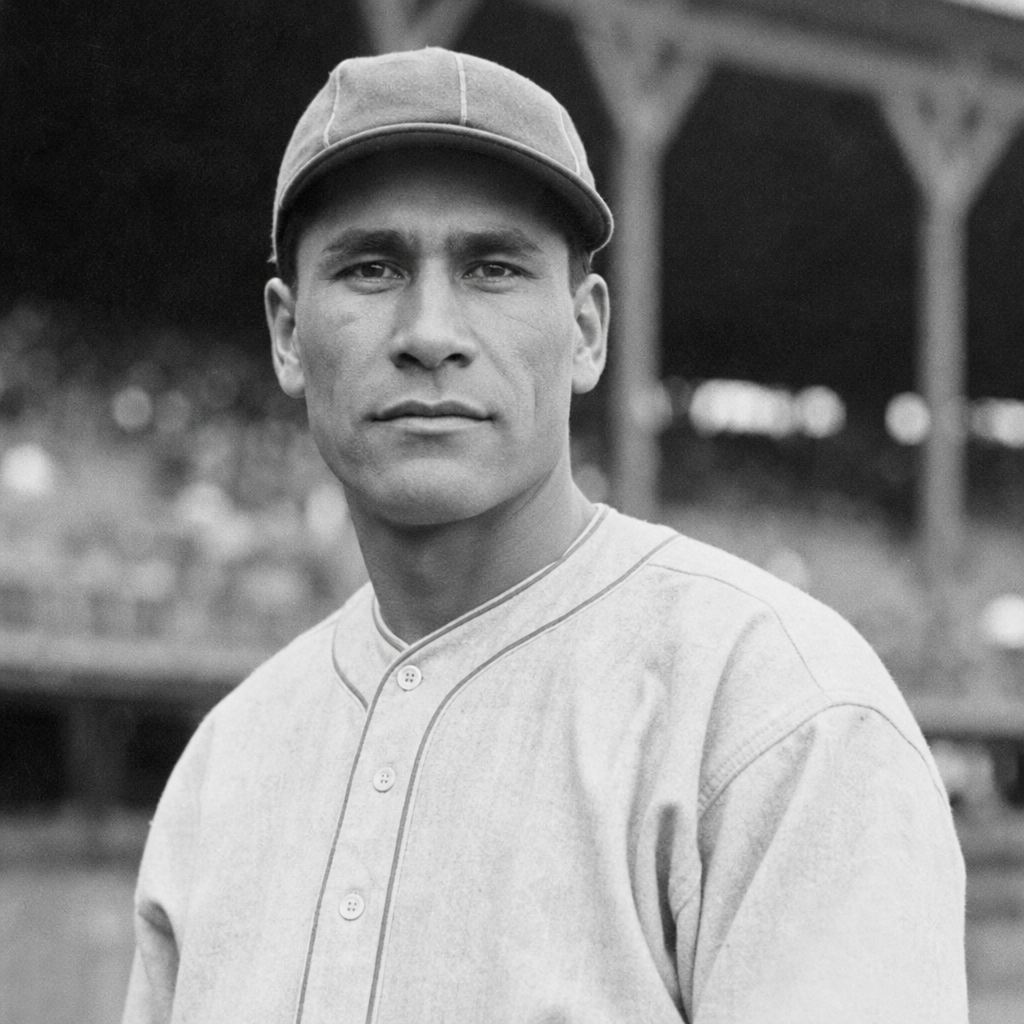
Chief Bender stands as one of baseball’s most important player profiles because his story connects elite performance, Native American history, and the rise of the modern major leagues. Charles Albert Bender, widely known during his playing days as Chief Bender, was an Ojibwe star pitcher whose calm command, durable arm, and postseason brilliance helped define the Philadelphia Athletics dynasty of the early twentieth century. For readers exploring legendary players, his career offers more than statistics. It shows how talent, discipline, and identity shaped baseball at a time when the sport was becoming a national institution.
A player profile is more than a biography. It explains what a player did, how he did it, why he mattered in his own era, and what his legacy means now. Bender fits that standard perfectly. Born in 1884 in Minnesota and raised in an Ojibwe community associated with the White Earth area, he emerged from Carlisle Indian Industrial School, reached the majors in 1903, and became the ace Connie Mack trusted when the stakes were highest. He won 212 major league games, posted a career 2.46 earned run average, threw with unusual intelligence, and starred in multiple World Series for championship clubs.
His nickname remains complicated. Newspapers, fans, and baseball culture of his era used “Chief” constantly, often in ways tied to stereotypes rather than respect. Any complete profile must recognize that reality. At the same time, Bender’s accomplishments cannot be reduced to the prejudices surrounding him. He was one of the finest pitchers of the dead-ball era, a sophisticated strategist on the mound, and a figure whose success challenged narrow assumptions about who belonged in professional sports. That combination makes him essential in any hub covering legendary baseball player profiles, especially for readers seeking both baseball history and cultural context.
This article serves as a broad guide to Bender’s life and career while also functioning as a hub within the larger legendary players topic. It covers his background, playing style, biggest seasons, World Series record, place among Athletics greats, and enduring significance in baseball history. If you are building a deeper understanding of player profiles, Bender belongs near the front of the list because he combines measurable greatness with a story that still speaks directly to modern conversations about representation, respect, and historical memory.
Early Life, Carlisle, and the Road to the Major Leagues
Bender’s path to stardom did not resemble the standard origin story of white major leaguers from urban sandlots or small-town semipro clubs. He was born on May 5, 1884, in Crow Wing County, Minnesota. His parents were of German and Ojibwe heritage, and his upbringing connected him to Native community life at a time when federal assimilation policies were reshaping Indigenous education. He attended Carlisle Indian Industrial School in Pennsylvania, the same institution later associated nationally with Jim Thorpe. Carlisle developed several outstanding athletes, and Bender quickly stood out for his arm strength, poise, and competitiveness.
Professional scouts saw more than velocity. They saw command and emotional control. In an era when pitchers were expected to work deep into games and constantly adapt to changing ball conditions, Bender looked unusually composed. He spent time in the minors, including work with Harrisburg, before reaching the Philadelphia Athletics in 1903 under manager Connie Mack. Mack, one of the sharpest evaluators in baseball history, valued pitchers who thought several batters ahead. Bender became one of his long-term favorites because he could execute that cerebral style under pressure.
The early major leagues were not welcoming environments for Native players. Crowds mocked Bender openly, opposing benches taunted him, and sportswriters often framed him through racial caricatures. I have found that many modern readers know he was called “Chief” but do not realize how relentless the abuse could be. What made Bender exceptional was his refusal to let noise dictate the game. He learned to slow everything down. Teammates and reporters repeatedly described his unshakable manner, and that trait would become one of the foundations of his postseason reputation.
What Made Chief Bender an Elite Pitcher
Chief Bender was not merely successful for his time; he possessed a toolkit that translates clearly when evaluated through modern baseball language. He threw a lively fastball, a dangerous curve, and a slider-like breaking pitch often described by contemporaries as a sharp drop or slanting ball. More important, he changed speeds with precision. In the dead-ball era, when home runs were scarce and contact management mattered, changing eye level and pace could dominate hitters just as effectively as pure power. Bender excelled at disrupting timing.
His control statistics support that reputation. Across 3016 innings, he allowed relatively few baserunners, and his 2.46 ERA compares strongly with top pitchers from the first two decades of the American League. ERA+ was not cited at the time, but modern references place his career mark well above league average, which confirms what observers saw: he consistently prevented runs better than most of his peers. He also fielded his position well and understood situational pitching, essential skills in an era filled with bunting, hit-and-run plays, and stolen-base pressure.
One of Bender’s greatest strengths was game management. Some pitchers rely on one overwhelming pitch. Bender built outs through sequencing. He would show a hitter one pattern early, then break that pattern in a critical spot later. Connie Mack trusted him against lineups stacked with Hall of Fame bats because Bender could think through an order multiple times. That tactical intelligence is why his player profile should be linked conceptually with other legendary pitchers known for command and planning, not simply velocity or raw strikeout totals.
| Category | Career Figure | Why It Matters |
|---|---|---|
| Wins | 212 | Shows long-term excellence and durability on strong clubs |
| ERA | 2.46 | Reflects elite run prevention in a low-scoring era |
| Innings Pitched | 3016 | Demonstrates heavy workload and sustained value |
| Shutouts | 40 | Indicates ability to finish games and dominate opponents |
| World Series Wins | 6 | Confirms performance on baseball’s biggest stage |
Philadelphia Athletics Ace and Dynasty Anchor
The best way to understand Bender’s place in baseball history is to put him inside the Philadelphia Athletics machine that Connie Mack built. The Athletics won pennants in 1905, 1910, 1911, 1913, and 1914, and captured the World Series in 1910, 1911, and 1913. Those teams featured Eddie Collins, Frank Baker, Home Run Baker later by nickname, Stuffy McInnis, Jack Barry, and Eddie Plank. Yet even on rosters loaded with stars, Bender repeatedly became the pitcher Mack wanted for critical games.
From 1909 through 1914, Bender hit his peak. He won 18 games in 1909, then 23 in 1910 as the Athletics secured a pennant. He followed with 17 wins in 1911, 13 in 1912, 21 in 1913, and 17 in 1914. Raw win totals always depend partly on team support, but these numbers align with his strong rate performance and reputation. He was not riding lineup strength alone. He was one of the engines making those clubs great. Mack often split major assignments between Bender and left-hander Eddie Plank, giving the Athletics a balanced top-tier pairing.
Bender’s role also reveals how player profiles should handle context. A star on a losing team may compile brilliant isolated numbers, while a star on a dynasty faces a different challenge: constant expectation. Bender carried that burden well. He had to pitch for pennant races, not personal milestones. He had to adapt when opponents saw him repeatedly in high-leverage settings. He had to answer criticism whenever he was not perfect. By those standards, he excelled. His steady production across multiple championship campaigns is one reason historians rank him among the defining pitchers of the American League’s early decades.
World Series Greatness and Big-Game Reputation
If one question defines Chief Bender for casual fans, it is simple: was he truly great in the World Series? The answer is yes. His postseason record is central to his legacy. Across five World Series, he went 6-3 with a 2.44 ERA, an excellent mark given the level of competition and pressure. Those numbers become even more impressive when placed against specific performances that shaped championship outcomes. He did not merely appear in October. He controlled October.
In the 1910 World Series against the Chicago Cubs, Bender won three games, becoming the clear hero of the Athletics’ championship. That series changed how many fans saw him. He was no longer only a successful regular-season pitcher. He was the man who could beat a powerful National League opponent repeatedly under maximum scrutiny. In the 1911 World Series against the New York Giants, he added another victory. In 1913 against the Giants again, he won twice more as Philadelphia claimed another title.
What made him so effective in postseason play? First, he did not get rattled by noise, travel, or spectacle. Second, he could alter pitch selection quickly when hitters adjusted. Third, he kept the ball in playable areas and forced opponents to string together difficult at-bats. Modern analysts might describe this as a combination of command, adaptability, and weak contact management. His October record was not luck. It reflected the exact traits that already made him a top regular-season pitcher, amplified under pressure rather than diminished by it.
Identity, Bias, and Historical Importance Beyond the Box Score
No honest Chief Bender player profile can stop at wins and championships. His place in baseball history also depends on how he navigated race, representation, and public treatment. Early twentieth-century sports culture often treated Native athletes as curiosities instead of complete professionals. Headlines leaned on stereotypes. Fans shouted insults from the stands. Even praise came wrapped in language that denied individuality. Bender lived inside that contradiction: admired for results, disrespected in presentation.
That matters because his success was visible. He was not a fringe player escaping notice. He was a championship ace on one of the sport’s best teams. Every outing challenged the idea that Native players were novelties rather than strategic, durable, elite competitors. Bender did not speak in the activist vocabulary of later eras, but his career itself had social meaning. By performing at a Hall of Fame level in front of national audiences, he forced baseball to confront excellence that prejudice wanted to minimize.
There is also a responsibility for modern readers and writers. Using the historical nickname while explaining its context is different from repeating it uncritically. Bender’s real name, Charles Albert Bender, should remain central. His Ojibwe heritage should be identified accurately and respectfully. And his story should be connected to broader baseball history, not isolated as a cultural footnote. That balanced approach makes his profile stronger and more useful as a hub for readers who want legendary players covered with both accuracy and depth.
Legacy, Hall of Fame Status, and Why This Player Profile Still Matters
Bender finished his major league career with later time in the Federal League and additional roles in baseball as a manager, coach, and mentor. He was inducted into the National Baseball Hall of Fame in 1953, a recognition that confirmed what contemporaries already knew: he belonged among the game’s enduring greats. Hall of Fame selection alone does not explain his importance, though. What keeps his legacy alive is the combination of performance, historical relevance, and clarity of style. He was easy to admire once you understand what he actually did on the mound.
For a player profiles hub under legendary players, Bender offers several pathways for deeper reading. He connects naturally to articles on Connie Mack’s Athletics, dead-ball era pitching, Native American athletes in professional sports, Carlisle’s athletic history, and World Series heroes. He also provides a useful comparison point for profiles of other elite control pitchers who succeeded through intelligence and composure rather than intimidation alone. In editorial terms, he is a true hub figure because many baseball history topics branch outward from his career.
The key takeaway is straightforward. Chief Bender was not simply a notable Native American player, and he was not only a member of great teams. He was an Athletics ace, an Ojibwe star, and a genuine World Series great whose career deserves close study. His record, his resilience, and his influence make him essential to any serious understanding of legendary baseball players. If you are building your knowledge of player profiles, start here, then continue through related legends from the same era to see how Bender’s greatness fits into the wider story of the game.
Frequently Asked Questions
Who was Chief Bender, and why is he such an important figure in baseball history?
Chief Bender, born Charles Albert Bender, was one of the most accomplished pitchers of baseball’s early modern era and a central star of Connie Mack’s Philadelphia Athletics dynasty. He is especially important because his legacy reaches far beyond statistics. On the field, he was known for exceptional control, poise under pressure, and the ability to dominate in the biggest games, particularly in the World Series. Off the field, his life reflects a larger American story involving Native identity, discrimination, opportunity, and achievement at a time when professional sports and the country itself were changing rapidly.
Bender was Ojibwe, and his rise to major league stardom made him one of the most visible Native American athletes of his generation. He played during an era when racist language and stereotypes were common in sports coverage, so his career also reveals the social realities Native players faced even while excelling at the highest level. Rather than being remembered only for a nickname given by others, he deserves recognition as a complete historical figure: an elite pitcher, a disciplined competitor, a key part of championship teams, and a Native athlete whose presence in the major leagues carried lasting significance.
His place in baseball history is strengthened by both performance and influence. Bender helped the Athletics become one of the great teams of the dead-ball era, and his postseason success made him a dependable ace when stakes were highest. Because of that combination of talent, durability, and historical importance, he remains one of the most meaningful player profiles from early twentieth-century baseball.
What made Chief Bender such an effective pitcher for the Philadelphia Athletics?
Bender’s effectiveness came from a rare blend of intelligence, command, composure, and stamina. He was not simply a hard thrower who overwhelmed hitters with raw power. Instead, he built his reputation on locating pitches, changing speeds, working efficiently, and staying in control of difficult situations. In an era when pitchers were often expected to finish what they started and carry heavy workloads, Bender’s durable arm and steady mechanics made him especially valuable.
One of his defining strengths was calm command. He did not appear rattled easily, and that gave him a major advantage in close games. Hitters had to deal with a pitcher who understood how to disrupt timing and who could adjust his approach as lineups turned over. Managers valued pitchers who could think through a game, and Bender’s baseball intelligence made him a trusted anchor of strong Athletics clubs. He was also known for throwing a sharp breaking pitch and for mixing his arsenal effectively, which helped him succeed against top competition year after year.
Another major reason for his success was his consistency in meaningful games. Great regular-season pitchers are valuable, but pitchers who elevate their performance in pennant races and championship matchups become legends. Bender did exactly that. For the Athletics, he was not just productive; he was dependable when pressure was highest. That reliability helped define his reputation as one of the premier pitchers of his generation.
How did Chief Bender perform in the World Series, and why is he remembered as a postseason star?
Chief Bender is remembered as a World Series star because he delivered some of his best and most memorable work on baseball’s biggest stage. During the Athletics’ championship years, he repeatedly proved that he could handle elite opponents, intense public attention, and the strategic demands of short postseason series. In that setting, every pitch mattered more, and Bender’s control and composure became even more valuable.
His World Series reputation grew from both results and style. He did not merely survive those games; he often set the tone for the Athletics with confident, efficient pitching. He had a gift for controlling momentum, limiting damage, and giving his team a strong chance to win against the best clubs in the game. That ability made him an ideal pitcher for championship baseball, where avoiding mistakes and staying calm under pressure can be just as important as overpowering stuff.
What makes his postseason legacy stand out historically is that early World Series performances helped shape how players were remembered nationally. October success could define a career, and Bender took full advantage of those opportunities. His excellence in the World Series reinforced his status as an ace, strengthened the Athletics’ dynasty, and ensured that his name would remain associated with winning at the highest level of professional baseball.
Why does Chief Bender’s Ojibwe heritage matter so much when telling his story today?
Bender’s Ojibwe heritage matters because it is essential to understanding both his life and his place in American sports history. He was not simply a great pitcher who happened to be Native; he was a Native athlete whose career unfolded in a period when Indigenous people were frequently misunderstood, marginalized, and misrepresented in public life. His visibility in major league baseball made him an important figure in the broader history of Native American representation.
At the same time, discussing his heritage requires care and accuracy. For many years, popular retellings of his career focused too heavily on the nickname “Chief,” often repeating the language and assumptions of the era without enough reflection. Today, a more responsible approach recognizes Bender as Charles Albert Bender, an Ojibwe player whose achievements deserve to be understood in full human and historical context. That means appreciating his athletic greatness while also acknowledging the prejudice he faced and the complicated ways Native identity was treated in sports culture.
His story matters to modern readers because it connects baseball history to larger conversations about identity, resilience, and historical memory. Bender’s career shows that Native athletes were not marginal figures in the development of professional sports; they were central participants who helped shape the game. When his story is told well, it deepens our understanding of both baseball and the lived experiences of Indigenous athletes in the United States.
What is Chief Bender’s lasting legacy in baseball and American sports culture?
Chief Bender’s lasting legacy rests on three powerful foundations: excellence, representation, and historical significance. First, he was one of the premier pitchers of his era, a true ace for a championship club and a performer whose regular-season and World Series success earned lasting respect. His record of achievement helped set standards for what a dependable, intelligent, big-game pitcher could look like in the early major leagues.
Second, his legacy carries special weight because he was one of the most prominent Native American players in baseball history. His career continues to matter not only to fans of the Philadelphia Athletics or students of dead-ball-era baseball, but also to anyone interested in the role Indigenous athletes have played in shaping American sports. He stands as a reminder that major league history has always been more diverse and more complex than older narratives sometimes suggest.
Finally, Bender’s story endures because it invites readers to look at baseball in a fuller way. He represents the meeting point of athletic brilliance, cultural history, and the emergence of the modern major leagues. Remembering him properly means seeing more than a nickname or a line of statistics. It means recognizing a World Series great, an Ojibwe star, and a player whose life still adds depth and meaning to the history of the game.