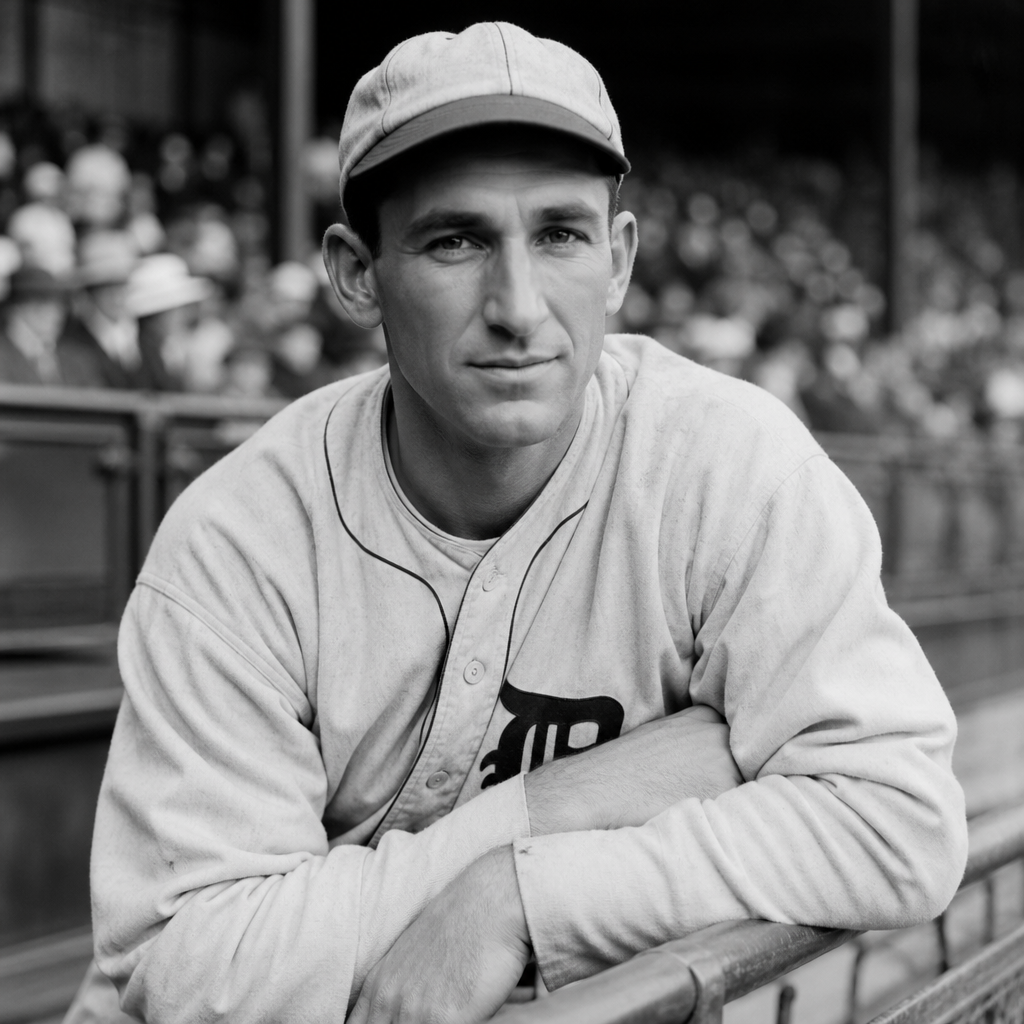
Charlie Gehringer remains one of the most underrated stars in baseball history, yet few players better define sustained excellence. Known as “The Mechanical Man,” Gehringer built a Hall of Fame career with the Detroit Tigers through precision, durability, and rare all-around skill. In a baseball culture that often celebrates louder personalities and bigger counting milestones, his profile stands out because consistency was his signature tool. For a player profile hub under Legendary Players, Gehringer offers the ideal case study: he connects elite hitting, dependable defense, leadership, and historical importance in one remarkably stable career.
A player profile is more than a biography. It explains how a player performed, why his style mattered, where he fits in team history, and what modern fans can learn from his career arc. In Gehringer’s case, those questions are especially useful because his greatness was subtle. He did not rely on theatrics. He did not dominate headlines the way Babe Ruth, Lou Gehrig, or Joe DiMaggio did. Instead, he posted elite numbers year after year, anchored Detroit’s infield, and helped shape winning baseball in the American League during the 1920s and 1930s. That reliability is exactly why he remains essential in any serious collection of legendary player profiles.
Gehringer played his entire Major League career with Detroit from 1924 through 1942, a period that included dramatic changes in the game, from the live-ball era’s offensive surge to the strategic demands of pennant races and wartime disruption. He won the American League Most Valuable Player Award in 1937, earned repeated All-Star selections, topped the league in runs, hits, doubles, triples, and batting average in different seasons, and finished with a .320 career average. Advanced evaluation only strengthens his case. His Wins Above Replacement total places him among the greatest second basemen ever, and his offensive production compares favorably with nearly anyone at the position. When people ask who belongs in the inner circle at second base, Gehringer is always part of the answer.
What makes this profile matter today is that Gehringer represents a complete standard for evaluating players. A great player profile should examine contact quality, plate discipline, defensive range, positional value, durability, postseason impact, and historical context. Gehringer checks every category. He was smart without being showy, productive without long slumps, and valuable in ways that hold up whether someone prefers traditional statistics or modern analytics. For readers exploring Player Profiles across Legendary Players, Gehringer is not just a subject; he is a model for how to judge baseball greatness clearly and fairly.
Who Charlie Gehringer Was and Why “The Mechanical Man” Fit
Charlie Gehringer was born in Fowlerville, Michigan, in 1903 and grew into a local icon by starring for the Tigers in Detroit. Nicknamed “The Mechanical Man” by sportswriters and opponents, he earned the label because his game looked efficient, repeatable, and almost machine-like. I have always found that nickname more revealing than cold. It captured how little wasted motion appeared in his fielding footwork, how balanced his swing remained, and how predictable his production became over six full presidential administrations. Managers never had to guess what they would get from him; they penciled him in and expected excellence.
The nickname also reflected his temperament. Gehringer was not a demonstrative star. He worked, adjusted, and delivered. That profile made him easy to overlook in broader baseball memory, especially on a Tigers club that also featured Hank Greenberg, Mickey Cochrane, and later Rudy York. But quiet players often become the backbone of winning teams. Gehringer handled second base with smooth hands and quick transfers, turned the double play cleanly, and hit line drives to all fields. In practical terms, he reduced mistakes and created extra outs, which is one of the clearest ways to understand baseball value.
His career totals reinforce the visual impression. Gehringer collected 2,839 hits, 574 doubles, 146 triples, 184 home runs, and 1,775 runs scored. He drove in 1,427 runs and walked more than 1,100 times. Those numbers are not empty accumulation. They came with efficiency and era-adjusted quality, including an on-base percentage above .400 and a slugging percentage near .480. For a second baseman in that era, that offensive package was extraordinary. The best short description is simple: Charlie Gehringer was a franchise cornerstone whose style looked modest but whose impact was immense.
Charlie Gehringer’s Offensive Profile: Contact, Discipline, and Power
When evaluating Charlie Gehringer as a hitter, the first point is direct: he was not merely good for a second baseman; he was one of the best hitters in baseball, period. He won the American League batting title in 1937 with a .371 average, and that same year he posted a .458 on-base percentage and .559 slugging percentage. Those figures explain why he won the MVP Award. He did not compile value through one narrow skill. He reached base, hit for average, drove the gaps, and supplied enough power to change games.
His plate discipline deserves special emphasis because it translates across eras. Gehringer routinely worked counts and drew walks, helping him maintain elite on-base percentages. In several seasons he walked more than he struck out, a marker of command at the plate that modern analysts still prize. Watching the shape of his statistical record, you see very few collapses. From 1926 through 1940, he hit .300 or better in all but one season. That kind of annual reliability is why lineup construction around him was so easy. Managers could bat him near the top or in a run-producing role because he fit both jobs.
Power, meanwhile, showed up in doubles and triples before home runs. In an era when park dimensions, equipment, and strategy differed from today’s game, gap power was a major weapon. Gehringer led the league in doubles and triples in different years, which tells us his extra-base output came from hard contact rather than one-dimensional home run hunting. He finished with 574 doubles, still one of the highest totals ever. For readers comparing player profiles, this is a critical distinction: Gehringer’s bat played through bat control, pitch recognition, and authoritative contact, not through streaky force.
| Category | Career Mark | Why It Matters |
|---|---|---|
| Batting Average | .320 | Shows elite contact skill over a long career |
| On-Base Percentage | .404 | Confirms patience and consistent table-setting value |
| Doubles | 574 | Evidence of sustained gap power and hard contact |
| Runs Scored | 1,775 | Reflects lineup importance and offensive durability |
| MVP Award | 1937 | Peak season recognized by contemporary voters |
If someone asks, “What kind of hitter was Charlie Gehringer?” the best answer is concise and complete: he was an elite right-handed second baseman who paired batting average, strike-zone judgment, and extra-base production at a level that made him one of the American League’s toughest outs for more than a decade.
Defense, Durability, and the Value of Playing Second Base at an Elite Level
Second base is often misunderstood in historical conversations because its best work can look routine. Gehringer made that routine look automatic. He moved efficiently to both sides, positioned himself well before the pitch, and completed plays with quick, economical actions. Contemporary accounts consistently praised his steadiness. He was not simply surviving at a demanding middle-infield position while carrying an offensive load; he was excelling there. That matters because defensive competence at second base amplifies every offensive contribution. A player who hits like a star and also converts difficult chances in the middle infield creates compounding value.
Durability was another major part of his greatness. Gehringer played 1,000 consecutive games from 1927 to 1933, an enormous streak for a middle infielder absorbing constant contact around the bag. I always treat that number as more than trivia. It demonstrates preparation, physical resilience, and consistent skill under daily fatigue. Baseball seasons expose flaws because repetition magnifies every weakness. Gehringer did not fade under repetition; he became more dependable.
Modern value metrics reward exactly that combination. High-level offense at second base is scarce, and sustained availability raises a player’s seasonal floor. Gehringer’s long prime helped Detroit contend repeatedly, because replacing his production on either side of the ball would have required multiple players. This is one of the most useful lessons for any player profile hub: positional value matters. A .320-hitting outfielder is valuable. A .320-hitting second baseman with on-base skill, doubles power, and durable defense is historically rare.
Pennants, the 1935 World Series, and Gehringer’s Place in Tigers History
Great player profiles must connect individual performance to team outcomes, and Gehringer’s Detroit career does that clearly. The Tigers won American League pennants in 1934 and 1935, then captured the 1935 World Series over the Chicago Cubs. Those clubs are central to franchise history, and Gehringer was central to those clubs. In 1934, Detroit lost a dramatic World Series to the St. Louis Cardinals, but Gehringer hit .379 in the series and showed exactly why his calm offensive style translated under pressure. The next year, Detroit returned and finished the job.
His role on those teams went beyond headline moments. Mickey Cochrane brought urgency and leadership, Hank Greenberg supplied middle-order thunder, and Goose Goslin added veteran production, but Gehringer linked the lineup together. He kept innings alive, scored runs, and stabilized the infield. Championship teams need stars, but they also need certainty. Gehringer provided certainty. That is why he remains one of the definitive Tigers legends alongside Ty Cobb, Greenberg, Al Kaline, and later stars such as Alan Trammell and Miguel Cabrera.
For Detroit specifically, Gehringer also carried local meaning. A Michigan-born player becoming a franchise icon deepened the bond between club and city. Fans saw not just a great second baseman but one of their own succeeding at the highest level. In franchise memory, that connection matters. Player profiles are strongest when they explain why a player resonated beyond statistics, and Gehringer’s identity as a homegrown Tiger is a major part of his enduring appeal.
How Charlie Gehringer Compares With Other Legendary Second Basemen
Any comprehensive Charlie Gehringer profile eventually reaches the comparison question: where does he rank among the greatest second basemen ever? The defensible answer is near the top tier. Rogers Hornsby had the louder peak as a hitter. Joe Morgan brought more speed and a modern power-walk combination. Eddie Collins offered exceptional longevity and baserunning. Nap Lajoie dominated an earlier era. But Gehringer belongs in that conversation because his total package was so balanced and his prime so long.
Compared with many peers, Gehringer has fewer narrative shortcuts working in his favor. He was not attached to a mythic nickname like “The Rajah,” nor did he play in New York, nor did he build his legacy around one defining postseason clip replayed for generations. What he did do was produce Hall of Fame quality every year. That sort of résumé often ages well because it is supported by both traditional totals and modern analytical review. Historians, researchers at Baseball-Reference, and value-based systems consistently rate him as one of the most accomplished players at the position.
The strongest comparison point is balance. If a team wanted one second baseman for ten straight seasons, Gehringer is among the safest elite choices in baseball history. He would give average, on-base value, doubles power, competent run production, durable defense, and low maintenance. That is not a romantic answer, but it is a championship answer. For readers using this hub to explore Player Profiles, Gehringer demonstrates how greatness can be built on repeatable excellence rather than singular flash.
What Modern Fans, Analysts, and Collectors Can Learn From His Legacy
Charlie Gehringer’s legacy teaches an important lesson about baseball evaluation: consistency is a skill, not a side note. Modern discussion often centers on peak seasons, viral highlights, exit velocity, or milestone totals, but long-form player analysis demands a wider lens. Gehringer shows why. He combined skills that age well in any evaluative framework: plate discipline, bat-to-ball ability, gap power, defensive reliability, positional difficulty, and year-to-year availability. Those are winning traits in every era.
For analysts, Gehringer is a reminder to weigh context carefully. His home run totals look modest next to modern middle infielders, but his doubles output, on-base profile, and era-adjusted offense reveal star-level impact. For collectors and historians, he represents a type of legend whose market visibility may lag behind his actual baseball standing, which often makes his story richer to study. For fans building knowledge across Legendary Players, he is an ideal bridge figure between obvious household names and deeper Hall of Fame appreciation.
The key takeaway is straightforward. Charlie Gehringer was not memorable because he was eccentric or noisy; he was memorable because he solved baseball problems every day. He gave Detroit stability at second base, elite offense from a premium position, and championship-caliber performance over nearly two decades. If you are exploring player profiles seriously, start with Gehringer’s example and use it as a benchmark: look for complete players, examine context, and value consistency as highly as brilliance. Then continue through the rest of the Legendary Players hub with that sharper standard in mind.
Frequently Asked Questions
Why was Charlie Gehringer called “The Mechanical Man”?
Charlie Gehringer earned the nickname “The Mechanical Man” because of the smooth, repeatable precision he brought to every part of the game. He was not a player defined by emotional theatrics, dramatic gestures, or attention-grabbing self-promotion. Instead, he built his reputation on doing difficult things look routine. At second base, he handled chances with calm footwork, dependable hands, and excellent positioning. At the plate, he developed a compact, disciplined approach that produced results year after year. The nickname captured the sense that Gehringer operated with remarkable efficiency, almost as if he were built to perform at the same high standard every day.
That label also reflected his larger baseball identity. Gehringer was the kind of star whose greatness revealed itself over time rather than through noise. Managers, teammates, opponents, and sportswriters recognized that his value came from consistency, not volatility. He rarely looked rushed, rarely seemed out of control, and rarely strayed far from his established level of excellence. In an era filled with colorful personalities and headline-makers, Gehringer stood apart as a player whose reliability became legendary. “Mechanical” was never meant to suggest he lacked artistry; rather, it emphasized how incredibly polished and repeatable his game was over a long Hall of Fame career.
What made Charlie Gehringer such an underrated all-time great?
Charlie Gehringer is often described as underrated because his greatness was rooted in completeness and steadiness rather than in a single flashy trait that dominates public memory. He could hit for average, get on base, produce extra-base power, drive in runs, and play outstanding defense at a premium infield position. He was also durable and dependable over a long period, two qualities that can be easy to overlook when compared with more dramatic achievements such as record-breaking home run totals or larger-than-life personalities. For Detroit, Gehringer was the engine of stability, the kind of player who raised a team’s floor and ceiling every season.
Another reason he can be overlooked is historical visibility. Many baseball fans can quickly identify more famous contemporaries whose reputations were amplified by louder public personas or iconic milestones. Gehringer’s excellence was subtler. He accumulated value season after season, posting elite production from second base while contributing to winning baseball in multiple ways. That kind of profile is especially appreciated today, when a more complete understanding of player value highlights how rare it is to combine offensive impact, defensive reliability, intelligence, and longevity the way Gehringer did. Once you move beyond surface-level fame and look at his actual body of work, he stands comfortably among the greatest second basemen in baseball history.
How important was Charlie Gehringer to the Detroit Tigers’ success?
Charlie Gehringer was absolutely central to the Tigers’ identity and success during his career. He was not just a productive player filling a spot in the lineup; he was one of the foundational pieces around which Detroit built a winning club. His consistency gave the Tigers a dependable presence both offensively and defensively, which matters enormously over the course of a long season. A team can survive occasional slumps from volatile players, but championship-caliber baseball often depends on stars who deliver quality performance with exceptional regularity. Gehringer did exactly that, giving Detroit a high baseline every year.
His importance becomes even clearer when you consider the responsibilities of a second baseman in that era. Gehringer had to contribute to infield stability, support the pitching staff, execute defensively under pressure, and still produce at the plate. He met all of those demands while remaining one of the most polished hitters at his position. For Detroit fans and historians, he represents more than individual brilliance; he represents organizational reliability. He helped define what strong Tigers baseball looked like: smart, steady, fundamentally sound, and difficult to beat over time. When people discuss the great figures in franchise history, Gehringer belongs near the very top because his influence was both sustained and deeply tied to team success.
What kind of player was Charlie Gehringer offensively and defensively?
Offensively, Charlie Gehringer was one of the most complete middle infield hitters of his generation. He was not one-dimensional, and that is a major part of what made him so valuable. He could hit for average, draw walks, and keep rallies alive with an intelligent, controlled approach. He also offered meaningful power for a second baseman, which separated him from players at the position whose offensive value came only through contact. Gehringer understood situations, adjusted to pitchers, and contributed in ways that fit what his team needed. He was the kind of hitter managers trust because his game was mature, dependable, and difficult to disrupt.
Defensively, he brought the same polish that characterized his offense. At second base, Gehringer was known for reliability, strong instincts, and the ability to make complex plays appear easy. He positioned himself well, reacted quickly, and helped convert batted balls into outs with a minimum of wasted movement. His defense complemented his bat perfectly because it reinforced the overall image of a player who gave away very little. He was not merely surviving at second base while carrying value with his hitting; he was excelling on both sides of the ball. That all-around excellence is exactly why modern evaluations hold him in such high regard. Gehringer was the rare infielder who could anchor the lineup and the defense at the same time.
Why does Charlie Gehringer still matter in discussions of baseball greatness today?
Charlie Gehringer still matters because he represents a timeless version of baseball excellence: the star whose value is built on skill, discipline, balance, and durability. As the sport continues to evolve, one lesson remains constant: players who contribute in every phase of the game are extraordinarily valuable. Gehringer did that at an elite level. He was a standout hitter for his position, a high-quality defender, and a long-term source of stability for a major franchise. Those traits translate across eras, which is why his legacy remains relevant even as the language used to describe greatness has changed.
He also matters because he challenges the way fans think about fame and historical memory. Not every inner-circle caliber player becomes a household name in the same way, and Gehringer is a perfect example of that gap between reputation and achievement. His career encourages a deeper look at what true excellence can look like when it is expressed through consistency rather than spectacle. For a player profile hub focused on legendary figures, Gehringer is essential because he reminds readers that greatness is not always loud. Sometimes it is measured in the relentless accumulation of quality, season after season, until the full weight of a Hall of Fame career becomes impossible to ignore.