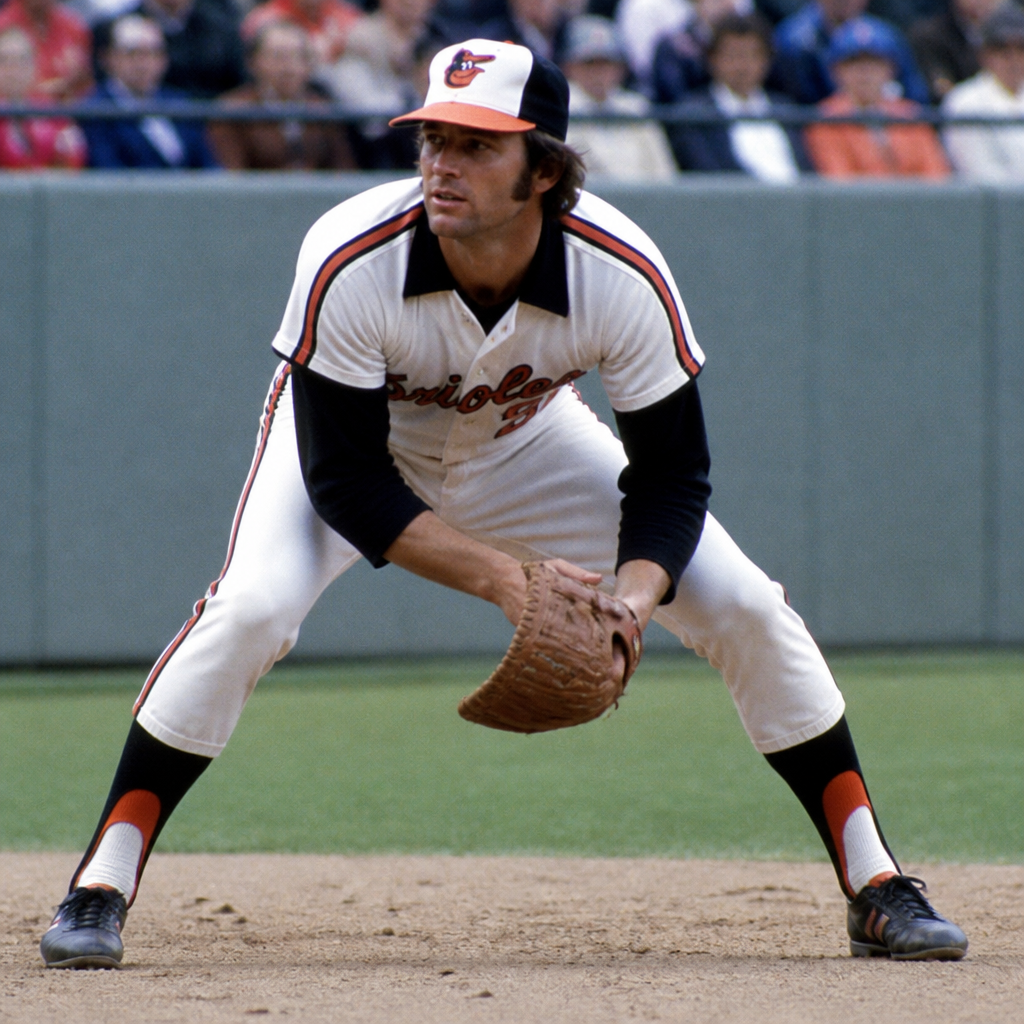
Bobby Grich is one of the clearest examples of how advanced metrics can change the historical understanding of a baseball player. For decades, he was often described as a very good second baseman who lacked the fame, milestone totals, and headline moments that drive awards and Hall of Fame voting. Once analysts began looking beyond batting average, RBI, and Gold Glove counts, Grich’s full value came into focus. Modern measurements show a player who combined power, patience, defense, durability, and positional difficulty at an elite level for a long time. That matters not only for Grich’s legacy, but for any serious discussion of player profiles under the broader Legendary Players landscape.
In practical terms, advanced metrics are statistical tools designed to estimate total contribution more accurately than older categories. Wins Above Replacement, usually shortened to WAR, tries to summarize how many wins a player added compared with a readily available replacement. OPS+ and wRC+ adjust offensive production for league and ballpark context, making it easier to compare players from different environments. Defensive metrics such as Total Zone and Defensive Runs Saved are imperfect, especially for earlier eras, but they improve on fielding percentage by measuring range and run prevention. When I evaluate player profiles, those context-adjusted tools repeatedly elevate Grich from underrated star to inner-circle great at his position.
Grich played from 1970 through 1986, primarily with the Baltimore Orioles and California Angels. He was a six-time All-Star, a four-time Gold Glove winner, and a key contributor on strong clubs, yet he never won an MVP and received little lasting mainstream recognition. Traditional numbers partly explain the oversight: 224 home runs, 1,833 hits, a .266 batting average, and 864 RBI do not look automatic for Cooperstown. But second basemen are not first basemen, and the offensive standards for middle infielders were very different in the 1970s and early 1980s. Once you account for position, era, and defense, the case changes sharply.
This hub article examines why Bobby Grich belongs near the top of player profile discussions for second basemen. It covers his career arc, offensive value, defensive reputation, the advanced metrics that reshape his standing, and the reasons his greatness was missed in real time. It also explains how Grich serves as a model for evaluating other legendary players whose impact was broader than the back of a baseball card suggested. If you want one player who proves why modern analysis matters, Grich is an ideal starting point.
Career profile: the shape of an elite second baseman
Grich signed with the Orioles, debuted in 1970, and gradually earned a regular role on one of baseball’s smartest organizations. Baltimore in that era valued strike-zone judgment, defensive reliability, and adaptable roster construction. Grich fit that philosophy exactly. By 1972 he was a full-time player, and from 1972 through 1985 he was consistently productive whenever healthy. He later joined the Angels, where he remained an impact performer into his mid-thirties and helped postseason-caliber teams with veteran steadiness and power from second base.
What stands out in his player profile is balance. He was not merely a glove-first infielder, and he was not simply an on-base specialist with hidden value. He hit for power unusual for his position, drew large numbers of walks, ran the bases well enough to avoid giving runs back, and played a premium infield spot with range and sure hands. In my experience reviewing historical middle infielders, players with one standout tool are common. Players who check every box, especially over a long prime, are much rarer. Grich did.
His best seasons were exceptional by any standard. In 1979 he hit 30 home runs with a .365 on-base percentage and a .543 slugging percentage, tremendous production for a second baseman in a low-offense period. In 1981, a strike-shortened season, he led the American League in home runs with 22 and slugged .543 again. In 1985, at age 36, he posted a .378 on-base percentage and a 145 OPS+, showing that his game aged well because it rested on plate discipline and all-around skill rather than speed alone.
Why traditional statistics underrated Bobby Grich
The old evaluation model favored visible accumulation and simple rate stats. Batting average rewarded singles but ignored walks. RBI depended heavily on lineup context. Gold Gloves often reflected reputation as much as observed range. MVP voting historically leaned toward narrative, pennant races, and counting stats that looked imposing in newspapers. Grich was excellent in ways those systems only partly captured.
He rarely threatened 200 hits, never reached 100 RBI, and finished with fewer than 2,000 hits, which hurt him in Hall of Fame conversations. Yet those benchmarks are poor filters for second basemen. Middle infielders contribute differently, and many of the skills that create wins do not announce themselves loudly. A walk that extends an inning, a turn of a difficult double play, or extra range to the right side can change games without creating famous milestones.
Context matters just as much. Grich spent much of his career in a lower-scoring era, especially the 1970s, and he played home games in environments that were not inflated offensive showcases. Comparing his raw totals to those of sluggers from friendlier eras distorts the picture. A 20- to 30-home-run second baseman with patience and defense in that context was far more valuable than the same line might appear at first glance. This is exactly the kind of blind spot modern metrics were built to correct.
Offensive value through a modern lens
Advanced offensive measures love Grich because they capture the full shape of his production. He posted a career .371 on-base percentage and a .424 slugging percentage, strong numbers for any infielder and outstanding for a second baseman of his era. His career OPS+ was 125, meaning he was 25 percent better than league average offensively after adjusting for park effects. His career wRC+ is commonly listed in the same neighborhood, confirming that the conclusion is not dependent on a single formula.
The key drivers were selectivity and power. Grich drew 1,087 walks, a major total for a middle infielder, and routinely posted on-base percentages well above league average. He also hit 224 home runs, which placed him far ahead of many second basemen from his generation. Those home runs were not empty totals padded by an easy era. In several seasons he was one of the best power threats at his position anywhere in baseball.
One useful way to explain Grich’s offense in plain terms is this: he created runs without needing a batting title profile. A .266 average can look ordinary, but when combined with walks and extra-base power, it becomes a high-value offensive package. That distinction is crucial for player profiles because many historically underrated stars share it. Grich was not failing to hit; he was succeeding in ways older summary stats blurred.
Defense, position, and the hidden half of his value
Second base is a demanding position that asks for range, quick exchanges, double-play skill, and constant tactical awareness. Grich was widely respected there long before modern analytics became common, which is important because contemporary reputation and modern defensive estimates point in the same direction. He won four Gold Gloves and developed a strong internal reputation among coaches, managers, and observers as a reliable, athletic defender.
Modern systems are more cautious with older fielding data, and that caution is appropriate. Still, whether you consult Baseball-Reference WAR, FanGraphs summaries built from historical defensive estimates, or Total Zone-based evaluations, Grich grades as an excellent defender. The exact number of runs saved may vary by model, but the broader conclusion is stable: his glove added substantial value on top of an already strong bat.
Position amplifies that value. Offense from second base is worth more than the same offense from left field or first base because replacement level is lower and the defensive demands are harder. This is one of the central lessons advanced metrics teach clearly. Grich’s bat was not just good in the abstract; it was elite relative to what teams usually got from the position. Pair that with plus defense, and the result is star-level impact even before longevity is added.
The numbers that recast his legacy
When people say advanced metrics transformed the Bobby Grich conversation, they usually mean WAR first. Depending on the version consulted, his career total sits in the range usually associated with Hall of Fame caliber middle infielders and ahead of many inducted players. Baseball-Reference credits him with more than 70 WAR, an extraordinary mark for a second baseman. FanGraphs places him in similarly impressive territory. No matter which model you prefer, he is not on the fringe. He is comfortably in the historical top tier.
| Metric | What it shows | Why it matters for Grich |
|---|---|---|
| WAR | Total value in wins above replacement | Places him with Hall-level second basemen |
| OPS+ | Offense adjusted for park and league | Shows his bat was far above average for era |
| wRC+ | Run creation adjusted for context | Confirms offensive excellence beyond batting average |
| Total Zone/defensive value | Estimated runs saved on defense | Supports his long-held reputation as an asset in the field |
| JAWS | Career and peak value for Hall comparisons | Strengthens his Cooperstown argument at second base |
JAWS, the Hall of Fame comparison framework created by Jay Jaffe, is especially useful in player profile work because it balances career value and peak value against the standards of each position. Grich fares extremely well there. He compares favorably to multiple Hall of Fame second basemen and often exceeds the established average for the position. That does not mean every voter must agree, but it does mean the burden of proof shifted. The question is no longer whether he was merely good. The real question is why someone this valuable was overlooked for so long.
Comparing Bobby Grich with famous second basemen
Name recognition tends to favor players such as Ryne Sandberg, Nellie Fox, Bill Mazeroski, and even some multi-position stars whose fame traveled farther than their total value. Grich may lack Sandberg’s MVP aura or Mazeroski’s World Series moment, but the overall record is far tighter than many casual fans assume. In some advanced comparisons, Grich actually comes out ahead because he combined offensive efficiency with defense and sustained peak years.
He also compares well with contemporaries who received more attention. Lou Whitaker is a natural parallel: another superb, balanced second baseman whose modern valuation rose dramatically after his playing days. The Grich-Whitaker pairing has become a touchstone in player profile analysis because both men reveal the same lesson. If a second baseman reaches base, hits for power relative to the era, fields well, and does it for more than a decade, he is creating star value even if he is not chasing 3,000 hits or winning a batting crown.
That comparison helps frame Grich properly for readers moving across the Legendary Players hub. Not every legend was a media phenomenon. Some were complete players whose excellence lived in the margins between conventional categories. Those margins are where games are won, and Grich dominated them.
Why he was missed, and why he matters now
Several forces worked against Grich. He played in an era before comprehensive public analytics. He spent much of his career on the West Coast after leaving Baltimore, reducing national visibility. He was steady more often than flashy, and steady players are easier to overlook when the conversation is driven by awards, round-number milestones, and postseason mythology. Hall of Fame voting habits at the time also lagged far behind the best available methods for measuring total contribution.
Today, Grich matters because he sharpens how we build player profiles across baseball history. He reminds us to ask better questions. Was the player great relative to his position? Did he help prevent runs as well as create them? Did his skills translate across seasons, ballparks, and aging curves? Did narrative hide value? Those questions do not just rescue Grich’s reputation. They improve the entire process of identifying legendary players fairly.
The best takeaway is simple: Bobby Grich was not a modern analytics invention. He was a genuinely great second baseman whose greatness became easier to prove once the tools improved. Advanced metrics did not create his value; they described it more accurately. For anyone exploring player profiles within the Legendary Players topic, Grich is essential because he shows how complete evaluation can reveal a different, truer baseball history. Revisit his record with modern context, then use that same lens on other overlooked stars.
Frequently Asked Questions
Why do advanced metrics rate Bobby Grich more highly than traditional baseball statistics did?
For a long time, Bobby Grich was judged through the lens that shaped most older Hall of Fame debates: batting average, RBI totals, major awards, and broad reputation. By those standards, he looked excellent but not necessarily historic. He did not chase flashy batting titles, did not pile up the kind of headline milestones that instantly define a legend, and did not benefit from the level of media attention that often amplifies a player’s legacy. That made him easy to classify as “very good” rather than truly elite.
Advanced metrics changed that by measuring everything Grich did well instead of focusing on a narrow set of traditional categories. His value came from a complete package: strong on-base ability, meaningful power for a middle infielder, excellent defensive impact, smart overall offensive production, and steady durability over many seasons. Stats such as WAR, OPS+, and defensive value estimates capture that broader contribution. They show that Grich was not just helping in one area; he was adding wins in several different ways at once.
This matters because second base has historically been an offense-light position, so a player who hits for power, reaches base consistently, and saves runs in the field has outsized value. Traditional stats often missed that context. A .266 batting average can look ordinary in isolation, but when paired with walks, extra-base power, premium defense, and positional difficulty, it becomes part of a star-level profile. Advanced analysis essentially recast Grich from a player who looked understated on the back of a baseball card into one whose all-around performance compares favorably with many celebrated Hall of Fame middle infielders.
What specific parts of Bobby Grich’s game stand out when viewed through modern analytics?
The first major strength is his offensive efficiency. Grich was not simply a contact hitter trying to survive at second base; he brought legitimate power and plate discipline to the position. He drew walks, avoided making easy outs, and produced extra-base damage, all of which modern metrics value heavily because they contribute directly to run creation. Advanced evaluation tends to reward players who control the strike zone and generate quality offensive outcomes, and Grich did both consistently.
The second major strength is defense. Modern historical analysis, even while imperfect for older eras, strongly supports Grich’s reputation as an outstanding defender at second base. He was considered reliable, rangy, and fundamentally sharp, and the available metrics generally reinforce the idea that he was preventing runs at a high level. Traditional awards like Gold Gloves can be helpful, but they are incomplete and sometimes influenced by reputation. Advanced metrics aim to estimate total defensive contribution more directly, and that is where Grich’s value becomes even clearer.
The third key factor is durability and balance. He was not a one-dimensional player who needed one hot skill to carry his case. He contributed over a long period and did so in ways that accumulated real value year after year. Modern analytics reward sustained excellence because winning baseball games depends on dependable performance across full seasons, not just isolated peaks or memorable moments. Grich’s profile becomes especially impressive when all of these traits are put together: power for his position, patience at the plate, quality run prevention in the field, and enough longevity to turn those strengths into a substantial career total.
How does Bobby Grich compare to other second basemen and Hall of Fame candidates once advanced metrics are considered?
Once advanced metrics enter the discussion, Grich stops looking like a borderline candidate and starts looking like a seriously underrated great. His overall value compares very well with many second basemen who have received more recognition, and in some cases he stacks up favorably against Hall of Famers. That does not mean he was identical to every more famous player, but it does mean the gap between Grich and better-known names is often much smaller than traditional narratives suggested.
One reason is positional context. Second base is not first base or a corner outfield spot, where teams historically expected more offense. A second baseman who can hit with patience and power while also playing high-level defense is rare and extremely valuable. Advanced metrics adjust for that context, giving proper credit for producing at an above-average rate from a demanding defensive position. This is a major reason Grich’s career looks so strong in modern comparisons.
Another reason is that his value was distributed broadly rather than concentrated in one media-friendly category. He was not building his reputation around 3,000 hits, gaudy RBI totals, or a huge batting average. Instead, he was creating runs efficiently, avoiding outs, fielding his position at a high level, and staying productive over time. In a modern framework, that is exactly the type of player who helps teams win more than casual perception may realize. As a result, Grich is often cited today as one of the best examples of a player whose Hall of Fame case strengthens dramatically when modern evaluation methods are applied.
Why was Bobby Grich overlooked by many award voters and Hall of Fame discussions during and after his career?
Much of the answer comes down to how baseball greatness used to be framed. For many years, the public conversation leaned heavily on easy-to-recognize benchmarks: batting average, hit totals, RBI, MVP finishes, postseason fame, and signature moments. Grich’s game was not designed to dominate those conversations. He was exceptionally valuable, but he often delivered that value in quieter ways, such as drawing walks, hitting for efficient power, playing excellent defense, and helping prevent runs. Those contributions matter immensely to winning, but they were not always the traits that drove headlines or voting momentum.
There is also the issue of style and visibility. Some players build mythologies through dramatic October moments, larger-than-life personalities, or statistics that are instantly understood by every fan. Grich’s excellence was more subtle. He was not a player whose greatness was always obvious in one glance at a box score, especially in an era before on-base percentage and comprehensive value stats were widely emphasized. That made him vulnerable to being underestimated even by knowledgeable observers.
Hall of Fame voting, in particular, has often rewarded narrative clarity. If a player can be summarized quickly as a batting champion, a home run king, a defensive icon, or a postseason hero, the case tends to resonate. Grich’s case is more layered. It asks voters to appreciate the cumulative force of a well-rounded player who did many things at a high level for a long time. Before advanced metrics became more mainstream, that kind of case was harder to sell. Today, with better tools for measuring total contribution, the gap between Grich’s actual value and his historical reputation is far easier to see.
What does Bobby Grich’s legacy tell us about how advanced metrics can change baseball history?
Bobby Grich’s legacy is a powerful reminder that baseball history is never completely fixed; it evolves as the sport develops better tools for understanding performance. Traditional statistics were not useless, but they captured only part of the picture. When analysts began incorporating on-base ability, slugging efficiency, positional value, run prevention, and total wins above replacement, players like Grich emerged in a different light. He became a case study in how older methods can underrate players whose strengths are broad, efficient, and less dependent on flashy counting totals.
His example also shows why context matters so much. A player is not just his batting average or his RBI total. He exists within a position, a run environment, a defensive role, and a larger framework of team value. Advanced metrics try to account for those factors, which is why they can reveal greatness that earlier systems blurred or missed. In Grich’s case, they highlight a second baseman who offered impact at the plate, real defensive quality, and long-term consistency—exactly the traits that winning teams rely on.
More broadly, Grich represents the kind of player whose reputation improves when evaluation becomes more complete and less tied to surface-level impressions. His career encourages fans and historians to revisit other overlooked stars from earlier eras with the same openness. That is one of the most important contributions of advanced metrics: they do not just generate new numbers, they sharpen our understanding of old players. For Bobby Grich, that means moving from the category of “underappreciated standout” toward recognition as one of the strongest all-around second basemen of his generation.