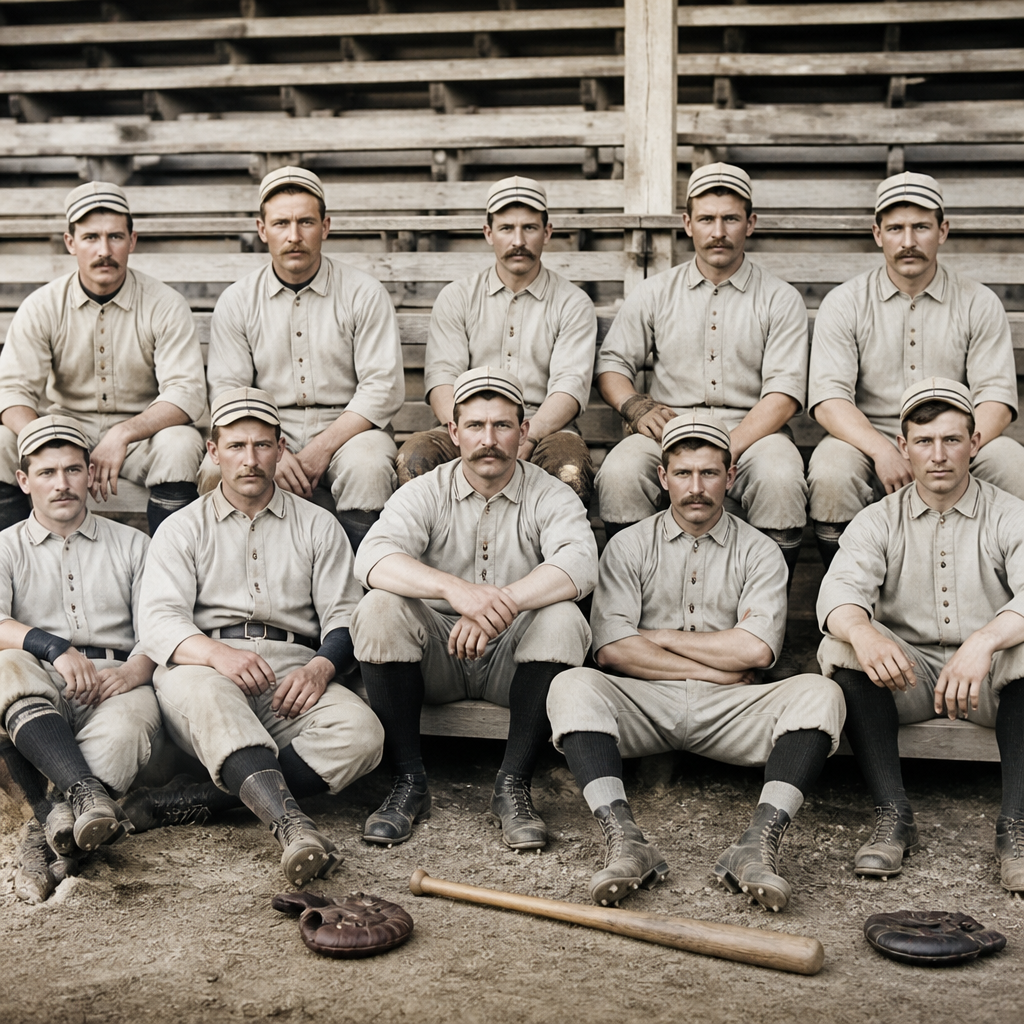
The 1890s Baltimore Orioles were baseball’s most feared, most imitated, and most controversial team, and their aggressive style helped define not only the 19th century game but the sport’s transition into the modern era. In baseball history, the term aggressive style refers to a deliberate, pressure-heavy approach built on bunting, baserunning, hit-and-run plays, strategic contact, field intimidation, and a willingness to exploit every inch of the rulebook. The Orioles of the National League during the 1890s perfected that formula under manager Ned Hanlon and turned it into a competitive weapon. For anyone studying 19th century baseball eras, this club sits at the center of the story because it connects rough early professional baseball to the more systematized game that followed.
This period matters because late 19th century baseball looked very different from the power-centered sport many fans know today. Ballparks were uneven, gloves were primitive, field conditions changed daily, and rules still evolved from season to season. Teams manufactured runs through placement, timing, deception, and relentless motion. In that environment, Baltimore became the standard for intelligent disorder: they appeared chaotic to opponents, yet almost every play carried intent. I have always found that when people ask why the 1890s Orioles loom so large in baseball history, the shortest accurate answer is simple: they showed how a team could turn tactics, psychology, and precision into dominance before the home run became king.
As a hub for the 19th century, this article places the Orioles inside the broader baseball eras timeline. Earlier decades established the professional game, the National League, the reserve system, and style conventions inherited from amateur clubs. The 1890s then became a proving ground for advanced in-game strategy, roster construction, and managerial authority. Baltimore’s rise also overlapped with the Players’ League collapse, league contraction pressures, franchise instability, and intense urban rivalries. Understanding the Orioles means understanding cap-and-collar baseball culture, the emergence of inside baseball, and the personalities who carried those methods into the 20th century through clubs such as the Brooklyn Superbas, New York Giants, and early American League powers.
They won because they were talented, but they became legendary because they fused talent with method. Hanlon’s roster featured John McGraw, Wee Willie Keeler, Hughie Jennings, Joe Kelley, Wilbert Robinson, and strong pitchers including Kid Gleason and Sadie McMahon. Their championships in 1894, 1895, and 1896 were not accidents. They reflected a repeatable system built around pressure offense, adaptable defense, sign coordination, and emotional edge. To understand 19th century baseball comprehensively, start with the Baltimore Orioles, because few teams better reveal how the sport thought, competed, and evolved before the dead-ball era officially took shape.
The 19th Century Baseball Context Behind Baltimore’s Rise
By the time the Orioles emerged, professional baseball had already passed through several distinct 19th century phases. The 1860s and early 1870s established club competition and professionalism. The National Association exposed both opportunity and disorder. The founding of the National League in 1876 imposed more structure, though enforcement, travel, gambling concerns, and franchise turnover remained unstable for years. Through the 1880s, teams experimented constantly with tactics because equipment and conditions rewarded placement more than raw force. Foul rules were different, pitchers worked from changing distances, and gloves offered far less protection and reach than later models. Every one of those factors shaped how Baltimore played.
The Orioles’ style did not appear in a vacuum. It grew from what contemporaries called inside baseball, a term covering bunts, steals, delayed steals, cutoffs, decoys, intentional slaps, and coordinated movement designed to force defensive mistakes. In modern terms, it was process baseball. Hitters shortened swings, batters aimed for holes rather than fences, runners pressured catchers, and fielders expected bunts at any moment. Hanlon recognized that in this environment, run expectancy could be manipulated aggressively. A single, a stolen base, a sacrifice, and a misplayed throw could decide games. Baltimore built a roster around players able to execute those sequences repeatedly under pressure.
The 1890s were also an era of compressed margins between strategy and gamesmanship. Clubs routinely argued calls, blocked bases hard, and pushed ethical boundaries. Umpiring crews were smaller than modern standards, replay did not exist, and crowd conditions could be hostile. A smart team could gain edges by distracting opponents, baiting umpires, or forcing rushed decisions. Baltimore embraced that reality more skillfully than any rival. Critics called them dirty; admirers called them brilliant. Both views contain truth. Their importance lies in showing that 19th century baseball was not primitive. It was highly sophisticated, simply optimized around different conditions and incentives than today.
Ned Hanlon and the Architecture of Inside Baseball
Ned Hanlon was the organizational mind behind the Orioles, and his influence on baseball strategy is difficult to overstate. Before data rooms, video libraries, and front-office analytics departments, Hanlon built an information system through observation, repetition, and role definition. He studied opposing batteries, defensive tendencies, runner reactions, and situational probabilities. Then he assigned responsibilities clearly. In my experience studying old game accounts, Hanlon stands out because his teams rarely looked accidental. Even chaotic innings usually reflected preparation. He ran practices that emphasized bunt placement, signal recognition, backing up throws, first-to-third judgment, and coordinated infield movement.
Hanlon’s Orioles treated strategy as infrastructure, not decoration. He expected every player to know where the next throw should go, how to sell a bluff, when to take the extra base, and how to exploit a defense shading too far. He also valued versatility. Keeler was an elite bat-control hitter. McGraw combined on-base skill with relentless agitation. Jennings played with daring and physicality. Kelley brought all-around offensive balance. Robinson anchored the catching position with tactical awareness. Hanlon did not merely collect good players; he assembled pieces that amplified one another within a pressure system.
His managerial legacy extended beyond Baltimore because many of his methods migrated with players and protégés. John McGraw later became one of the defining managers of the early 20th century, carrying forward the same appetite for pressure, precision, and intimidation. Wilbert Robinson later managed successfully as well. That continuity is why the Orioles matter as a hub topic within 19th century baseball. They were not an isolated champion. They were a transfer point through which 19th century tactics flowed into the next baseball era, influencing pennant winners long after the Baltimore franchise itself changed.
How the Orioles Played: Bunting, Running, Hitting, and Pressure
The hallmark of the 1890s Baltimore Orioles was relentless offensive pressure. They bunted not as surrender but as attack. A well-placed bunt toward third or first forced infielders with limited gloves and uneven footing to field cleanly and throw accurately under stress. They hit behind runners, chopped balls to create bad hops, and used the hit-and-run to open holes. Keeler’s famous batting approach, often summarized as “hit ’em where they ain’t,” captured the era perfectly. Bat control, spatial awareness, and timing mattered more than launch angle or exit velocity. Baltimore weaponized all three.
On the bases, they turned movement into psychological warfare. Runners broke hard, challenged arms, distracted middle infielders, and pressed for extra ninety-foot gains whenever defenses relaxed. McGraw especially excelled at converting annoyance into advantage. He would crowd fielders, chatter constantly, and force attention onto himself, all while looking for the next opening. This was not random recklessness. Good aggressive baseball depends on calculation. The Orioles understood catcher arm strength, pitcher delivery speed, backup positioning, and outfielder route quality. Their pressure worked because they chose moments well and because every player expected the club to keep attacking.
Defensively, Baltimore anticipated rather than reacted. Infields crept in, outfields adjusted to hitters, and the club backed up aggressively to limit extra bases. Communication mattered because 19th century fields generated strange caroms and bad hops. A team that hesitated gave away runs. Baltimore reduced hesitation through repetition and trust. They also embraced baseball’s gray areas: hidden-ball style feints, verbal distractions, and hard slides that rattled opponents. Modern readers should understand that this edge made them both effective and unpopular. Their genius lay in marrying legitimate tactical excellence with an abrasive style many clubs could not match emotionally.
| Element | How Baltimore Used It | Why It Worked in the 1890s |
|---|---|---|
| Bunting | Placed bunts to corners and in front of the plate | Primitive gloves and rough fields increased throwing errors |
| Hit-and-run | Started runners early to open holes | Middle infielders had to cover bags, creating contact lanes |
| Stealing | Pressed catchers and pitchers constantly | Delivery times and equipment favored daring runners |
| Bat control | Shot balls to vacant areas | Defensive positioning was less standardized and easier to exploit |
| Gamesmanship | Distracted fielders and argued edges | Loose enforcement and limited umpire support created openings |
The Stars Who Made the System Work
No system succeeds without players skilled enough to execute it, and Baltimore had a remarkable concentration of them. John McGraw, before his legendary managerial career, was one of the toughest and smartest players in the league. He drew walks, handled the bat, and unsettled opponents. Wee Willie Keeler was the lineup’s purest contact artist, spraying line drives and grounders with intentional placement. Hughie Jennings brought flair, courage, and speed. Joe Kelley offered middle-of-the-order production in an era where run creation required adaptability rather than just slugging. Wilbert Robinson gave the club leadership behind the plate and a deep understanding of tempo and sequencing.
The pitching staff also mattered more than some retrospective accounts suggest. While the Orioles are remembered primarily for offense and tactics, they still needed reliable innings in a decade when workloads were heavy and strategic support for pitchers was essential. Kid Gleason, for example, contributed both on the mound and with his baseball intelligence. Pitchers in this era benefited from coordinated defenses and from offenses that could scratch runs across quickly, allowing them to attack hitters differently. Baltimore’s complete team construction is one reason they won multiple pennants instead of merely becoming a colorful curiosity.
Another reason this roster deserves attention within a 19th century hub article is its long afterlife in baseball leadership. McGraw and Robinson later shaped major league clubs as managers. Jennings became a significant figure as well. Hanlon moved on and kept winning. In other words, this team functioned as a school of baseball thought. When historians trace why early 20th century National League and American League clubs looked so sharp in cutoffs, bunting, and situational execution, the trail often runs back through Baltimore’s clubhouse.
Legacy, Controversy, and the Bridge to the Modern Game
The Orioles’ greatest legacy is that they proved aggressive, coordinated baseball could be systematized at a championship level. Their three straight National League pennants from 1894 through 1896, plus continued strength afterward, established a model later clubs copied. Yet their reputation remains inseparable from controversy. Opponents accused them of dirty play, umpire manipulation, and excessive jawing. Those criticisms were not invented. Baltimore genuinely tested limits. The fairest historical judgment is that they combined innovation and antagonism in equal measure, and both were part of their competitive identity.
The team also stands at the hinge between 19th century baseball and the dead-ball era. As rules stabilized and the 20th century progressed, some of Baltimore’s rougher habits became less acceptable, but their strategic principles survived. Baserunning pressure, precision bunting, defensive anticipation, and manager-led tactical planning all became standard parts of winning baseball. Even later power teams kept versions of these habits. When I look at the Orioles historically, I do not see a quirky antique. I see an early high-performance system built for its environment and influential far beyond its own city.
For readers exploring Baseball Eras, the 1890s Orioles are the essential 19th century hub because they connect nearly every important thread of the century: professionalization, urban fandom, evolving rules, tactical experimentation, strong-willed managers, rough competitive culture, and the transfer of baseball knowledge across generations. Study them, and the century sharpens into focus. You can better understand why the game looked the way it did before 1900 and how that style prepared the ground for everything that followed. If you want a clear next step, continue through the wider 19th century topics linked from this hub and trace how Baltimore’s methods echoed into modern baseball strategy.
Frequently Asked Questions
What made the 1890s Baltimore Orioles so influential in baseball history?
The 1890s Baltimore Orioles mattered because they did far more than win games—they changed how elite baseball could be played. In an era when the sport was still evolving and many tactical norms were not yet fixed, Baltimore showed that a club could dominate by applying constant pressure in every phase of the game. They were not simply waiting for extra-base hits or pitching mistakes. Instead, they forced opponents into rushed decisions through bunting, daring baserunning, hit-and-run plays, precision contact, and relentless awareness of field position. That approach made them one of the most feared teams of the decade and one of the most closely studied.
The Orioles also helped bridge 19th century baseball and the modern game. Their style reflected older rough-and-ready baseball traditions, but it also revealed a more advanced understanding of strategy, teamwork, and situational execution. They proved that winning baseball could be built on preparation, discipline, and manipulation of defensive weaknesses, not just individual talent. Other teams copied their methods because those methods worked, and because Baltimore exposed how much tactical advantage could be created by aggression within the rules—or right up against their edges. In that sense, their influence was not temporary. They helped define the strategic imagination of baseball at a critical turning point in the sport’s development.
What does “aggressive style” mean when describing the 1890s Baltimore Orioles?
When historians describe the Orioles’ “aggressive style,” they are talking about a deliberate, pressure-oriented brand of baseball designed to make every pitch and every batted ball uncomfortable for the opposition. This style emphasized bunting not as a passive sacrifice but as an offensive weapon, often placed to force hurried throws and defensive confusion. It relied on sharp baserunning, including aggressive leads, daring advances on balls in play, and constant attempts to take the extra base. It also featured the hit-and-run, slash hitting, strategic contact, and a deep understanding of how to create small openings that could turn into big innings.
Just as important, the Orioles’ aggression was psychological. They wanted opponents to feel rushed, irritated, and off balance. Their players were known for crowding the action, testing defenders’ composure, exploiting field conditions, and using gamesmanship to gain tiny but meaningful edges. In the 1890s, rules were different, field conditions were rougher, and umpiring standards were less standardized than they are today, so teams that could think quickly and act boldly often gained an advantage. Baltimore mastered that environment. Their style was aggressive not because it was reckless, but because it was calculated. The goal was to pressure the other side into mistakes, then capitalize before it could recover.
Why were the Orioles considered controversial as well as successful?
The Orioles were controversial because their brilliance often came wrapped in behavior that opponents and critics considered abrasive, manipulative, or unsporting. They were famous for pushing the boundaries of acceptable play. That included verbal needling, close study of umpiring tendencies, exploiting loose interpretations of the rules, and using every possible tactical trick to create an edge. Supporters admired their intelligence and toughness; detractors saw a club that blurred the line between clever baseball and outright gamesmanship. Either way, they were impossible to ignore.
Part of the controversy also came from how effective they were. Teams that win consistently while making others look unprepared tend to attract resentment, and Baltimore’s style could be humiliating to opponents. A routine ball might become chaos because the Orioles had anticipated a weak arm, a slow reaction, or a vulnerable infield alignment. Their ability to turn ordinary moments into pressure situations made them seem almost predatory. In the highly competitive atmosphere of 1890s baseball, that reputation fed both admiration and outrage. The Orioles became a symbol of baseball’s harder edge: a team that embodied intelligence, nerve, and tactical sophistication, but also one that made people debate where competitive excellence ended and unfair manipulation began.
How did the Orioles’ tactics shape the evolution of modern baseball strategy?
The Orioles helped popularize the idea that baseball could be controlled through pressure, sequencing, and execution rather than through isolated bursts of power alone. Their offensive approach highlighted the value of moving runners, forcing defenders to make difficult plays, and using coordinated team action to manufacture runs. Many elements associated with “inside baseball” became more prominent because Baltimore demonstrated their effectiveness at the highest level. The bunt, the hit-and-run, intelligent baserunning, defensive anticipation, and situational awareness all gained credibility as central tools of winning baseball.
They also influenced baseball’s mental framework. The Orioles treated strategy as a full-game system. Every inning presented opportunities to exploit positioning, tempo, nerves, and rules. That way of thinking foreshadowed the increasingly sophisticated tactical culture of the 20th century, when managers and clubs became more systematic in how they approached matchups, defense, and offensive planning. Even though the sport would later shift through dead-ball, lively-ball, and modern analytical eras, the Orioles’ legacy remained visible in the enduring belief that pressure creates mistakes and that smart, coordinated aggression can reshape a game. In other words, they helped teach baseball that dominance could come from orchestrated detail, not just raw force.
Who were the key figures behind the Orioles’ identity, and why do they still matter?
The Orioles’ identity was shaped by a combination of star players, forceful leadership, and a clubhouse culture that embraced tactical aggression. Manager Ned Hanlon is often central to any discussion because he is widely credited with organizing and refining the team’s strategic identity. Under his guidance, Baltimore became known not just as a talented roster but as a club that played with a recognizable system and purpose. Hanlon understood how to build pressure into the game and how to get players to execute a demanding, opportunistic style consistently.
On the field, figures such as John McGraw, Willie Keeler, and Hughie Jennings remain especially important. McGraw represented the fierce, confrontational edge of the Orioles’ persona, combining talent with relentless competitive intensity. Keeler brought a different but equally vital element: elite bat control and the ability to place the ball intelligently, which fit perfectly with a contact-driven attack. Jennings embodied energy, toughness, and baseball instinct. Together, players like these gave the Orioles their particular character—a blend of skill, nerve, and tactical sharpness. They still matter because they represent an early model of baseball sophistication. Their team was not remembered only for victories, but for showing how a club could impose its style on an entire era and leave a strategic legacy that outlasted the decade itself.