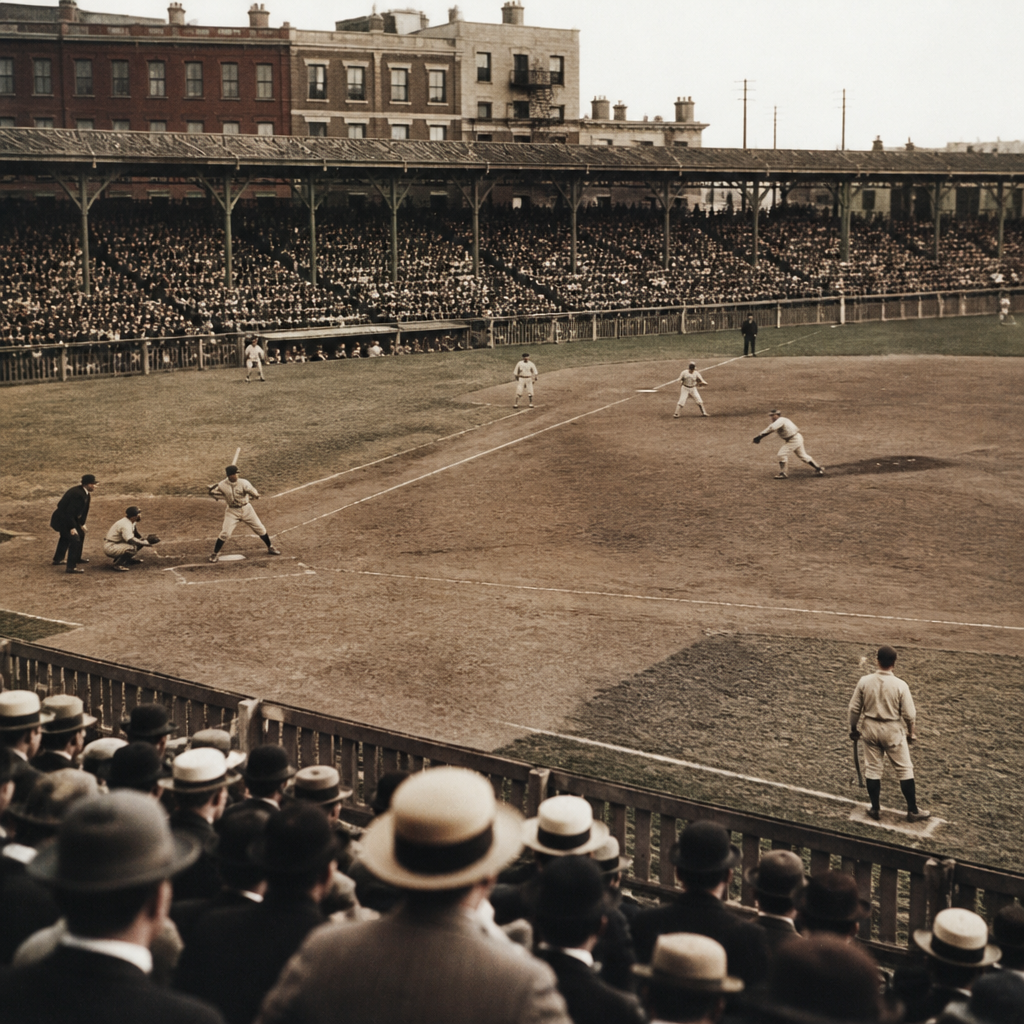
The 1880s were baseball’s first age of explosive expansion, a decade when professional leagues multiplied, cities fought for clubs, and promoters discovered that demand for organized sport could outrun the business structures meant to sustain it. In this context, a “major league” means a top-tier professional circuit recognized for high-level talent, broad media attention, and direct competition for players, markets, and legitimacy. The baseball boom of the 1880s matters because it shaped nearly every institution that later defined the national game: league governance, player contracts, territorial rights, scheduling, labor conflict, and the relationship between sport and urban growth. I have spent years tracing club records, league constitutions, attendance patterns, and newspaper accounts from this period, and one conclusion stands out. So many leagues rose because baseball had become one of America’s most visible commercial entertainments. So many fell because the revenue base, transportation systems, and legal controls needed to support stable nationwide competition were still immature. To understand the decade, you have to see the 1880s not as chaos on the margins of modern baseball, but as the workshop where modern professional baseball was assembled through repeated failure, adaptation, and consolidation.
Why the 1880s created perfect conditions for league expansion
Several forces converged to make league formation unusually attractive in the 1880s. First, the United States was urbanizing rapidly. Industrial cities such as Chicago, St. Louis, Cincinnati, Philadelphia, Baltimore, Brooklyn, and New York had enough population density to support paid admissions several afternoons a week. Second, railroad expansion made intercity scheduling practical on a scale impossible a generation earlier. A club could travel across a region, complete a road swing, and return home without losing weeks to transit. Third, newspapers had become indispensable amplifiers. Daily box scores, standings, and game stories created serial interest, turning baseball from a local pastime into a continuing competitive narrative.
Another key factor was the maturing of professionalism. The National League, founded in 1876, established a durable model built on fixed schedules, stronger central authority, and member clubs in larger cities. Yet its very discipline created opportunity for challengers. The league restricted entry, controlled player movement through the reserve system, and often set admission at fifty cents, effectively targeting a more affluent audience. Entrepreneurs looked at excluded cities and price-sensitive fans and saw an opening. That opening produced the American Association in 1882, a major rival that charged twenty-five cents in many markets, tolerated Sunday baseball where local politics allowed it, and sold beer at parks. This was not a minor tweak. It was market segmentation before the term existed.
League growth also reflected unstable demand for labor. Skilled players were scarce and increasingly valuable. Every new circuit needed credible stars to claim major status, so owners bid aggressively, raided rivals, or positioned themselves as more player-friendly alternatives. The result was a recurring cycle. A new league formed by promising access to underserved markets or better labor terms. It drew talent and attention quickly. Then it faced the hard realities of uneven attendance, weak capitalization, travel costs, and owner infighting. In many cases, the boom itself created the bust.
The National League and the new rules of big-city baseball
The National League was the anchor around which the decade revolved. After the disorder of the 1870s, when the National Association suffered from weak central discipline, gambling scandals, and unstable membership, the National League imposed a more corporate model. Clubs were expected to honor schedules, protect territorial exclusivity, and comply with league discipline. By the 1880s, that structure gave the league prestige, especially in established urban markets such as Boston, Chicago, New York, and Philadelphia.
Its strength, however, came with constraints that encouraged challengers. The league was conservative in expansion, preferring financial reliability over speculative growth. It also resisted Sunday baseball and alcohol sales, partly for moral reasons and partly because ownership tended to reflect middle-class and business interests. In practice, these policies limited revenue in working-class cities where Sunday was the only realistic leisure day for many wage earners. Club operators outside the National League understood that what looked like principle from one angle looked like unmet demand from another.
The league also normalized the reserve clause as a mechanism for labor control. By binding players to clubs beyond a single season, owners stabilized rosters and suppressed salary escalation. From an operator’s standpoint, this was essential cost management. From a player’s standpoint, it was coercive. That tension became one of the decade’s main engines of league proliferation. Every time player discontent rose, organizers could imagine a rival circuit or union-backed challenge. The National League remained powerful because its leading clubs had deep markets and administrative experience, but it never enjoyed uncontested dominance during the 1880s.
The American Association proved a rival major league could thrive
The American Association debuted in 1882 and immediately demonstrated that there was room for another top-level league. Its founders targeted cities the National League overlooked or undervalued, including St. Louis, Louisville, Cincinnati, and Philadelphia. They adopted a more flexible business model: lower admission prices, tolerance for beer sales, and Sunday play where local law permitted. Those choices broadened the audience and made the Association especially attractive to working-class fans.
For several seasons, the Association was unquestionably a major league by any serious standard. It signed elite players, fielded strong clubs, and generated pennant races with national attention. The St. Louis Browns became a powerhouse under owner Chris von der Ahe and manager Charlie Comiskey, winning multiple pennants and regularly challenging National League prestige. The Association also helped normalize the postseason championship series concept through meetings between league winners, precursors to the modern World Series in spirit if not format.
Still, the American Association’s strengths contained weaknesses. Flexible admission policies could drive volume, but lower ticket prices left less room for error when attendance softened. Some clubs were undercapitalized from the start. Governance was looser than in the National League, making enforcement less consistent. Membership turnover became a recurring problem. Cities could look promising on paper yet prove too small, too volatile, or too politically constrained to sustain a major club. By the late 1880s, internal instability and rising competition eroded the Association’s position, even though it had already changed professional baseball permanently by proving that fan demand extended beyond the National League’s preferred model.
Other 1880s leagues rose fast, fought hard, and collapsed faster
If the National League and American Association were the decade’s durable heavyweights, several other circuits reveal why the 1880s looked crowded, ambitious, and fragile. The Union Association in 1884 is the clearest example. Backed by St. Louis magnate Henry Lucas, it tried to exploit dissatisfaction with the reserve system and the exclusionary practices of established leagues. On paper, the opportunity was real. In practice, the Union Association lacked competitive balance, stable ownership, and enough strong markets. The St. Louis Maroons dominated a weak field, several clubs folded or relocated midseason, and the league lasted only one year.
The Players’ League, launched in 1890, technically sits just outside the 1880s, but it was a direct product of conflicts that intensified throughout that decade. Organized with support from the Brotherhood of Professional Base Ball Players, the Players’ League challenged owner control, especially the reserve clause and contract classifications. It attracted stars and built credible clubs in major markets. Yet even with superior talent in some cities, it struggled against the combined financial resistance of the National League and American Association. Competing for the same spectators in the same urban centers proved ruinously expensive. The league collapsed after one season, but it exposed how unresolved labor grievances could threaten the sport’s entire power structure.
Short-lived leagues were not always absurd ventures. Many were rational responses to visible market signals: rising attendance in certain cities, resentment toward established owners, or the belief that baseball’s popularity was still under-monetized. The problem was that founders often underestimated two things: the importance of scheduling reliability and the cost of surviving initial losses. In this era, one weak gate, one travel-heavy road trip, or one ownership dispute could destabilize an entire circuit.
Business realities that doomed many leagues
The most important reason so many major leagues rose and fell in the 1880s was economic mismatch. Baseball looked bigger than its financial infrastructure. Promoters saw packed grandstands in leading cities and assumed demand was universal. It was not. Revenue depended heavily on gate receipts because broadcasting did not exist and merchandising was minimal. If weather turned poor, local teams slumped, or a city lacked sufficient weekday leisure traffic, income dropped immediately.
Costs were also more complex than many founders admitted. Rail travel, hotel bills, ballpark leases, player salaries, and advance guarantees all strained club finances. A league needed not just one healthy franchise but an entire chain of solvent opponents. If one club failed, scheduling unraveled, travel plans changed, and competitive credibility suffered. The business risk was systemic.
| Pressure point | Why it mattered in the 1880s | Typical effect on a league |
|---|---|---|
| Gate dependence | Most income came directly from ticket sales | Bad weather or weak attendance caused immediate cash shortages |
| Travel costs | Railroad expansion helped, but long trips were still expensive | Marginal clubs fell behind on expenses and forfeited stability |
| Player bidding | Rival leagues had to sign recognizable talent fast | Salary inflation hurt new leagues before revenues matured |
| Uneven markets | Some cities loved baseball; others could not sustain daily clubs | Relocations, replacements, and folding teams damaged confidence |
| Weak governance | New circuits often lacked enforcement authority | Owners ignored schedules, contracts, or league assessments |
Another fatal issue was capitalization. In records from this period, you repeatedly find clubs entering a season with optimism but little reserve cash. Owners expected early crowds to finance operations. When that did not happen, they borrowed, delayed salary payments, or exited. Established leagues learned that central discipline and stronger ownership vetting were not luxuries. They were survival tools.
How cities, class, and culture shaped winners and losers
Baseball’s 1880s geography was not random. Leagues survived where urban scale, transportation links, newspaper culture, and local social habits aligned. St. Louis and Cincinnati were ideal examples because they combined strong civic identity with working-class audiences receptive to lower prices and Sunday recreation. Boston and Chicago supported high-level baseball through larger populations, robust press coverage, and entrenched club traditions. Brooklyn and Baltimore showed how dense urban communities could sustain fierce local followings when operators matched pricing and scheduling to neighborhood realities.
Class mattered as much as population. The National League’s more restrained image appealed to business-oriented leadership and fans who valued order, but that model did not automatically maximize attendance. The American Association’s willingness to sell beer and stage Sunday games recognized the rhythms of industrial labor. For many workers, six-day schedules made weekday baseball inaccessible. Sunday was not merely a preference. It was the only practical time to attend. This is why legal and cultural differences between cities had outsized effects. A club in a Sunday-baseball city had a built-in revenue advantage over one in a restrictive jurisdiction.
Ethnic and neighborhood identities also influenced club loyalty. German-American communities in cities such as St. Louis, for example, often embraced baseball environments that were sociable rather than moralized. Owners who understood local culture could build powerful ties. Owners who imported policies without regard to local habits often struggled. In that sense, the boom was not only about national growth. It was also about discovering that professional baseball had to be local in its business logic.
Why this decade became the hub of 19th-century baseball history
The 1880s sit at the center of any serious study of 19th-century baseball because they connect the game’s early professional experiments to the more consolidated structure that emerged in the 1890s and beyond. Earlier decades established professionalism, but the 1880s tested scale. They forced leagues to answer questions that still define sports management today. How many markets can top-level competition support? How should labor be controlled or negotiated? What rules should a central office enforce? How much should ticket strategy vary by audience?
This decade also links naturally to every major subtopic in 19th-century baseball. It connects backward to the National Association and the first openly professional clubs. It connects sideways to labor history through the reserve clause and the Brotherhood movement. It connects to rules evolution, including pitching distance changes, the gradual standardization of equipment, and shifting umpiring practices. It connects to urban history because baseball’s growth mapped onto industrial America. And it connects forward to the 1890s, when contraction, merger, and monopoly reshaped the sport again.
The core lesson is straightforward. The 1880s baseball boom was not an accident, and the collapse of many leagues was not proof that demand was fake. Demand was real, broad, and growing. What failed was the alignment between enthusiasm and sustainable organization. Strong leagues survived when they paired quality play with disciplined governance, adequate capital, and business models suited to local audiences. Weak leagues disappeared when ambition outran structure.
For readers exploring the broader Baseball Eras landscape, the 1880s provide the essential hub for understanding 19th-century baseball as a whole. Start here, then follow the era into the rise of professionalism in the 1870s, the labor battles that culminated in the Players’ League, the strategic and rules changes of the 1890s, and the city-by-city stories that turned clubs into civic institutions. The decade’s churn can look messy at first glance. Look closer, and it becomes the clearest explanation for how major league baseball learned to survive. Continue through the rest of the 19th-century era articles with that lens, and the entire century becomes far more coherent.
Frequently Asked Questions
What caused so many major baseball leagues to appear in the 1880s?
The surge of new major leagues in the 1880s came from a rare combination of social enthusiasm, economic ambition, and weak institutional barriers. Baseball had become the country’s most visible professional team sport, and urban growth gave the game a large, paying audience in city after city. Rail travel made regional scheduling more practical, newspapers gave clubs constant publicity, and promoters saw organized baseball as a business that could produce gate receipts, local prestige, and influence. Once it became clear that fans would pay to watch high-level professional clubs, investors and entrepreneurs rushed in.
Just as important, no single league yet had the power to fully control the market. The National League existed, but it did not have an unshakable monopoly. Its policies, including strict business practices and limited membership, left room for rivals. That gap helped create opportunities for competing circuits such as the American Association and later the Union Association and Players’ League. In the 1880s, a “major league” was not simply a title someone claimed. It meant a circuit with strong enough clubs, enough talent, enough press attention, and enough financial backing to compete seriously for players and spectators. Because baseball’s popularity was rising faster than its governance structure, league formation became relatively easy while long-term survival remained extremely difficult.
Why did so many of those 1880s major leagues collapse so quickly?
Most of them failed because demand for baseball was real, but the business systems needed to support multiple top-tier leagues were still fragile. A league could attract attention and even field excellent talent, but survival required stable ownership, dependable scheduling, balanced competition, affordable travel, and enough local attendance to keep every club afloat. Many 1880s leagues had some of those ingredients, but few had all of them. When one or two franchises weakened, the entire circuit could unravel because travel plans, gate-sharing expectations, and competitive credibility were all closely linked.
Player salaries were another major pressure point. Rival leagues often tried to establish legitimacy by signing away stars, which drove up payroll costs quickly. At the same time, club revenues depended heavily on ticket sales rather than the diversified income streams modern sports leagues enjoy. A few bad gates, a weak team in the wrong city, or an owner with limited capital could cause immediate instability. Some leagues also expanded too aggressively into markets that looked promising on paper but could not sustain major league attendance in practice. In short, many leagues rose because entering the business was easier than mastering it, and many fell because baseball’s popularity alone could not overcome weak finances, internal disputes, and uneven market support.
How did competition between leagues affect players, teams, and fans during the 1880s?
Competition transformed the baseball world at every level. For players, rival leagues created leverage. When more than one circuit wanted top talent, salaries rose and contract power shifted, at least temporarily, away from established owners. This was one reason the decade was so turbulent: new leagues often tried to win instant credibility by signing recognized stars, and players were willing to move if the money or conditions improved. That competition exposed how unsettled professional baseball still was and how much resentment existed over restrictive labor practices such as the reserve system.
Teams and owners faced a different kind of pressure. A club was no longer competing only on the field; it was competing in the marketplace for spectators, newspapers, and local loyalty. In some cities, two leagues might chase the same fan base. In others, clubs jumped between leagues or disappeared altogether. That instability made business planning difficult, but it also pushed owners to think more seriously about territorial rights, league discipline, and long-term organization. Fans, meanwhile, benefited and suffered at the same time. They often got more games, more star movement, and lower ticket prices in leagues that marketed themselves as accessible alternatives. But they also had to deal with short-lived teams, shifting schedules, and the constant uncertainty of whether a club or even an entire league would survive the season. The era was exciting precisely because it was unsettled.
Which 1880s leagues are considered “major leagues,” and what made them major?
Historians generally recognize several 1880s circuits as major leagues because they operated at the top professional level and competed directly for elite talent and public attention. The National League remained the most established. The American Association, founded in 1882, is also widely recognized as a major league because it built a substantial presence, attracted strong clubs, and challenged the National League for players and markets. The Union Association of 1884 is usually counted as a major league as well, even though it was short-lived and uneven in quality, because it attempted to function as a national top-tier competitor. At the end of the decade, the Players’ League of 1890 likewise qualifies because it drew many star players and represented a serious challenge to existing powers.
What made these leagues “major” was not simply longevity or later prestige. It was their position in the baseball ecosystem at the time. A major league had to operate as a genuine first-rank professional circuit: signing notable players, receiving broad newspaper coverage, drawing meaningful crowds, and presenting itself as a legitimate rival rather than a regional minor operation. Some leagues lasted only briefly, but while they existed, they influenced salaries, club stability, fan loyalties, and the broader struggle over who would control professional baseball. That influence is the key reason they matter historically, even when their records look unstable compared with more enduring leagues.
Why does the 1880s baseball boom matter to the later history of Major League Baseball?
The 1880s matter because the decade tested nearly every major issue that would shape the future structure of top-level baseball. Questions about league competition, franchise stability, player control, territorial rights, scheduling, and revenue sustainability were all fought out in real time during this boom. The failures of short-lived leagues taught owners that popularity alone was not enough; top-tier baseball needed stronger coordination and more disciplined business practices. At the same time, the success of challengers proved that fans wanted affordable entertainment, recognizable stars, and clubs rooted in growing urban markets.
The decade also showed that players were central economic actors, not just interchangeable employees. Repeated league wars and labor disputes revealed the limits of owner control and the risks of suppressing player bargaining power too aggressively. Later baseball institutions, including more durable league agreements and eventually the modern major league framework, were built in response to these pressures. In that sense, the 1880s were not a chaotic sideshow but a foundational period. The boom established the commercial possibilities of professional baseball while exposing the weaknesses of early league organization. Nearly every later development in the sport—from consolidation and expansion to labor conflict and market strategy—can be traced back in some form to the lessons learned when so many “major leagues” rose and fell in the same remarkable decade.