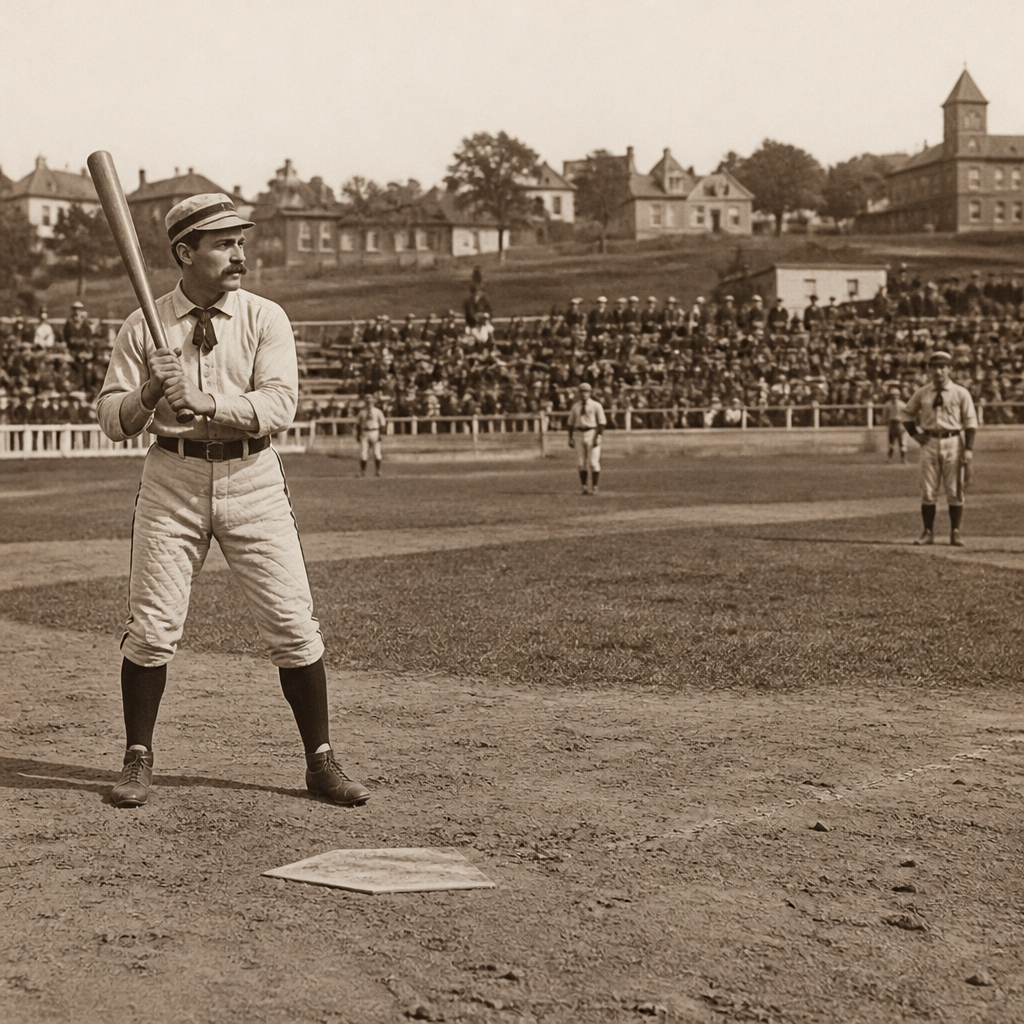
Baseball in the 1870s was a decade of reinvention, when a loosely organized bat-and-ball pastime became a structured spectator sport shaped by professional leagues, touring clubs, rule changes, and fierce regional rivalries. To understand the 19th century game, this era is the essential hub, because it connects the amateur roots of the 1850s and 1860s with the more stable major league systems that emerged in the 1880s and beyond. The 1870s introduced the first serious attempts to govern schedules, player contracts, championships, and club finances, while also exposing how fragile those efforts could be. Teams folded midseason, leagues collapsed, gambling scandals damaged trust, and travel logistics constantly disrupted plans. Yet the decade also established practices that still define baseball: league standings, pennant races, paid players, road trips, spring exhibitions, and the idea that the strongest clubs should compete under common rules.
When historians discuss baseball in transition, they mean more than changing uniforms or expanding crowds. They mean a sport moving from local clubs to commercial entertainment. A club in 1870 was often part business, part civic symbol, and part traveling show. The best nines drew paying audiences, crossed state lines by rail, and carried reputations that mattered far beyond their home grounds. Newspapers reported box scores, batting totals, and disputes with growing regularity, helping fans compare teams that never met in person. Just as important, clubs increasingly sought regularized competition rather than informal challenge matches. That push created the central story of the decade: the struggle to balance profit, competitive integrity, and national reach.
Key terms matter here. A professional club was one that openly paid players, even if payroll was sometimes hidden or irregular. A league was an organized association that set membership terms and championship rules, unlike the older convention system that mainly standardized regulations. Touring clubs were teams that traveled extensively to meet opponents, expand audiences, and earn gate receipts in multiple cities. During the 1870s, all three forces overlapped. The result was messy, often unstable, but historically decisive. For anyone exploring 19th century baseball, the decade serves as the main junction point: from here, readers can branch into early professionalism, rule evolution, club culture, equipment, urban fandom, and the rise of permanent major leagues.
The professional breakthrough after the amateur age
The immediate background to the 1870s was the National Association of Base Ball Players, which had governed a mostly amateur game before open professionalism took hold. In 1869, the Cincinnati Red Stockings demonstrated what a fully salaried team could achieve. Their undefeated season was not just a sporting accomplishment; it was proof that baseball could function as a commercial attraction. I have found that modern readers often assume professionalism arrived cleanly and all at once, but in practice it emerged unevenly. Some clubs openly paid stars, some disguised compensation as jobs, and some tried to preserve elite amateur ideals while quietly competing against professionals. By 1870, that ambiguity was collapsing. Top-level baseball was becoming a business.
The economic logic was simple. Winning clubs attracted larger crowds, larger crowds produced gate revenue, and gate revenue justified paying better players. Strong teams also enhanced city prestige. Boston, Chicago, Philadelphia, New York, and other growing urban centers wanted clubs that reflected civic ambition. Railroads made wider schedules possible, and newspapers made reputation portable. Once a club in one city charged admission and hired talent, rivals had incentives to do the same or fall behind. This was a classic professionalizing cycle, visible in boxing, horse racing, and cricket as well, but baseball adapted it especially fast because of its compact field, frequent schedule, and clear scoring system.
The shift mattered for style of play too. Salaried players practiced more consistently, specialized more clearly by position, and faced stronger pressure to win close games. Pitching, still delivered underhand early in the decade, became more strategic as hurlers worked on pace, placement, and deception within the rules. Fielding standards remained uneven by modern expectations because gloves were minimal and fields rough, but top clubs displayed remarkable coordination. Professional baseball in the 1870s was not merely amateur ball with tickets sold at the gate. It was a sharper, more disciplined product that required management, scheduling, publicity, and constant travel planning.
The National Association and why it struggled
The first fully professional league, the National Association of Professional Base Ball Players, began play in 1871. It included clubs such as Boston, Philadelphia, Washington, and Chicago, though membership shifted repeatedly. Its importance is enormous: it was the first sustained attempt to organize professional baseball on a league basis. However, it was not a strong central authority. Clubs retained broad independence, scheduling was inconsistent, and enforcement mechanisms were weak. Championships could be influenced by unequal numbers of games played, disputes over forfeits, and unstable franchises. Even so, the Association normalized the idea that a season should produce a recognized champion among professional clubs.
Boston dominated much of the Association period, winning four pennants in five seasons from 1872 through 1875 behind stars such as Al Spalding and the Wright brothers’ broader baseball influence. The club’s success showed the value of continuity and sound management. Chicago, rebuilt after the Great Fire of 1871 disrupted the city, also became a major force. Philadelphia’s Athletics and other clubs had strong moments, but the league never fully solved structural problems. Wealthier teams could schedule advantageously, weaker clubs could collapse, and long travel increased costs that many owners underestimated. In my experience studying early league records, the Association’s greatest weakness was not talent level but governance: too much depended on voluntary cooperation among direct competitors.
Public trust suffered further because gambling and game fixing were recurring concerns. Betting on baseball was common in the 19th century, and while not every accusation was proven, the perception of compromised competition damaged the league’s credibility. Fans wanted predictable championship rules, reliable schedules, and clubs that would survive the season. Owners wanted a framework that protected investments. By 1875, many influential figures believed the Association had demonstrated both the commercial potential of professional baseball and the danger of leaving too much power in club hands. That conclusion set up the most consequential organizational change of the decade.
The National League brings order, discipline, and exclusion
In 1876, Chicago executive William Hulbert helped create the National League of Professional Base Ball Clubs. This was not just a new league name. It was a new governing model designed to impose discipline on the chaos of the Association years. The founding clubs included Chicago, Boston, Hartford, St. Louis, Louisville, Cincinnati, New York, and Philadelphia. Membership was selective, and league authority was stronger. Clubs that failed to meet obligations could be expelled. Schedules were more centralized, and the organization was explicitly built to protect business interests as much as sporting ideals.
The National League’s early years were far from smooth. Franchises still struggled financially, and teams in smaller markets often found travel and payroll burdens difficult to sustain. Yet the league established a durable principle: major professional baseball required firm governance. That included standard admission policies, mandatory road obligations, and closer oversight of club behavior. Hulbert and his allies also sought to reduce gambling influence and improve respectability, especially among middle-class patrons and local business leaders. Their model privileged stability over openness. In practical terms, that meant excluding clubs seen as unreliable and locating membership in cities thought capable of supporting regular attendance.
One cost of this system was concentration of power. Players had little leverage, and club owners increasingly acted together on labor matters. Another cost was geographic and social narrowing. Still, the structure worked better than what came before.
| League | Founded | Strength | Main weakness |
|---|---|---|---|
| National Association | 1871 | Opened full professional league play | Weak central control |
| National League | 1876 | Stronger governance and stability | Exclusive membership and owner dominance |
That contrast explains why the National League became the foundation for later major league baseball, while the Association is remembered as a necessary but unstable precursor.
Touring clubs and the business of baseball on the road
Touring clubs were essential to 1870s baseball because the national game could not become national without travel. Before reliable league structures matured, leading teams built prestige by touring other cities and defeating local opponents. Even after leagues formed, extended road trips remained crucial for revenue and publicity. I have always viewed these tours as the decade’s connective tissue. They linked eastern and midwestern baseball cultures, spread tactics and rules, and gave smaller cities direct exposure to elite play. A successful tour could create headlines, strengthen a club’s finances, and raise demand for return visits.
Travel, however, was punishing. Teams moved primarily by rail, often on uneven timetables, with little comfort and frequent delays. Rainouts could wreck financial expectations. Grounds varied widely in quality, from enclosed urban parks to makeshift fields. Gate control was inconsistent, and local promoters sometimes disputed terms. Yet clubs kept touring because the alternatives were limited. A team that only played at home restricted both its revenue and its reputation. Touring also turned ballplayers into recognizable public figures. When stars arrived in a new city, newspapers previewed lineups, recent results, and interpersonal feuds, creating anticipation in ways familiar to modern sports marketing.
The most famous international extension of this pattern came at the end of the decade, when Albert Spalding organized the 1878-79 world tour, though its fullest significance belongs partly to the next era. Even before that venture, the touring habit had already taught owners that baseball could be packaged, exported, and sold as entertainment rooted in American identity. Within the 19th century hub, touring clubs are the bridge between local club culture and national baseball consciousness.
Rules, equipment, and the changing shape of play
The 1870s game looked familiar in outline but very different in execution. The pitching distance was shorter than today and would not be fixed in its modern form until later. Pitchers delivered the ball under restrictions that gradually loosened, encouraging more speed and movement. Fielders often played barehanded or with light glove-like protection that offered far less assistance than modern mitts. Catchers worked dangerously close to the plate early in the decade and absorbed hard contact from foul tips and foul bound rules that modern fans would barely recognize. Equipment limitations alone help explain high error totals in period box scores.
Several rule developments shaped competition. The decline of the fair-foul hit, once a major weapon for left-handed batters, altered offensive strategy. The called strike was introduced to discourage batters from endlessly waiting for favorable pitches, and the ball-strike count gained more importance over time. The shift from one-bounce catches being recorded as outs on fair balls to the modern catch-on-the-fly expectation raised defensive standards. These changes pushed baseball toward a cleaner contest between pitcher, batter, and fielders rather than a loose, negotiated exchange governed by custom.
Scoring and statistics also became more systematic. Newspapers regularly printed runs, outs, putouts, assists, and errors, giving readers tools to compare players and clubs. The statistics were not as analytically refined as modern measures, but they mattered culturally. They made baseball legible at scale. A fan in St. Louis could track Boston or Chicago through the press. That circulation of numbers helped transform baseball from a local event into a shared national conversation.
Baseball culture in the 19th century city
By the late 1870s, baseball had become a fixture of urban leisure. Clubs were businesses, but they were also civic brands. A successful nine represented the discipline, ambition, and modernity of its city. Ballparks drew clerks, laborers, businessmen, and curious families, though class divisions remained visible in seating, decorum expectations, and press coverage. Saturday games fit emerging work rhythms, and newspapers increasingly treated baseball as a regular beat rather than an occasional novelty. That cultural embedding is one reason this decade deserves hub status within the 19th century topic.
At the same time, the era’s limitations should be stated plainly. Professional baseball remained overwhelmingly white and male, with exclusion hardening even as the sport expanded. The game’s organizational centers were urban and commercially driven, which meant some regions and communities were underrepresented. Labor relations were also becoming more restrictive for players. Even so, the decade’s institutions proved durable enough to shape everything that followed: pennant competition, road schedules, statistical reporting, club branding, and the expectation that baseball seasons should be organized under central authority.
Baseball in the 1870s matters because it explains how the sport learned to survive success. Professional leagues created order but also hierarchy. Touring clubs spread the game but exposed financial risk. Rule changes improved competition while making older styles obsolete. If you are exploring 19th century baseball, start here, then continue into deeper studies of early professional stars, league formation, equipment evolution, club travel, and urban fan culture. The decade is not a side chapter. It is the hinge that turned baseball into a modern national game.
Frequently Asked Questions
Why is baseball in the 1870s considered such an important turning point in the sport’s history?
The 1870s matter because this was the decade when baseball moved decisively from a loosely organized pastime into a more recognizable professional spectator sport. Earlier generations had established clubs, local rivalries, and a basic framework for play, but the game still operated with a great deal of informality. In the 1870s, that began to change. Teams started thinking in terms of league membership, fixed schedules, gate receipts, paid players, and broader public followings. Baseball was no longer simply something clubs arranged among themselves; it was becoming an industry as well as a game.
This period also served as a bridge between two baseball worlds. On one side was the amateur and semiprofessional culture of the 1850s and 1860s, when clubs often reflected neighborhoods, social organizations, or civic pride. On the other side was the more durable major league structure that would emerge in the 1880s and later. The 1870s sit directly between those eras, and that is why they are so important. The decade exposed what worked and what did not: weak governance, uneven finances, unstable rosters, and improvised scheduling created constant problems, but they also forced baseball leaders to search for more reliable systems.
Just as importantly, the game itself was evolving. Rules continued to shift, playing standards improved, and the expectations of spectators became more central to how clubs operated. Regional rivalries intensified, touring clubs expanded the game’s reach, and newspapers gave fans a regular narrative to follow. In short, the 1870s were the decade when baseball stopped being merely popular and started becoming organized, commercial, and nationally visible.
What were the first professional leagues of the 1870s, and how successful were they?
The first major experiment was the National Association of Professional Base Ball Players, usually called the National Association, which began play in 1871. It is widely recognized as the first true professional baseball league because it brought together clubs that openly employed players and competed in a common championship structure. That alone was a major development. The Association represented a serious attempt to move beyond isolated club competition and create a more unified professional game.
Its success, however, was mixed. On one hand, it proved that professional baseball could draw public attention and support strong clubs in major cities. It also helped establish the idea that top-level baseball should be organized through a league rather than through occasional challenge matches or loose club networks. On the other hand, the National Association suffered from deep structural weaknesses. League authority was limited, schedules were inconsistent, weaker clubs came and went, and financial instability was common. Teams did not always operate with the same level of seriousness, and competitive balance could be erratic.
These shortcomings helped lead to the creation of the National League in 1876. The National League was founded with a stronger commitment to centralized control, more stable membership, and stricter business discipline. Its organizers wanted to correct the problems that had undermined the National Association, especially weak enforcement and club instability. While the new league did not solve every issue immediately, it marked a crucial step toward the modern league model. So when discussing success, the best answer is that the early leagues were imperfect but essential. They did not create instant stability, but they established the professional framework from which organized major league baseball would grow.
How did touring clubs shape baseball in the 1870s?
Touring clubs were one of the most important engines of baseball’s growth during the 1870s. In an era before nationwide broadcasting, modern travel convenience, or a fully standardized league system, clubs spread the game by physically carrying it from city to city. These tours introduced communities to stronger styles of play, created excitement around visiting teams, and helped turn baseball into a regional and increasingly national attraction. A touring club did more than play games; it advertised the sport, modeled competitive standards, and built interest wherever it appeared.
These tours also strengthened the culture of baseball as a spectator event. When a prominent club arrived in town, the match could become a civic occasion. Local newspapers covered the contest, crowds gathered, and home clubs had a chance to measure themselves against more established opponents. That process intensified rivalries and encouraged local organizers to improve their own teams, grounds, and methods. Touring clubs therefore helped spread both baseball’s popularity and its standards.
There was also a practical side to touring. Clubs used travel to generate revenue, maintain visibility, and expand their reputations beyond their home cities. In a time when league schedules were often incomplete or unevenly enforced, tours could fill out a season and keep a club financially active. They also contributed to the game’s transition from local pastime to broader commercial sport. By connecting distant baseball communities, touring clubs made the sport feel larger than any single city, and that sense of a shared baseball world was a major part of the game’s transformation in the 1870s.
What kinds of rule changes and on-field developments defined baseball during the 1870s?
The 1870s were a period of continued experimentation and refinement, and that matters because the sport had not yet settled into the exact form modern fans would recognize. Baseball’s rules were still being adjusted in ways that affected strategy, pace, and style of play. Clubs, officials, and organizers were trying to create a game that was competitive, watchable, and governable. This meant that players had to adapt to changing expectations while spectators learned a version of baseball that was still evolving year by year.
One of the broad trends of the decade was increasing standardization. Even when enforcement remained inconsistent, there was a stronger push to define what counted as legitimate professional competition. That included clearer expectations around schedules, club obligations, eligibility, and gameplay. As leagues and stronger organizations took shape, rules became more important not just for fairness on the field but for preserving the credibility of the sport in the eyes of paying fans and the press.
On the field, play was becoming sharper and more specialized. Teams put greater emphasis on disciplined fielding, tactical hitting, and organized club play rather than purely informal competition. As professionalism spread, players were expected to perform at higher levels and with more consistency. The result was a game in transition: still recognizably 19th century in style, but increasingly serious, strategic, and structured. The 1870s did not produce a finished modern game, but they were a decisive stage in shaping one.
What were the biggest challenges facing professional baseball in the 1870s?
The biggest challenge was instability. Professional baseball was growing quickly, but its institutions were not yet strong enough to manage that growth smoothly. Leagues struggled to enforce schedules, clubs folded or relocated, and financial planning was often uncertain. Some teams were well organized and ambitious, while others lacked the resources or discipline to survive a full season. That inconsistency made it difficult to build fan trust and league credibility, especially when standings or schedules could feel unsettled.
Another major problem was governance. Early professional baseball had not yet fully solved the question of who was in charge and how rules should be enforced. When a club failed to meet obligations, disputed a result, or handled players irresponsibly, leagues did not always have effective mechanisms to respond. This was one reason the decade saw repeated efforts to create tighter organizational control. Baseball leaders increasingly understood that talent alone would not sustain the sport; it also needed administration, discipline, and dependable business practices.
Regional rivalry, while exciting, could also add tension. Clubs represented city pride as much as athletic ambition, and competition could become bitter. At the same time, the sport’s expanding commercial side raised concerns about professionalism, player movement, and the influence of money. Those anxieties were part of the broader transition taking place throughout the decade. Yet in a historical sense, these challenges were productive. The problems of the 1870s forced baseball to confront the realities of being a professional enterprise, and the solutions pursued during and after the decade laid the groundwork for the more stable systems that followed.