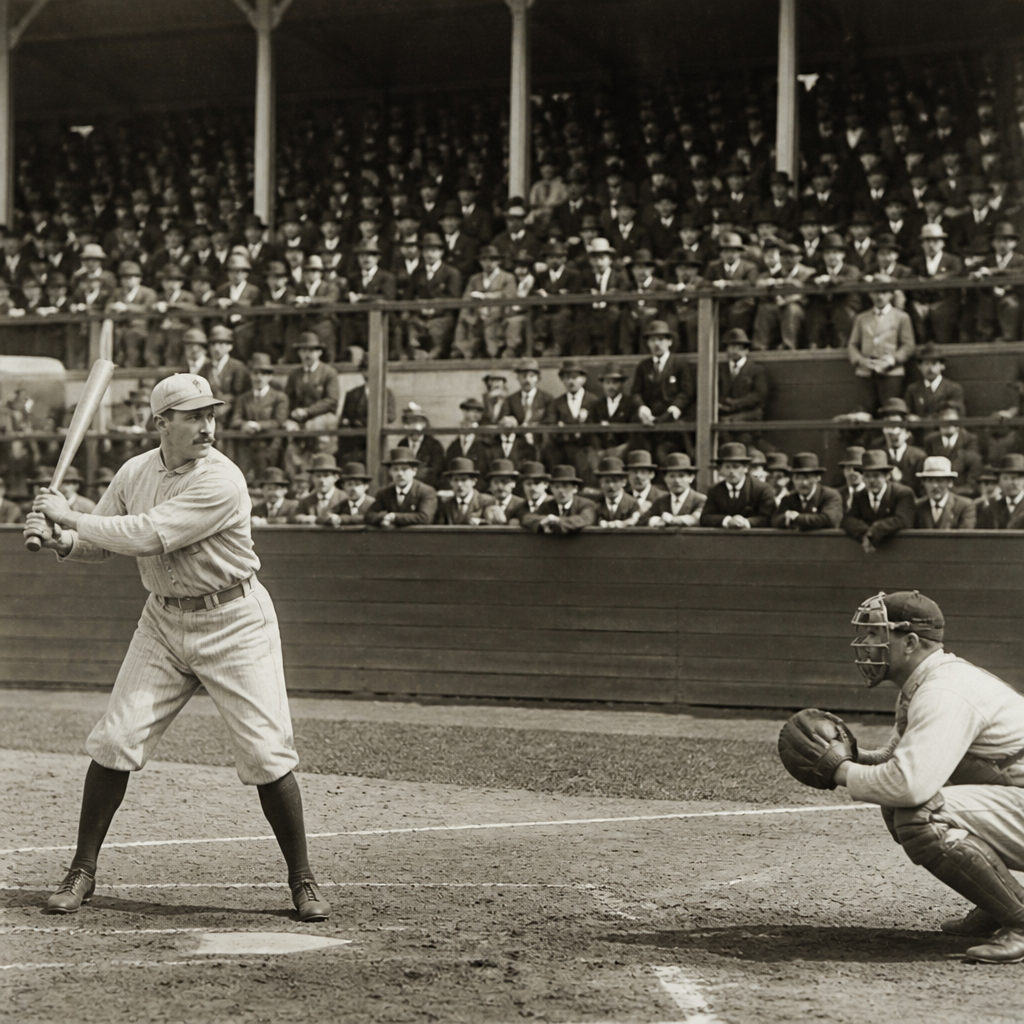
The 1876 National League season marked a turning point in the early history of baseball because it represented the most serious attempt yet to impose order on a chaotic professional game. Before this season, professional baseball existed, but it lacked a durable structure for schedules, finances, discipline, and club relations. The new league did not invent professionalism from nothing. Rather, it tried to fix the failures that had plagued the National Association, the first fully professional major league, by creating stricter governance and placing control in the hands of club owners instead of loosely coordinated teams and players.
To understand why the 1876 National League season matters, it helps to define the central issue: professionalization meant turning baseball from a loosely organized sporting activity into a stable business. That required predictable revenue, enforceable contracts, reliable travel arrangements, standard rules, and a league office with enough authority to punish clubs that ignored their obligations. In my work on nineteenth-century baseball business history, this season always stands out because nearly every later major league practice traces back to problems owners were trying to solve in 1876, even if their first solutions were incomplete or self-serving.
The season also matters because it linked competitive integrity to commercial survival. Owners believed fans would only pay consistently if they trusted that scheduled games would be played, players would stay with their clubs, and championship races would not be distorted by financial collapses. The result was a league built around exclusivity, urban markets, and centralized authority. Those principles helped baseball survive, but they also concentrated power among a small group of executives and set precedents that shaped labor relations for decades.
As a hub for the professionalization and business side of early baseball, this article explains why the National League formed, how the 1876 season operated, what business reforms it introduced, and where it fell short. It also shows how one season became the foundation for modern league governance.
Why Professional Baseball Needed Reform in 1876
The immediate background to the 1876 National League season was the collapse of confidence in the National Association, which operated from 1871 through 1875. The Association was important because it openly embraced professional players and helped baseball spread beyond local amateur clubs. Yet by the mid-1870s, owners and influential executives saw it as unstable. Clubs entered and exited too easily, schedules changed constantly, and stronger teams could raid weaker rosters. Gambling concerns also damaged credibility, a major issue in an era when many spectators already viewed professional sports with suspicion.
William Hulbert of the Chicago White Stockings became the central organizer of reform. Hulbert concluded that the existing model gave too much freedom to clubs and not enough power to league leadership. He wanted a closed, disciplined association of selected franchises in major cities, each expected to meet financial obligations and complete a full schedule. His view was shaped by practical business realities. Clubs invested in grounds, payroll, and travel, but they could not build a dependable gate business if opponents folded, failed to appear, or treated contracts casually.
The new National League of Professional Base Ball Clubs, founded in February 1876, therefore reflected a deliberate business strategy. Entry was by invitation, not open admission. Membership initially included clubs from Chicago, Boston, Hartford, St. Louis, Louisville, New York, Philadelphia, and Cincinnati. The concentration on larger cities was no accident. Bigger urban populations meant more paying customers, stronger newspaper coverage, and better rail connections. In plain terms, the league wanted markets that could support repeated home dates and absorb the costs of a national circuit.
How the 1876 National League Was Structured
The 1876 National League season differed from its predecessor in governance as much as in on-field competition. Under the new arrangement, club owners and officers—not players—held authority. The league constitution established procedures for meetings, discipline, scheduling, and membership standards. This was a major shift in baseball business organization. Hulbert and his allies believed that if clubs were investing capital, they needed collective mechanisms to protect that investment. They were not interested in a loose federation. They wanted a cartel-like body that could coordinate competition while limiting disorder.
League structure also emphasized obligations. Clubs were expected to play scheduled games, settle financial accounts, and respect player contracts. In practice, enforcement remained imperfect in 1876, but the principle was crucial. A professional league could not survive if each club acted only in short-term self-interest. This is one of the clearest lessons from the 1876 National League season: modern sports leagues emerge when owners decide that cooperation is necessary to make competition commercially viable.
The championship itself was not determined by a modern balanced schedule. Clubs played uneven numbers of games, and the standings reflected a developing system rather than a polished one. Even so, the league aimed for greater regularity than the National Association had achieved. Chicago ultimately won the pennant behind star player-manager Albert Spalding, whose club combined strong pitching, disciplined defense, and organizational stability. The White Stockings were also a model franchise in business terms, with management that understood publicity, scheduling, and fan cultivation.
Key Business Problems the New League Tried to Solve
The founders of the league were addressing several concrete business failures at once. First was franchise instability. In the earlier system, clubs could join with too little capital and then collapse midseason, leaving creditors unpaid and schedules broken. Second was contract jumping, where players left one club for another offering more money or better terms. Third was gate uncertainty. Clubs depended heavily on ticket sales, so canceled games and weak opponents directly reduced revenue. Fourth was reputation. If fans believed professional baseball was disorderly or corrupt, they had less reason to spend money on admission.
From the start, the National League answered these problems with stricter membership control, centralized scheduling, and stronger rules on club conduct. It also restricted Sunday games and alcohol sales at ballparks, partly to present baseball as respectable middle-class entertainment. That decision had tradeoffs. It improved public standing among reform-minded civic leaders, but it also reduced access for working-class spectators who had free time on Sundays. The business strategy, then, was not simply about efficiency. It was about choosing which audience baseball wanted to attract and which social image owners believed would produce long-term stability.
| Problem in Professional Baseball | National League Response in 1876 | Business Goal |
|---|---|---|
| Clubs folding or skipping obligations | Invitation-only membership and tighter discipline | Protect schedules and preserve ticket revenue |
| Players changing clubs unpredictably | Greater contract enforcement between member clubs | Stabilize rosters and reduce bidding chaos |
| Irregular schedules | Central planning of league games | Create dependable home dates and travel plans |
| Questionable public reputation | Bans on Sunday play and alcohol sales in league parks | Attract respectable audiences and civic support |
| Weak league authority | Owner-led governance with constitutional rules | Coordinate clubs as a durable business system |
Teams, Markets, and the Economics of the First Season
The makeup of the league in 1876 reveals how seriously the founders took market economics. Chicago and Boston were obvious anchors because they already had strong baseball followings and substantial press attention. New York and Philadelphia offered population scale, even though their clubs were less dominant competitively. St. Louis, Cincinnati, Louisville, and Hartford reflected a mix of ambition, geography, and existing professional baseball culture. Railroad access mattered enormously. A national league in the 1870s was only possible because clubs could coordinate travel across expanding rail networks, though trips were still expensive, tiring, and vulnerable to disruption.
Revenue remained centered on the gate. There were no broadcast rights, no league-wide sponsorship systems, and only limited merchandising by later standards. That meant attendance was the lifeblood of every club. Owners had to think constantly about weather, local competition, newspaper publicity, and the drawing power of star players. Clubs that failed to attract enough paying spectators could quickly slide into crisis. This financial fragility helps explain why owners wanted strong opponents in sizable cities. A weak club hurt not just itself but every team counting on a profitable road series against it.
Chicago’s success in 1876 illustrates the connection between business competence and baseball performance. With Spalding as both star pitcher and influential baseball entrepreneur, the White Stockings operated with unusual sophistication. Spalding understood that winning, promotion, and institutional legitimacy reinforced each other. A successful club sold tickets, drew favorable newspaper coverage, and strengthened the league’s claim to be the premier professional circuit. That combination made Chicago a template for how baseball could become a stable urban entertainment business.
Player Control, Labor Tension, and League Authority
Although the 1876 National League season is often remembered as a triumph of order, it also marked a decisive shift in the balance of power away from players. Owners wanted contract stability, but from the player perspective, stricter enforcement limited bargaining freedom. Even before the reserve system was formalized later, the logic was already visible: clubs sought mechanisms to prevent salary escalation and roster instability. This tension between business efficiency and labor autonomy became one of the defining features of professional baseball.
In practical terms, players in 1876 were still relatively mobile compared with those of the 1880s and 1890s, but the league’s direction was unmistakable. Clubs wanted agreements honored, poaching reduced, and league membership used as leverage against rivals. Owners argued that this discipline was necessary to protect investment. Players often saw the same policies as restrictions imposed by men who controlled the grounds, the schedules, and the legal machinery of the sport. Both views contain truth. Without greater order, many clubs might not have survived. Yet the order that emerged served ownership first.
This matters within the early history of baseball because professionalization was never just about better administration. It was also about deciding who would control the economic value created by the game. The 1876 season showed that league governance, player contracts, and franchise policy were inseparable parts of one business system.
What the 1876 Season Achieved and Where It Failed
The first National League season achieved something substantial: it proved that a more centralized professional baseball league could operate at a higher level of credibility than the National Association. The league established a clearer membership standard, a more serious governing structure, and a stronger identity as the top professional competition. Those gains were not cosmetic. They gave newspapers, fans, and investors a framework they could recognize as legitimate.
At the same time, the season exposed limits. Not every club was financially secure. Schedules were still imperfect, competitive balance was uneven, and the league had not eliminated instability as quickly as founders hoped. Some cities lacked sufficient long-term support, and enforcement depended heavily on the will of powerful executives rather than mature administrative systems. In other words, 1876 was a beginning, not a finished model. The league solved enough problems to survive, but not enough to avoid continuing conflict over markets, labor, and governance.
That nuance is essential. It is inaccurate to portray the National League as instantly modern. What it did accomplish was more foundational: it changed the expectations for how top-level professional baseball should be organized. After 1876, a major league was expected to have selective membership, formal rules, and collective authority over business conduct. That was the durable breakthrough.
The Lasting Legacy for Baseball’s Business Model
The long-term importance of the 1876 National League season lies in the business template it introduced. Modern readers can see early versions of franchise control, league governance, market selection, brand management, and labor regulation all taking shape here. Later developments—including the reserve clause, more formal scheduling systems, stronger central offices, and eventual league expansion—grew from the same core idea: baseball could only thrive nationally if owners coordinated competition and protected the commercial structure around it.
For anyone studying the early history of baseball, this season is the key hub for understanding professionalization and business. It connects directly to topics such as the fall of the National Association, William Hulbert’s leadership, Albert Spalding’s influence, nineteenth-century ballpark economics, player contract disputes, gambling concerns, and the emergence of the franchise system. The central lesson is straightforward. The National League did not merely stage games in 1876; it attempted to redesign professional baseball so that the sport could endure as a business.
The 1876 National League season matters because it showed that structure could be as important as talent. Owners believed baseball needed rules, reliable markets, and stronger authority to win public trust and financial stability. They were right, even if their methods often favored management over players and left important problems unresolved. If you want to understand how professional baseball became an organized industry rather than a loose collection of clubs, start with this season and then follow the business decisions it set in motion across the rest of baseball history.
Frequently Asked Questions
Why was the 1876 National League season considered such an important turning point in baseball history?
The 1876 National League season mattered because it was the first serious, organized effort to bring lasting structure to professional baseball. Professional clubs had already existed, and fans were already paying to watch top-level competition, but the sport was unstable. Earlier professional baseball arrangements struggled with weak central authority, uneven scheduling, financial uncertainty, and clubs that could appear, disappear, or ignore obligations with little consequence. That made it hard for teams to trust one another, hard for fans to follow a reliable pennant race, and hard for owners to build a business that could survive from year to year.
The National League was created to address exactly those weaknesses. Its founders wanted a league in which membership meant something, schedules were more formal, and club behavior was subject to league rules rather than informal understandings. In that sense, the 1876 season represented more than a new championship race. It was a test of whether professional baseball could operate under a more disciplined business model. The league did not solve every problem overnight, and early professional baseball remained rough around the edges, but this was a decisive step toward the modern idea of an organized major league.
Just as importantly, the season showed that baseball’s future would depend not only on talent on the field but also on governance off it. League leaders believed that professional baseball needed stronger administration, better financial standards, and more dependable club relations if it was going to endure. The 1876 campaign therefore stands as a foundational moment because it shifted the conversation from simply playing professional baseball to managing it in a way that could last.
What problems from earlier professional baseball was the National League trying to fix in 1876?
The new league was trying to fix a whole set of problems that had undermined earlier professional baseball, especially during the era of the National Association. One of the biggest issues was the lack of consistent organization. Schedules could be irregular, and not every club approached its obligations with the same seriousness. That created confusion about standings, fairness, and competitive balance. If teams did not play comparable schedules or failed to complete commitments, the championship race could feel incomplete or even questionable.
Financial instability was another major concern. Early professional baseball clubs often operated in a fragile business environment, and some owners were not equipped to absorb losses or manage long seasons. Clubs could fold, withdraw, or struggle to travel, which weakened the league as a whole. For fans, that meant uncertainty. For stronger clubs, it meant frustration, because they needed dependable opponents and dependable gate receipts. The National League’s founders wanted member clubs that were more financially responsible and more committed to the collective health of the competition.
Discipline and authority were also central issues. Previous arrangements had not created a strong enough governing structure to enforce standards of conduct among clubs, players, and owners. Disputes between teams, questions about contracts, and basic league compliance could become difficult to manage when central authority was weak. The National League tried to change that by creating a more exclusive organization with clearer expectations and stronger control over members. The basic idea was simple: professional baseball could not become a stable national business unless teams were held accountable to rules that everyone had to respect.
So when people say the National League was trying to “fix” professional baseball in 1876, they mean it was trying to impose order on chaos. It sought more reliable schedules, better business practices, firmer discipline, and more stable relationships among clubs. Those goals were not glamorous, but they were essential to turning professional baseball from a loosely connected enterprise into a durable institution.
How was the National League different from the earlier National Association?
The most important difference was that the National League aimed to be more centralized, more selective, and more disciplined than the National Association. The National Association had been significant because it represented the first fully professional major baseball organization, but it often struggled to enforce standards consistently. Clubs had considerable freedom, and that freedom could turn into disorder when teams failed to meet expectations or when the league could not effectively manage scheduling, finances, or disputes.
By contrast, the National League was built around the idea that league membership carried obligations. It was not supposed to be merely a loose collection of clubs competing under a shared label. Instead, it was designed as a governing body with more authority over how teams conducted business and participated in competition. That meant closer attention to schedules, stronger expectations about club behavior, and a more serious effort to protect the league’s reputation and financial stability.
Another key difference was philosophical. The National Association reflected an earlier stage of professional baseball, when the sport was still figuring out how to organize itself at the highest level. The National League represented a more deliberate business-minded response to the failures of that first experiment. Its founders believed that if baseball was going to thrive, the strongest clubs needed a system that rewarded order and punished unreliability. In practical terms, that meant trying to create a more durable framework for competition rather than trusting that clubs would regulate themselves effectively.
That does not mean the National League immediately became a perfect modern organization. Early league baseball still dealt with instability, controversy, and uneven enforcement. But compared with the National Association, the National League marked a clear shift toward stronger administration and a more formal conception of what a professional league should be. That shift is why historians often view 1876 as a critical dividing line between baseball’s first professional experiment and a more enduring major league structure.
Did the National League immediately solve the problems of professional baseball in its first season?
No, the National League did not instantly solve everything in 1876, and it is important not to oversimplify the season as a clean success story. What made the league important was not that it eliminated chaos overnight, but that it represented the strongest attempt yet to control it. Early professional baseball was still developing, and many of the sport’s structural problems were deeply rooted. Travel remained difficult, finances could still be precarious, and maintaining discipline across independent clubs was never easy.
Even with a stronger framework, the league still had to prove that its rules could be enforced and that clubs would consistently honor their commitments. In any new organization, especially one formed to replace a weaker system, there is a period of testing. Owners might agree in principle on the need for order but differ in practice when league rules conflicted with local interests or immediate financial pressures. That meant the 1876 season was as much an experiment in governance as it was a baseball competition.
Still, the league’s significance lies in the fact that it established a new direction. Instead of accepting disorder as an unavoidable feature of professionalism, the National League treated disorder as something that could and should be managed. That mindset mattered tremendously. It laid the groundwork for more consistent administration, firmer league authority, and a stronger sense that professional baseball required institutional control if it was going to survive and grow.
So the honest answer is that the National League did not perfect the sport in one season. What it did do was create a more credible framework for solving professional baseball’s biggest problems over time. That is why historians see 1876 not as the end of baseball’s growing pains, but as the beginning of a more stable and recognizable major league system.
Why does the 1876 National League season still matter to fans and historians today?
The 1876 season still matters because it marks the moment when professional baseball began moving toward the durable league structure that later generations would take for granted. Fans today are used to the idea that leagues have schedules, rules, standings, discipline, and long-term institutional continuity. In 1876, those things were not guaranteed. The National League season is important precisely because it shows that the sport had to fight for that stability. It did not emerge automatically from popularity alone.
For historians, the season offers a window into a crucial transformation in American sports culture. Baseball was becoming more than a game played by talented clubs; it was becoming a business and a public institution. That shift raised questions about authority, money, fairness, and governance that would shape the sport for decades. The National League’s founding season helps explain why modern baseball developed the way it did, with heavy emphasis on league control, club obligations, and the protection of the competition’s credibility.
For general readers and fans, the story also remains compelling because it reveals how fragile the sport once was. Looking back, it can be tempting to assume that major league baseball was always destined to become stable and dominant. The 1876 season reminds us that this was not inevitable. Baseball had to be reorganized by people who believed the professional game would collapse unless someone imposed structure on it. Their effort was imperfect, but it was hugely influential.
In that sense, the 1876 National League season matters not just as a first season or a historical milestone, but as the clearest early example of baseball trying to govern itself seriously. It stands at the point where the professional game began to move from improvisation toward institution-building, and that makes it essential to understanding the history of the sport.