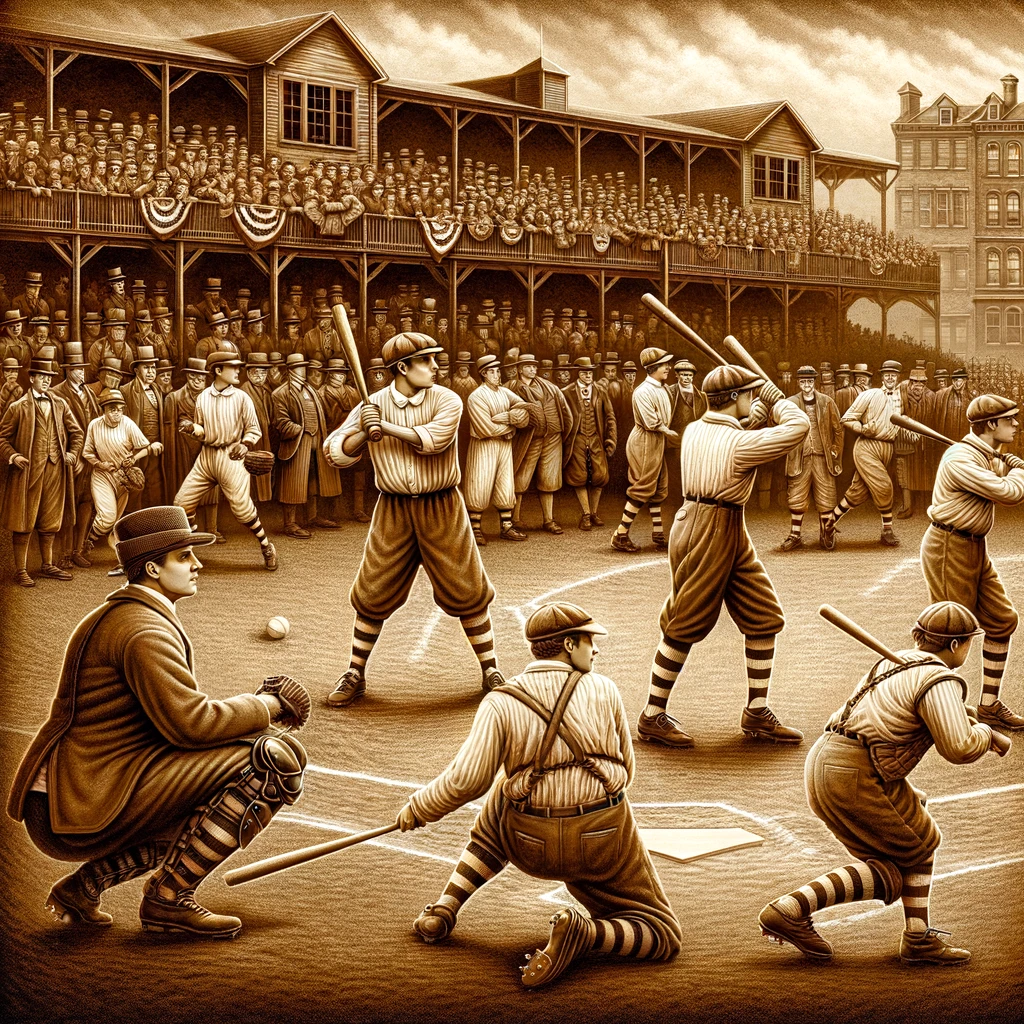
Baseball, often referred to as America’s pastime, has a rich and storied history that dates back to the 19th century. This era witnessed the transformation of baseball from a recreational activity to a professional sport, complete with its own legends and superstars. The 19th century was a time of pioneers, where the rules and traditions of baseball were established and its first heroes were born.
The Origins of Baseball
The early history of baseball is somewhat murky, with various forms of bat-and-ball games played in different cultures for centuries. However, it was in the United States that baseball, as we know it today, began to take shape. The game was initially more of a social pastime, with variations in rules depending on the region. It wasn’t until 1845 that Alexander Cartwright, often considered the father of modern baseball, formalized a set of rules which included the diamond-shaped infield, foul lines, and the three-strike rule.
The National Association and Professionalism
In 1871, the National Association of Professional Base Ball Players was established, marking the start of professional baseball. This league, although short-lived, was significant as it represented the shift from amateur clubs to professional teams, setting the stage for the development of major league baseball.
Early Baseball Superstars
Cap Anson
Adrian “Cap” Anson, one of baseball’s first superstars, played from 1871 to 1897. He was known for his hitting prowess and was one of the first players to reach 3,000 hits, a feat that was almost mythical at the time. Anson was a controversial figure, but his impact on the game was undeniable.
Cy Young
Denton True “Cy” Young, who began his career in 1890, is another legend of this era. Young’s career spanned 22 seasons, during which he amassed 511 wins, a record that still stands. His endurance and skill on the mound were unmatched, and the Cy Young Award, given to the best pitchers in the game, is named in his honor.
King Kelly
Michael Joseph “King” Kelly, a charismatic and flamboyant player, was one of the biggest stars of the 1880s. He was known for his versatility, playing multiple positions, and for his strategic mind, often credited with developing the hit-and-run play. Kelly’s popularity extended beyond the field, making him one of the first players to achieve celebrity status.
The Impact of the 19th Century on Baseball
The 19th century laid the foundation for modern baseball. It saw the standardization of rules, the rise of professional teams and leagues, and the emergence of the sport’s first superstars. These developments not only shaped the way the game was played but also how it was perceived by the public.
Growth of Popularity
Baseball quickly grew in popularity during this era. It became a source of local pride, with towns and cities rallying around their teams. The sport also reflected the societal changes of the time, including the tensions of industrialization and the quest for a national identity.
Technological Advancements
The late 19th century was a time of technological advancement, and baseball benefited from these changes. The invention of the telegraph and the rise of newspapers allowed scores and news about games to be disseminated quickly, helping to build a national following for the sport.
Cultural Significance
Baseball during the 19th century also held significant cultural importance. It was seen as a way to promote physical education and was often linked to the idea of American exceptionalism. The sport was a unifying force, bringing together people from different backgrounds and regions.
Challenges and Controversies
Despite its growth and popularity, baseball in the 19th century faced its share of challenges and controversies. The sport was not immune to the social and racial divides of the time. Segregation was prevalent, and African American players were often excluded from the professional leagues. This led to the formation of separate leagues and teams for black players, which were both a testament to their resilience and a stark reminder of the era’s racial divisions.
Gambling and game-fixing scandals also marred the sport, leading to questions about the integrity of the games. These issues would continue to plague baseball into the early 20th century.

The Evolution of the Game
As baseball evolved during the 19th century, so did its rules and style of play. The introduction of the overhand pitch in the 1880s, a departure from the previous underhand style, revolutionized pitching. This change added speed and variety to pitches, making the game more challenging and exciting. The introduction of gloves and other equipment also marked significant advancements, improving player safety and the quality of play.
The Formation of the National League
A landmark event in the history of baseball was the formation of the National League (NL) in 1876. This league, still in existence today, brought a higher level of organization and standardization to the sport. The NL was instrumental in combatting the rampant gambling and game-fixing issues that plagued earlier leagues, striving to maintain the integrity of the sport.
The American Association and the World Series
The American Association (AA), established in 1882, emerged as a rival to the National League. The AA introduced innovations like the sale of alcohol at games and Sunday baseball, appealing to a broader audience. The competition between the NL and AA led to the first version of the World Series in 1884, a postseason championship that pitted the best teams from each league against each other.
Baseball’s Cultural Impact in the 19th Century
Baseball’s rise in the 19th century mirrored America’s transformation during this period. The sport, with its emphasis on teamwork and fair play, became a symbol of American values. It also played a role in the integration of immigrants into American culture, as they adopted baseball as part of their American identity.
Baseball Literature and Popular Culture
The popularity of baseball in the 19th century extended into literature and other forms of popular culture. Newspapers featured detailed accounts of games and player statistics, while poets and songwriters celebrated the sport in their works. The famous poem “Casey at the Bat,” published in 1888, captured the drama and spirit of baseball, becoming an enduring piece of Americana.
Baseball Cards and Memorabilia
The late 19th century also saw the birth of baseball cards, originally included in tobacco products as promotional items. These cards, featuring players’ pictures and statistics, became highly sought-after collectibles, further cementing baseball’s place in American culture.
The Legacy of 19th Century Baseball
The legacy of 19th-century baseball is profound. The era’s superstars, innovations, and cultural impact laid the groundwork for what the sport has become today. Baseball’s early history is not just about the games and the players; it’s a reflection of American society at a pivotal time in the nation’s history.
Influence on Modern Baseball
Many of the rules and traditions established in the 19th century continue to influence modern baseball. The structure of the leagues, the style of play, and even the design of the fields have their roots in this era. The superstars of the 19th century, with their skills and personalities, set the standard for the players who followed, shaping the public’s expectations of what a baseball player should be.
Challenges and Overcoming Adversity
The challenges faced by baseball in the 19th century, including issues of segregation and corruption, also serve as reminders of the sport’s capacity for change and growth. Baseball’s ability to adapt and evolve, overcoming adversity, is a testament to its resilience and enduring appeal.
Conclusion
The 19th century was a defining era for baseball, marked by legendary players, significant changes, and a growing cultural significance. From its humble beginnings to its emergence as America’s national pastime, the early history of baseball is a fascinating story of innovation, perseverance, and the American spirit. The legends of this era, with their remarkable feats and captivating personalities, remain an integral part of baseball’s rich tapestry, inspiring generations of players and fans alike.
As we celebrate the superstars of the 19th century and their contributions to baseball, we are reminded of the enduring power of this sport to bring people together and reflect the best of American values and traditions. Baseball’s early history is not just a chapter in the sport’s narrative; it is a vital part of the American story.
Frequently Asked Questions
1. Who were some of the legendary baseball players from the 19th century?
The 19th century was a remarkable era in the history of baseball, giving rise to numerous legendary players who laid the groundwork for the modern game. Some of the most renowned figures include Cap Anson, who was a dominant first baseman and became one of the first players to reach 3,000 hits. Another legend, Cy Young, started his career in 1890, eventually reaching 511 career wins—a record that still stands today. King Kelly was famous for his strategic runs and stealing prowess, leading to the term “slide Kelly, slide.” These players, among others, like John Montgomery Ward and Old Hoss Radbourn, did as much for baseball’s popularity in their time as modern players do today. Their contributions not only helped to shape the game itself but also ensured its place as America’s pastime.
2. How did the rules of baseball evolve during the 19th century?
The transformation and standardization of baseball rules during the 19th century are fascinating. In the early 1800s, baseball was still developing, with various local versions existing across the United States. One of the pivotal moments came in 1845 with the Knickerbocker Rules, drafted by Alexander Cartwright, which introduced elements such as three outs constituting an inning, and a diamond-shaped infield. Over the subsequent decades, additional adjustments included the overhand pitch becoming legal in 1884, and the creation of the National League in 1876, which helped further consolidate rules. This period of evolution was essential because it laid down the basis for the standardized rules we are familiar with today, allowing for fair play and fostering competitive, professional leagues.
3. What role did teams play in the establishment of professional baseball during the 19th century?
Teams were central to the professionalization of baseball in the 19th century. The Cincinnati Red Stockings, established in 1869, are often considered the first fully professional baseball team. This marked a crucial turning point, inspiring more teams to pay their players and cultivate a dedicated fan base. The National League, formed in 1876, was particularly important as it formalized the league structure, creating competitive schedules and organizing teams under a consistent set of rules and governance. Teams like the Boston Red Caps (later the Braves) and the Chicago White Stockings (now the Cubs) became the anchors of this new professional league, developing regional rivalries and fan followings that are so integral to the sport’s cultural impact today.
4. How did 19th-century baseball players become superstars despite the era’s limited media?
In an age long before the internet, television, or even widespread radio, 19th-century baseball players became superstars through newspapers and word-of-mouth. Sports journalists of the time played a crucial role, often using colorful language to describe game highlights and player exploits, turning athletes into larger-than-life figures. Baseball cards, first appearing in the 1860s as tobacco inserts, also immortalized players, making their names and faces familiar nationwide. Fan clubs started forming, dedicated to supporting their favorite teams and players, helping legends like King Kelly and Cap Anson reach iconic status. The charisma and on-field achievements of these athletes, coupled with the burgeoning media of the time, helped elevate them to the status of superstars.
5. What impact did 19th-century baseball have on modern sports culture?
The impact of 19th-century baseball on modern sports culture is monumental. It set the precedents for many aspects of sportsmanship, competition, and the business model of sports as entertainment. Practices like organized leagues, standard schedules, player contracts, and the concept of free agency began forming in this era. The 19th century also established baseball as a unifying cultural force across America—bridging regional, class, and racial divides (although integration was still a significant issue). It paved the way for the sports industry to grow into a global phenomenon. Baseball’s 19th-century roots helped shape the communal experience of enjoying sports, defining norms that would spread well beyond America’s borders, influencing countless other sports around the world.