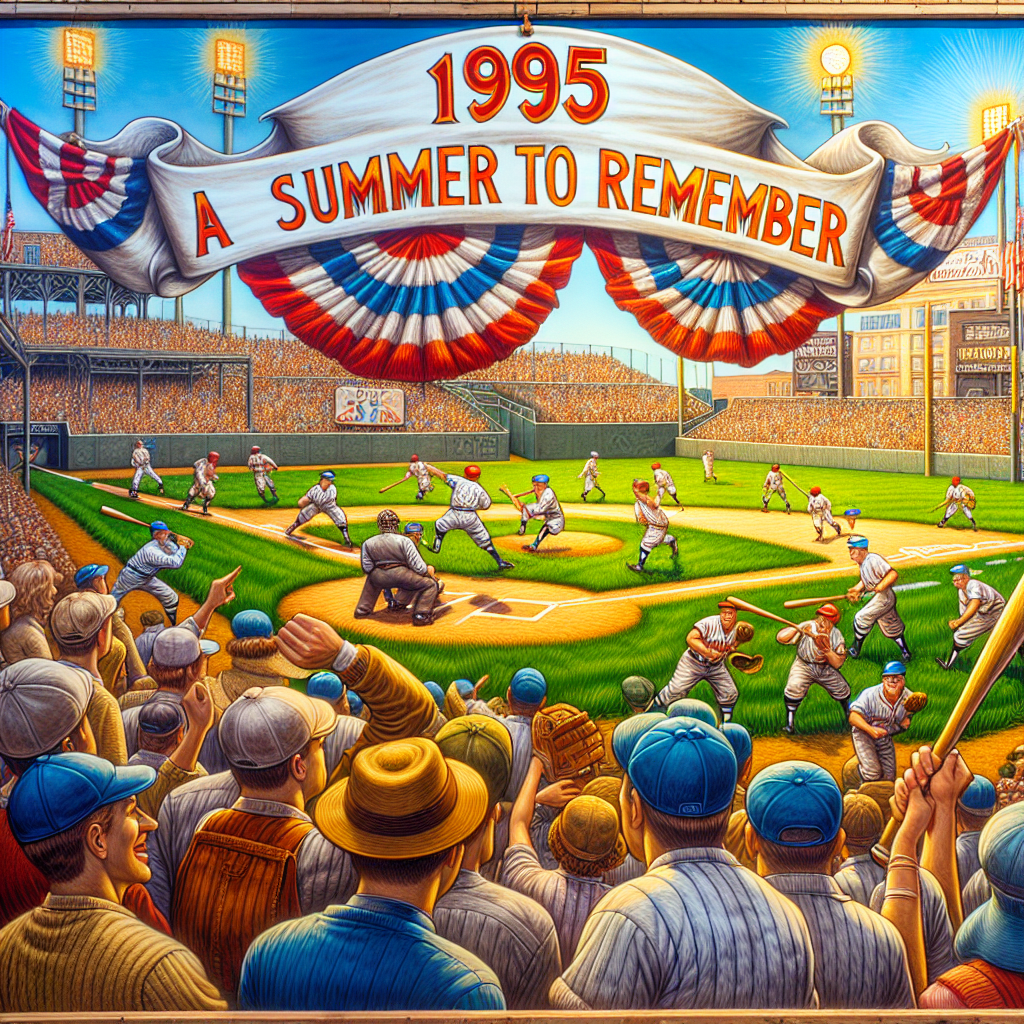
The 1995 Cleveland Indians season is remembered by fans as one of the most exhilarating and successful periods in the team’s long and storied history. After decades of mediocrity and frustration, the Indians not only had one of their best seasons in terms of record but also brought an electrifying brand of baseball to Cleveland that rekindled the city’s passion for the sport. This year marked the renaissance of the team, which was highlighted by their potent offense, dominant pitching, and an indomitable spirit that made every game a spectacle. For a city that had long yearned for a baseball revival, the 1995 season was a breath of fresh air.
The backdrop of the season was unique as well. The sport itself was rebounding from the 1994 MLB strike, which left a void in the hearts of baseball fans. Many questioned if the passion for baseball would ever return to its previous heights. The Cleveland Indians answered that question with a resounding yes. They turned what could have been another average season into a summer to remember, captivating the hearts and minds of fans not just in Cleveland, but across the country. The team’s performance on the diamond became a beacon of hope, a symbol of what passionate, dedicated, and talented athletes could achieve.
Led by manager Mike Hargrove, the team showcased a blend of seasoned veterans and emerging stars. This combination proved to be lethal, as the Indians stormed through their opposition with an air of confidence and determination. The notable figures, such as Albert Belle, Manny Ramirez, and Kenny Lofton, didn’t just have prolific seasons; they produced moments that would be etched in baseball lore forever. The 1995 Cleveland Indians were not just a baseball team; they were a movement, a catalyst that reignited a city’s love for the game.
The Lineup: An Offensive Powerhouse
One of the most formidable aspects of the 1995 Cleveland Indians was their lineup. This team had a batting order that could arguably be considered one of the most potent in Major League Baseball history. The offensive prowess of the Indians was anchored by a core group of hitters who had career years, contributing to a team batting average that led the league at .291. The offense was not just about hitting for average; it was about power, speed, and an uncanny ability to come through in clutch situations.
Albert Belle stood at the forefront of this offensive surge. Belle had a season for the ages, hitting 50 home runs and driving in 126 runs. His power display was complemented by his sheer intensity and drive, characteristics that inspired his teammates and instilled fear in opposing pitchers. Alongside Belle was the young Manny Ramirez, who began to show glimpses of the Hall of Fame talent he would later fully realize. Ramirez hit .308 with 31 home runs and 107 RBIs, proving to be a lethal combination of power and average.
The table-setters for these power hitters were equally impressive. Kenny Lofton had an unforgettable year with his speed and on-base skills, hitting .310 and stealing 54 bases, igniting the offense from the leadoff spot. The balance provided by Carlos Baerga, who hit .314 with 15 home runs, and Omar Vizquel’s exceptional fielding and situational hitting completed a lineup that could beat opponents in a multitude of ways. The chemistry and balance within the lineup were second to none, creating an offensive juggernaut that made it difficult for any pitcher to find an easy out.
The Pitching Staff: Silent But Deadly
While the 1995 Indians were known for their high-flying offense, the pitching staff provided the steady foundation necessary for championship-caliber baseball. The Indians had a balanced rotation that featured a mix of experienced veterans and youthful exuberance. Dennis Martinez, the seasoned ace, led the staff with his pinpoint control and veteran savvy. Martinez posted a 12-5 record with a 3.08 ERA, often delivering in crucial matchups and providing invaluable leadership to the younger pitchers on the staff.
Charlie Nagy, one of the core young arms in the rotation, showcased his potential with a solid season, posting a 16-6 record and a 4.55 ERA. Nagy’s growth and development as a reliable starter were pivotal to the team’s success. Joining him were Orel Hershiser and rookie standout Chad Ogea. Hershiser, known for his incredible 1988 season with the Dodgers, brought his trademark bulldog mentality to Cleveland, ending the season with a 16-6 record and a 3.87 ERA. Ogea, a relative unknown at the beginning of the season, surprised many by contributing valuable innings and key victories.
The bullpen featured one of the best closers in the game in Jose Mesa. Mesa had a career year, posting an ERA of 1.13 and saving 46 games. His reliability at the back end of games provided a sense of security and confidence for the entire team. Complementing Mesa were key relievers like Paul Assenmacher, Julian Tavarez, and Eric Plunk, who collectively ensured that the Indians could preserve leads when the starters exited. The balance and reliability of both the starters and the relievers made the Indians a complete team, capable of winning games through their pitching as well as their offense.
Memorable Moments
The 1995 season was filled with unforgettable moments that made it truly special for the Cleveland Indians and their fans. One of the standout moments was their dramatic win against the Toronto Blue Jays on June 4, where the Indians rallied from a 6-0 deficit to win 7-6 in extra innings. This game epitomized the never-say-die attitude that became synonymous with the team throughout the season. Fans packed Jacobs Field that night, roaring with approval as the team mounted their improbable comeback.
Another defining moment came on September 8th, when the Indians clinched their first American League Central Division title with a victory over the Baltimore Orioles. The celebration that ensued was a scene of pure joy and relief for a fan base that had waited over four decades for a taste of postseason baseball. The celebration on the field that night was a testament to the hard work, dedication, and resilience of the players and the entire organization.
The postseason also provided its fair share of memorable moments. The Indians faced off against the Seattle Mariners in the American League Championship Series (ALCS). Game 5 of the ALCS was particularly memorable, as the Indians overcame an early deficit to clinch their first pennant in 41 years. Tony Pena’s walk-off home run in Game 1 of the ALDS against the Boston Red Sox also stands out as a dramatic moment that set the tone for their playoff run.
These moments and many others from the 1995 season remain etched in the memories of fans. They serve as a reminder of a team that played with heart, determination, and an unyielding will to win. The thrilling games and the emotional highs and lows helped to rekindle a deep and enduring love for Cleveland baseball that carries on to this day.
The World Series: So Close, Yet So Far
The Indians’ magical 1995 season led them to the ultimate stage in baseball: the World Series. Squaring off against the Atlanta Braves, a team known for its dominant pitching staff, the Indians were faced with their greatest challenge. Nevertheless, the series was highly anticipated and filled with intense competition from the opening pitch.
The Braves’ pitching proved to be a formidable opponent. With a rotation that featured future Hall of Famers like Greg Maddux, Tom Glavine, and John Smoltz, the Braves had a distinct edge in the pitching department. The Indians’ potent lineup faced an uphill battle against these premier arms. Despite this, they competed fiercely in every game, exemplifying the never-give-up attitude that defined their season.
In Game 6, the Indians’ journey culminated in a heart-wrenching loss. They fell 1-0 to the Braves, clinching the World Series for Atlanta. While the loss was a bitter pill to swallow, it did not diminish the Indians’ spectacular season. The team had defied expectations and reignited a fervent passion for baseball in Cleveland. Their journey to the World Series was a testament to their talent, resilience, and collective spirit.
The lasting image of the 1995 World Series may be one of disappointment, but it also encapsulates the grit and determination of the Indians. They had come so close to achieving the ultimate glory, and though they fell short, their impact was immense. The lessons learned and the bonds forged during that season would lay the groundwork for future success, making them a team that would be remembered fondly in the annals of baseball history.
Legacy and Impact
The legacy of the 1995 Cleveland Indians extends far beyond their impressive record or their heartbreaking World Series loss. They brought a sense of hope, excitement, and pride back to the city of Cleveland. For fans who had endured years of subpar performances, the 1995 season was a dream come true. It was a testament to what belief, hard work, and collective effort could achieve.
The team’s success also had a significant impact on baseball in Cleveland. Jacobs Field, which had opened just two years earlier, became a fortress of passion and support. Game after game, the stadium was packed with fans who brought an unparalleled energy and atmosphere. The resurgence of the Indians coincided with a rebirth of downtown Cleveland, contributing to a sense of communal pride and revitalization.
Beyond the local impact, the 1995 Indians’ season had broader implications for baseball. They demonstrated that smaller-market teams could compete at the highest level, challenging the notion that success in baseball was reserved for teams from larger markets with bigger budgets. The Indians’ approach to building a team through smart drafting, shrewd trades, and developing homegrown talent became a blueprint for other franchises.
The influence of the 1995 team could be seen in the Indians’ sustained success in the subsequent years. They would go on to make the playoffs consistently throughout the late ’90s, becoming a perennial contender. The foundation laid during that magical season provided a template for future teams, solidifying the Indians’ place as a respected and formidable franchise in Major League Baseball.
Conclusion
Reflecting on the 1995 Cleveland Indians, it’s clear that their season was more than just a collection of games. It was a narrative of triumph, resilience, and the unbreakable bond between a team and its city. Though the ultimate goal of a World Series championship eluded them, the journey they embarked on left an indelible mark on baseball history and the hearts of their fans.
For those who lived through it, the summer of 1995 in Cleveland was unforgettable. The roar of the crowd, the crack of the bat, and the sight of their beloved Indians taking the field created memories that would last a lifetime. The 1995 team transcended the game, becoming a symbol of hope and determination that resonated far beyond the baseball diamond.
The season’s impact is still felt today. The lessons learned from that remarkable year continue to inspire both players and fans. It serves as a reminder that with passion, perseverance, and a little bit of magic, incredible things can happen. The 1995 Cleveland Indians will forever be remembered as a team that brought a city together, proving that in baseball, as in life, sometimes the journey is just as meaningful as the destination.
Frequently Asked Questions
1. Why is the 1995 season considered a turning point for the Cleveland Indians?
The 1995 season is often heralded as a turning point for the Cleveland Indians because it marked the end of a long period of mediocrity and the beginning of a renaissance for the team. For decades, the Indians struggled to make a significant impact in Major League Baseball, often hovering in the lower echelons of their division. However, 1995 saw a confluence of talent, strategic management, and a fan-base hungry for success come together to create one of the most memorable and successful seasons in the team’s history. This year is particularly significant as the Indians secured a remarkable 100-44 record, leading the American League Central Division. It was the first time the team had made it to the postseason since 1954, breaking a 41-year playoff drought. The newfound success on the field, coupled with the electrifying atmosphere at the freshly opened Jacobs Field, reignited enthusiasm for baseball in Cleveland.
2. How did the offense contribute to the success of the 1995 Cleveland Indians?
The 1995 Cleveland Indians’ offense was nothing short of formidable, and it played a monumental role in the team’s successful season. The lineup was packed with talent, power, and versatility, capable of turning any game around in a heartbeat. Players like Albert Belle, Manny Ramirez, and Jim Thome formed the heart of an offensive juggernaut known for its ability to score runs in bunches. Albert Belle became the first player in Major League history to hit 50 doubles and 50 home runs in the same season, a testament to his raw power and hitting ability. Meanwhile, players like Carlos Baerga and Omar Vizquel provided stability and excellent defensive skills, ensuring that the Indians were a well-rounded team. With high batting averages and impressive on-base percentages across the board, the team’s offensive prowess not only won them many games but also created countless memorable moments for fans to cherish.
3. What role did pitching play in the team’s success during the 1995 season?
While the Cleveland Indians’ 1995 season is often remembered for its explosive offense, the team’s pitching staff was equally critical to its success. The starting rotation and bullpen were anchored by outstanding performances from key players who consistently delivered when it mattered most. Veteran pitcher Orel Hershiser, known for his experience and leadership, led the rotation with a poised presence on the mound that inspired confidence in both his teammates and fans. Young phenoms such as Charles Nagy and Dennis Martinez also played pivotal roles, combining effective pitching with the ability to handle high-pressure situations. The bullpen was fortified with the likes of Jose Mesa, whose dominance as a closer gave the team an edge in close games. With an ERA thereby stringently controlled and a knack for coming through in clutch moments, the pitching staff complemented the offensive firepower brilliantly, helping the Indians achieve the best record in the AL.
4. How did the opening of Jacobs Field impact the 1995 season?
The opening of Jacobs Field in 1994, now known as Progressive Field, was a game-changer for the Cleveland Indians, setting the stage for the incredible 1995 season. The state-of-the-art ballpark quickly became a cherished landmark in Cleveland, known for its modern amenities and fan-friendly design. Its debut coincided with the Indians’ resurgence on the field, creating a sense of excitement and rejuvenation around the franchise. Fans flocked to Jacobs Field in droves, with the stadium selling out every game, turning it into a fortress of support for the team. The venue provided an electric atmosphere, enhancing the home-field advantage for the Indians and energizing the players. Jacobs Field’s opening also played an economic role, revitalizing downtown Cleveland and highlighting the city’s passionate embrace of baseball. The nature of its crowd support and the energy it infused into each game helped boost player morale and perform consistently at a high level throughout the season.
5. What is the legacy of the 1995 Cleveland Indians season?
The legacy of the 1995 Cleveland Indians season is rich and profound, leaving an indelible mark on both the franchise and its fan base. For years, the 1995 team has symbolized hope, revival, and the triumph of persistence for Cleveland sports. The season reignited a passion for baseball within the city, leading to years of competitive teams and sustained fan engagement, even beyond their immediate success. While ultimately falling to the Atlanta Braves in a hard-fought World Series, the Indians’ journey to the finals captured the hearts of fans and proved to skeptics that Cleveland was capable of producing elite baseball. The team’s ability to hang with the best in baseball instilled a sense of pride within the community. The 1995 season also laid the foundation for a prosperous period in the late 1990s and early 2000s, with many players from this team continuing to impact the franchise in ensuing years. The excitement, cultural connection, and sportsmanship of 1995 remain a defining chapter in the chronicles of the Cleveland Indians, serving as an inspiration to teams striving for greatness.