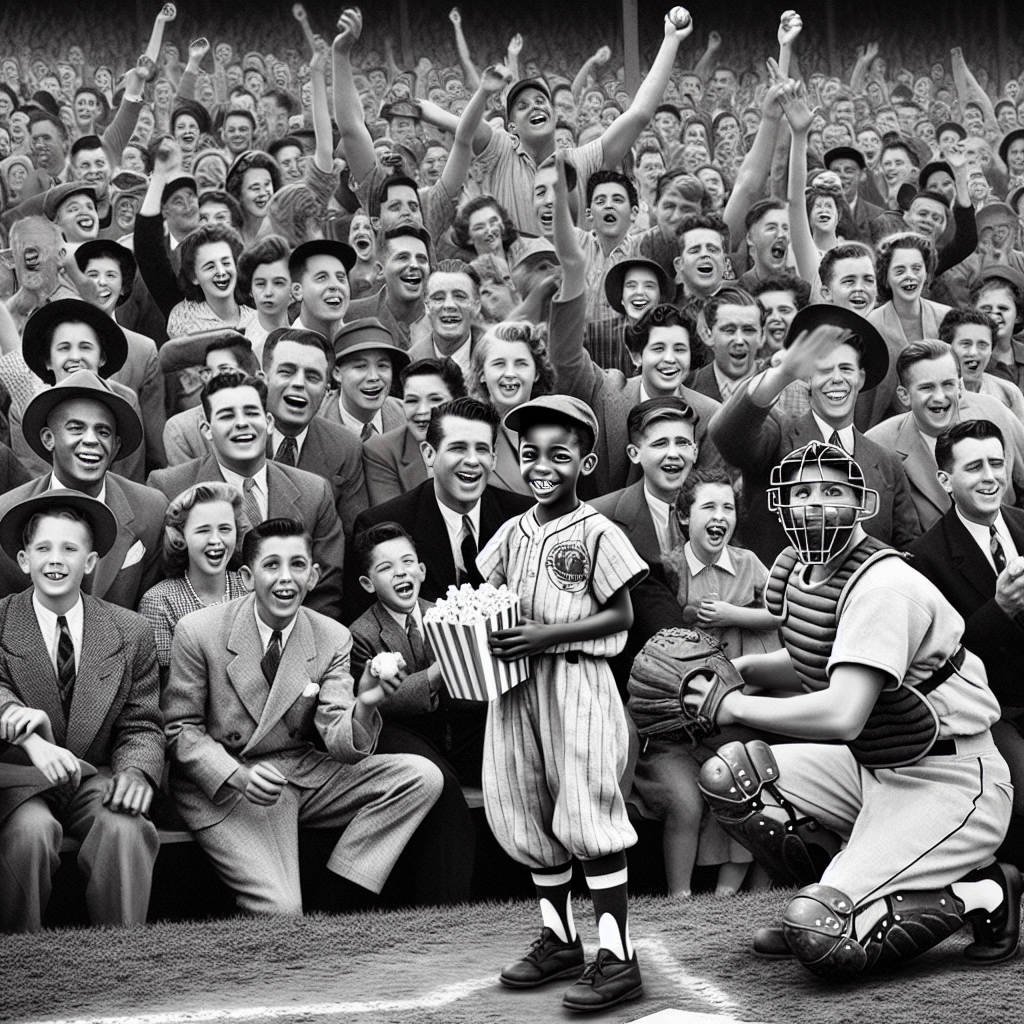
The 1950s stand as a dynamic decade in the history of the United States, marked by significant socio-economic changes, technological advancements, and a burgeoning sense of optimism following the turbulent war years. During this era, baseball emerged not only as America’s favorite pastime but also as a reflective mirror of the country’s evolving mood and culture. This period is often characterized by a fervent sense of optimism, and baseball, with its larger-than-life personalities and dramatic games, epitomized this spirit. It served as a common thread connecting people from different walks of life, embodying hope, ambition, and the American dream.
The post-war period brought about rapid changes in American society, including a rise in consumerism, the birth of the suburban sprawl, and a significant uptick in population known as the Baby Boom. Amidst these shifts, baseball provided a familiar ground—a constant in a changing world. The game’s role in society went beyond mere entertainment; it was a symbol of unity and a testament to the enduring spirit of American resilience and success.
The game’s integration in 1947, when Jackie Robinson broke the color barrier, set the stage for the next pivotal decade. By the 1950s, African American players regularly participated alongside their white counterparts, challenging and ultimately changing racial attitudes within the sports sphere and society. Baseball thrived, becoming one of the primary mediums through which the transformational energy of the post-war era was channeled.
The 1950s baseball landscape was punctuated by vibrant teams, indelible rivalries, and players who became national icons. Figures like Mickey Mantle, Willie Mays, and Hank Aaron were not just athletes; they were symbols of the possibilities the decade promised. As the nation hurdled toward modernity, baseball often dictated cultural trends and societal norms, weaving itself into the very fabric of American identity.
The Rise of Consumer Culture and Baseball
The 1950s were emblematic of the rise of consumer culture in America, fueled by a booming economy and the increased availability of consumer goods. For many Americans, the ability to purchase goods they could only dream of a decade earlier was a marker of prosperity. Baseball, a sport deeply rooted in American tradition, found itself entwined with this consumer boom. Merchandise like team jerseys, caps, and player cards became available on a much broader scale, turning baseball into a commercial powerhouse.
You could see billboards featuring baseball players promoting everything from Coca-Cola to Ford cars. The endorsement deals that baseball players signed off the field were reflections of the larger consumerist attitudes prevalent in society. Stadiums, too, began to reflect America’s newer, consumer-oriented society. The design and amenities incorporated luxury seating, numerous concession stands, and diverse food options, providing an all-around entertainment experience beyond the game itself.
Television’s emergence as a primary medium for entertainment further transformed baseball, making games accessible to millions of Americans who could now watch their favorite teams from the comfort of their living rooms. Broadcasting rights deals brought significant revenues to ball clubs, influencing the financial landscape of the sport. As baseball entered American households via TV screens, the game became embedded in the rhythm of daily life, reinforcing its prominence in the heart of American culture.
Thus, the larger consumer environment of the 1950s provided baseball with an expansive platform—not only to grow as a sport but also to integrate itself deeply into the social consciousness of the nation. Baseball games were not mere events; they innovated into shared social experiences aligned perfectly with America’s newfound pursuit of leisure and enjoyment.
Television and Baseball’s Mirroring of Society
Television emerged during the 1950s as a revolutionary medium, drastically altering the way Americans consumed sports. Baseball, by that time, was poised as one of the predominant benefactors of this change, its golden age coinciding perfectly with the visual storytelling capabilities of TV. For the first time, fans could visualize heroes like the New York Yankees’ Mickey Mantle or the Brooklyn Dodgers’ Jackie Robinson playing live, making these players household names across the nation.
As televised games became a common fixture, baseball began to reflect societal themes presented within other media, including the evolving discussions about race relations and integration. People from every corner of the country could concurrently experience the excitement of a closely contested game or the frustration of a controversial call made by an umpire. Television naturally lent itself to mass communal experiences, forging tighter bonds within fan bases and society.
This symbiotic relationship between baseball and television meant that key games reached newer audiences, effortlessly surpassing geographic constraints. While radio maintained its influence, TV was unparalleled in terms of disseminating live, visual experiences. Events such as the 1955 World Series, when the Brooklyn Dodgers won their first title, became landmark broadcasts that injected life and context into the game’s narrative while broadening fan engagement.
Furthermore, television transformed sports media into a 24/7 cycle, where highlights and replays became staples. This constant presence in American living rooms underscored baseball’s role in public life, influencing anything from fashion to slang, strengthening its hand as a cultural and societal mirror. By embedding itself so deeply into American households, baseball during the 1950s became an omnipresent part of cultural fabric, impacting players, fans, and the sport itself.

Baseball’s Influence on Civil Rights
The integration of baseball significantly contributed to societal changes during the 1950s, mirroring the national dialogue surrounding civil rights. The breaking of the color barrier by Jackie Robinson in 1947 was just the beginning. The inclusion of African American players in Major League Baseball increasingly reflected transitions within America’s broader social and political arenas.
By the 1950s, a new generation of African American stars began to emerge, including Willie Mays and Hank Aaron, who not only performed spectacularly on the diamond but also challenged preconceived notions of racial equality. As legends in their own rights, these athletes became vital symbols of potentiality and versatility, pushing open doors slowly creaking under the strain of societal expectation.
Baseball stadiums, towns, and cities became key nodes in the nationwide conversation regarding desegregation and racial harmony. Crowds of fans flocked to stadiums not only for the love of the game but also out of recognition of the historic cultural shifts these players represented. Importantly, these settings provided fans from across racial lines a common ground, a shared arena where societal norms could be directly or indirectly challenged and re-evaluated.
These shifts in baseball were soon mirrored in the larger civil rights movements spreading through the country, showcasing how sports had become an integral component of activism and societal change. Baseball, in particular, demonstrated the powerful influence that sports could have on American society, amplifying voices, and perspectives that were foundational to shaping the future of the nation and the modern civil rights dialogue.
Baseball as a Reflection of American Dream Ideals
In the 1950s, baseball mirrored the American Dream ideals—both its promise and its challenges—in striking clarity. The sport was viewed as a realm where anyone, regardless of their background, could achieve greatness based on talent, hard work, and determination—a quintessential reflection of the American Dream narrative.
This was the era of players who embodied these dreams, whose personal and professional triumphs echoed the aspirations of many Americans trying to find footing and purpose amidst the booming prosperity of post-war America. Mickey Mantle, hailing from a small mining town, became one of baseball’s biggest stars, epitomizing the narrative of achieving success through perseverance and skill—a story relished by the masses.
Baseball fields were often seen as democratically sacred ground, where elements like socio-economic background fell away, leaving only talent and tenacity to distinguish one player from another. This ideal had broad appeal in the 1950s, when many Americans struggled to balance rapid societal changes with their own ambitions and dreams.
The way baseball endorsed the idea of meritocracy resonated profoundly with individuals looking to secure their place in the wider societal framework. It allowed leagues, fans, and communities to project the idealized vision of America into a readily recognizable format while instantly grounding and expanding it through daily engagements, games, and rituals.
Conclusion
Reflecting on the multifaceted relationship between baseball and American society during the 1950s allows us to appreciate the sport as more than just a game; it serves as a medium through which collective aspirations, anxieties, and ideologies were negotiated and expressed. The decade established foundational moments that would define not only aspects of sporting history but help transform society at large.
By maintaining its relevance over the course of the 1950s, baseball illustrated its intrinsic connection to American identity. The sport’s arenas became amphitheaters of cultural exchange, political dialogue, and profound personal narrative—venues where optimism was tangible and dreams, however idealistic, could be draped in reality.
Though baseball has evolved significantly in the decades since, the lessons and legacies of the 1950s endure. These years offer more than nostalgia; they present lasting testaments to the deep resonances that sports, culture, and society hold within the multilayered American experience. During this transformative time, baseball was much more than an athletic pastime. It remained a faithful reflection of the hopes, dreams, and realities of a society intent on reimagining its potential and redefining its future.