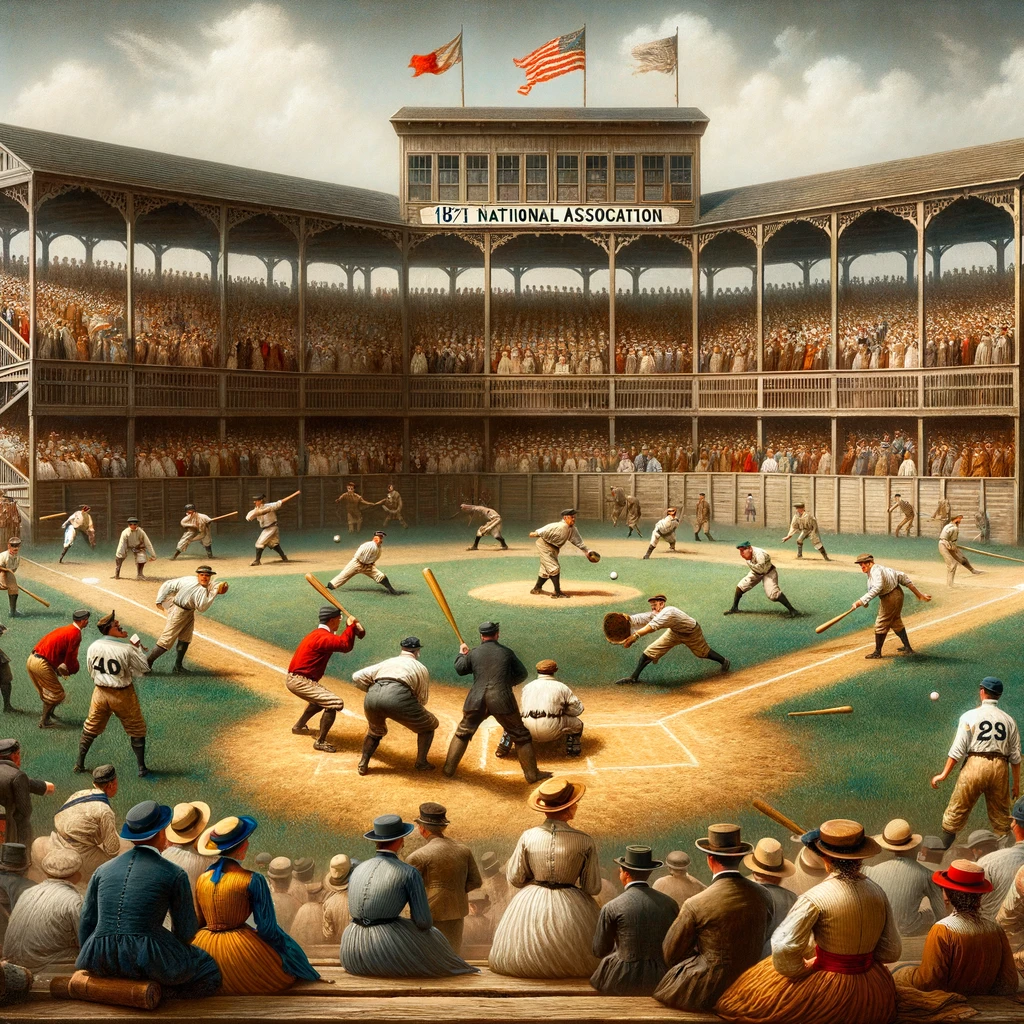
In the annals of sports history, few events have had as transformative an impact on a game as the establishment of the National Association of Professional Base Ball Players (NAPBBP) in 1871. This pioneering league marked the dawn of professional baseball, setting the stage for the modern sport as we know it today. This article delves into the early days of baseball, focusing on the birth and development of the 1871 National Association, its teams, players, and the lasting legacy it left on the game.
The Pre-Professional Era of Baseball
To appreciate the significance of the National Association’s formation, one must first understand the state of baseball before 1871. Originating from older bat-and-ball games, baseball in the early 19th century was largely a recreational activity with varying rules and informal play. Clubs like the New York Knickerbockers, founded in 1845, began standardizing rules, but the game was far from the professional spectacle it would become.
The Rise of Club Baseball
By the 1850s and 1860s, baseball’s popularity surged in the United States, leading to the formation of numerous clubs. These clubs were amateur in nature, but they laid the groundwork for competitive play. Cities like New York, Philadelphia, and Boston became hotbeds of baseball activity, with teams like the Brooklyn Atlantics and Philadelphia Athletics drawing large crowds.
The Civil War’s Impact
The American Civil War (1861-1865) played a surprisingly pivotal role in baseball’s spread. Soldiers from different states played baseball to pass the time, disseminating the game throughout the country. Post-war, the nation’s renewed spirit and improved transportation networks facilitated baseball’s growth as a unifying national pastime.
The Birth of Professionalism
The concept of paid players was not entirely new in the late 1860s. Some clubs had begun to secretly pay top players, a practice frowned upon by many. The Cincinnati Red Stockings, formed in 1869, became the first openly all-professional team, touring the country and defeating numerous amateur clubs. Their success demonstrated the potential of professional baseball, leading to the pivotal year of 1871.
Formation of the National Association
On March 17, 1871, ten teams from various cities convened in New York to form the National Association of Professional Base Ball Players (NAPBBP). This league was groundbreaking, being the first to feature a schedule where teams played against each other, keeping track of wins and losses to determine a champion.
Founding Teams
The initial teams in the league were a diverse group, representing several major cities:
- Boston Red Stockings
- Chicago White Stockings
- New York Mutuals
- Philadelphia Athletics
- Washington Olympics
- Troy Haymakers
- Cleveland Forest Citys
- Fort Wayne Kekiongas
- Rockford Forest Citys
- Baltimore Canaries
Each team brought its unique flair and competitive spirit, setting the stage for a landmark season.
The Inaugural Season: Triumphs and Challenges
The 1871 season was a fascinating mix of triumphs and challenges. Teams played a varying number of games, and travel was arduous. Yet, the excitement of professional play captivated audiences.
Standout Teams and Players
The Philadelphia Athletics emerged as the league’s first champion, led by notable players like Dick McBride and Al Reach. The Boston Red Stockings and Chicago White Stockings also showed strong performances, featuring future Hall of Famers like Al Spalding and Ross Barnes.
Challenges and Setbacks
The season was not without its difficulties. The Great Chicago Fire and a devastating fire in Boston impacted teams and schedules. Moreover, the lack of a strict governing body led to disputes over rules and player contracts.
The Legacy of the 1871 National Association
The National Association lasted until 1875, paving the way for the National League’s establishment in 1876. The league’s impact, however, was far-reaching:
Professionalism in Baseball
The National Association’s biggest contribution was establishing the viability of professional baseball. It set precedents for player contracts, team revenue, and league organization, aspects integral to today’s game.
Evolution of the Game
This era saw significant developments in how baseball was played. The introduction of professional players led to a higher level of skill and strategy, influencing the evolution of the game’s rules and style of play.
Cultural Impact
Baseball’s rise as America’s national pastime can be traced back to the excitement generated by the National Association. The league captured the public’s imagination, cementing baseball’s place in American culture.
The National Association of Professional Base Ball Players, though short-lived, was a monumental step in the evolution of baseball. It transformed the game from a pastime into a professional sport, setting the foundation for the modern baseball era. Its legacy is evident in every pitch, hit, and play in today’s major leagues, a testament to its enduring impact on the sport.
Expansion and Influence of the League
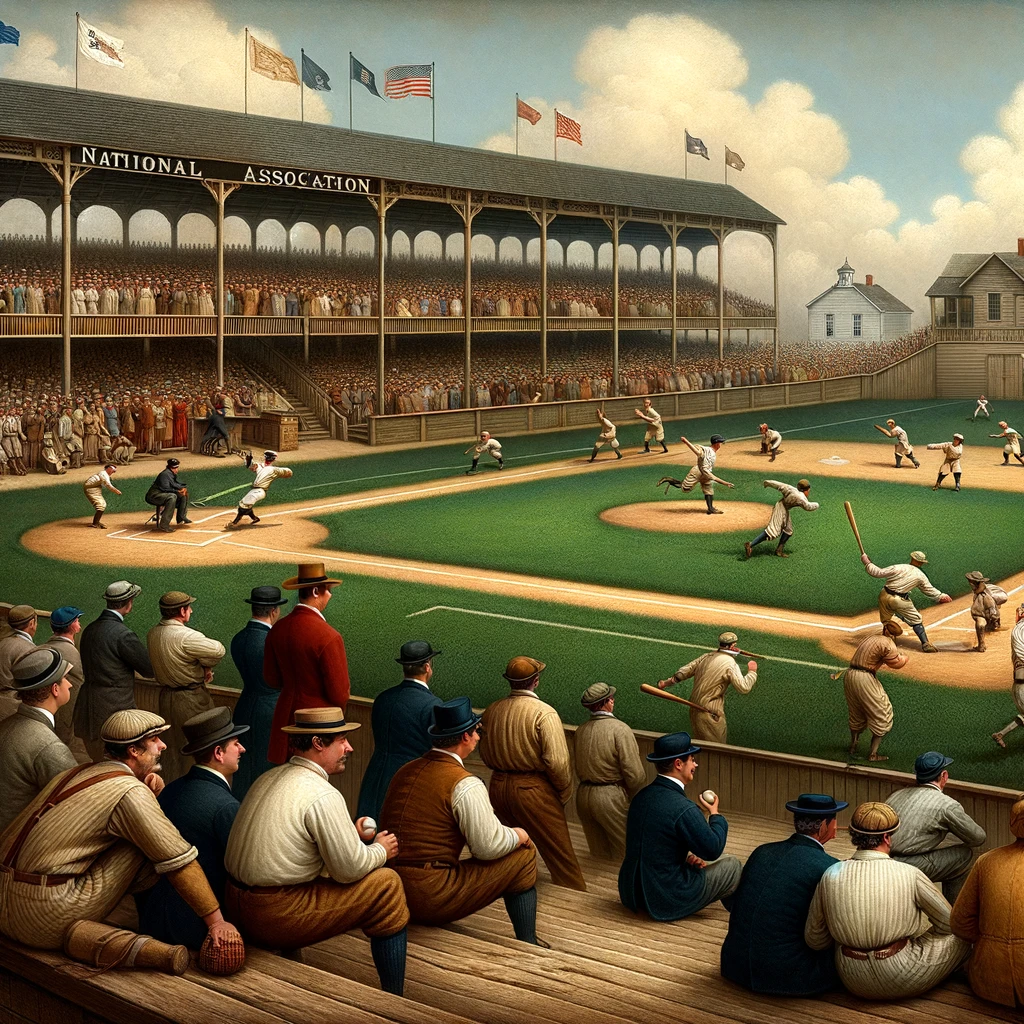
The National Association, while initially comprising ten teams, saw fluctuations in its lineup over its five-year existence. New teams emerged, and some original teams folded or relocated, reflecting the dynamic and somewhat unstable nature of early professional baseball. This period was crucial in expanding baseball’s geographical footprint, bringing the game to new cities and audiences.
The Growth of the Sport
As the league progressed, it spurred the growth of baseball across the nation. Cities eager to showcase their prowess and partake in the burgeoning popularity of the sport established their own teams. This expansion was not just about sports; it was about civic pride and the desire to be part of a national trend.
Impact on Local Communities
The presence of professional baseball teams had a significant impact on local communities. It provided a source of entertainment, community gathering, and local pride. The teams were often closely tied to their cities, reflecting the local culture and identity.
Key Figures and Innovations
The early years of professional baseball were marked by influential figures and important innovations that shaped the game.
Pioneering Players
Players like Cap Anson, who began his career with the Rockford Forest Citys and later played for the Philadelphia Athletics and Chicago White Stockings, became one of the era’s superstars. His career spanned across several decades, influencing the game both as a player and manager.
Rule Changes and Innovations
This period saw several rule changes that moved the game closer to its modern form. The introduction of the foul ball rule, decisions on bat and ball specifications, and the evolution of fielding and pitching techniques were all part of this era’s legacy.
Challenges and the Demise of the National Association
Despite its pioneering role, the National Association faced numerous challenges that eventually led to its demise and the rise of the National League.
Governance Issues
One of the biggest issues was the lack of strong central governance. The league struggled with enforcing rules, scheduling, and resolving disputes. This lack of structure often led to confusion and inconsistencies across the league.
Financial Instability
Many teams faced financial difficulties due to inconsistent revenue streams, reliance on gate receipts, and the cost of travel. This financial instability led to teams folding and players frequently changing clubs, undermining the league’s integrity.
The Formation of the National League
In response to these challenges, the National League was formed in 1876. It sought to address the shortcomings of the National Association with a stronger central authority, more stable franchise system, and stricter player contracts. This marked the end of the National Association, but its pioneering spirit lived on in the new league.
Epilogue: The Enduring Legacy of the National Association
The National Association’s legacy in the history of baseball is profound and enduring. While it lasted only five years, its impact resonates in every aspect of the modern game.
Foundation for Modern Baseball
The league laid the groundwork for the professional structure of baseball, influencing everything from the organization of leagues to the commercial aspects of the sport. It was the genesis of the transition from amateur clubs to professional teams, a model that is followed to this day.
Historical Significance
Historically, the National Association is a symbol of the evolution of American sports and society in the post-Civil War era. It reflects a time of change, innovation, and the pursuit of new forms of entertainment and communal activity.
A Tribute to Pioneers
The players, managers, and officials of the National Association were pioneers who shaped the future of baseball. Their contributions, often made under challenging and evolving circumstances, paved the way for the generations of players and fans who followed.
Conclusion
The National Association of Professional Base Ball Players may have been a brief chapter in baseball’s long history, but its importance cannot be overstated. It was the crucible in which the modern game of baseball was forged, a bold experiment that laid the foundations for a sport that would become an integral part of American culture and identity. As we celebrate the heroes and legends of today’s game, we also remember the trailblazers of the National Association, who took the first steps towards making baseball the beloved national pastime it is today.
Frequently Asked Questions
1. What was the National Association of Professional Base Ball Players (NAPBBP) and why was it significant?
The National Association of Professional Base Ball Players, established in 1871, holds monumental significance as the first professional baseball league. Before its establishment, baseball was primarily an amateur pastime, with players often not paid or, if paid, it was done under the table. The formation of the NAPBBP marked a turning point, transitioning baseball into a professional sport where players could officially earn a living from their talents. This league set the foundation for how baseball would develop, laying the groundwork for formal rules and organized play. It allowed the game to evolve into a structured sport with a schedule and a sense of competition that went beyond local teams playing ad hoc games whenever possible. The league’s advent marked the beginning of the professional era and set a precedent that has led to the Major Leagues we know today.
2. Who were some of the notable teams and players in the National Association?
The National Association boasted several teams that have since etched their names into the annals of baseball history. The Boston Red Stockings, for instance, were one of the dominant forces in the league, featuring a roster full of talented players and future Hall of Famers such as Al Spalding and George Wright. Other prominent teams included the Philadelphia Athletics and the Chicago White Stockings, who would go on to become the present-day Chicago Cubs. The players in this league often played multiple roles, from pitching to various field positions, showcasing their versatile athleticism. Additionally, figures like Harry Wright, who not only played but was pivotal as a manager, helped craft early strategies and propelled the sport forward. These players and teams were the trailblazers, setting the standard and excitement for generations to come.
3. How did the establishment of the National Association influence the development of modern baseball rules?
With the NAPBBP’s founding, baseball began a crucial transition from an unregulated pastime with informal rules to a regulated professional sport. The Association introduced a more standardized set of rules that began to resemble the modern game. For example, it solidified the nine-inning format that is still in place today. Before the National Association, games could be shorter or longer, which left outcomes inconsistent. Furthermore, the league helped in defining player positions with clearer responsibilities and popularized practices such as the curveball, an innovation that highlighted the evolving pitching strategies. By formalizing these structures, it elevated the level of play and paved the way for future rule refinements seen in later leagues such as the National League, formed in 1876.
4. What challenges did the National Association face during its brief existence?
The National Association, while groundbreaking, faced numerous challenges that ultimately led to its dissolution after just five seasons in 1875. Chief among these issues was the lack of centralized authority. Without a strong governing body, team owners often acted in their own interest, which led to problems such as teams folding mid-season and disputes over player contracts. The league’s financial instability made it difficult for clubs to sustain operations, with variations in team strength and commitment leading to inconsistent play quality. A significant challenge was the lack of an effective dispute resolution system, which often led to conflicts between players and team management. Moreover, the Association struggled to maintain a uniform schedule, with games often disrupted by weather or poor travel arrangements. These hurdles illuminated the need for more structured governance, which the later formation of the National League sought to address.
5. What is the legacy of the National Association in the context of baseball history?
The legacy of the National Association is profound, as it laid the bedrock for professional baseball and ignited a cultural phenomenon that continues to thrive. It helped establish the notion that baseball could be more than a hobby—it could be a viable career. The Association’s existence demonstrated that organized and professional leagues could be sustainable, inspiring countless others to innovate and expand upon its framework. Worshipped by baseball historians and enthusiasts, the National Association’s influence is felt in the persistent celebration of baseball as America’s pastime. It brought about a new era in sport, one of competition, professionalism, and spectator appeal that only grew more sophisticated. The resilience and vision of those early teams and players moved baseball beyond its modest beginnings to become the dynamic sport that is deeply woven into America’s social and cultural fabric.