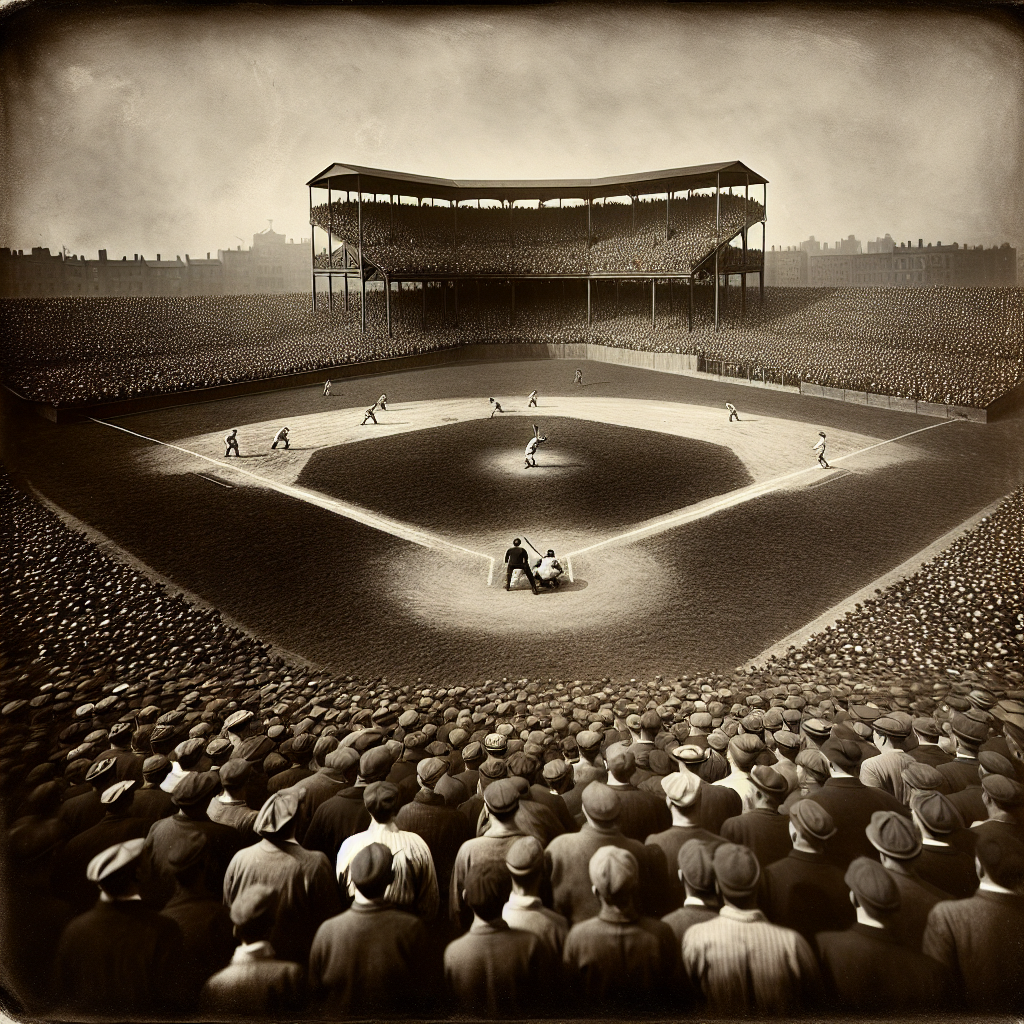
Throughout the history of baseball, few ballparks are as iconic and storied as the Polo Grounds. Situated in Upper Manhattan, the Polo Grounds was the home field for the New York Giants for over half a century and is remembered not only for its unique design but also for being the site of some of baseball’s most legendary moments, including the famous ‘Shot Heard ‘Round the World’.
Introduction
The Polo Grounds stands as one of the most unique and memorable venues in the history of Major League Baseball. Originally built in 1876, this ballpark transitioned through several iterations and relocations until it found a permanent home at 155th Street and Eighth Avenue in Upper Manhattan. Its unusual bathtub shape, with extremely short foul lines and a cavernous center field, has become etched in the memories of baseball historians and fans alike.
Home to the New York Giants from 1883 until the team’s move to San Francisco in 1957, the Polo Grounds witnessed some of baseball’s most spectacular moments. Among the most famous is Bobby Thomson’s walk-off home run in 1951, forever known as “The Shot Heard ‘Round the World”, which catapulted the Giants into the World Series. While the Polo Grounds played host to various sports, including football and soccer, its legacy is inexorably tied to baseball and the larger-than-life characters that graced its diamond.
The ballpark, with its distinctive horseshoe grandstand, panoramic views of the Harlem River, and a setting amidst the urban hustle of New York City, captured the imagination of every fan who passed through its gates. For decades, it was not just a venue; it was a cathedral of American sport, an integral part of the cultural fabric of the city, shaping the stories of triumph, heartbreak, and community.
As we journey through the pages of baseball history, the Polo Grounds emerges not merely as a backdrop, but as a central character in the unfolding drama of America’s pastime. This article will delve into the unique characteristics of the Polo Grounds, recount the unforgettable moments and figures who immortalized its name, and reflect on the enduring legacy of this historic ballpark.
Architectural Oddities and Unique Dimensions
The Polo Grounds is perhaps best known for its unconventional design, distinguishing it from other ballparks of its era. Unlike the symmetric and more standardized designs of modern stadia, the Polo Grounds featured a quirky “bathtub” layout that made it instantly recognizable.
With dimensions that defied logic, the field featured incredibly short distances down the left and right foul lines—279 feet and 258 feet, respectively—but expanded dramatically to 483 feet to dead center field. This brought about unique gameplay dynamics where routine fly balls could turn into home runs down the lines, while power hitters had an almost impossible task of clearing the deep center field fence.
The double-decked grandstand wrapped around nearly the entire field, providing excellent sightlines for spectators but also creating a compact, enclosed atmosphere that amplified crowd noise. Fans were extraordinarily close to the action, fostering a sense of intimacy and community. The steel and concrete structure, completed in 1911 after a disastrous fire destroyed the previous wooden incarnation, became an enduring symbol of resilience and continuity.
Additionally, the Polo Grounds was flanked by the Harlem River and Coogan’s Bluff, a steep hill offering a natural balcony for spectators. Urban legend has it that fans too thrifty or late to buy tickets would climb the bluff to catch a glimpse of the game, adding a communal dimension to the viewing experience.
The design quirks didn’t end there. The bullpens were uniquely positioned in fair territory, just to the right and left of center field, complicating the fielding of fly balls. This quirk added both a strategic challenge for players and an element of unpredictability for fans.
The Home of the Giants
The New York Giants’ tenure at the Polo Grounds was marked by a rich tapestry of triumphs and heartaches, encapsulating the very essence of baseball’s unpredictable drama. Managed by legendary figures like John McGraw, the Giants won ten National League pennants and five World Series during their time at the Polo Grounds.
One of the most unforgettable moments in Giants history, and indeed in all of baseball, occurred on October 3, 1951. On that fateful day, Bobby Thomson electrified the sports world with his “Shot Heard ‘Round the World,” a game-winning home run off Brooklyn Dodgers pitcher Ralph Branca in the ninth inning. This dramatic blast clinched the National League pennant for the Giants, capping an incredible comeback from 13 1/2 games behind in mid-August.
Giant legends like Christy Mathewson, Mel Ott, and Willie Mays brought their formidable talents to the Polo Grounds, etching their names into the annals of baseball history. Mathewson’s pinpoint control, Ott’s thunderous bat, and Mays’ extraordinary athleticism helped define eras of excellence for the Giants.
Of course, the Giants’ tenure wasn’t without frustrations. The bitter rivalry with the Brooklyn Dodgers, only intensified by the proximity of their stadiums and the competitive nature of their matchups, became a captivating subplot within the broader narrative of New York City sports. The dynamic and emotional contests played out at the Polo Grounds contributed to an enduring mythology in baseball folklore.
By the mid-1950s, however, owner Horace Stoneham decided to follow a growing trend and relocate the team. The Giants played their final game at the Polo Grounds on September 29, 1957, and subsequently moved to San Francisco, marking the end of an era. While the franchise’s departure was a painful moment for many New Yorkers, the Polo Grounds remains a cherished chapter in the long, storied history of the Giants.

Football, Boxing, and More
While the Polo Grounds is predominantly remembered as a baseball haven, the venue’s versatility extended its legacy into other sports as well. The ballpark was the home field for various football teams, most notably the New York Giants of the National Football League (NFL).
The Polo Grounds hosted several epic gridiron battles, adding another layer to its storied past. From 1925 to 1955, the NFL Giants captivated football fans with thrilling games in this unique multi-sport venue. One of the most unforgettable moments in football history took place here during the 1934 NFL Championship game, known as the “Sneakers Game.” Faced with icy conditions, the Giants switched to basketball sneakers at halftime, giving them superior traction and contributing to a remarkable 27-0 second-half surge that led to a 30-13 victory over the Chicago Bears.
Boxing also found a home at the Polo Grounds. The stadium’s large seating capacity and central location made it an ideal venue for major bouts. Legendary fighters like Joe Louis and Sugar Ray Robinson showcased their pugilistic prowess in thrilling fights that captivated New York’s teeming sports enthusiasts.
In fact, one of the most famous boxing matches in American history happened at the Polo Grounds. On June 22, 1938, Joe Louis stunned the world by defeating Max Schmeling in a first-round knockout, avenging his earlier loss to the German fighter and serving as a symbolic victory for America on the cusp of World War II.
Over the years, the stadium also hosted college football games, concerts, and even some soccer matches, underlining its role as a multifaceted venue that could adapt to diverse forms of entertainment. While baseball may have been its primary claim to fame, the Polo Grounds’ adaptability added to its enduring historical significance.
The Shot Heard ‘Round the World
Often cited as the most famous moment in baseball history, the “Shot Heard ‘Round the World” epitomizes the drama and unpredictability that make the sport so compelling. Bobby Thomson’s legendary home run on October 3, 1951, was not just a game-winning blast; it was a moment that united and electrified an entire nation.
The Giants and Dodgers, bitter New York rivals, had forced a three-game playoff to decide the National League pennant. After splitting the first two games, the stage was set for an epic finale at the Polo Grounds. The Dodgers held a 4-1 lead going into the bottom of the ninth inning, but the Giants clawed back with multiple hits and a critical error, setting the stage for Thomson’s heroics.
When he blasted Ralph Branca’s second pitch into the left-field stands, pandemonium erupted. The call by Giants’ radio announcer Russ Hodges—”The Giants win the pennant! The Giants win the pennant!”—became one of the most iconic soundbites in sports history.
The home run was significant for various reasons. It capped a miraculous comeback during the latter part of the season where the Giants had to overcome a 13 1/2-game deficit to even reach the playoff. Thomson’s homer further entrenched the Giants-Dodgers rivalry into the annals of baseball lore, and it reinforced the timeless unpredictability and excitement inherent in the sport.
The “Shot Heard ‘Round the World” is more than just a historic sporting feat. It is a cultural moment frozen in time, encapsulating the splendor and heartbreak of baseball. Thomson himself would later reflect on the home run, acknowledging the emotional and symbolic weight it carried for generations of baseball fans.
In many ways, this singular event immortalized the Polo Grounds, transforming it from a mere sports venue into an enduring American monument. To this day, fans of the game recount that magical afternoon, ensuring that the Polo Grounds, and Bobby Thomson’s heroic swing, will never be forgotten.
Legacy and Farewell
The latter years of the Polo Grounds were marked by a mix of retrospection and melancholy as the iconic ballpark faced an uncertain future. Following the departure of the New York Giants and their move to San Francisco in 1957, the Polo Grounds saw intermittent use by other sports teams and events but never quite regained its former glory.
The New York Mets played their inaugural seasons at the Polo Grounds in 1962 and 1963 while awaiting the completion of Shea Stadium. These seasons offered fans a nostalgic glimpse back into the golden era of New York baseball, even as the new team struggled on the field. Despite the Mets’ lackluster performance, their presence briefly revitalized the stadium, imbuing it with fresh energy and enthusiasm.
Ultimately, the Polo Grounds could not escape the tide of modernization and urban development sweeping through New York City. In 1964, the decision was made to demolish the historic venue, making way for housing projects. By April of that year, the once-vibrant ballpark was reduced to rubble, and with it, a significant chapter of baseball history closed.
However, the legacy of the Polo Grounds endures in the memories of fans, the annals of sports history, and the cultural imagination. Its distinctive characteristics, legendary moments, and the heroes who graced its field remain vivid in the collective consciousness. The storied venue played host to much more than just baseball games; it witnessed and helped shape significant narratives in American sports culture.
To this day, baseball enthusiasts honor the Polo Grounds as a symbol of the sport’s rich past. Memorabilia and photographs from the venue are cherished by collectors, while historians and writers frequently recount the ballpark’s contributions to baseball lore. New generations of fans discover its stories, ensuring that the Polo Grounds remains a cornerstone of baseball heritage.
Conclusion
The Polo Grounds was more than just a sports venue; it was a vital part of New York City’s fabric and a backdrop for many unforgettable moments that continue to resonate within the culture of baseball. From its odd yet charming dimensions to the legendary feats and personalities that made it come alive, the Polo Grounds carved out a permanent place in the annals of sports history.
The ballpark’s distinctive characteristics, such as its bathtub shape and short foul lines paired with a cavernous center field, created a unique atmosphere that challenged players and delighted fans. Its location, embedded within the urban landscape of Upper Manhattan, added a layer of community involvement and local identity to each game played there.
Figures like Christy Mathewson, Mel Ott, and Willie Mays became synonymous with the Polo Grounds, their exceptional talents cementing its status as a baseball mecca. The “Shot Heard ‘Round the World” stands as a high point not only for the stadium but for the sport itself, encapsulating all that is magical about baseball.
Beyond baseball, the Polo Grounds served as a versatile venue for football, boxing, concerts, and other events. Its contributions to the NFL, college football, and boxing enriched its legacy, demonstrating its adaptability and significance across multiple sports and cultural spheres.
Though the Polo Grounds was ultimately demolished, its spirit lives on. Today, a commemorative plaque marks the site where this grand stadium once stood, a quiet yet powerful reminder of the thrills and legends it housed. For those who cherish the history of baseball, the Polo Grounds will always evoke nostalgia and reverence, a testament to a bygone era of sports grandeur.
Frequently Asked Questions
1. What was unique about the Polo Grounds’ design?
The Polo Grounds was unlike any other baseball stadium in its time, or since. One of the most distinctive features was its oddly-shaped playing field. The outfield was extremely deep, with straightaway center field reaching a vast 483 feet from home plate, making it almost impossible for players to hit home runs directly over the center field wall. This design stemmed from the stadium’s origins as a polo field, which explains the unconventional dimensions. In stark contrast, the foul poles in left and right fields were only 279 and 258 feet, respectively, from home plate, creating opportunities for more frequent home runs down the lines. This unique setup led to interesting strategic plays and contributed significantly to the iconic status of the ballpark. Additionally, the horseshoe-style grandstands allowed for a closer, more intimate spectator experience, while the distinctive Coogan’s Bluff loomed over the field, offering fans outside the stadium a glimpse of the game.
2. Why is the Polo Grounds so significant in the history of the New York Giants?
The Polo Grounds holds a special place in the history of the New York Giants, serving as their home from 1891 until 1957. During their tenure at the Polo Grounds, the Giants won five World Series titles (1905, 1921, 1922, 1933, and 1954) and established themselves as one of the premier teams in Major League Baseball. The stadium hosted some of the most thrilling games and legendary players in baseball history, including Hall of Famers like Christy Mathewson, Mel Ott, and Willie Mays. One of the most iconic moments in Giants history occurred at the Polo Grounds—the ‘Shot Heard ‘Round the World,’ when Bobby Thomson hit a dramatic three-run homer in 1951. This moment secured the Giants’ place in the playoffs and is still celebrated as one of the defining events in baseball history. The Polo Grounds was more than just a ballpark; it was a cultural centerpiece for New York City and left an indelible mark on the sport of baseball.
3. What was “The Shot Heard ‘Round the World,” and why is it so famous?
“The Shot Heard ‘Round the World” refers to Bobby Thomson’s three-run home run on October 3, 1951, during the National League pennant playoff game between the New York Giants and the Brooklyn Dodgers at the Polo Grounds. This moment is ingrained in the fabric of baseball folklore due to the dramatic fashion in which it took place. The Giants were trailing the Dodgers 4-2 in the bottom of the ninth inning of the decisive third game of the series. With two runners on base, Thomson stepped up to the plate and launched a Ralph Branca pitch into the left-field stands, securing a 5-4 victory for the Giants. This incredible comeback capped a stunning run for the Giants, who had made up a 13.5-game deficit to force the playoff. “The Shot” not only sent the Giants to the World Series but also became a symbol of perseverance and triumph in sports. The iconic radio call by Russ Hodges, who shouted, “The Giants win the pennant! The Giants win the pennant!” is immortalized in baseball history.
4. What impact did the Polo Grounds have on the surrounding community and culture of New York City?
The Polo Grounds was more than just a baseball stadium; it was a central hub for the community and a cultural landmark in New York City. Situated in Upper Manhattan, the Polo Grounds served as a gathering place for New Yorkers of all backgrounds, fostering a sense of camaraderie and collective spirit. Its proximity to public transit systems made it accessible to residents from all boroughs, further embedding it into the fabric of the city. The neighborhood around the Polo Grounds thrived economically during its peak years, with local businesses benefiting from the influx of baseball fans on game days. Beyond baseball, the stadium also hosted boxing matches, football games, and concerts, contributing to its reputation as a versatile entertainment venue. As one of the few bastions of live entertainment during the first half of the 20th century, the Polo Grounds played a pivotal role in shaping the cultural identity of New York City and became a cherished memory for countless sports enthusiasts and city dwellers alike.
5. Why did the New York Giants leave the Polo Grounds, and what happened to the stadium afterward?
The New York Giants left the Polo Grounds after the 1957 season, driven by a combination of factors including the deteriorating condition of the stadium, the shifting demographics and economic landscape of New York City, and the search for modern facilities. Owner Horace Stoneham, influenced by the potential for greater revenue opportunities and a burgeoning fan base on the West Coast, decided to move the team to San Francisco before the start of the 1958 season. The loss of both the Giants and Brooklyn Dodgers (who moved to Los Angeles) in the same year marked the end of an era for New York baseball. After the Giants’ departure, the New York Mets played at the Polo Grounds during the 1962 and 1963 seasons until Shea Stadium was completed. Eventually, the stadium fell into disrepair and was deemed obsolete. The city of New York demolished the Polo Grounds in 1964, and the Polo Grounds Towers, a public housing complex, was erected on the site. The legacy of the Polo Grounds, however, lives on in the hearts of baseball fans and the annals of sports history.