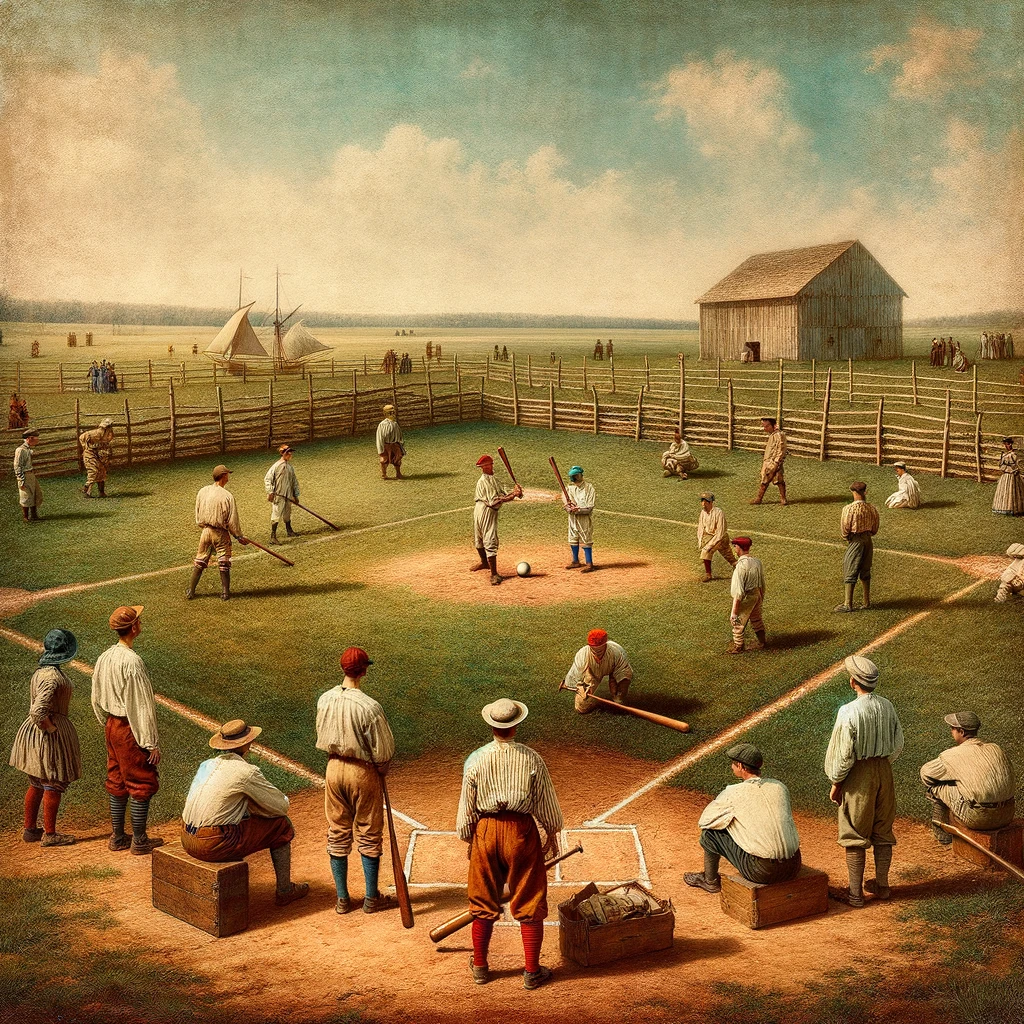
Baseball, often referred to as America’s pastime, has a rich and complex history that intertwines with the cultural and social fabric of numerous nations. While predominantly known as a cornerstone of American culture, the origins of baseball trace back to older bat-and-ball games played in various forms around the world. This article explores the earliest roots of baseball, shedding light on how it evolved into the beloved sport known today.
Early Precursors to Baseball
Stoolball: An English Ancestor
The earliest ancestor of modern baseball can be traced back to 14th-century England with a game known as stoolball. Primarily played during Easter, stoolball involved teams, a bat, and a ball, with the objective of defending a target, typically a stool. Over the centuries, stoolball evolved and spread across England, laying the groundwork for other bat-and-ball games.
Rounders and Cricket: Siblings in Sport
By the 18th century, stoolball had branched into various regional games, most notably rounders and cricket. Rounders, played primarily in England and Ireland, shared many similarities with modern baseball, including running between bases after hitting the ball. Cricket, with its distinct use of a flat bat and wickets, became an established sport in England, influencing games in its colonies.
Baseball’s Emergence in America
Early Versions in the New World
The exact origin of baseball in America remains a subject of debate. However, it is widely accepted that various bat-and-ball games were played in North America from the early 18th century. These games, often called “town ball” or “base ball,” were informal and varied in rules from one locality to another.
The Knickerbocker Rules: Standardizing the Game
A significant milestone in the history of baseball occurred in 1845 with the establishment of the Knickerbocker Baseball Club in New York City. Led by Alexander Cartwright, the club formulated the “Knickerbocker Rules,” which laid the foundation for modern baseball. These rules introduced concepts like three strikes, diamond-shaped infields, and elimination of “soaking” or throwing the ball at runners to get them out.
The Rise of Professional Baseball
The National Association of Base Ball Players
In 1857, the National Association of Base Ball Players (NABBP) was formed, marking the start of organized baseball. Initially amateur, the NABBP saw rapid growth in popularity, leading to the first openly professional baseball team, the Cincinnati Red Stockings, in 1869.
The National League and American Association
The professionalization of baseball continued with the formation of the National League (NL) in 1876, which sought to standardize rules and organize competition. The American Association (AA), established in 1882, emerged as a rival to the NL, leading to a period of competition and eventual merger of some teams.
Baseball in the 20th Century
The World Series and Expansion
The early 20th century witnessed the establishment of the World Series, a championship series between the NL and the American League, formed in 1901. This era also saw the expansion of baseball, both in terms of teams and geographic reach.
The Negro Leagues and Integration
One of the most significant aspects of baseball history is the Negro Leagues. Formed due to the racial segregation policies of the major leagues, these leagues showcased some of the most talented African-American players. The integration of baseball began with Jackie Robinson breaking the color barrier in 1947, playing for the Brooklyn Dodgers.
Global Influence and Modern Era
Baseball’s influence extended globally, with significant growth in Latin America and Asia. Countries like Japan, Cuba, and the Dominican Republic embraced the game, producing talented players who would eventually make their mark in the major leagues. The late 20th and early 21st centuries saw technological advancements, increased commercialization, and evolving strategies that continue to shape the game.
From its humble beginnings in the fields of England to the bright lights of stadiums around the world, baseball’s journey is a testament to its enduring appeal. Its evolution reflects broader societal changes, including issues of race, professionalism, and international influence. As we look back at the origins of baseball, it’s clear that the game is not just a sport but a living, evolving part of human history.

The Golden Age of Baseball
The 1920s to 1940s: Baseball’s Heyday
The period from the 1920s to the 1940s is often referred to as the Golden Age of Baseball. This era was marked by the rise of legendary players like Babe Ruth, whose charismatic personality and unprecedented home-run hitting transformed the game’s popularity. Baseball became a symbol of American culture, with radio broadcasts expanding its reach to a nationwide audience.
The Impact of World War II
World War II had a profound impact on baseball, with many players, including stars like Joe DiMaggio and Ted Williams, serving in the military. The war period also saw the temporary formation of the All-American Girls Professional Baseball League (AAGPBL), providing a platform for women in the sport.
Post-War Developments
Expansion and Relocation
The post-war era saw significant changes in the landscape of baseball. Teams began to relocate, seeking new markets and financial opportunities. This period marked the move of the Brooklyn Dodgers to Los Angeles and the New York Giants to San Francisco, fundamentally changing the geographic spread of the sport.
The Rise of Television
Television played a crucial role in transforming baseball. It brought the game into living rooms across America, changing how fans engaged with the sport. While there were initial fears that television would reduce stadium attendance, it instead helped in growing the game’s popularity.
The Modern Era
Players’ Rights and Free Agency
The modern era of baseball is also defined by significant changes in players’ rights. The Curt Flood case in the late 1960s and early 1970s challenged the reserve clause, leading to the era of free agency. This shift empowered players, giving them more control over their careers and significantly increasing salaries.
Technological Innovations and Challenges
Technological advancements have continually shaped modern baseball. From the use of instant replay to the integration of sabermetrics (the statistical analysis of baseball records), technology has changed how the game is played and understood. However, this era has also faced challenges, including controversies over performance-enhancing drugs (PEDs) and the balancing of tradition with modernization.
Baseball’s Global Reach
International Growth
In recent decades, baseball’s popularity has surged globally. Major League Baseball (MLB) has made concerted efforts to promote the game internationally, with regular season games being played in countries like Japan, Australia, and the United Kingdom. The World Baseball Classic, inaugurated in 2006, has become a prominent international tournament, featuring teams from around the globe.
The Impact on International Players
The internationalization of baseball has also seen a rise in the number of players from Latin America, Asia, and other parts of the world in the MLB. These players have not only brought diversity to the league but have also influenced the style and strategy of the game.
The Future of Baseball
Embracing Change and Preserving Tradition
As baseball continues to evolve, it faces the challenge of balancing innovation with the preservation of its rich traditions. Issues like pace of play, the use of technology, and changes in player development and strategy continue to shape discussions about the future of the sport.
Baseball’s Enduring Legacy
Despite these challenges, the essence of baseball remains unchanged. It is a game that captivates with its blend of strategy, skill, and unpredictability. As it moves forward, baseball continues to be a mirror reflecting societal changes and a bridge connecting generations of fans.
The story of baseball is a tapestry woven from threads of history, culture, and innovation. From its earliest roots to its current global presence, the game has continually adapted and thrived. Baseball is more than just a sport; it is a narrative that continues to unfold, rich with heroes, legends, and moments that resonate beyond the diamond.
Reflecting Societal Changes Through Baseball
Baseball and Social Movements
Baseball’s history is deeply intertwined with broader social and cultural movements. The sport has been a reflection of societal changes, from the racial integration initiated by Jackie Robinson to the women’s movement mirrored in the AAGPBL. Baseball has often been at the forefront of social change, providing a platform for addressing issues of race, gender, and equality.
The Role in War and Peace
Baseball’s role during times of conflict, such as World War II, and in periods of peace, highlights its significance beyond the playing field. During wars, baseball has served as a morale booster and a symbol of the American way of life. In peacetime, it has been a unifying force, bringing together people from diverse backgrounds.
The Economics of Baseball
The Business Evolution
The economic aspect of baseball has seen a dramatic evolution. From the days of small-time club owners to the current era of massive television contracts and corporate sponsorships, the business of baseball is as intriguing as the sport itself. This evolution reflects broader economic trends and the increasing commercialization of sports.
Player Salaries and Revenue
The issue of player salaries, especially in the era of free agency, has been a point of contention and discussion. The escalation of salaries reflects the growing revenue streams in baseball, including merchandising, media rights, and ticket sales. These financial aspects underscore the complexities of managing modern sports teams and leagues.
Technological Advancements in Baseball
The Role of Analytics
The use of analytics in baseball, known as sabermetrics, has revolutionized how teams evaluate players and strategies. Popularized by the Oakland Athletics’ “Moneyball” approach, this data-driven strategy has changed the way teams are built and games are played.
Media and Broadcasting
Advancements in broadcasting and media have transformed how fans engage with baseball. From radio broadcasts to live streaming on mobile devices, technology has expanded the reach of the sport, making it more accessible to a global audience.
Cultural Impact and Legacy
Baseball in Literature and Film
Baseball’s influence extends into literature and film, where it has been a frequent subject, symbolizing larger themes of hope, struggle, and triumph. Classic works like Bernard Malamud’s “The Natural” and films such as “Field of Dreams” showcase baseball’s deep cultural resonance.
The Game as a Community Anchor
At its heart, baseball is a community game, often serving as a social anchor in towns and cities across America and beyond. From Little League fields to major league stadiums, baseball is a gathering place, a source of local pride, and a connector of generations.
Challenges and Innovations
Addressing Modern Challenges
Baseball, like all major sports, faces challenges. Issues such as game duration, competition from other entertainment forms, and maintaining fan engagement are ongoing concerns. The sport continues to innovate, seeking ways to stay relevant and exciting for future generations.
The Role of International Expansion
Expanding baseball’s reach internationally remains a key focus. By nurturing talent globally and organizing international competitions, baseball aims to broaden its appeal and compete on a global sports stage.
Conclusion
The story of baseball is a reflection of human endeavor, passion, and resilience. From its earliest roots to its current global presence, baseball has mirrored societal changes and adapted to the times. It is more than a game; it is a cultural phenomenon that continues to evolve, inspire, and unite people across the world.
Frequently Asked Questions
1. What are the earliest known forms of baseball, and how did they contribute to the game’s evolution?
Baseball’s origins are multifaceted, dating back to a mélange of bat-and-ball games that sprawled across different cultures and continents. One of the earliest known forms that contributed significantly to the evolution of baseball was Stoolball. Originating in England during the medieval period, Stoolball involved a hitter trying to defend a stool from being hit by a thrown ball, which bears a slight resemblance to baseball’s core mechanics. Similar games like Cricket and Rounders also played pivotal roles. Cricket, with its emphasis on team play and a ball hitting gameplay, infused elements that can be seen in baseball’s structure. Meanwhile, Rounders provided the concept of bases and running around them in a sequence, a feature directly influential in shaping what became baseball. Collectively, these early games created a foundation, melding elements like pitching, hitting, and base running, all contributing to baseball’s eventual codification in the 19th century. The cultural interchange facilitated by emigration and colonial endeavors amplified this evolution, spreading these ideas widely and allowing them to coalesce into modern baseball.
2. Why is baseball predominantly considered an American pastime, despite its diverse origins?
While baseball’s historical roots draw from a variety of ancient games, it is primarily considered an American pastime due to its significant development and cultural integration in the United States during the 19th and early 20th centuries. The sport was profoundly embedded into America’s social fabric, partly because it emerged as a leisure activity that provided a sense of unity post-Civil War. Additionally, influential figures like Alexander Cartwright and Abner Doubleday were long credited (rightly or wrongly) with inventing and disseminating the sport in America, further cementing its American identity. With the creation of professional leagues and the shaping of its rules primarily in the United States, baseball became a symbol of American industry and innovation. Media coverage and the rise of radio and television further helped it to be perceived as a distinctly American activity. Internationally, while other countries adopted and contributed to the sport’s development, none matched the scale of professional and cultural investment seen in the United States. This unique adoption and nurturing gave baseball its moniker as America’s pastime.
3. How did the codification of the rules in the 19th century shape modern baseball?
The 19th century marked a pivotal period for baseball, primarily due to the formal codification of its rules. This structured approach began notably with the Knickerbocker Rules, created in 1845 by Alexander Cartwright and his New York Knickerbocker Base Ball Club. These rules standardized the distance between bases, the format of innings, and the duties of various positions, among other aspects. As various clubs started playing by these guidelines, it enabled the spread of a more standardized, recognizable version of the game, which was crucial in facilitating competitive leagues and tournaments. The formal rules also included safety regulations, gradually phasing out practices considered too aggressive or dangerous and setting parameters that stressed skill over brute strength. The codification enhanced appeal and accessibility, allowing fans to engage more deeply with the game, knowing exactly what to expect irrespective of where it was played. This framework laid the groundwork for professional clubs and leagues, enabling baseball to transition smoothly into organized sports, maintaining consistency and allowing for records and statistics to become an integral part of the sport’s growth and allure.
4. Were there any significant international influences that guided baseball’s development outside English bat-and-ball games?
While English bat-and-ball games laid the basic structural foundations, significant international influences shaped baseball’s development across different periods. One notable influence was the French game called La Soule, which involved using a stick to strike a ball in teams with objectives similar to baseball’s run-scoring system. Another was Gilli-danda from India, a game that emphasized striking a ball with a stick, resembling the batting mechanics of baseball. The international reach of baseball spread mostly through American influence and military presence in other countries, particularly Japan, Cuba, and the Dominican Republic, where it led to unique adaptations and styles still prominent today. These countries embraced baseball robustly around the late 19th to early 20th centuries, cultivating vibrant baseball cultures that, while maintaining core rules, often adapted the sport to align with their social nuances and athletic traditions. These influences contributed to creating a rich, globally infused world of baseball that stands unique within and outside American borders, reflecting a truly international pastiche within its ostensibly American frame.
5. What role did regional variations like town ball play in the standardization of baseball?
Regional games, often broadly referred to as town ball, played an essential role in leading to the standardized version of baseball that became widespread. Variations of town ball appeared across various parts of the United States, from Pennsylvania to Massachusetts, each with its rules emphasizing specific gameplay aspects like number of players, field dimensions, and scoring methods. While town ball’s scattered nature added complexity, its variations allowed for experimentation and innovation in game mechanics, providing baseball with a rich collaborative developmental history. Over time, competitive naturally led to the adoption of rules that maximized fairness, spectator enjoyment, and practicality, feeding into the greater cultural dialogues that eventually demanded a more unified rule set. Town ball games facilitated necessary conversations about how large groups could practically play and watch the game, leading to inevitable standardization once clubs sought inter-regional match-ups, paving the way for modern baseball’s universally recognized official rules. This period of regional variation was thus crucial as a rapidly evolving laboratory fostering teamwork, technical refinement, and enjoyment, that would coalesce into the sport we celebrate today.