
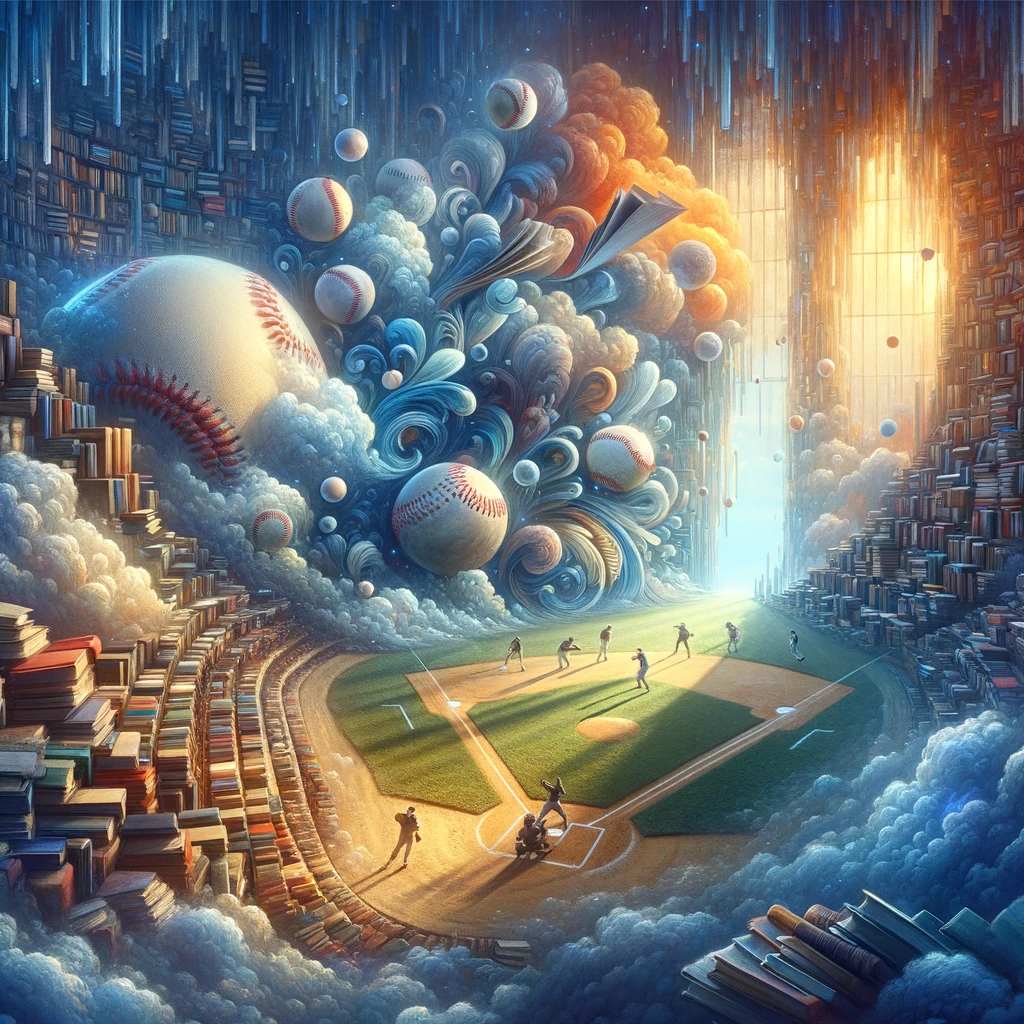
Baseball, often referred to as America’s pastime, is more than just a sport. It is a cultural phenomenon that has seeped into various facets of life, including literature. Through the annals of literary history, baseball has been used as a metaphor to explore themes of heroism, failure, redemption, and the American Dream. This article delves into how baseball, through its narrative and symbolism, has become a powerful literary tool.
Early Beginnings and the Rise of Baseball Literature
The origins of baseball are somewhat nebulous, with various forms of bat-and-ball games existing since the 18th century. However, it was in the 19th century that the sport began to take its modern shape, paralleling the industrialization and urbanization of America. This era also saw the birth of baseball literature, where writers began to use the sport as a backdrop for storytelling.
One of the earliest examples is Ernest Thayer’s 1888 poem “Casey at the Bat,” a narrative that encapsulates the dramatic tension of a baseball game. The poem, with its portrayal of the mighty Casey striking out, serves as a metaphor for human fallibility and the unpredictability of life.
The Roaring Twenties and the Great Depression
The 1920s and 1930s were transformative years for both baseball and America. This period, marked by the Roaring Twenties and the Great Depression, saw baseball literature evolve. F. Scott Fitzgerald, in his magnum opus “The Great Gatsby,” subtly uses baseball to symbolize the American Dream and its discontents. The novel’s reference to the 1919 World Series scandal reflects the corruption and disillusionment underlying the American pursuit of success.
Post-World War II America and the Golden Age
The post-World War II era ushered in what many consider the golden age of baseball. This period coincided with a flourishing of American literature that often mirrored the optimism and complexity of the times. J.D. Salinger’s “The Catcher in the Rye,” though not directly about baseball, features the sport as a motif representing innocence and the protagonist’s struggle to preserve it.
“The Natural” – A Literary Masterpiece
Bernard Malamud’s 1952 novel “The Natural” is perhaps the most direct and significant use of baseball as a literary metaphor. The story of Roy Hobbs, a talented baseball player whose career is marred by tragedy and scandal, parallels the Greek tragedy of a hero’s fall from grace. Baseball in “The Natural” is a metaphor for life’s challenges, the pursuit of greatness, and the inevitability of human weakness.
Modern Literature and Diverse Perspectives
In contemporary literature, baseball continues to be a rich source of metaphor and narrative. The sport’s reflection of societal changes, including issues of race, gender, and identity, has been explored in works like August Wilson’s play “Fences.” The story of Troy Maxson, a former Negro League baseball player, confronts the realities of racial discrimination and unfulfilled dreams, using baseball as a symbol of lost opportunities and the struggle for dignity.
Baseball’s journey from a simple pastime to a profound metaphor in literature reflects its deep entrenchment in the fabric of American culture. The sport has transcended its physical boundaries to become a lens through which authors explore the complexities of human life and society. From the rise of modern America to the challenges of contemporary society, baseball remains a powerful narrative tool, echoing the triumphs and tribulations of the human experience.
In the end, baseball in literature is more than just a game. It is a mirror of the human condition, a canvas on which writers paint stories of hope, despair, triumph, and loss. As we continue to read and interpret these literary works, baseball remains an enduring symbol of the diverse and evolving American narrative.
The Intersection of Baseball and Literary Modernism
The mid-20th century also witnessed an intriguing intersection between baseball and literary modernism. Authors began experimenting with narrative styles and themes, paralleling baseball’s own evolution during this era. Don DeLillo’s “Underworld,” a sprawling narrative set against the backdrop of the Cold War, uses baseball to explore themes of consumerism, waste, and the loss of innocence in American culture. The novel’s opening scene, depicting the famous 1951 National League tiebreaker game, is not just about baseball but a lens through which the complexities of post-war America are viewed.
Baseball as a Reflection of Societal Change
As America moved into the latter half of the 20th century, baseball’s role in literature began to reflect more directly the societal changes occurring in the country. Philip Roth’s “The Great American Novel” satirizes both the sport and the nation, using a fictional baseball league as a metaphor for the absurdity and paradoxes of American life. This era saw baseball narratives becoming more critical, reflecting the disillusionment and questioning that characterized the period.
The Contemporary Scene: Diverse Voices in Baseball Literature
The 21st century has seen a diversification in the voices contributing to baseball literature. Writers from various backgrounds are using baseball to tell stories that transcend the traditional boundaries of the sport. In Kadir Nelson’s “We Are the Ship,” the story of the Negro Leagues is told with a rich narrative and stunning illustrations, providing insight into a vital but often overlooked chapter of baseball history. This work and others like it offer new perspectives on the significance of baseball in American culture, highlighting its role in conversations about race, identity, and equality.
Baseball in Young Adult Literature
Baseball has also found a significant place in young adult literature, serving as a metaphor for growth, discovery, and overcoming adversity. Novels like Matt de la Peña’s “Mexican WhiteBoy” use baseball to address issues of racial identity and belonging. The protagonist’s talent in baseball becomes a means of connecting with his heritage and understanding his place in a world full of complex cultural and social dynamics.
The Future of Baseball Literature
As we look to the future, the relationship between baseball and literature seems poised to continue evolving. The digital age has brought new forms of storytelling, and with it, new opportunities to explore the metaphorical richness of baseball. From graphic novels to interactive narratives, the potential for baseball to serve as a literary device in exploring contemporary issues and themes is vast.
Final Thoughts
Baseball’s enduring appeal in literature lies in its ability to encapsulate the human experience. Its simplicity and complexity, its moments of individual brilliance and collective effort, mirror the journey of life itself. As American culture continues to evolve, so too will the ways in which writers use baseball to tell their stories. It remains a powerful tool for examining our world, a metaphor that continues to inspire and provoke thought in readers and writers alike.
In the end, whether it’s the crack of the bat in a quiet field or the roar of the crowd in a packed stadium, baseball holds a special place in the American literary imagination. It’s more than a game—it’s a story, a history, a metaphor, and a mirror, reflecting the ever-changing landscape of American life.
Frequently Asked Questions
1. Why is baseball frequently used as a metaphor in literature?
Baseball serves as a powerful metaphor in literature because it is deeply embedded in American culture and history. As America’s pastime, it embodies themes that resonate on a universal level. The structure of the game itself lends well to storytelling—with its rhythm, unpredictability, and dramatic moments mirroring the human experience. Characters in novels often find themselves at crossroads similar to those in a ballgame: the batter facing the pitcher, a team down to its last out, or an underdog story of triumph. This allows authors to explore heroism, failure, redemption, and the American Dream in a relatable, poignant manner. Additionally, baseball’s rich history offers a tapestry of legendary figures and epic tales that authors can draw upon to craft compelling narratives, offering both nostalgia and an exploration of broader societal themes.
2. Can you give examples of literary works where baseball is used as a metaphor?
Certainly! One of the most renowned works is Bernard Malamud’s “The Natural,” where baseball is intertwined with classic mythological themes, echoing the story of Sisyphus, as the protagonist Roy Hobbs struggles against destiny and personal flaws. Similarly, in “Shoeless Joe” by W.P. Kinsella, which inspired the film “Field of Dreams,” baseball becomes a medium for exploring reconciliation and the pursuit of dreams beyond the confines of reality. In these stories, the baseball diamond becomes a stage for human drama and introspection, with each game an opportunity for characters to face inner demons and societal expectations. These literary gems demonstrate baseball’s versatility as a metaphor in exploring the breadth of human ambitions and failures.
3. How does the structure and rules of baseball contribute to its role as a literary metaphor?
Baseball’s structure—a slow-paced, strategic sport full of tension and anticipation—serves as an ideal framework for literature. The game progresses through innings, providing a natural narrative arc with ups and downs, much like a well-crafted story. Each pitch and swing becomes a moment of decision, representing life’s myriad choices. The game’s format of three outs per inning and nine innings per game offers endless scenarios for drama and resolution, akin to life’s unpredictable twists. Furthermore, the concept of teams battling against each other mirrors personal and societal conflicts, while individual feats on the field—such as home runs or strikeouts—illustrate the duality of success and failure. As a result, the structure of baseball transforms it into a compelling literary device to explore complex human experiences.
4. How have thematic elements like heroism and the American Dream been portrayed through baseball in literature?
In literature, baseball often stands as a symbol of the American Dream—the notion that success is possible through talent and perseverance. It encapsulates the idea of rising from obscurity to stardom, mirroring the classic “rags to riches” tales. Heroism is exemplified through characters who achieve greatness despite adversity on and off the field. For instance, players stepping up during crucial moments in a game can parallel moments of personal triumph or moral courage in a narrative. Conversely, the darker side of the American Dream is explored through themes of failure and disillusionment—the fallen hero unable to realize their potential or haunted by past mistakes, capturing the fragile nature of dreams. This dichotomy allows authors to paint complex characters and narratives that delve deep into the human psyche and societal constructs.
5. Why does baseball continue to be relevant as a metaphor in modern literature?
Baseball remains a relevant metaphor because its essence speaks to timeless human experiences and societal issues. Despite changes in technology and culture, the fundamental challenges and aspirations it represents have not altered. Newer literary works may use baseball to tackle contemporary themes such as identity, inclusivity, and change, reflecting current societal shifts while maintaining the sport’s traditional roots. Baseball’s narrative richness provides layers for authors to address personal and collective journeys, allowing readers to connect past and present. As society continues to evolve, baseball as a metaphor offers a nostalgic yet adaptable canvas for exploring both enduring values and modern concerns, ensuring its continued significance in literature.