
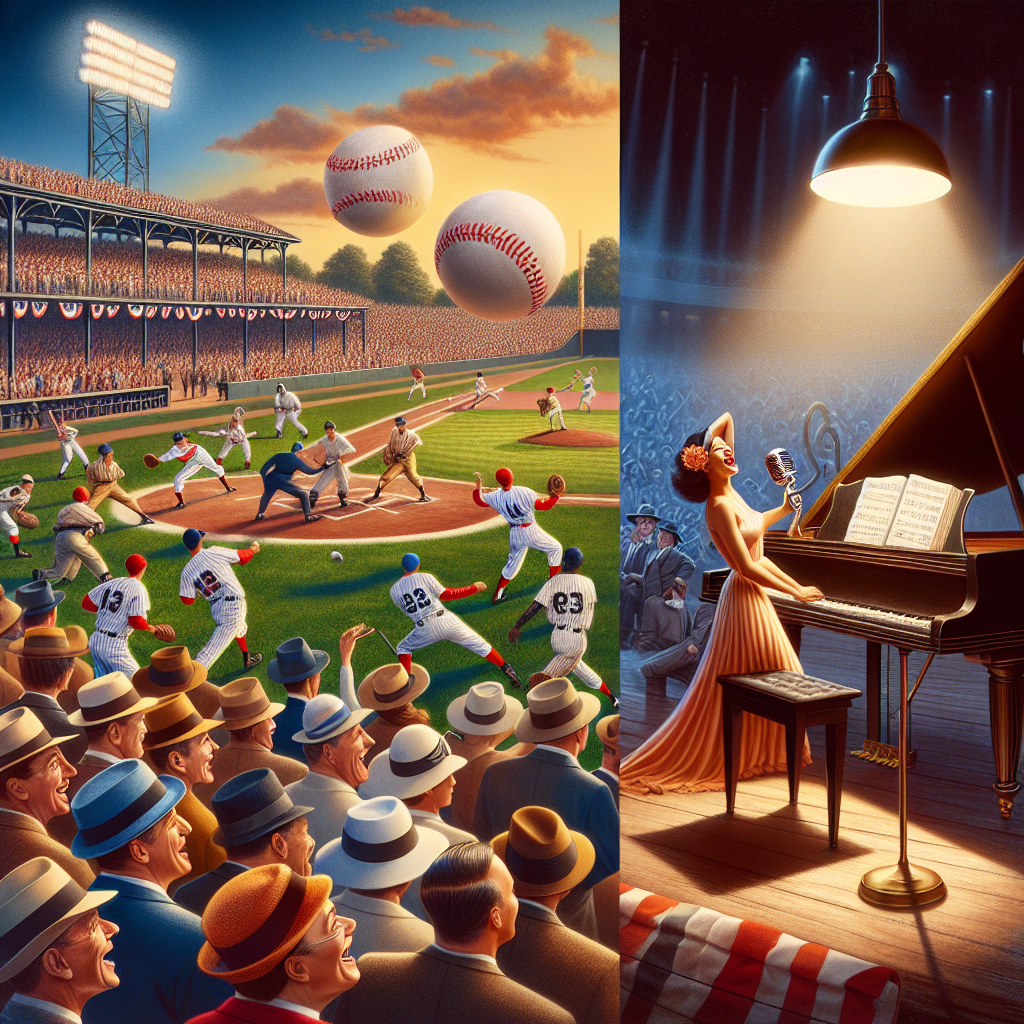
Baseball, often heralded as America’s pastime, is more than just a sport. It’s a rich tapestry interwoven with the cultural fabric of the United States, carrying with it social, economic, and cultural implications that reach far beyond the diamond. Its importance transcends mere athletics, touching upon elements deeply ingrained in the national consciousness. But one of its lesser-discussed intertwines is with the Great American Songbook, a collection of the most influential American songs of the 20th century. This often-overlooked relationship showcases how baseball has been celebrated, romanticized, and critiqued through music, offering a unique perspective on American society and history.
The Great American Songbook refers to compositions that have stood the test of time, primarily from Broadway, jazz, and American popular music, generally emerging from the early to mid-20th century. These songs have been sung and celebrated by generations, becoming a part of the cultural DNA, much like baseball. With legends such as Irving Berlin, George Gershwin, and Cole Porter, these songs have captured the spirit, challenges, and dreams of the American people. Baseball, on the other hand, has often mirrored societal changes, acting as a barometer for various economic and social environments throughout its evolution.
The symbiotic relationship between the Great American Songbook and baseball reveals the nuances of a diverse and evolving nation. Songs have immortalized baseball heroes, captured its spirit, and delivered commentary on its role within society, echoing broader societal themes. They have been used as instruments of patriotism, solace, celebration, and protest—reflecting the complexities of an ever-changing society. This article explores the interplay between baseball and the Great American Songbook, illustrating how these seemingly distinct realms have continuously influenced and informed each other through the ages.
Baseball’s Early Influence on Music
In the early days of baseball, before the emergence of radio broadcasts and television, spectators relied solely on newspapers and live events to experience the excitement of the game. During this period, the sport sought the assistance of music as a way to capture the public’s attention and elevate its status in society. Music became an essential tool to convey the thrill, camaraderie, and emotions associated with baseball. Many early compositions focused heavily on the sport, with sheet music becoming one of the primary modes of sharing these anthems across the country.
One of the earliest notable pieces is the 1858 hit, “The Baseball Polka,” which represents one of the pioneering attempts to combine baseball with the musical arts. This piece, which today may seem quaint, marked the beginning of baseball’s integration into popular culture, hinting at the significant role it would soon play in the American psyche. As small local games grew into larger organized leagues, music followed plays, highlighting notable players, teams, and events that drew people emotionally closer to the game.
Songs like “Take Me Out to the Ball Game,” penned in 1908 by Jack Norworth and Albert Von Tilzer, became the quintessential baseball anthem. Despite neither man having attended a game before writing it, the song encapsulated the notion of baseball as a communal experience—emphasizing concession-stand delights, the joy of spectating, and the spirit of friendly competition. Its ear-worm tune and simple yet engaging lyrics endeared it to fans and cemented its place as a staple in American baseball culture, marking the beginnings of an indelible link that would continue to flourish.
Jazz and Baseball: The Harlem Renaissance
As America entered the 20th century, baseball found itself adapting to an ever-diversifying nation. This era witnessed an unparalleled cultural explosion in Harlem, New York—known as the Harlem Renaissance—that merged African American cultural expressions with the broader national identity. Within this explosive atmosphere, jazz became a defining soundtrack that resonated deeply with American life and, by extension, baseball.
Jazz, with its roots in African American communities, shared commonalities with baseball, such as improvisation and individuality. This era brought forth songs that influenced society’s perception of the sport, intertwining themes of freedom, creativity, and barrier-breaking. The likes of Duke Ellington composed pieces that were inspired by the game, underscoring local heroes and pivotal events that were changing the face of baseball, especially with the push towards integration and the acknowledgment of Negro Leagues.
Jazz’s bebop evolution often reflected the fast pace and unpredictable nature of baseball, with the two reinforcing concepts of breaking through societal constraints and discovering new identities. This synergy between jazz and baseball could capture the aspirations and frustrations of a metropolis on the move, where ballparks and jazz clubs offered a haven of exploration and expression.
The Harlem Renaissance not only broadened the landscape of America’s cultural horizons but also infused baseball with a transformative voice, one that was vibrant, resilient, and unapologetically hopeful. The music reflected issues of race, identity, and the American Dream—elements that the game navigated alongside the evolving cultural tide.”
Baseball, Big Bands, and World War II
World War II marked an era where both baseball and music took on heightened patriotic significance. With a majority of the nation’s young men off fighting abroad, baseball became a vital source of American morale on the home front. As fields and ballparks provided much-needed distraction and national unity, music bands cranked out tunes to rally the spirits of workers and servicemen alike.
Big band music of the 1940s, led by the likes of Glenn Miller and Benny Goodman, often included themes of nostalgia and longing for the beloved pastime. Songs reflected a yearning for leisurely baseball afternoons as well as a patriotic dedication to the country’s collective victory. This period gave rise to songs such as “Joltin’ Joe DiMaggio,” leaping from radio speakers into the hearts of many Americans. Its spirited homage to the Yankees’ center fielder painted DiMaggio not just as a ballplayer but as a national symbol nestled into the heart of American culture.
Baseball and music coalesced during this era to express the complexities of a world at war, reflecting stances from joyous optimism to solemn resolve. Radio broadcasts became a widespread sensation, uniting communities by capturing the joie de vivre of an American public clinging to familiar pastimes amidst global uncertainty. This relationship fostered a growing recognition of heroes viewed within ballparks and band halls alike, reminding an audience that despite hardship, the American spirit remained collectively resolute.
The Civil Rights Movement and Baseball’s Growing Role
The latter half of the 20th century witnessed baseball evolving amid substantial societal transformations, with the sport often entangled in movements toward greater equality. The civil rights movement, which gained momentum in the 1950s and 60s, placed baseball within the broader conversation of American identity. Concurrently, music reflecting prevailing civil rights themes became an avenue for challenging entrenched societal norms.
Songs during this period began using baseball as a metaphor for breaking through racial barriers and achieving societal progress. A key moment in baseball’s history during this time was Jackie Robinson breaking the color barrier in 1947, a theme that was often captured through the lens of singers and songwriters. Artists like Nina Simone and Billie Holiday drew parallels between baseball’s struggles and the larger racial challenges America faced, each using their platform to shine a light on inequality.
In turn, baseball became a microcosm for American society, confronting the need for change while simultaneously showcasing perseverance. Both the landscape of music and sport matured in response to evolving attitudes, capturing the complex realities faced by athletes, musicians, and fans alike. The music not only entertained but served as a catalyst for crucial dialogues about growth, acceptance, and the power of unity in diversity.
Modern Reflections: Baseball and Contemporary Music
Baseball’s significance in American culture endures into the 21st century, evolving alongside shifting societal landscapes. Today’s music continues to capture the spirit of baseball in innovative ways, though it includes a broader range of genres beyond the traditional bounds of the Great American Songbook. As artists from diverse backgrounds and genres draw inspiration from the sport, the connection between baseball and music has taken on new dimensions, finding expression across varied platforms and styles.
The interaction between modern music and baseball can be seen in genres from hip hop to indie rock, each highlighting unique aspects of the game. Hip hop artists often employ baseball imagery to reflect the triumphs and challenges of urban life, while alternative and indie bands evoke the nostalgic and bucolic aspects of the sport. Additionally, artists like Bruce Springsteen have consistently revisited baseball in their lyrics, employing it as a lens to probe personal and collective American experiences.
Incorporating modern sentiments and technology, contemporary songs often capture both reverence and critique towards baseball, underscoring themes like perseverance, nostalgia, and occasional disillusionment. While materially baseball may look different today—with advanced metrics and technology—the spirit remains tied to a centuries-old tradition of evoking emotion through music that resonates with audiences young and old.
Conclusion: The Enduring Melody of Baseball and Music
The enduring linkage between baseball and the Great American Songbook reflects a continual dialogue about whom we envision ourselves to be as Americans. Both music and sport have celebrated victories, bemoaned losses, and provided solace during challenging times, showcasing the rich tapestry of emotions and experiences found across the nation. From the nostalgic ballads of yesteryear to contemporary genre-crossing interpretations, baseball and music have invariably provided a means for Americans to explore identity, hardship, and joy.
Melding the legacies of varied voices, baseball resonates as an anthem of Americana—ever-changing, yet steadfast in its role as a symbol of what defines the nation’s spirit. Through melodies that celebrate triumphs and examine struggles, music continues to reflect and inform societal growth, illuminating the significance of the sport and its vast cultural echo.
As we move forward, the interchange of baseball and music will undoubtedly forge new pathways, much in the way they have for decades. With ongoing social evolution, technological advancements, and emerging artistic visions, this association promises to remain a poignant testament to baseball’s place within the cultural and historical dialogue.
Frequently Asked Questions
1. How did baseball become intertwined with the Great American Songbook?
Baseball and the Great American Songbook share a unique relationship that reflects the cultural landscape of America. This intertwining began in the early 20th century, during a time when both baseball and popular music were rapidly growing in popularity across the United States. Baseball, being America’s pastime, naturally found its way into pop culture, including music. As ballparks filled and radios became household staples, songs about baseball found their way into the Great American Songbook, immortalized by songwriters who captured the thrill and communal spirit of the game. Legendary composers such as George M. Cohan and Irving Berlin saw baseball as a perfect backdrop for their compositions, adding to the national narrative of the sport through music.
2. What are some famous songs from the Great American Songbook that relate to baseball?
Several iconic songs in the Great American Songbook celebrate the spirit of baseball. One of the most famous is “Take Me Out to the Ball Game,” a simple yet evocative tune that has become an unofficial anthem for baseball games, sung during the seventh-inning stretch. Written by Jack Norworth and Albert Von Tilzer in 1908, this song perfectly highlights baseball as America’s pastime. Additionally, “Did You See Jackie Robinson Hit That Ball?” is a notable tribute penned by Buddy Johnson, celebrating the achievements of one of baseball’s most influential figures. These pieces, among others, serve as cultural markers that illustrate the beloved place baseball holds in American music and life.
3. Why is baseball often referred to as America’s pastime, and how does the Great American Songbook contribute to this perception?
Baseball is often dubbed America’s pastime due to its long history and deep roots in American culture. Originating in the mid-19th century, it quickly grew into a national sport that symbolized American values such as fair play, teamwork, and perseverance. These themes resonated with a rapidly modernizing society, creating a collective cultural identity centered around baseball. The Great American Songbook bolsters this perception by capturing and codifying the essence of baseball through music. Songs from the songbook reflect not only the sport’s significance but also the emotions and unity it inspires. These musical tributes have cemented the notion of baseball as not just a game but an integral part of American life and cultural expression.
4. In what ways do baseball and music serve as unifying elements in American culture?
Both baseball and music serve as powerful unifying forces in American culture, often bringing together communities across diverse backgrounds. Baseball, with its universal appeal, transcends demographics, making it a shared experience for citizens nationwide. Stadiums become melting pots, where the love of the game overrides cultural and social differences. Similarly, music from the Great American Songbook offers a common language that resonates with people of all ages and backgrounds. These timeless tunes, often played at baseball games, evoke nostalgia and camaraderie. Collectively, both elements help bridge societal divides, fostering a sense of unity through shared experiences that are both universally accessible and deeply personal.
5. How have historical events impacted the relationship between baseball and the Great American Songbook?
Historical events have significantly shaped the relationship between baseball and the Great American Songbook, highlighting how both spheres adapt and respond to major societal changes. During times of upheaval, like the Great Depression and World War II, baseball provided an essential escape and sense of normalcy, while music offered emotional solace and hope. This relationship was particularly evident through songs that celebrated baseball heroes or captured the spirit of the times. As the Civil Rights Movement gained traction, baseball’s integration was mirrored by songs that documented these social shifts, such as those celebrating Jackie Robinson’s contributions to the sport. Thus, both baseball and the Great American Songbook have evolved alongside historical changes, reflecting and influencing American society’s response to pivotal moments.