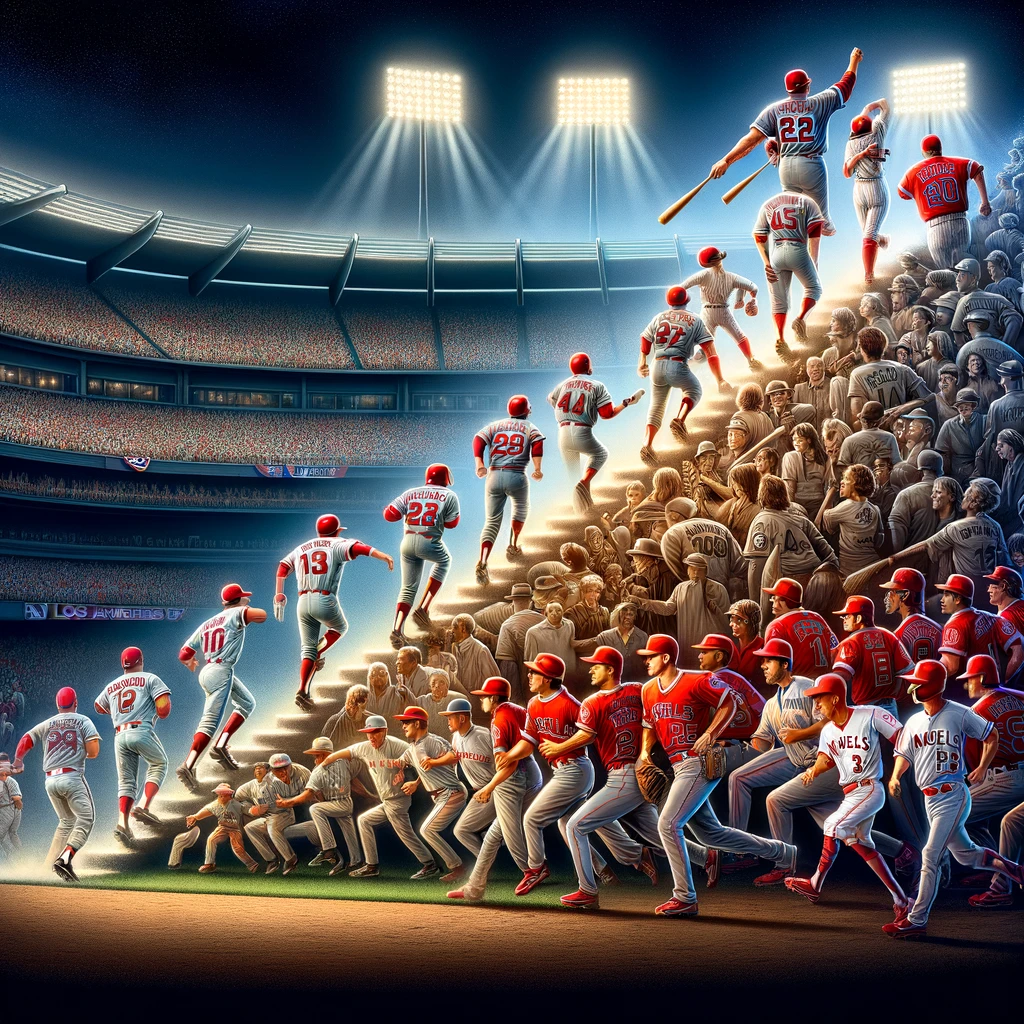
Baseball, America’s beloved pastime, has witnessed the rise of many legendary teams. Among these, the Los Angeles Angels have carved a unique path from their humble beginnings in Anaheim to stardom in Major League Baseball (MLB).
The Dawn of the Angels (1960s)
The Los Angeles Angels, established in 1961, began their journey under the ownership of the famous cowboy movie star Gene Autry. Their early years were marked by promising performances, despite being an expansion team with limited resources. In 1962, the team briefly played in Dodger Stadium, also referred to as Chavez Ravine. This period saw pitcher Bo Belinsky achieve fame not just for his skills on the mound but also for his vibrant personality.
1964 was a pivotal year for the Angels, as pitcher Dean Chance won the Cy Young Award, an achievement that spotlighted the team’s growing potential. The need for a separate stadium became evident as the Angels sought to emerge from the shadow of the Dodgers and build their own identity.
Anaheim, A New Beginning (1965-1971)
The turning point came when team owner Autry moved the team to Anaheim in 1966, a move that was initially resisted but eventually accepted. The team, now known as the California Angels, witnessed a remarkable increase in attendance in their new home. The Angels showed their mettle in the 1967 season, contending for the pennant in a tightly contested race. Players like Alex Johnson, Clyde Wright, and Jim Fregosi became household names during this era.
Nolan Ryan Era and the Rise to Prominence (1972-1979)
The 1970s saw the Angels blessed with the arrival of Nolan Ryan, a fireballer who would go on to throw four no-hitters for the team and set numerous strikeout records. Ryan’s presence galvanized the team, although they struggled to convert his individual brilliance into team success.
A Decade of Potential and Heartbreak (1980s)
The 1980s were a rollercoaster for the Angels. They became consistent contenders, buoyed by star players like Reggie Jackson and Fred Lynn. However, heartbreaking losses in the playoffs, particularly in 1982 and 1986, marked this era with a sense of unfulfilled potential.
Rebuilding and Resilience (1990s)
The 1990s were a time of rebuilding for the Angels. Despite a notable collapse in 1995, the team laid the groundwork for future success. Players like Tim Salmon and Jim Edmonds emerged, signaling a new era.
Golden Era and World Series Triumph (2000s)
Under manager Mike Scioscia, the Angels entered their golden era in the 2000s. Their crowning achievement came in 2002 when they won the World Series, a testament to their resilience and team spirit.
Continued Evolution (2010s and Beyond)
More recently, the Angels have seen the rise of players like Mike Trout and Shohei Ohtani. Despite their individual brilliance, the team has faced challenges in translating this into consistent team success.
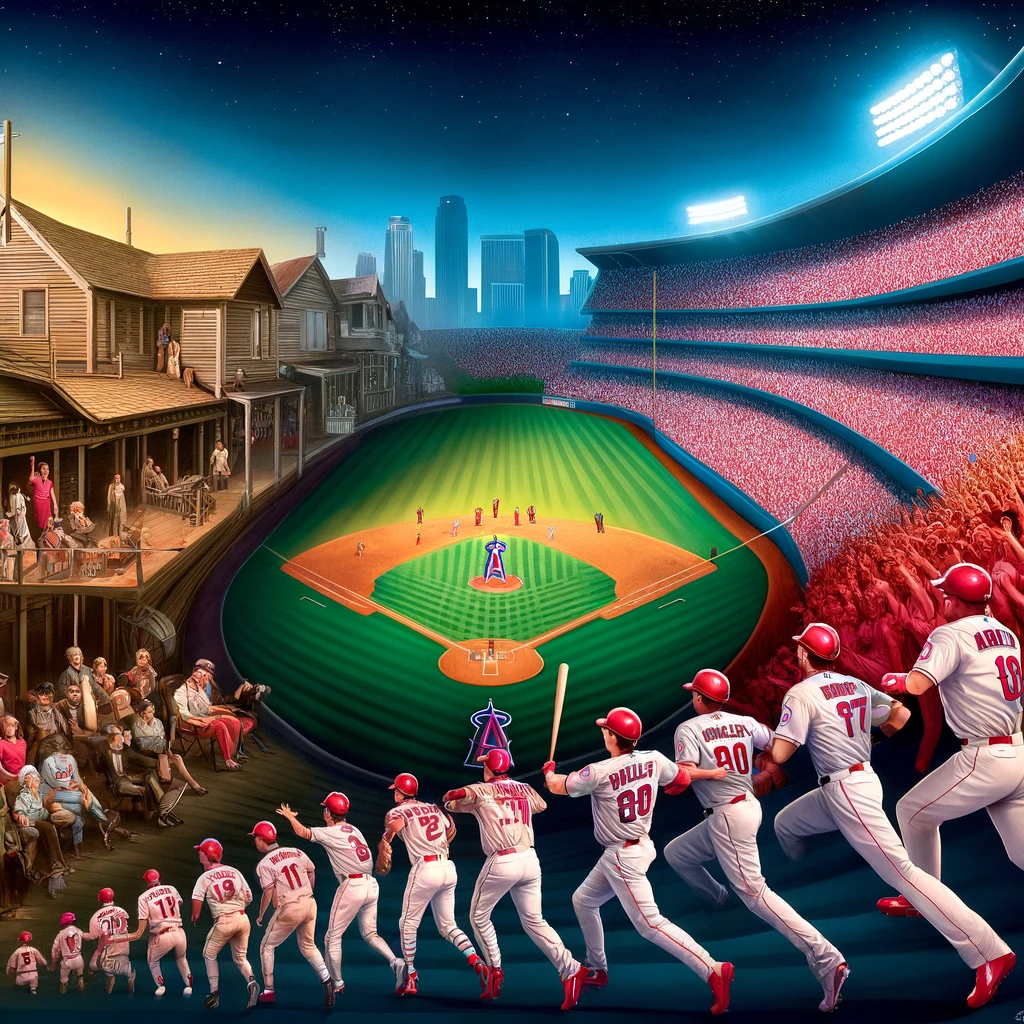
A Legacy of Talent and Memorable Moments
The Angels’ journey through the decades has been marked by an array of talent and memorable moments that have left an indelible mark on baseball history.
Talent That Defined Generations
As the team transitioned into the 21st century, the Angels continued to showcase exceptional talent. The 2000s were particularly significant with Mike Scioscia taking the helm as manager. Scioscia, known for his strategic acumen, steered the Angels to their first World Series victory in 2002. This period was not just about victories but also about building a team spirit that would define the Angels for years to come.
In the latter part of the 2000s and into the 2010s, the Angels made strategic acquisitions, bringing in star players like Albert Pujols and Josh Hamilton. While their contributions were significant, it was the emergence of Mike Trout that captivated the baseball world. Trout, with his awe-inspiring skills, quickly established himself as one of the game’s greatest players. His presence, combined with the multifaceted talent of Shohei Ohtani, brought a new era of excitement to the Angels, even though team success was inconsistent.
Challenges and Controversies
Despite their on-field talents, the Angels have not been immune to challenges and controversies. The tragic opioid-related death of pitcher Tyler Skaggs in 2019 cast a somber shadow over the team, raising questions about player health and safety in the league. Furthermore, plans for the rejuvenation of Angel Stadium fell through due to local government corruption, highlighting the complex relationship between sports franchises and civic entities.
The Angels’ Impact on Baseball and Community
The Angels’ influence extends beyond the diamond. They have been active in community engagement, with initiatives like the Angels Baseball Foundation and youth baseball and softball camps. These efforts demonstrate the team’s commitment to fostering a love for baseball among the younger generation and giving back to the community that has supported them throughout their history.
Modern Era and the Path Ahead
Entering the 2020s, the Angels find themselves at a crossroads. With a roster that includes players like Trout and Ohtani, the potential for greatness is undeniable. However, translating this individual brilliance into consistent team success remains a challenge. The team continues to strive for a balance between showcasing star talent and building a cohesive unit that can compete at the highest levels.
Conclusion
The story of the Los Angeles Angels is a tale of ambition, talent, and resilience. From their early days in Anaheim to their present status in MLB, the Angels have undergone a remarkable evolution. They have experienced the thrill of victory, the agony of defeat, and everything in between. As they continue to write new chapters in their storied history, the Angels remain a testament to the enduring allure and complexity of America’s pastime.
References: