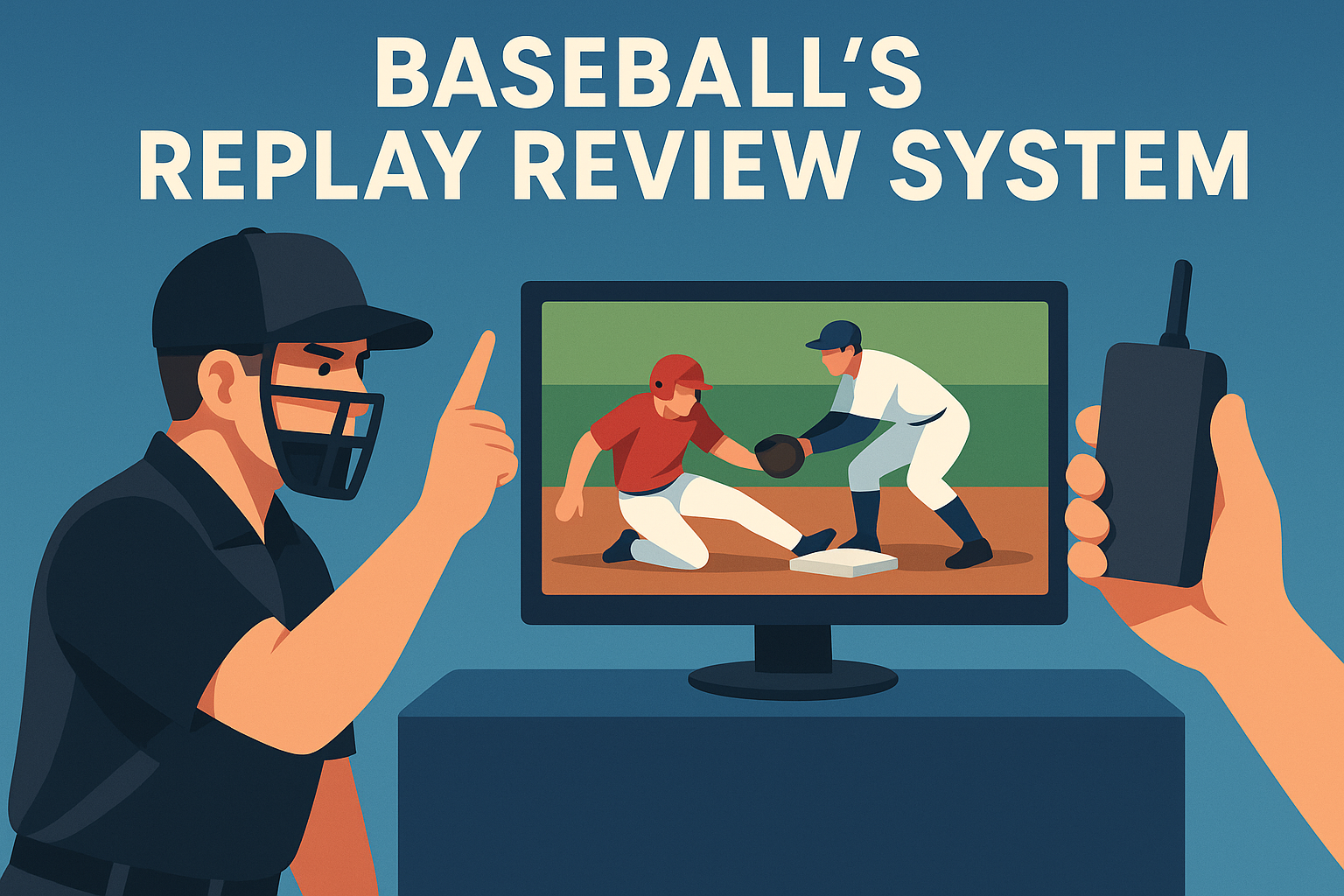
Baseball has long been celebrated as America’s pastime, steeped in tradition and cherished by millions. Throughout its storied history, the game has undergone various changes to enhance fairness, excitement, and the overall fan experience. One of the most significant developments in recent years has been the introduction of the replay review system. This technological advancement aimed to improve the accuracy of on-field decisions and reduce human error, altering the way the game is played, viewed, and appreciated.
Replay review in baseball is a system that allows certain contentious decisions made by umpires on the field to be reviewed using video footage. This system has transformed the way teams, officials, and fans engage with the game. It brings precision to an arena once governed solely by human perception, introducing a level of certainty in situations that were previously shrouded in doubt. As technology becomes increasingly intertwined with sports, the implementation of replay review systems is a pivotal moment for baseball, sparking debate, inviting technological innovation, and ultimately seeking to uphold the integrity of the game.
The Genesis of Baseball’s Replay Review System
Baseball’s replay review system was introduced gradually, driven by a need to rectify glaring errors and ensure fair play. The genesis of this system can be traced back to persistent controversies arising from incorrect on-field decisions. Mistakes, albeit unintentional, often swayed the tide of games, influencing standings, championships, and careers. Recognizing this, Major League Baseball (MLB) began to deliberate over how technology could reinforce the game’s integrity.
The pioneering steps towards this modernization started in 2008 when MLB implemented instant replay to review boundary home run calls. This limited use was a direct response to several high-stakes situations where umpires made decisive errors. The system gradually expanded until 2014 when the MLB formally adopted a more comprehensive replay review system.
A pivotal moment illustrating the need for such a system occurred during a 2010 game between the Detroit Tigers and the Cleveland Indians. Armando Galarraga’s near-perfect game was thwarted by a missed call at first base. The public outcry following this incident was a catalyst for change, emphasizing the necessity for a mechanism to challenge and correct umpire decisions. The replay review system was embraced not as a tool to undermine umpires but to supplement and uphold their critical role in the game.
How the Replay Review System Works
The replay review system incorporates video technology to assess disputed calls. The process is initiated when a team challenges a call, triggering a review by the Replay Operations Center (ROC) in New York, where MLB officials scrutinize video footage to make a ruling. The review encompasses plays such as force plays, tag plays, fair/foul balls in the outfield, catch/no-catch scenarios, and home run boundary calls.
Each team is allowed a specific number of challenges per game, strategic tools that must be employed judiciously. If a challenge is successful, the team retains the right to challenge another call later in the game. Conversely, if a challenge is unsuccessful, the team forfeits a challenge opportunity. This strategic element means managers must decide carefully which plays to challenge, weighing the potential impact on the game.
| Play Type | Can Be Reviewed |
|---|---|
| Force plays at all bases | Yes |
| Tag plays at all bases | Yes |
| Catch/no-catch | Yes |
| Fair/foul in the outfield | Yes |
| Stolen bases | Yes |
The backbone of the replay review system lies in its reliance on multiple camera angles and advanced technology to provide a comprehensive view of contested decisions. This methodology minimizes room for human error, reinforcing the legitimacy of calls and fostering confidence among players, managers, and fans.
The Impact on Traditional Umpiring
Introducing replay review has inevitably impacted the traditional role of umpires. Historically, umpires have been entrusted with making immediate, authoritative decisions. The replay system shifts some of this authority to technology, which can seem like a diminution of the umpire’s role.
Some purists argue this technology diminishes the human element of the game, a vital component that contributes to baseball’s charm. However, many acknowledge that ensuring the correct call is worth the trade-off. For example, the botched call by umpire Jim Joyce during Armando Galarraga’s imperfect game was corrected by the replay system, highlighting its fundamental necessity in preserving the authenticity of the game.
What emerges is a new, albeit challenging, landscape for umpires. Their decision-making process now includes an understanding that their calls could be subject to external evaluation. This added dimension requires resilience and adaptability among umpires, helping them evolve alongside modern advancements in the game.
Enhancing Fan Experience through Replay Reviews
The replay review system serves to enhance the fan experience by adding transparency and certainty to outcomes previously left to chance. It bridges the gap between spectatorship and participation, inviting fans to scrutinize controversial calls alongside players and officials. The slow-motion replays shown in stadiums and on broadcasts engage fans by allowing them to witness the decision process, fostering a deeper connection with the game.
Consider a close call at home plate during a playoff game — the drama intensified by a review gives fans, whether at the stadium or at home, a chance to engage more directly with the action. It adds to the suspense and drama, ensuring fairness while maintaining excitement.
Furthermore, the accuracy brought by replay reviews builds credibility, attracting new fans who appreciate the commitment to justice and precision. Knowing that the outcome is determined by correct calls rather than human error contributes to a more enjoyable and legitimate viewing experience.
Challenges and Criticisms of Replay Reviews
Despite the evident benefits, the replay review system is not without its challenges and criticisms. One major concern is the time taken during reviews, which can disrupt the flow of the game. Baseball, inherently slow-paced, can become even more prolonged due to the interruptions caused by reviews.
Though the system is designed to be as efficient as possible, some critics argue that this delay detracts from the spectator experience, potentially leading to fan disengagement. The key is finding a balance between ensuring accuracy and maintaining the vibrant pace that fans expect.
Furthermore, there’s ongoing debate around the limitations of what can be reviewed. For instance, balls and strikes remain untouched by the system, leaving room for contention on pivotal pitches. These aspects highlight the importance of continued evaluation and potential refinement of the current replay review protocols.
The Future of Replay Review in Baseball
The introduction of the replay review system marks a significant milestone in baseball’s evolution, yet, like all systems, it is bound to evolve. Future innovations may further integrate technology, making reviews faster and more precise.
One emerging possibility is using automated systems, such as the Automated Ball-Strike (ABS) system, which employs radar technology to call pitches in real time. This could one day be integrated into the replay review system, expanding its scope and further reducing human error in critical situations.
As baseball continues to adapt to technological advancements, the balance between preserving the sport’s traditional essence and embracing innovation will be paramount. Future adaptations to the replay review system are likely to reflect this delicate balancing act, with the ultimate goal of enhancing fairness, integrity, and the overall fan experience.
Conclusion: Reflecting on the Replay Review System’s Significance
Baseball’s replay review system represents an essential step toward ensuring justice and precision in America’s cherished pastime. From mitigating errors and enhancing fairness to augmenting the fan experience, this technology-driven initiative underscores a commitment to the game’s continued evolution.
The adoption of replay reviews not only reflects modern sports’ reliance on technology but also highlights baseball’s willingness to grow and adapt. As the system evolves, its capacity to tidy up the lines between right and wrong and support the rich tapestry of the game will serve as a testament to the adaptive spirit of baseball.
The next step for baseball enthusiasts, players, and officials is to embrace this technological advancement while remaining open to future refinements. As baseball charts its course into the digital age, the replay review system will undoubtedly play a pivotal role in shaping the future of the sport, harmonizing tradition with innovation for generations to come.
For fans, understanding this system enriches their appreciation of the game. As we witness this new era unfold, let us engage actively with it, recognizing its role in preserving the sanctity of the sport we love, while inviting others to share in the vibrancy of America’s favorite pastime.
Frequently Asked Questions
1. What led to the introduction of baseball’s replay review system?
The introduction of baseball’s replay review system was primarily driven by the desire to enhance the accuracy of on-field decisions and reduce the likelihood of human error. Historically, baseball has been a game where the umpire’s call was final, often leading to debates and discrepancies regarding certain plays. As the game evolved, so did the technology surrounding it. This technological advancement paved the way for a more accurate adjudication method. By using multiple camera angles and high-definition video, officials could better analyze close plays, ultimately leading to fairer outcomes and preserving the integrity of the game. For fans who cherish the purity and fairness of baseball, this development has been significant, offering a sense of justice when calls are challenged. It introduced a new dynamic that not only refines the adjudication process but also adds a layer of engagement for spectators who get to witness the decision-making process more transparently.
2. How does the replay review system work in baseball?
The replay review system in baseball operates through a well-orchestrated process aimed at authenticating the accuracy of an umpire’s call. When a play is in dispute, a team manager can challenge the call, initiating the review process. This call to action involves consulting with a designated replay official who examines the contested play from multiple camera angles using high-definition feeds. The pivotal role of this official is to determine whether or not sufficient evidence exists to overturn the original call. It’s important to note that not every aspect of the game is subject to review; only specific types of plays such as tag plays, force plays, and boundary calls, among others, are eligible. This ensures that the game maintains its momentum while providing a safety net for dealing with only the most impactful decisions. Managers, however, have a limited number of challenges, making strategy paramount. The process culminates with a decision that adheres to prestigious standards of accuracy, continuously watched and analyzed closely by fans both in the stadium and those watching at home.
3. What types of plays can be challenged and reviewed in the replay system?
The scope of the replay review system is deliberately designed to maintain a balance between thorough examination and the smooth flow of the game. Traditionally, the system allows challenges for a variety of crucial plays, including boundary calls such as fair or foul balls, home runs, and any fan interference within these territories. Additionally, tag plays, including tags on a runner concerning stealing bases, are subject to review. Force plays at bases, excluding plays at first base where it’s strictly the result of a routine ground ball, also fall under this category. Another essential area includes runner placement in instances of obstruction or interference. These categories are carefully selected to address the most contentious and potentially game-changing decisions, ensuring that the essence of the sport remains intact while adopting a level of scrutiny necessary for fair play. This considered selection process helps to minimize disruption while maximizing justice in play outcomes.
4. How has the replay review system impacted the game and its traditional elements?
The introduction of the replay review system has deftly walked the fine line between innovation and tradition in baseball. Traditionally, baseball is synonymous with American culture and historic authenticity, and the initial resistance towards the system reflected the concern of altering this sacred tradition significantly. Over time, the system has shown to enhance the game by reinforcing the accuracy of crucial decisions, thereby preserving the sport’s integrity without altering its fundamental nature. The presence of replay reviews adds a modern, technological edge to the game, inviting more scrutiny and careful analysis from fans who relish deeper engagement and involvement with each significant call. In stadiums and at home, camera technology and angle-variety have elevated the spectacle, catering to the audience’s thirst for precision. Purists may lament the stylized way it reduces the umpire’s immediate and unassailable decision-making, but it undeniably adds another riveting facet to a game entrenched in tradition, serving present-day demands for accuracy without diluting its rich heritage.
5. Have there been any criticisms or controversies regarding the replay review system?
While the replay review system seeks to elevate fairness, it hasn’t been without its criticisms and controversies. One of the primary critiques is the potential for the system to prolong games. Baseball, already a sport with a natural leisurely pace, can see further delays when reviews take longer than anticipated. Fans and players, known for patience, occasionally express frustration over extended game times due to multiple reviews. Further criticisms hinge on the notion of undermining the authority and traditional role of umpires. Historically, umpires held the final say, and the rewind and scrutiny enabled by technology can be perceived as questioning their expertise and judgment. The subjectivity in determining which parts of the play may fall under review also sparks occasional debates, fueling discussions about consistency and fairness. Moreover, limitations on what can be reviewed occasionally erupt into controversy, particularly in instances where non-reviewable calls have substantial game-altering potential. Despite its virtues in upholding fair play, navigating the delicate balance between tradition and technology remains an ongoing challenge for the replay review system, inviting discourse on its continuous evolution aligned with the game’s cherished ethos.