
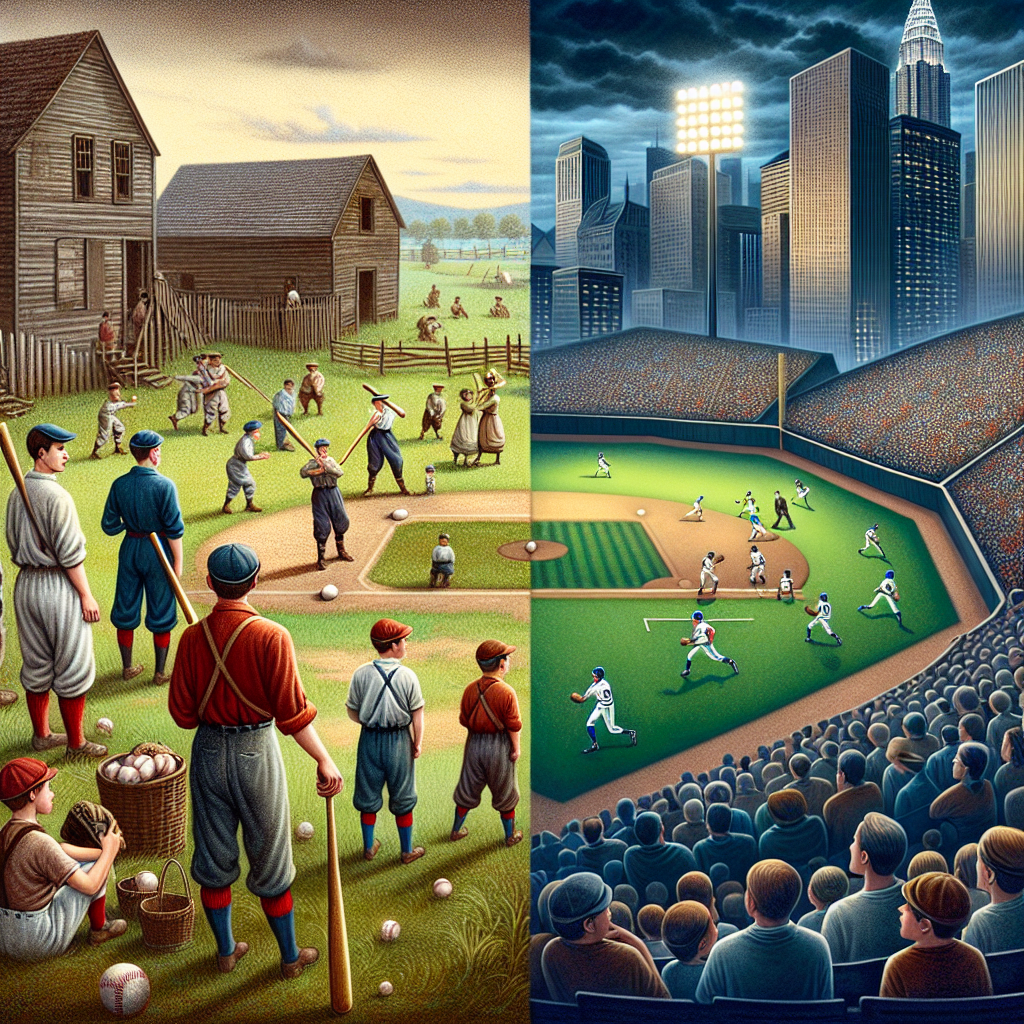
Baseball, fondly known as America’s pastime, has deep roots entwined with the fabric of society. Over the years, this beloved sport mirrored the cultural, social, and economic shifts in the United States. Amidst these shifts, urbanization has played a profound role in molding the game both on and off the field. As cities grew and changed throughout the 19th and 20th centuries, they brought with them a far-reaching influence on baseball. From igniting local rivalries to establishing the iconic ballparks that we revere today, urbanization has exponentially affected the game’s evolution. This article examines how the rise and development of urban centers have intersected with baseball’s history, shaping it into the complex entity it is now and paving the way for the dynamic sport that continues to captivate millions.
During the 1800s, as America saw its cities swell with waves of immigrants and an expanding working class, the need for leisure and entertainment became increasingly prominent. Baseball filled that void, providing a shared activity that bridged cultural divides. Urbanization influenced baseball’s rules, accessibility, and economics, thereby making it a central component of community life. As the game evolved from informal gatherings in fields and open lots to a structured sport with organized leagues, urban centers served as fertile ground for its growth. Here, early clubs were formed, attracting not only players but a dedicated base of spectators who found joy and community in cheering for their hometown heroes.
The growth and expansion of cities also meant improvements in transportation and infrastructure. These advancements facilitated league play, allowing teams to travel more efficiently and engage in competitive matchups beyond their local areas. The American League and National League, key components of Major League Baseball, owe much of their expansion and success to the ability to draw fans from an increasingly urbanized population. By understanding the historical interplay between urbanization and baseball, we gain insights into how social forces shape the sports we love, reflecting broader societal changes over time.
Baseball’s Beginnings in Urban Centers
The origins of baseball can be traced back to smaller game variants played in the early 19th century, such as rounders and cricket. These games often took place in the burgeoning cities of the Northeastern United States. It was here that baseball began to take shape as an organized sport. The growing urban populations provided a diverse pool of participants eager to form clubs and establish the earliest competitions. New York, Boston, and Philadelphia became the initial hotbeds for baseball activity, fostering a competitive atmosphere that drove the sport’s early development.
In these urban settings, baseball thrived as a primarily amateur pursuit. Local businessmen and community leaders organized teams and leagues, and their efforts were motivated by a desire to provide structured recreation and community camaraderie. Events often attracted large crowds, eager for respite from the daily grind of city life. Meanwhile, the rise of industrialization drove a demographic shift: many people moved from rural areas to urban conurbations in search of work and new beginnings, further fueling baseball’s growth as these urban residents sought familiar and enjoyable leisure activities.
As baseball’s popularity surged in cities, its rules and structure began to solidify. The famous Knickerbocker Base Ball Club, founded in New York City in 1845, was pivotal in this process, implementing a code of rules that formed the basis of the modern game. Other cities quickly followed suit, establishing their own rules and teams. By the 1850s, competitive matches between clubs had grown commonplace, firmly roots baseball in the urban landscape. This period marked the transition from an informal pastime to a source of local pride and subsequently laid the groundwork for professional leagues to emerge.
The Rise of Professional Baseball Leagues
Urbanization set the stage for the emergence of professional baseball leagues toward the end of the 19th century. The development of railway networks was crucial in this transformation, providing teams the ability to travel long distances quickly and reliably. This newfound mobility led to the formation of regional leagues, which naturally progressed to interstate competitions. The National Association of Base Ball Players, founded in 1857, marked one of the first attempts to standardize baseball rules and its organizational structure across cities. However, a desire for professional play motivated the transformation of these organizational frameworks, and professional salaries soon became an accepted part of the sport.
Urban areas, with their large populations and growing media presence, proved attractive markets for fledgling baseball teams. Cities vied for teams, hoping to elevate their profiles through association with a successful sports franchise. Major metropolitan areas supported more than one team, and fierce rivalries emerged, fostering intense local fan engagement. The creation of the National League in 1876 and the American League in 1901 were milestones in baseball’s professionalization. Both leagues were composed of teams based in major U.S. cities and consolidated the game’s rules and structure, leading to the modern era of baseball.
The media played a pivotal role in popularizing baseball further as urbanization progressed. Newspapers located in densely populated areas devoted considerable space to coverage of games and players. Radio and, eventually, television would later propagate the sport to national and international audiences, expanding its reach beyond the cities where it grew to prominence. This media exposure elevated baseball to national consciousness, firmly establishing it as a central component of American life.
Ballparks: Icons of Urban Architecture
The construction of dedicated ballparks in urban areas was a significant factor in baseball’s evolution. These structures became early icons of urban architecture, reflecting the cities in which they were built. The close proximity of city residents to these sports venues further bolstered baseball’s identity as an urban sport.
With the expansion of the sport at the professional level, permanent stadiums became necessary. Ballparks like Fenway Park in Boston, Wrigley Field in Chicago, and Ebbets Field in Brooklyn were constructed during the early 20th century. These venues were not just sports arenas; they became symbols of civic pride and played vital roles in the social and cultural identity of their hometowns.
Ballparks were intertwined with the urban landscape, and their locations were often chosen based on access to public transport and other facilities. Their unique architectural designs often adapted to fit the constraints of urban plots, leading to idiosyncrasies that became beloved fan quirks. Over time, as urban areas continued to evolve, relocation and the construction of new multipurpose stadiums began, reflecting broader trends in urban planning and development.
Ballparks also served as venues for cultural integration and community gathering points, spaces where people from different backgrounds could come together for a common purpose. They provided a venue for all social classes to mix, united in their support of the home team. Despite the many social challenges and tensions in American urban life, ballparks stood as places where unity could be achieved — if only for nine innings.
Challenges and Changes in Urban Baseball
Despite its symbiotic relationship with urbanization, baseball faced numerous challenges as cities continued to grow and change. Economic upheavals, technological advances, and social movements all had substantial impacts on the sport. The Great Depression of the 1930s, for example, led many baseball clubs to struggle financially as attendance numbers slumped, reflecting broader economic trends. Urban centers bearing the brunt of modernity had to adapt, and so did baseball, adjusting financial models and marketing strategies to survive tough times.
Race and integration also became critical issues as cities became more diverse. Jackie Robinson famously broke the Major League Baseball color barrier in 1947, representing a profound change not just for the sport, but for urban society at large. Urban teams began fielding diverse rosters, providing new opportunities for African-American and Latino players. As a result, baseball became a vehicle for broader social change within urban communities, epitomizing the progressive shifts happening across America.
Technological innovations further spurred change in urban baseball. The advent of television transformed how fans consumed baseball, making it possible for the urban experience to be shared by broader audiences. This shift necessitated changes in how teams marketed themselves, with a growing focus on broadcast revenues. In response, baseball expanded from urban centers into suburban and rural areas, yet cities remained the heart of the action, maintaining historic rivalries that drew viewers in.
Despite these challenges, urban baseball continued to thrive, adapting to economic and technological changes over time. Hunting for new markets and better revenues, teams realigned and relocated, fostering excitement among ever-expanding fan bases. This resilience highlights the enduring strength and appeal of baseball even amidst external pressures and societal transformations associated with urban growth.
Modern Urban Baseball
Today, baseball continues to thrive in urban areas even as the context around it shifts. The relationship between baseball and cities is more dynamic than ever, illustrating how the sport has grown alongside urban transformations in the 21st century. Modern ballparks have become multi-use venues, serving as cultural hubs for concerts and events beyond baseball, reiterating their central role in urban life.
Contemporary urban baseball teams exponentially leverage digital technology and social media, pushing engagement with fans to new levels. Interactive experiences inside and outside stadiums aim to draw in urban dwellers, while marketing and gameday promotions reflect the unique cultural fabric of each city. The effects of gentrification, real estate development, and changing demographics within urban areas continue to impact where and how stadiums are developed.
Furthermore, initiatives aimed at revitalizing neighborhoods and fostering inclusive urban development through baseball endeavors have taken root. Programs designed to improve youth access to sports and education are emblematic of baseball embracing an urban mission, further solidifying its role in societal progression. These initiatives link baseball not only with cultural and economic growth but with expansive opportunities for future generations within city settings.
In recent years, discussions around protecting historic venues like Fenway Park from urban encroachment highlight the enduring significance of baseball’s place in the urban landscape. By striking a balance between preserving the past and embracing contemporary needs, baseball remains relevant and vital to thriving cities. In this way, urban areas not only serve as the backdrop for baseball but actively influence its ongoing evolution and place at the heart of American identity.
Conclusion
The journey of baseball and urbanization is a testament to the sport’s adaptability and enduring appeal. Cities provided the foundation upon which baseball was built, nurturing its growth and igniting the fervent passion that surrounds it today. Through the halls of history, from the energetic shouts of early amateur games to the roar of modern stadiums, baseball has been a reflection of urban America.
Urbanization’s impacts on baseball are multifaceted: they include the facilitation of professional leagues, the rise of iconic ballparks, and the creation of deep-rooted community identities. It is a story of challenge, adaptation, and triumph within the constantly shifting urban fabrics of the nation.
As baseball continues to captivate new generations of fans, its urban past offers a touchstone, reminding us of where the sport has come from and providing inspiration for its future directions. The relationship between baseball and urbanization will undoubtedly continue to evolve, reflecting broader societal changes and influencing the way the game is perceived and played.
While its rich heritage tethers baseball to the cities where it began, its ongoing journey mirrors the shared stories of struggle, change, and triumph experienced by people in urban areas across the globe. Through this interplay with cities, baseball not only reflects our past but shapes our future, remaining a beloved part of the social tapestry today and for generations to come.
Frequently Asked Questions
1. How did urbanization contribute to the popularity of baseball?
Urbanization significantly boosted baseball’s popularity by bringing large, diverse populations into concentrated areas, creating a ripe environment for communal sports experiences. As cities expanded in the late 19th and early 20th centuries, so too did the opportunities for people to gather and partake in public leisure activities. Baseball stadiums emerged as cultural hubs, offering affordable entertainment options for a burgeoning working and middle class looking for a release from the rigorous and often monotonous workweek. Furthermore, with the advent of public transportation, baseball games became even more accessible, drawing crowds from across and beyond city limits. This resulted in increased ticket sales, enhanced fan engagement, and broader media coverage, each a critical contributor to the sport’s explosive popularity.
2. In what ways did urban rivalries fuel the development of baseball?
Urban rivalries were pivotal in heightening the competitive nature and overall atmosphere within baseball. When densely-populated cities started forming teams, natural rivalries sprung up, such as the revered matchups between the New York Yankees and the Boston Red Sox, or the Chicago Cubs and the St. Louis Cardinals. These rivalries attracted intense local interest and contributed to the massive growth in dedicated fan bases. Fans took immense pride in their city’s teams, creating a fervent cultural identity around baseball that extended beyond the sport to deeper socio-economic and cultural pride. These urban clashes often resulted in packed stadiums, dynamic media stories, and provided the unfolding drama that cemented baseball’s place in American folklore as much as America’s pastime.
3. How did urbanization shape the physical infrastructure of baseball stadiums?
As urban areas grew, the availability of open space within cities became limited, leading to an evolution in the construction of baseball stadiums. Initially built in more urban areas to bring the sport to bustling populations, these spaces turned into transformative places that adapted to their surroundings. The constraints of urban space heralded the unique character of ballparks such as Fenway Park or Wrigley Field, where capacity limits, innovative design, and unique dimensions reflected the city’s geography. In turn, these changes influenced how the game was played within the stadiums – affecting the strategy, ballpark atmosphere, and fan experience. Architects and city planners innovated new ways to construct environments that maintained the engaging and communal nature of baseball even within confined city spaces.
4. How did media advancements in urban centers affect the way baseball was consumed?
The growth of urban centers coincided with major advancements in media that revolutionized the way baseball was consumed. Newspapers, radio, and later television, all centered in urban locales, played a critical role in broadening baseball’s reach. Newspapers, with their budding sports sections, brought color, storytelling, and analysis of the games to those unable to attend. The introduction of radio broadcasts turned baseball into an auditory experience, allowing fans to engage with the game while going about daily life. As TV networks originated from urban hubs, they elevated baseball into living rooms nationwide, amplifying player fame and franchise symbols. These media outlets, born out of bustling cities, ensured baseball’s stories were part of the cultural mainstream and solidified its status as America’s pastime.
5. How did urban migration and demographic changes influence baseball?
Urban migration and the resulting demographic shifts enriched baseball both culturally and competitively. As people moved from rural to urban areas in search of opportunity, they brought with them different cultural backgrounds and traditions, infusing new life into the sport. The migration of various ethnic groups into urban areas diversified player pools, fostering the inclusion of different styles, skills, and dynamics, ultimately making the game more inclusive and representative of the nation’s melting pot. Stadiums became places of multicultural gathering, where baseball served not only as entertainment but as a means of social integration. Additionally, as the population flourish in metropolitan areas, so did the demand and expectations for more competitive and professional-level teams, driving investments in player training, international scouting, and system improvements.