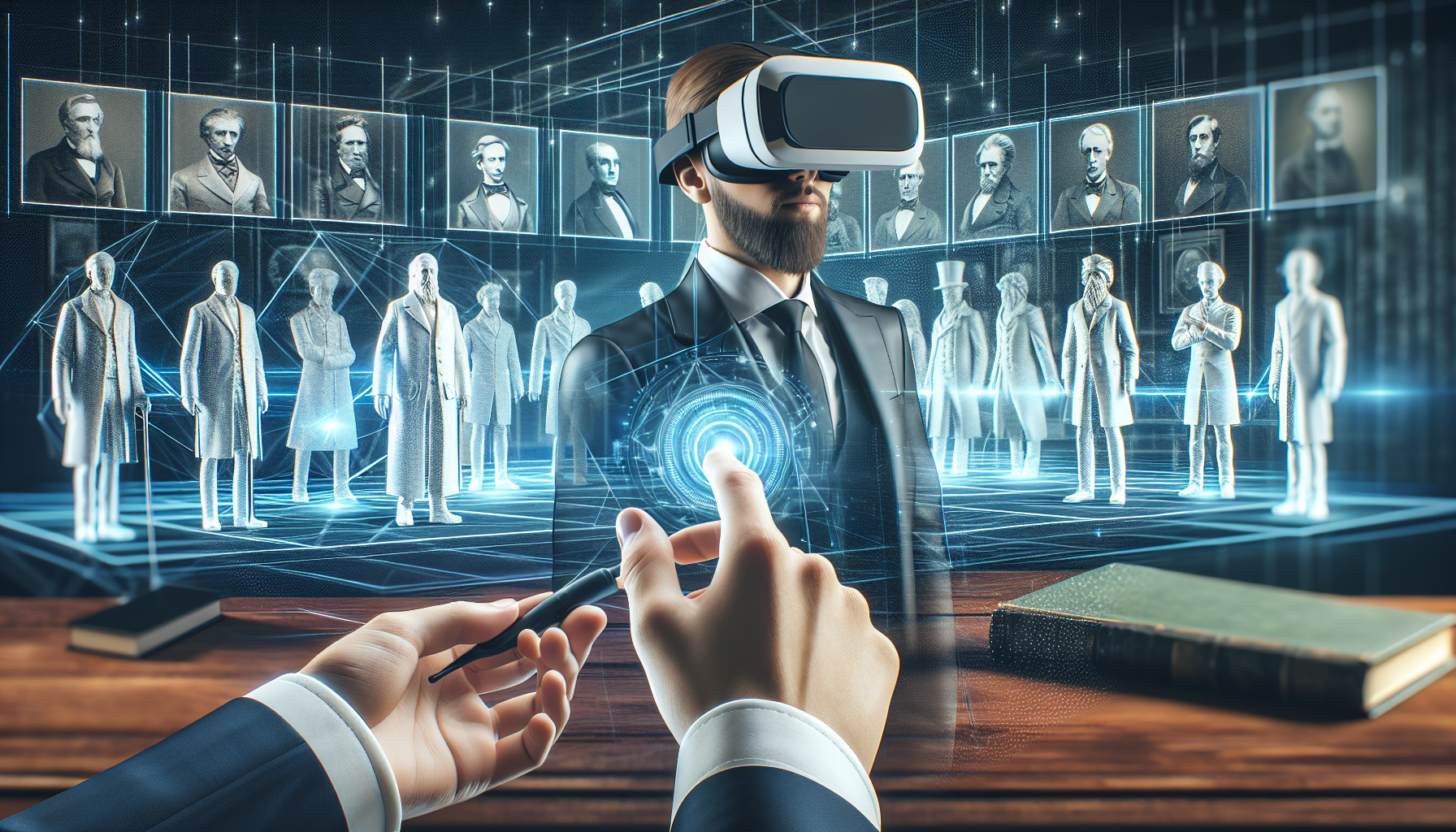
The Baseball Hall of Fame is no longer limited to bronze plaques, glass cases, and quiet galleries. Virtual reality is changing how fans encounter baseball history by turning static artifacts into immersive experiences that can be seen, heard, and explored. In the Hall of Fame context, virtual reality means digitally reconstructed spaces, players, moments, and collections that visitors access through headsets, projection rooms, mobile apps, or web-based 3D environments. It overlaps with augmented reality, which layers digital content onto the physical museum, and mixed reality, which allows digital objects to interact with the real environment. Together, these tools create new ways to teach, preserve, and share the story of the game.
This matters because the Baseball Hall of Fame serves multiple audiences at once: lifelong fans, school groups, tourists, researchers, collectors, and people who may never travel to Cooperstown. A traditional exhibit can display a bat used in a famous World Series, but an immersive exhibit can place a visitor in the batter’s box, recreate the crowd noise, explain the pitch sequence, and connect the object to the player’s career and the era’s social context. That difference is not cosmetic. It changes memory retention, accessibility, and emotional engagement. In museum planning meetings I have seen repeatedly, the central question is not whether technology should replace artifacts. It should not. The better question is how technology can deepen understanding without overshadowing the authenticity of the original collection.
For a sub-pillar hub under the broader Baseball Hall of Fame topic, this miscellaneous area covers the practical and interpretive edges of the museum experience: digital exhibits, remote access, preservation workflows, education uses, visitor expectations, and the future of immersive storytelling. These are the supporting systems that make a modern Hall of Fame feel alive. They also create strong pathways to related topics such as Hall of Fame exhibits, Hall of Fame artifacts, museum technology, baseball education programs, and digital archives. If a reader wants to know how the Hall of Fame can bring history to life for both in-person and remote audiences, virtual reality is the clearest lens.
At its best, Hall of Fame virtual reality does three jobs at once. First, it interprets complex history in plain terms. Second, it extends access beyond physical walls. Third, it preserves fragile stories and environments that cannot survive in their original form. A recreated Negro Leagues ballpark, a clubhouse walkthrough, or a pitch-level replay of a milestone home run can help visitors understand details that labels alone rarely convey. That is why virtual reality has become more than a novelty in museums. It is now part of how institutions fulfill their mission.
How Virtual Reality Fits the Baseball Hall of Fame Mission
The National Baseball Hall of Fame and Museum exists to preserve history, honor excellence, and connect generations through the game’s story. Virtual reality supports all three aims when it is designed around interpretation rather than spectacle. Preservation benefits because high-resolution photogrammetry, LiDAR scanning, and volumetric capture can document artifacts, uniforms, trophies, and even architectural spaces in detail. Education benefits because immersive media can explain rules, strategy, and historical context through simulation. Public access benefits because digital replicas can be experienced by people who cannot visit Cooperstown because of distance, cost, mobility, or scheduling constraints.
A good Hall of Fame VR experience starts with a real curatorial question. What should the visitor understand after the experience ends? For example, if the goal is to explain Jackie Robinson’s impact, the experience should not simply recreate Ebbets Field. It should place the player’s debut within the structure of segregation, the pressures of integration, and the response from teammates, opponents, media, and fans. If the goal is to interpret pitching evolution, the experience might compare release points, grips, and batter reactions across eras, from Bob Feller to Mariano Rivera. The technology works when it sharpens historical meaning.
Institutions that do this well usually follow established museum standards. The American Alliance of Museums emphasizes mission alignment, accessibility, and stewardship. The Library of Congress and Smithsonian have also influenced best practices around digitization, metadata, and public access. In practical terms, that means a VR exhibit at the Hall of Fame should be tied to collection records, historical scholarship, rights management, and conservation planning. It should not exist as a detached entertainment feature. Visitors notice the difference immediately. Experiences rooted in authentic collections feel grounded and memorable.
What a Virtual Hall of Fame Experience Can Include
Virtual reality in a baseball museum can take several forms, and the best hub pages explain the range clearly. The simplest model is a 360-degree video that places a visitor inside a recreated scene, such as a World Series game or induction ceremony. More advanced is an interactive 3D environment where users move through a clubhouse, dugout, archive room, or historic ballpark and trigger stories through objects. The most sophisticated versions use spatial audio, hand tracking, and branching narratives so visitors can choose what they explore first.
Real-world museum technology makes these experiences possible. Unity and Unreal Engine are common development platforms for interactive historical environments. Matterport is widely used for digital twins of spaces. Photogrammetry tools such as RealityCapture and Agisoft Metashape can convert hundreds of photographs into accurate 3D models of bats, gloves, plaques, and scorecards. Curators then attach interpretive layers: voiceover, timelines, oral histories, and statistical overlays drawn from trusted baseball databases. A virtual exhibit on Hank Aaron, for instance, can combine a scanned artifact, era-specific stadium reconstruction, milestone footage, and season-by-season context in one environment.
The visitor does not need a headset for every version. WebXR and browser-based 3D tours can make Hall of Fame content available on laptops and phones. That matters for school access and family trip planning. A teacher preparing a lesson on the Negro Leagues may use a desktop tour in class, while an in-person visitor may later use an on-site headset for a deeper reconstruction. This layered design is important because it avoids creating a single expensive experience that only a small number of guests can use each day.
| Format | Best Use at the Hall of Fame | Main Advantage | Primary Limitation |
|---|---|---|---|
| 360-degree video | Historic moments and guided storytelling | Easy for first-time users | Limited interactivity |
| Interactive VR headset experience | Ballpark reconstructions and player perspective | High immersion and engagement | Higher cost and throughput limits |
| Augmented reality on mobile devices | Layering content onto artifacts in galleries | Connects physical and digital collections | Depends on visitor device comfort |
| Web-based 3D tour | Remote access and education programs | Broadest reach | Less immersive than headset-based systems |
Why Immersive Baseball History Works So Well
Baseball history translates unusually well to immersive media because the sport is built around place, sequence, and perspective. Fans understand the geometry of the field, the tension of one pitch, and the emotional weight of a specific inning. Virtual reality can model those elements with clarity. Standing in a recreated Polo Grounds outfield immediately teaches dimensions in a way a printed diagram cannot. Experiencing the speed differential between a fastball and a changeup from the batter’s viewpoint explains strategy intuitively. Hearing radio-style commentary in a period environment helps visitors feel how the game was consumed in earlier decades.
Baseball also has rich archival depth. There are scorecards, photographs, broadcast clips, scouting reports, uniforms, equipment, oral histories, and statistical records that can feed immersive interpretation. Because the sport is heavily documented, developers can build historically informed reconstructions rather than generic scenes. When I have reviewed museum prototypes, the strongest moments usually combine a physical object with an environmental reconstruction. Seeing a preserved glove is valuable; seeing that glove in a recreated spring training locker area, alongside narration about training routines and travel conditions, creates context that stays with visitors longer.
Another reason immersive baseball history works is that it can connect eras. A younger visitor may not immediately grasp the importance of Satchel Paige, Roberto Clemente, or Cool Papa Bell through text alone. An immersive scene can present pace, sound, and consequence. It can also frame baseball as more than numbers by showing labor issues, media change, war service, racial integration, immigration stories, and stadium development. In that sense, virtual reality supports broader museum interpretation, not just sports nostalgia.
Education, Accessibility, and Remote Reach
One of the strongest arguments for a Hall of Fame virtual reality strategy is educational reach. Schools need digital content that aligns with classroom time, device limits, and learning standards. A well-designed museum module can fit a twenty-minute lesson, include teacher guides, and support history, media literacy, civics, and math. Baseball naturally lends itself to interdisciplinary learning. Students can explore civil rights through Jackie Robinson, geography through franchise movement, statistics through on-base percentage, and design history through uniforms and logos. Virtual reality and related 3D tools make these lessons more concrete.
Accessibility must be built in from the start. Headset-only design excludes too many people. The strongest museum programs provide captions, audio description, seated modes, high-contrast interfaces, transcripts, multiple language options, and non-headset alternatives. For users sensitive to motion, teleport movement or fixed-position viewing reduces discomfort. For visitors with low vision, spatial audio cues and narrated object descriptions can be more important than visual detail. Accessibility is not a secondary checklist item; it is a core part of public trust and museum usefulness.
Remote reach is equally important. Many Hall of Fame fans will never make the trip to Cooperstown, yet they still want meaningful access to the collection. A virtual exhibit platform can support donor engagement, member benefits, school partnerships, and year-round programming. It can also strengthen internal linking across the broader Baseball Hall of Fame content ecosystem by guiding readers from a hub page like this one to deeper articles about exhibits, inductees, preservation, and trip planning. In practical publishing terms, a miscellaneous hub works best when it introduces these pathways clearly and anchors them in the museum’s real mission.
Challenges, Costs, and Curatorial Tradeoffs
Virtual reality is powerful, but it is not simple or cheap. Development costs can range from modest five-figure pilot projects to six-figure installations once scanning, modeling, scripting, rights clearance, hardware, and maintenance are included. Headsets need cleaning, updates, staff supervision, and replacement cycles. Software needs bug fixes. Content can age quickly if it relies on outdated interfaces or unsupported devices. Museums that underestimate these operational realities often end up with impressive launches followed by neglected experiences.
There are also curatorial risks. An immersive reconstruction can imply certainty where the evidence is incomplete. If a historic clubhouse interior is only partially documented, the experience should indicate which elements are verified and which are interpretive. This is standard historical practice, and it matters more in VR because immersion can make assumptions feel like fact. Rights management is another issue. Broadcast footage, player likenesses, team marks, and audio clips may require licensing. Even when a museum owns a physical artifact, it may not automatically control every digital use associated with it.
The best approach is phased implementation. Start with a focused interpretive question, build a prototype, test with varied audiences, measure dwell time and learning outcomes, and then expand. Museums commonly use visitor observation, surveys, and analytics to assess whether an experience improves comprehension or simply attracts short-term novelty traffic. In my experience, the most durable installations are those that solve a clear interpretive problem. They answer a question visitors already have.
The Future of the Hall of Fame’s Virtual Reality
The future of virtual reality at the Baseball Hall of Fame will likely be hybrid rather than headset-only. Visitors will move between physical artifacts, mobile overlays, large-scale projections, and take-home digital experiences. Artificial intelligence will probably help with search, transcription, translation, and personalized content pathways, but the foundation will remain curatorial rigor. A fan may scan an exhibit label, open a 3D model of the artifact, hear oral history from a player, and save related items to review later at home. That is a stronger museum relationship than a single visit alone can create.
Expect more emphasis on authenticity, not less. As graphics improve, museums will need to show provenance, source documentation, and scholarly reasoning more clearly. The winning formula is straightforward: use immersive tools to clarify history, connect objects to stories, and extend access responsibly. For readers exploring the Baseball Hall of Fame miscellaneous subtopic, that is the key takeaway. Virtual reality can bring history to life when it respects the collection, serves the visitor, and supports the institution’s educational mission. If you are building out your Hall of Fame knowledge, use this hub as your starting point, then continue into related pages on exhibits, artifacts, archives, and visitor experience.
Frequently Asked Questions
What does virtual reality mean in the Baseball Hall of Fame setting?
In the Baseball Hall of Fame setting, virtual reality refers to digital experiences that let visitors step inside baseball history rather than simply look at it from a distance. Instead of only viewing artifacts in display cases or reading interpretive panels, fans can use VR headsets, projection-based installations, mobile devices, or browser-based 3D environments to explore reconstructed ballparks, relive iconic games, examine historic objects in close detail, and engage with moments that would otherwise be impossible to witness firsthand. This can include digitally recreated locker rooms, dugouts, stadiums, player environments, and milestone events that place visitors in a more active role.
At its best, VR expands the Hall of Fame experience without replacing the value of the original collection. A bronze plaque, a game-used bat, or a historic jersey still carries powerful authenticity, but virtual reality adds context, scale, sound, movement, and perspective. It helps connect artifacts to the stories behind them by showing how they were used, where they belonged, and why they mattered. In practical terms, VR in the Hall of Fame overlaps with augmented reality and mixed digital exhibits, creating an immersive bridge between preserved history and modern storytelling.
How does virtual reality bring baseball history to life in ways traditional exhibits cannot?
Traditional exhibits are excellent at preserving and presenting real objects, but they are naturally limited by space, fragility, and the fact that history itself cannot be replayed on demand. Virtual reality changes that by transforming baseball history from a static display into an interactive environment. A visitor can stand in a digitally reconstructed stadium from a different era, hear the crowd, view the field from the batter’s box, or follow the sequence of a legendary play as it unfolds around them. That kind of immersion creates emotional immediacy and helps people understand not just what happened, but what it may have felt like to be there.
VR also allows the Hall of Fame to present stories that would be difficult or impossible to tell through objects alone. A single artifact can only suggest a larger narrative, while a virtual experience can connect multiple sources, including archival footage, photographs, audio recordings, data, and historical research, into one coherent scene. This is especially valuable for illustrating changes across baseball eras, such as stadium architecture, equipment evolution, fan culture, broadcast history, and the social context surrounding the game. For many visitors, that layered experience improves comprehension and makes historical interpretation more memorable.
Another major advantage is access to detail. Visitors can closely inspect digital versions of artifacts that might be too delicate to handle or too small to appreciate in a conventional case. They can move through collections at their own pace, revisit scenes, and engage with content in a personalized way. In that sense, virtual reality does not merely make exhibits more entertaining; it deepens learning by giving history dimension, movement, and human perspective.
Will virtual reality replace traditional Hall of Fame exhibits and original artifacts?
No, virtual reality is far more likely to complement traditional Hall of Fame exhibits than replace them. The core mission of an institution like the Baseball Hall of Fame is rooted in collecting, preserving, and interpreting authentic historical materials. Original artifacts carry irreplaceable value because they are direct physical connections to players, teams, moments, and eras. A game-worn uniform, a handwritten scorecard, or a championship trophy has a presence and significance that a digital reproduction cannot fully duplicate. Visitors continue to care deeply about seeing the real thing, and that authenticity remains central to the museum experience.
What VR does exceptionally well is extend the meaning of those objects. It can show how a bat was used in a famous game, where a glove appeared in a historic moment, or how a specific ballpark looked when a milestone occurred. It can also recreate environments that no longer exist, helping visitors place artifacts into their original setting. In this role, virtual reality becomes an interpretive tool that enhances understanding while allowing the Hall of Fame to protect fragile materials from excessive handling or environmental exposure.
There is also a practical reason the two approaches work best together. Different visitors learn in different ways. Some prefer reading text panels and studying objects closely, while others respond more strongly to sound, motion, interaction, and visual immersion. By combining authentic collections with virtual storytelling, the Hall of Fame can serve a wider audience, including lifelong baseball scholars, casual fans, younger visitors, and remote audiences accessing content online. The future is not a choice between artifacts and technology; it is a thoughtful blend of both.
What kinds of virtual reality experiences could visitors expect from the Hall of Fame?
Visitors could encounter a wide range of virtual reality experiences, depending on the Hall of Fame’s goals, the technology platform, and the story being told. One possibility is a fully immersive headset experience that places fans inside a recreated stadium during a legendary game, allowing them to look around from field level, the dugout, or the grandstands. Another is a room-scale projection environment where groups can explore baseball history together without wearing headsets. There could also be mobile and web-based 3D experiences that let remote users tour galleries, inspect digitized artifacts, or interact with historical timelines from anywhere.
Content could range from player-centered stories to collection-centered exploration. For example, a visitor might follow the career arc of a Hall of Famer through key moments, hear period-accurate crowd noise, listen to commentary, and see uniforms, equipment, and ballpark details rendered in context. Another experience could focus on baseball’s broader history by reconstructing Negro Leagues venues, early major league parks, or transformative moments in integration, broadcasting, or postseason play. Virtual reality could also help explain how artifacts are preserved, bringing visitors behind the scenes into conservation labs, archival storage spaces, and curatorial workflows that are not normally open to the public.
Importantly, these experiences do not need to be limited to spectacle. The strongest museum VR projects are guided by scholarship, using historical evidence, archival research, and expert interpretation to ensure accuracy. When done well, visitors are not just entertained; they leave with a richer understanding of players, teams, communities, and the evolving place of baseball in American culture.
Why is virtual reality important for the future of baseball museums and fan engagement?
Virtual reality matters because it helps baseball museums meet modern audiences where they are while staying true to their educational mission. Today’s visitors often expect layered, interactive experiences that combine storytelling, technology, and access. VR answers that expectation by making baseball history more immediate, participatory, and accessible. It can engage younger audiences who are accustomed to digital media, but it also serves longtime fans who want deeper context and new ways to revisit familiar legends. In both cases, the technology creates stronger emotional connections by allowing people to experience history spatially and sensorially rather than only intellectually.
It is also important from an access standpoint. Not every fan can travel to Cooperstown, and not every visitor can physically navigate every kind of gallery experience in the same way. Virtual reality and related digital platforms can extend the Hall of Fame beyond its walls through online exhibitions, guided virtual tours, and interactive educational programs. That broader reach supports schools, researchers, families, and international audiences, making baseball history available to more people than a solely on-site model ever could.
From an institutional perspective, VR opens new possibilities for interpretation, preservation, and audience development. It allows museums to tell stories around missing, fragile, or dispersed materials; to reconstruct environments that no longer survive; and to connect archival research with public engagement in compelling ways. For the Baseball Hall of Fame, that means preserving the game’s legacy while presenting it in forms that resonate with contemporary audiences. Rather than distancing people from history, virtual reality can make that history feel more human, more vivid, and more alive.