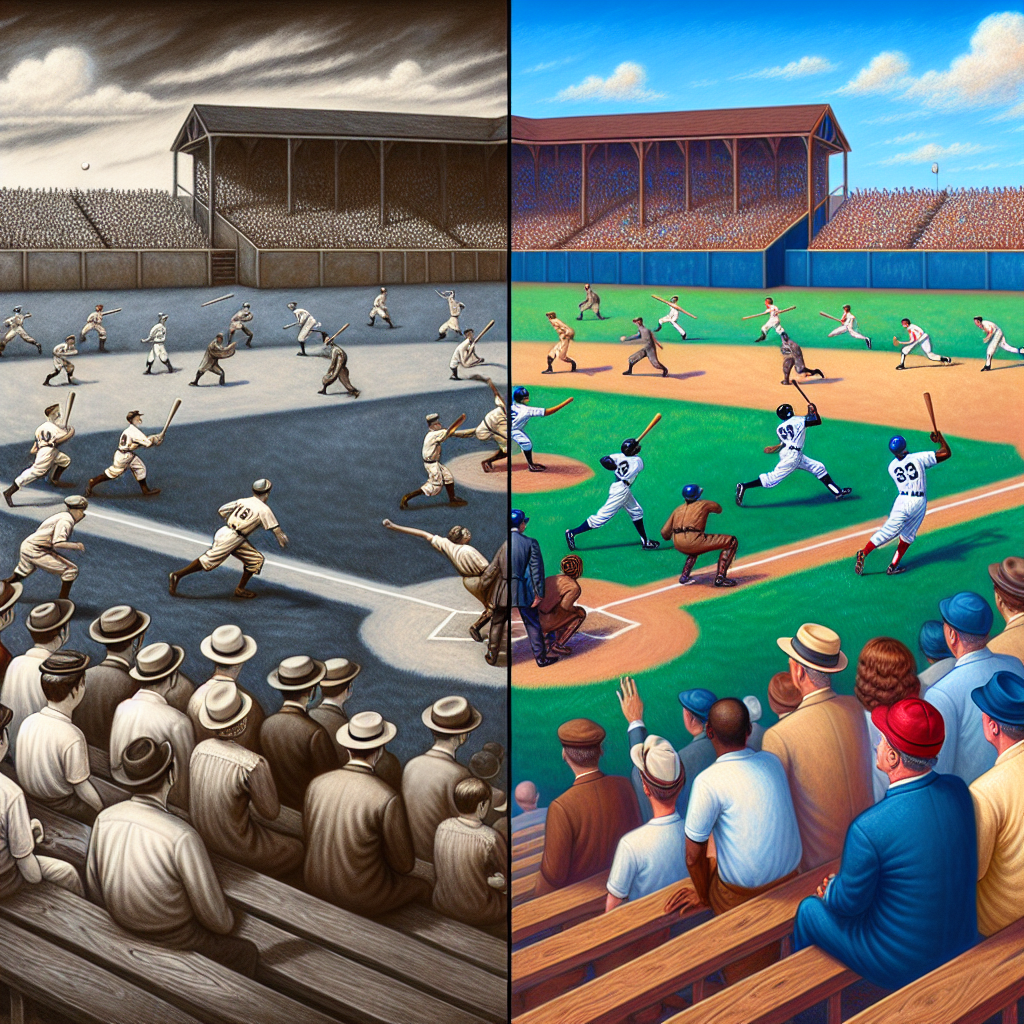
The story of baseball is filled with moments of triumph, struggle, and significant social change. Among its most transformative periods was the era of racial integration, a time that both reflected and influenced broader societal changes in America. While Jackie Robinson’s breaking of the color barrier in Major League Baseball (MLB) in 1947 is well-documented and celebrated, it is crucial to understand the context before and after his historic entry. This journey reveals the resilience of African American players who navigated a segregated society and paved the way for change. The conversation also extends to the post-integration impact, shining a light on the challenges and progress that ensued.
Before Jackie Robinson, African Americans were categorically barred from participating in MLB due to the unwritten “gentlemen’s agreement” among team owners. However, this did not mean African Americans were absent from the baseball scene. Many players showcased their talents in the Negro Leagues, an organized, professional alternative that provided a platform for countless exceptional athletes. The league itself became a cornerstone for African American culture, fostering community pride and economic support.
From pioneers like Bud Fowler—one of the earliest known African American professional players in the late 19th century—to teams like the Chicago American Giants, the legacy of the Negro Leagues is rich and influential. These leagues were not just about sports; they were cultural institutions that helped erode racial barriers and provided a critical foundation for the eventual integration of MLB.
The Landscape Before Jackie Robinson
The era leading up to Jackie Robinson’s 1947 MLB debut is marked by distinct and often brutal racial segregation. African American players faced overt, systemic racism, and were confined to the Negro Leagues, which emerged formally in the 1920s. This vibrant and competitive environment cultivated a wealth of talent including legends like Satchel Paige, Josh Gibson, and Cool Papa Bell.
These leagues were more than just a haven for black athletes; they were a source of significant economic empowerment and cultural pride. Teams like the Kansas City Monarchs, the Birmingham Black Barons, and the Homestead Grays didn’t just play ball—they provided entertainment and hope during a time of oppression. The Negro Leagues also featured extensive barnstorming tours, bringing games to rural and urban areas alike, and being instrumental in growing the sport’s popularity.
Efforts to integrate baseball were present even before Robinson. Dating back to the late 19th century, Moses Fleetwood Walker played in Major League Baseball but was later forced out due to increasing racial hostilities and institutionalized segregation practices. The notion of black players in white leagues was re-examined during World War II when the tragedies of the war highlighted the absurdity of segregation. Political figures, civil rights activists, and some sportswriters began pressing harder for integration.
Jackie Robinson’s Historical Breakthrough
April 15, 1947, marked a monumental moment in baseball and American history when Jackie Robinson stepped onto Ebbets Field as a Brooklyn Dodger. Robinson’s path to MLB was fraught with challenges. Signed by Branch Rickey, the Dodgers’ general manager, Robinson had to endure a gauntlet of racism from fans, opponents, and even teammates. Rickey’s recruitment of Robinson wasn’t merely a talent acquisition but a strategic, socially-conscious decision meant to challenge the broken system.
Robinson had demonstrated exceptional resolve and talent while playing for the Kansas City Monarchs in the Negro Leagues prior to joining the Dodgers. His recruitment process involved meticulous planning and foresight, recognizing that Robinson’s entry into MLB couldn’t be conflated with typical player promotions. Rickey and Robinson both knew that the struggle was not just for acceptance on the field but also for the necessary change in mindset among fans and players alike.
Despite facing extreme adversity, including racial slurs, physical threats, and blatant unfairness from officials, Robinson’s performance and poise on the field spoke volumes. He won the inaugural Rookie of the Year award and continued to achieve numerous accolades, cementing his role not only as a pivotal athlete but as a profound social catalyst. Robinson’s success laid the groundwork for subsequent African American players who would carry the torch of integration forward.

The Impact of Integration
In the years following Robinson’s groundbreaking debut, the integration of MLB continued at a gradual pace. Players such as Larry Doby, who integrated the American League with the Cleveland Indians, and Roy Campanella, a remarkable catcher for the Brooklyn Dodgers, soon joined Robinson. The inclusion of African American players led to an undeniable shift in the dynamics of the game, enhancing its competitive nature and drawing larger, more diverse audiences to the ballparks.
The 1950s and 1960s witnessed more African American athletes entering baseball, with stars like Hank Aaron, Willie Mays, and Frank Robinson all making significant headlines. These players not only took the sport to newer heights but also became symbols of the Civil Rights Movement, exemplifying that talent and merit must break down racial barriers.
The success stories, however, were juxtaposed with persistent prejudice and obstacles. Many African American players still faced discrimination in housing, restrictive covenants mandating segregated lodging, and inequitable treatment from fans and media. Ball clubs with less progressive leadership were slow to recruit black players, and those who were signed often didn’t receive the same support as their white teammates, affecting their performance and career longevity.
Integration Off the Field
The integration of baseball extended beyond the players on the field. African Americans began to make inroads as coaches, managers, and executives, gradually changing the sport’s landscape at administrative levels. Frank Robinson became the first African American manager in Major League Baseball in 1975, taking on dual roles as player-manager for the Cleveland Indians.
Even more transformative were the contributions of individuals like Bill Lucas, who became the first African American general manager in modern MLB history when he assumed the role for the Atlanta Braves in 1976. These milestones represented not just personal achievements but significant progress in a sport long plagued by systemic racism and exclusion.
Additionally, the expansion of baseball into more diverse communities and the globalization of the sport have roots in this era of integration. The inclusion of talented players from various backgrounds has not only enriched the game but also mirrored broader societal changes. Programs aimed at inner-city youth and initiatives to increase minority participation in baseball have stemmed from the trailblazing efforts of those early pioneers.
Recent Developments and Continuing Challenges
Despite the notable progress over the decades since Jackie Robinson’s MLB debut, challenges remain. The representation of African American players at the Major League level has fluctuated, with a noticeable decline in recent years. This trend has sparked initiatives aimed at increasing African American youth participation in baseball, such as the MLB’s Reviving Baseball in Inner Cities (RBI) program.
Moreover, the conversation around racial equality in baseball has evolved to include issues such as fair representation in managerial positions, broadcasting, and team ownership. While there have been pioneers in these areas, the numbers remain disproportionately low compared to the contribution of African Americans to the sport.
The impact of players speaking out on social issues has also grown. Athletes like Mookie Betts and others have used their platforms to advocate for social justice, echoing the legacy of earlier stars who also doubled as civil rights activists. The Black Lives Matter movement and other social justice causes have found strong allies in the baseball community, indicating that the fight for equality transcends time and continues in various forms.
Conclusion
Integration in baseball, symbolized by Jackie Robinson’s historic entry into MLB, remains a profound chapter in both sports and American social history. Understanding the era before Robinson illuminates the arduous journey of African American players who, despite systemic barriers, laid the groundwork for future generations. The integration achieved through Robinson’s courage and Branch Rickey’s vision sparked wider societal changes and inspired countless individuals within and beyond the realm of sports.
While significant progress has been made since 1947, the journey is far from complete. The continuing challenges faced by African American players and the need for more inclusivity in baseball’s higher echelons underscore an ongoing struggle. Programs aimed at fostering diversity and supporting youth participation are essential to maintain the spirit of integration and ensure the sport remains reflective of the society it entertains and represents.
Ultimately, the story of baseball’s integration before and after Jackie Robinson is a testament to resilience, courage, and the relentless pursuit of equality. It encourages us to not only celebrate milestones but also to recognize and address the work that still needs to be done. As baseball evolves, it carries forward the lessons of its history, using its platform to influence and inspire generations to come.
Frequently Asked Questions
1. What was baseball like before racial integration?
Baseball before racial integration was an exclusive sport dominated by white players. From the late 19th century up until the mid-20th century, African American players were systematically barred from Major League Baseball due to prevailing racial prejudices and the informal but steadfast “color line” that team owners and league officials upheld. Despite this, African American athletes and various ethnic minorities organized their own leagues and competitions, most notably the Negro Leagues. These leagues were vibrant hubs of talent, showcasing exceptional players like Satchel Paige, Josh Gibson, and Oscar Charleston, who crafted thrilling spectacles of skill, strategy, and showmanship.
The Negro Leagues were instrumental in challenging segregated perceptions and played incredibly high-caliber baseball, sometimes beating MLB teams in barnstorming exhibitions. They were crucial in keeping the spirit and talent of baseball alive among marginalized communities. However, players within these leagues often faced challenges beyond just racial discrimination, including financial instability of the leagues and difficulties with travel and accommodations, given the broader context of segregation in America. This era set the stage for inevitable confrontation and change, highlighting the tension between the undeniable talent of players excluded from the major leagues and the rigidity of racial barriers.
2. How did Jackie Robinson’s entry into MLB change baseball and society?
Jackie Robinson’s entry into Major League Baseball in 1947 as a member of the Brooklyn Dodgers was a watershed moment not just for baseball but for American society as a whole. Robinson’s signing by Branch Rickey was daring and emblematic of a transformative shift in the cultural landscape. On the field, Robinson was subjected to immense pressure and blatant racism from fans, fellow players, and the press. Yet, his talent, resilience, and stoicism in the face of such hostility set a powerful example and began dismantling the pervasive segregation in professional sports.
Robinson’s success on the field blazed a trail for other African American players like Willie Mays, Hank Aaron, and Roy Campanella, triggering a gradual integration of MLB teams. Socially, his rise mirrored and propelled the burgeoning Civil Rights Movement, challenging America to confront its segregationist practices and attitudes. Robinson’s trial by fire extended beyond the diamond, as he became an outspoken advocate for equality, leveraging his considerable influence to fight against racial injustice, thus cementing his legacy not only as a baseball icon but also as a pivotal figure in America’s broader civil rights narrative.
3. What were the challenges and resistance faced post-integration?
After Jackie Robinson broke the color barrier, integration in baseball was far from universally accepted or smooth. Even with Robinson’s success, many MLB teams were slow to integrate, with some clubs taking a decade or longer to sign African American players. This delay was often due to deep-seated racial prejudices among team owners, management, and fans. Players who did follow in Robinson’s footsteps, such as Larry Doby in the American League or Monte Irvin, faced immense racial hostility, both overt and subtle, from teammates and the audience alike.
The broader climate of resistance was exacerbated by societal norms that still strongly preferred segregation, and as players travelled across the United States, they faced inconsistent hospitality. Southern states, in particular, adhered firmly to Jim Crow laws, resulting in African American players facing difficulties with accommodations, dining, and basic civil rights during team trips. Despite these significant obstacles, the courageous efforts of pioneering players gradually led to changing attitudes, not only diversifying MLB but resonating with parallel struggles for racial equality throughout American society.
4. How did other sports and civil rights movements intersect with baseball integration?
Baseball’s journey towards integration did not occur in a vacuum but was intertwined with broader sports and cultural movements during the mid-20th century. As baseball sought to address its racial exclusions, other sports like basketball, football, and boxing were also navigating similar paths. This era saw African Americans pushing boundaries in diverse arenas, with figures like Jesse Owens and Joe Louis gaining prominence and challenging racial inferiority myths in the 1930s and 1940s.
By the mid-century, the Civil Rights Movement gained significant momentum, with actions such as the Brown v. Board of Education decision, the Montgomery Bus Boycott, and the March on Washington echoing the transformative messages preached on the baseball fields. Jackie Robinson, post his playing career, became politically active, directly engaging with civil rights organizations and using his platform to speak on issues of racial justice and equality, bridging the impacts of sports with the broader social movements. Such intertwining narratives exemplify how sports, particularly baseball, provided both a reflection and a catalyst for ongoing societal change, highlighting the pervasive interconnectedness of diverse struggles for equality.
5. What is the legacy of baseball’s integration today?
Today, the legacy of baseball’s integration is reflected in the diversity seen on the field, defining modern MLB. The barriers lowered by Jackie Robinson and other pioneering African American players opened doors for Latin American, Asian, and other minority players, fostering a truly global representation within baseball. This inclusivity has become a fundamental component of the league’s identity, culture, and competitive spirit. However, the journey towards full equity within baseball continues, as periodic discussions about racial disparities, representation among league management, ownership challenges, and broader social responsibilities of sport persist.
The historical journey of integration serves as a crucial reminder of how sport can transcend mere entertainment; it represents a powerful platform for initiating dialogue, driving cultural understanding, and promoting social change. Baseball’s integration era is oft commemorated in observances like Jackie Robinson Day, serving as both a tribute and an educational tool for future generations. The legacy continues, enriching the game while continually reflecting broader values and societal aspirations towards equality and justice.