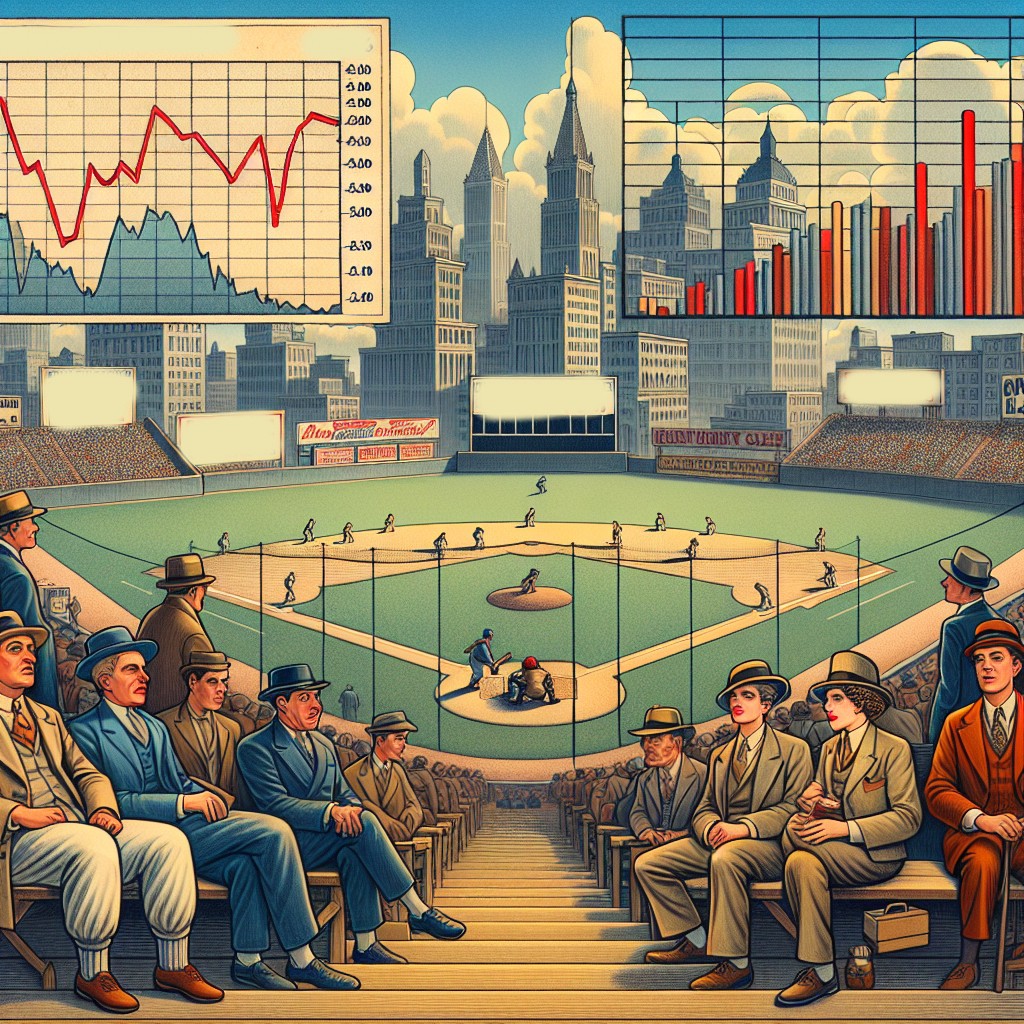
The Great Depression, which began with the catastrophic stock market crash of 1929, had far-reaching and devastating effects on practically every aspect of American life, including the national pastime, baseball. As the nationwide economic downturn emerged, it was quickly apparent that baseball, a sport that had begun to shine in the early 20th century and establish itself as America’s favorite pastime, would face unparalleled challenges. Ballparks that were once filled with thousands of eager fans saw attendance dwindle as discretionary income vanished for many families. Baseball players, ranging from rookies to established stars, had to rethink their careers and livelihoods amidst drastic pay cuts and job insecurities. Even the mighty Major League Baseball (MLB) organizations were not immune to the financial instability of the era.
Beyond these obvious immediate impacts, the Great Depression forced a significant transformation within baseball. Teams had to become increasingly innovative and adopt sustainable business practices. Economizing became the buzzword, and even seemingly small cost-saving measures were crucial in an era where every dollar counted. The period reshaped not only the financial strategies of the teams and leagues but also the logistics of player management, marketing strategies, and fan engagement. The necessity to adapt catalyzed many changes that not only helped the sport survive those tough years but led to innovations that were key to its future success.
In this article, we will delve into the multifaceted economic impact of the Great Depression on baseball. We’ll explore the immediate financial challenges faced by the teams and the players, the adjustments made to keep the leagues afloat, and the long-term effects of the era’s economic hardships. This journey through the tough times of baseball’s history offers insight into how adversity led to ingenious adaptations that shaped the modern game as we know it today.
Immediate Financial Challenges:
The dire economic circumstances of the Great Depression led to various immediate financial hurdles for the sport. As unemployment soared and disposable incomes shrank, fans could no longer afford to buy tickets to games, leading to a substantial drop in attendance. Major League Baseball saw its previous record-high audience numbers plummet, directly impacting revenue streams. Smaller ballparks were particularly hard hit as they struggled to meet operating costs without the gate receipts they had come to rely on.
Besides waning ticket sales, sponsorships and advertising revenue significantly decreased. Businesses that once paid for advertising in ballparks or for radio broadcast sponsorship faced their own financial crunches. Consequently, much-needed corporate support for the teams dried up swiftly. Revenue from concessions, merchandise sales, and other game-day purchases also saw a sharp downward trajectory, compounding the financial plight of baseball organizations.
For players, the Great Depression meant significantly reduced salaries. Even star players were not immune to pay cuts, and many found themselves negotiating to avoid outright salary slashes or the loss of their jobs altogether. In some cases, players accepted part-time jobs in the offseason or even during the season to make ends meet. Prospective players also felt the pinch as teams minimized or eradicated scouting budgets, limiting the chances for up-and-coming talent to be discovered and signed.
Team owners, burdened by the financial strain, often had to make the difficult decision to sell their franchises. In some cases, teams were dissolved entirely, and remaining franchises had to quickly adapt or risk following the same fate. This situation created opportunities for consolidation and relocation of teams, which, while financially beneficial for some markets, altered the regional dynamics and long-standing rivalries cherished by the fans.
Survival and Adaptation:
Necessity proved to be the mother of invention during this turbulent era as baseball organizations and players scrambled to survive. Creative cost-saving measures became commonplace, ranging from shared travel expenses to reduced spending on player amenities. Teams often traveled by bus or train, with entire squads staying in budget accommodations to cut costs. This shift also altered the scheduling of away games to minimize travel expenses, sparking the beginning of the now-familiar concentrated series of games played within specific regions.
Income diversification strategies emerged, with teams looking for new revenue streams beyond tickets and merchandise. Exhibition games, barnstorming tours, and charity matches became popular; these events helped maintain fan interest and provided essential financial relief. Owners also became more innovative with promotions, introducing giveaways, special events, and discounted ticket offers to pull spectators back into ballparks.
Public relations efforts intensified, aimed at maintaining the sport’s image and ensuring continued fan loyalty. Stories of players performing public service, contributing to charitable causes, and participating in community events became a staple, often covered by newspapers to inspire and connect with the public. The players’ involvement in goodwill activities projected baseball as a sport that was still accessible and relevant despite the economic gloom.
Radio broadcasts gained enormous popularity during this period, providing fans an affordable means to follow the game. This shift not only brought baseball to a wider audience but also established radio broadcasts as a significant source of advertising revenue. Importantly, this development allowed fans who couldn’t afford game tickets to stay engaged with their favorite teams, fostering a sense of continuity and loyalty that would prove crucial for the sport’s long-term sustainability.
Player Management and Contracts:
Economic hardship necessitated more strategic player management practices within teams. With strict budgets, teams had to reconsider massive salary payouts and look for ways to spread their limited finances efficiently. This financial restraint meant developing farm systems became more appealing as a cost-effective way to cultivate talent in-house rather than paying top dollar for already established stars.
The era also saw notable changes in contract negotiations. Many contracts became shorter-term with added flexibility for both the players and the teams. Bonuses and performance incentives gained prominence, allowing players to earn more based on their contributions while safeguarding the teams against nonperforming, expensive contracts. Contracts frequently included clauses that could be triggered by financial contingencies or other conditions, epitomizing the cautious yet strategic approach teams had to take.
This period also forced a reevaluation of financial hierarchies within teams. With resources stretched thin, teams had less tolerance for notable discrepancies between star salaries and those of average players. As a result, internal financial equity became a hot-button subject, fostering discussions and practices aimed at more balanced compensation structures throughout the team rosters.
Player unions began to take root, as players sought greater security and fairness amidst the uncertainties. Although it would take years before player unions would yield significant influence, the seeds planted during the Great Depression laid the groundwork for future advancements in player rights and financial protections.
Fan Engagement and Community Building:
Connecting with fans became more critical than ever during the Great Depression. Teams looked to deepen their relationship with the community, understanding that loyal fan bases were vital for survival. Community outreach programs emerged, focusing on working-class neighborhoods hit hardest by the economic downturn. Teams increased accessibility, offering inexpensively priced tickets and organizing free-to-attend events as gestures of solidarity.
Youth engagement became a focus, as teams capitalized on the free time of young fans who were out of school due to economic conditions. Clinics, youth leagues, and school partnerships sprang up, promoting baseball as a positive outlet and keeping the younger generation’s interest in the sport alive. Schools, in turn, integrated baseball into physical education programs, setting the stage for a lifelong connection to the sport for many students.
Teams also capitalized on baseball’s nostalgic charm, marketing games as an affordable escape from daily hardships. Players were positioned as relatable heroes, embodying hope and perseverance. Teams hosted “family days” and “worker appreciation” nights to honor the common man, strengthening the community’s emotional investment in the sport.
The development of baseball as a radio phenomenon also played a crucial role in fan engagement. Radio broadcasts quickly gained immense popularity, offering a low-cost medium for fans to experience the excitement of the games. This not only maintained fan interest during years when affordability was an issue but also established long-lasting regional followings, broadening baseball’s national reach.
Long-term Effects and Innovations:
The Great Depression’s harsh economic realities led to numerous lasting changes and innovations within baseball, many of which extended beyond its immediate aftermath. The financial prudence and strategic adjustments teams adopted during the era laid the foundation for a more sustainable business model. The increased emphasis on diversified income sources, from radio broadcasts and promotions to expanded community programs, became key pillars even during more prosperous times.
The farm system, which gained traction as a cost-effective approach during the Depression, grew into one of the most efficient means of developing baseball talent, a practice still very much in place today. This system allowed teams to scout and nurture young prospects while keeping costs manageable and focused on long-term team development.
The labor reforms initiated during the era paved the way for more organized efforts toward player rights. Though significant progress was slow, the period did catalyze discussions about fair compensation, job security, and the need for collective representation, influencing the eventual formation of more robust players’ unions.
Additionally, the Great Depression fostered the growth of baseball as a media-driven sport. The radio’s role in keeping the sport alive impacted how the game was broadcasted and consumed, welcoming future television broadcasts and shaping modern multi-platform sports engagement. The synergy between baseball and media helped establish revenue-sharing practices and broadened the sport’s fan base nationwide.
New marketing strategies and fan engagement techniques, born out of necessity, set the stage for baseball’s growth into a highly commercialized sport. These methods, including targeted promotions, community outreach, and enhanced fan experiences at ballparks, evolved into sophisticated marketing practices critical for modern-day sports management and audience development.
Conclusion:
The Great Depression, a period marked by unprecedented economic hardship, significantly impacted baseball, America’s beloved pastime. The immediate financial challenges faced by teams, players, and fans drove the sport to adopt innovative strategies for survival. The cost-saving measures, diversified revenue streams, improved fan engagement, and strategic player management practices reshaped baseball fundamentally. These adaptations not only ensured the sport’s survival through the dark days but also provided a strong foundation for its growth and evolution in the following decades.
In looking back at this challenging period, it’s evident that baseball’s response to the Great Depression reflected resilience and adaptability. The innovations and changes necessary for survival during that time left a lasting legacy. As we enjoy the grandeur and excitement of modern baseball, it’s worth remembering how the economic struggles of the Great Depression steered the sport toward its present-day success. This fascinating history underscores the importance of adaptability and innovation in the face of adversity, lessons that continue to resonate in baseball and beyond.
Frequently Asked Questions
1. How did the Great Depression affect baseball attendance?
The Great Depression had a profound impact on baseball attendance. Prior to the economic downturn, baseball games were a popular source of entertainment for people of all economic classes. However, as the Depression took hold, disposable incomes plummeted, and people were far less inclined to spend whatever money they had on game tickets. Stadiums that were once bustling with fans now had rows and rows of empty seats. Attendance numbers dwindled significantly as families prioritized essential expenses over leisure activities. The reduced crowds at games reflected the financial hardships faced by fans and resulted in further reduced revenues for baseball clubs, putting additional pressure on teams to survive the economic crisis.
2. What steps did baseball teams take to cope with the economic challenges of the Great Depression?
Baseball teams had to adapt quickly to survive the financial strain of the Great Depression. One of the most common strategies was for teams to reduce expenses, often starting with player salaries. Star baseball players, who once commanded high salaries, had to accept pay cuts or risk being let go. Many teams also reduced their rosters to lower operating costs. Additionally, some ballparks began offering discounts and promotions to draw fans back to the stands. For instance, teams introduced “Ladies’ Day” promotions, giving women free admission in hopes they would bring along full-paying male companions. Moreover, doubleheaders (two games for the price of one) became more common, offering more perceived value for fans’ dollars.
3. Did any baseball teams fold or relocate due to the Great Depression?
Yes, the financial stress of the Great Depression caused a number of baseball teams to fold or relocate. Some teams could not sustain the financial losses and were forced to disband, while others looked for more favorable markets where they could potentially draw larger crowds. The economic environment of the time made it difficult for some less-established or smaller market teams to survive. Teams had to reassess their operations and financial strategies, and in some cases, merging with other franchises became a viable solution to stay afloat. The struggles did, however, lead to a period of innovation and strategic management that ultimately helped surviving clubs to emerge stronger once the economy began to improve.
4. How did player salaries during the Great Depression compare to salaries before and after this period?
Player salaries saw a noticeable dip during the Great Depression. Prior to the Depression, baseball was experiencing a boom and player salaries reflected the sport’s growing popularity. However, as economic conditions worsened, teams were unable to sustain such high salaries. Many players had to take significant pay cuts, and new contracts offered to athletes were often lower. The negotiation dynamics shifted, with team owners having the upper hand due to the limited alternative employment opportunities for players during this time. Once the economy started to recover, salaries began to inch upward slowly as attendance grew and revenues returned, but it took time before they reached or exceeded pre-Depression levels, driven by renewed public interest and the eventual expansion of the sport.
5. Were there any notable innovations or changes in baseball strategies that emerged during the Depression?
The Great Depression spurred innovation and tactical changes within baseball, primarily as teams sought to cut costs and increase revenues. Managers began experimenting with game strategies that would keep fans engaged and returning to see something new. In this context, the introduction of night games was particularly significant. Night games allowed people who worked during the day to attend, dramatically increasing potential game attendance and revenue streams by making baseball more accessible. Additionally, the concept of farm systems, where teams developed talent internally rather than paying high prices for established stars, took on greater significance during this time. This system helped teams create a pipeline of fresh talent, which was crucial in reducing costs and maintaining competitiveness without expensive player acquisitions. These adaptations during the Great Depression significantly influenced how baseball developed in the post-Depression era.