
In the heart of Houston, Texas, stands a monument not only to the city’s love for baseball but also to the audacity of human imagination and engineering. The Houston Astrodome, once dubbed the ‘Eighth Wonder of the World,’ is a testament to the innovation and spirit that transformed the game of baseball and the experience of sports entertainment.
The Genesis of a Dream
The story of the Astrodome begins with the vision of Roy Hofheinz, a former mayor of Houston and a prominent figure in Harris County. Hofheinz dreamed of creating a stadium unlike any other in the world, one that would shield players and fans from the unpredictable and often harsh Texas weather. This vision was a bold departure from the traditional open-air baseball parks of the time.
Pioneering Design and Construction
The groundbreaking for the Astrodome was held on January 3, 1962. Its design was revolutionary, featuring a massive dome structure with a 642-foot diameter, a height of 208 feet, and covering 9.5 acres. The dome was an architectural marvel, employing cutting-edge technology and materials. The construction of the Astrodome was a significant engineering challenge, requiring innovative solutions to support its massive roof and air-conditioning system, the first of its kind in a major sports venue.
Innovations and Challenges
One of the most significant innovations of the Astrodome was its playing surface. Initially, natural grass was used, but the dome’s semi-transparent panels did not allow enough sunlight for the grass to thrive. This led to the development and introduction of AstroTurf, a synthetic grass, in 1966. This innovation not only solved the problem at the Astrodome but also revolutionized sports surfaces worldwide.
The Inaugural Game and Beyond
The Astrodome officially opened on April 9, 1965, with an exhibition game between the Houston Astros and the New York Yankees. President Lyndon B. Johnson and over 47,000 spectators attended the game, marking the beginning of a new era in baseball history. The dome’s climate-controlled environment, luxurious amenities, and futuristic design made it an instant sensation, attracting fans from all over the country.
Impact on Baseball and Sports Architecture
The Astrodome’s influence extended far beyond Houston. It changed the way architects and teams thought about sports stadiums. The concept of a multipurpose, climate-controlled stadium set a new standard in sports venue design. Following the Astrodome, cities across the United States began building their own enclosed stadiums, leading to a significant shift in sports architecture.
Cultural and Social Significance
The Astrodome was more than just a sports venue; it was a cultural icon. It hosted various events, including concerts, rodeos, and political conventions, becoming a central part of Houston’s social and cultural life. The stadium also reflected the spirit of the Space Age, aligning with Houston’s identity as the “Space City” and the home of NASA’s Johnson Space Center.
Challenges and Decline
Despite its initial success, the Astrodome faced challenges over the years. The maintenance and upgrade costs were high, and as newer, more modern stadiums were built, the Astrodome began to lose its luster. The Houston Astros played their last game in the Astrodome in 1999, and the stadium was superseded by the more modern Minute Maid Park.
Legacy and Future
The Astrodome’s legacy is undeniable. It revolutionized sports stadium design and left an indelible mark on the city of Houston and the game of baseball. While its future remains uncertain, efforts have been made to preserve and repurpose the stadium, recognizing its historical and cultural significance.
Preserving the Eighth Wonder
Efforts to preserve the Astrodome have included proposals to turn it into a multipurpose event venue or a public space. In 2013, the Astrodome was added to the National Register of Historic Places, highlighting its architectural and historical importance. The debate over its future continues, reflecting the ongoing challenge of balancing preservation with modernization.
The Houston Astrodome, with its groundbreaking design and cultural impact, remains an iconic symbol of innovation and ambition in sports architecture. Its story is a vivid chapter in the history of baseball and a reminder of the power of human creativity and determination. As we look to the future, the Astrodome continues to inspire and captivate, holding a special place in the hearts of baseball fans and the people of Houston.
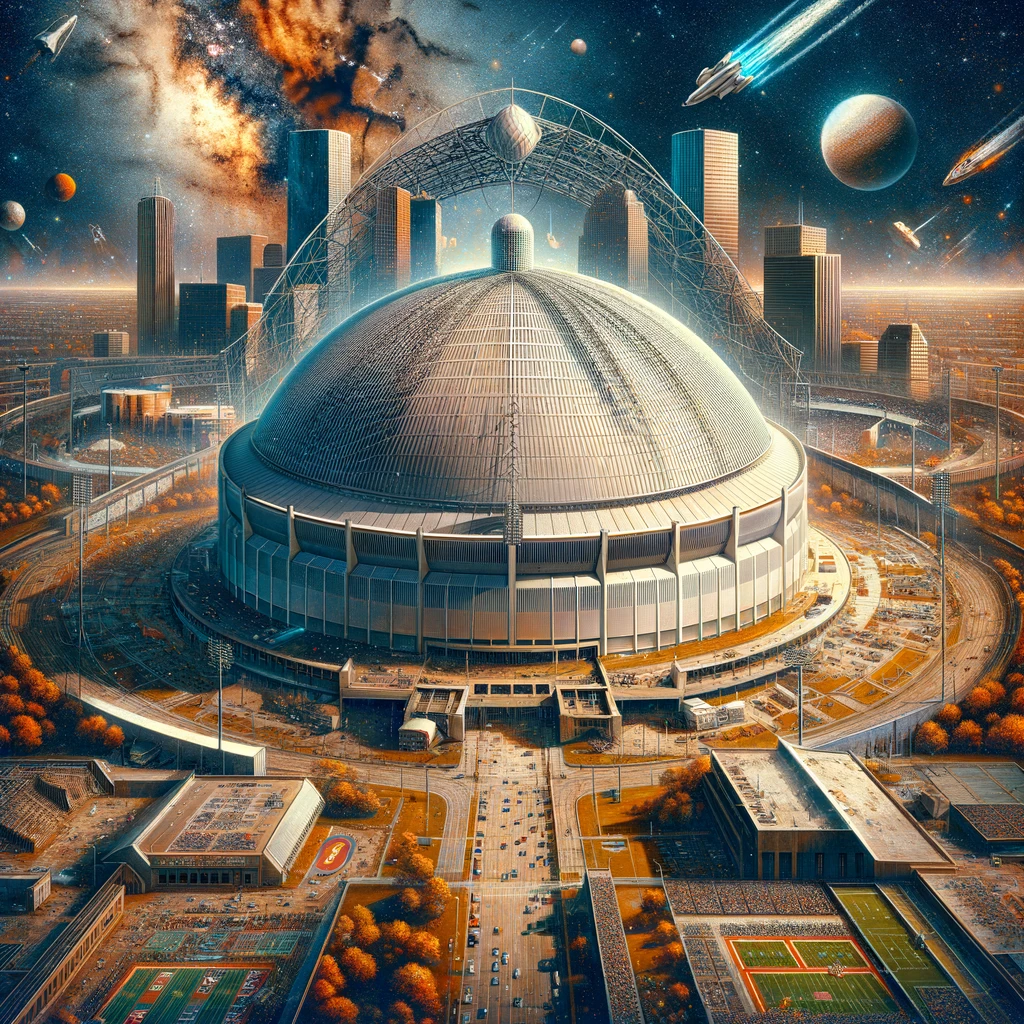
The Astrodome’s Influence on Modern Stadiums
The introduction of the Astrodome set a new benchmark in stadium design, influencing the construction of future sports venues. The concept of a fully enclosed, climate-controlled stadium was revolutionary. It allowed for a more comfortable spectator experience and made sports events less dependent on weather conditions. This idea was quickly adopted by other cities, leading to the construction of similar venues across the United States and around the world.
Revolutionizing Event Hosting
The versatility of the Astrodome also changed the landscape of event hosting. Its ability to accommodate various events, from baseball games to concerts and conventions, demonstrated the potential of multipurpose venues. This versatility became a key consideration in future stadium designs, making them more economically viable by allowing for a broader range of uses.
Technological Innovations and Challenges
The Astrodome was a harbinger of technological advancements in stadium construction and maintenance. However, these innovations were not without challenges. The introduction of AstroTurf, while solving the issue of grass maintenance under a dome, led to new problems. Players reported increased injury rates on the artificial turf, leading to debates about its safety and impact on the game.
Impact on the Game and Players
The controlled environment of the Astrodome also had an impact on how baseball was played. The absence of wind and sun altered the dynamics of the game, affecting everything from pitch movement to how the ball traveled. This led to adjustments in playing strategies and techniques, further demonstrating the Astrodome’s influence on the sport.
The Astrodome in Popular Culture
The Astrodome also made its mark in popular culture. It appeared in movies, TV shows, and was referenced in songs, cementing its status as a cultural icon. Its unique design and status as the first of its kind made it a symbol of American ingenuity and the Space Age, reflecting the optimism and forward-thinking attitude of the era.
A Symbol of Houston’s Identity
For Houston, the Astrodome was more than a stadium; it was a symbol of the city’s growth, ambition, and innovation. Its construction coincided with Houston’s rise as a major economic and cultural center in the South, reinforcing the city’s status on the national stage.
The Decline and Preservation Efforts
As newer, more advanced stadiums were built, the Astrodome began to show its age. The costs of maintaining and upgrading the facility became a burden, leading to its eventual decline. The last professional sports game in the Astrodome was played in 1999, marking the end of an era.
The Preservation Debate
The question of what to do with the Astrodome has been a topic of debate in Houston. Proposals have ranged from demolition to repurposing it as a public space or event venue. The challenge lies in balancing the cost of preservation with the sentimental and historical value of the structure.
The Astrodome’s Lasting Legacy
Despite its current state, the legacy of the Astrodome lives on. It revolutionized the way stadiums were built and perceived, and its innovations in design and technology set the stage for future developments in sports architecture. The Astrodome remains a significant part of baseball history and a symbol of the bold ambitions of its era.
Conclusion
The Houston Astrodome’s story is a compelling narrative of innovation, cultural impact, and the evolution of sports entertainment. From its groundbreaking design to its influence on stadium architecture and the game of baseball, the Astrodome holds a special place in the annals of sports history. As discussions about its future continue, the Astrodome remains a cherished landmark, not only for the people of Houston but for baseball fans and architectural enthusiasts worldwide.
Frequently Asked Questions
1. What inspired the creation of the Astrodome in Houston?
The bold vision of the Astrodome came from Roy Hofheinz, a vibrant figure whose ambitions reshaped Houston’s landscape and spirit. Known as “Judge,” Hofheinz was deeply intertwined with Houston’s identity, serving as its mayor and a key player in its political and cultural development. His dream for the Astrodome was rooted in a desire to create a sports venue that would elevate Houston onto the national stage. The Astrodome was conceived as a response to Houston’s sweltering summer heat and unpredictable weather, which often made outdoor sports uncomfortable and challenging. Hofheinz envisioned a climate-controlled stadium that could host baseball games year-round, defying nature itself. His audacious goal was to build a monument unlike any other—a domed stadium that would embody human creativity and engineering feats, thus bringing to life the ‘Eighth Wonder of the World’ and setting a new standard in sports entertainment and architectural design.
2. How did the Astrodome impact the game of baseball?
The Astrodome revolutionized baseball by transforming how the game was experienced by both players and fans. As the first domed stadium, it introduced the novelty of indoor baseball. This meant that games could go on rain or shine, sheltered from the whims of Mother Nature. Its creation led to significant changes in gameplay, as the stadium’s artificial turf, which became synonymous with the Astrodome, altered how the ball behaved and how players adapted their styles of play. The controlled environment offered consistent conditions, enhancing player performance and fan experience. Furthermore, the Astrodome set the stage for future stadiums to incorporate technological innovations such as advanced lighting and sound systems, setting a benchmark that pushed the boundaries of how sports arenas could function as exceptional entertainment centers.
3. What role did the Astrodome play in Houston’s economic and cultural development?
The Astrodome was a key player in Houston’s economic and cultural boom. It served as a catalyst for growth, attracting tourists and invigorating the local economy. Beyond its primary function as a baseball stadium, the Astrodome hosted various events, from concerts and conventions to boxing matches and rodeos. This diversity in usage made it an integral part of the community, drawing widespread national attention to Houston as a hub city capable of handling world-class events. The Astrodome’s iconic status also helped elevate Houston’s reputation as a forward-thinking city ready to embrace innovation and grandeur. It enhanced local pride and offered a gathering place that brought people together from diverse backgrounds, fostering a sense of unity and shared identity centered around the love of sports and communal celebration.
4. What were some architectural and engineering innovations of the Astrodome?
The Astrodome was a pioneering structure that pushed the envelope of what was architecturally possible during its time. Its most distinguishing feature was, of course, the enormous dome, which was engineered with an innovative steel lattice frame, spanning 642 feet across and rising 208 feet high. This made it the largest clear-span indoor facility of its type upon completion in 1965. The dome design required advanced engineering solutions to efficiently manage structural loads and ensure safety. Moreover, it was the first major sports venue to feature air-conditioning, providing unparalleled comfort to spectators in the sweltering Houston climate. The stadium’s wide concourses and luxurious seating options, including Hofheinz’s personal skybox outfitted with lavish amenities, reflected a forward-thinking approach to spectator satisfaction and architectural design that shaped future stadium constructions around the world.
5. Why did the Astrodome come to be known as the ‘Eighth Wonder of the World’?
The moniker ‘Eighth Wonder of the World’ was earned by the Astrodome due to its unprecedented architectural grandeur, scale, and the technological marvel it represented during the 1960s. At its debut, the Astrodome was hailed as the largest enclosed stadium ever built, showcasing advanced engineering techniques that pushed the boundaries of conventional design. Its ability to adapt a climate-controlled environment for baseball, alongside its massive seating capacity and multifunctional uses, was viewed as groundbreaking achievements reflecting the limitless potential of human ambition. This nickname signifies not just its physical attributes and monumental status in sports history, but also symbolizes the spirit of innovation and excellence that defines the Astrodome’s legacy and its enduring place in the hearts and stories of those who experienced its wonders firsthand.