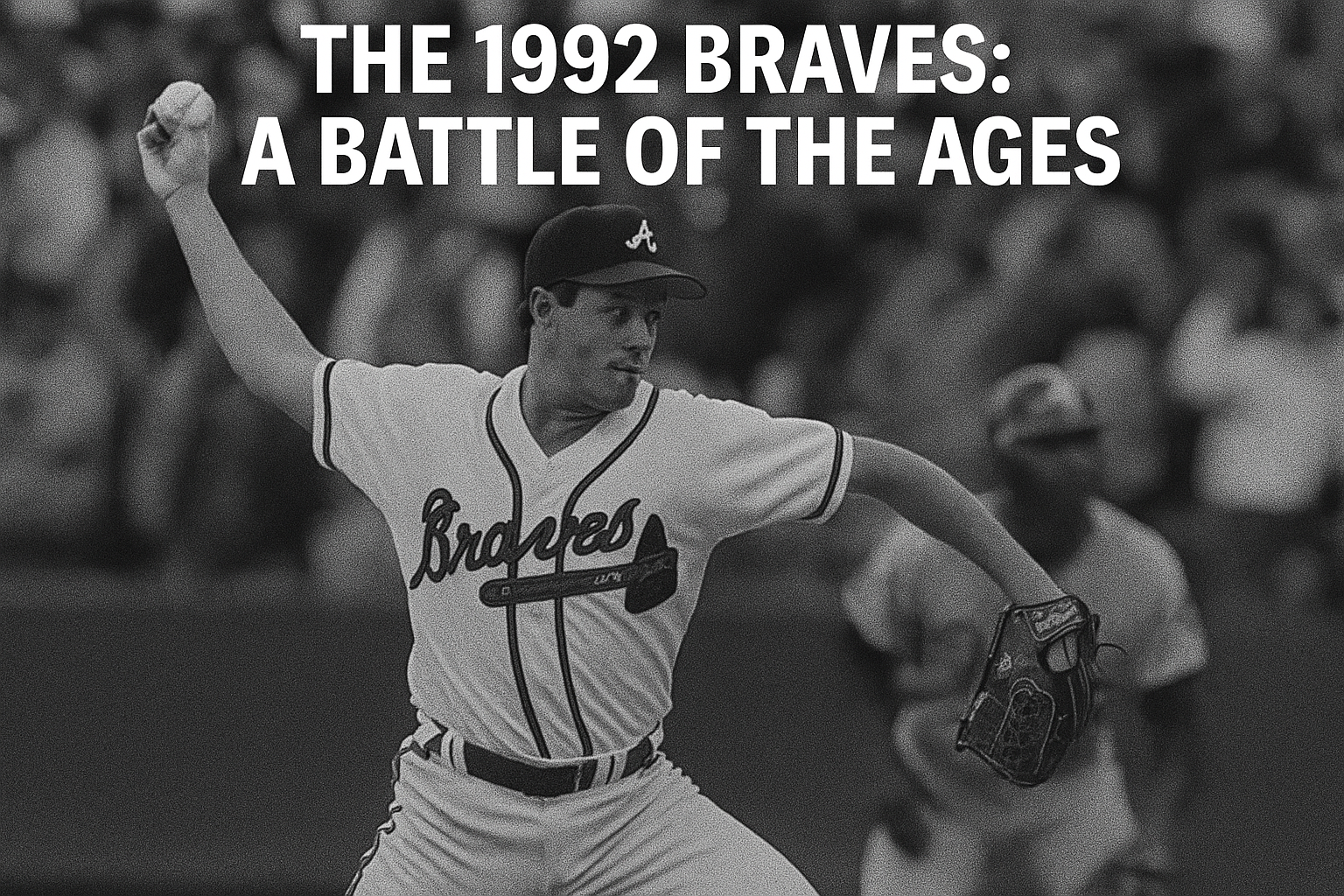
The 1992 Atlanta Braves season represents one of the most extraordinary chapters in MLB history. It was a journey punctuated by epic struggles, miraculous comebacks, and an eventual appearance in the World Series. Of course, the backdrop to this success was a collection of talented individuals, each bringing their own charisma and skillset to the team. As the Braves battled their way through the 1992 season, they not only captivated fans but also cemented their legacy in the annals of baseball lore. Atlanta was buzzing with excitement, and the Braves delivered a season filled with dramatic narratives and unforgettable moments. From the iconic pitching duel to the exhilarating offensive plays, this team was more than just a sum of its parts; it was a formidable force that competed fiercely against some of the most relentless opponents of the era. This article delves deep into the trials, triumphs, and legendary battles of the 1992 Braves, celebrating an unforgettable journey in baseball history.
Building a Championship Team
As the 1991 runners-up, the stage was set for the Braves to make another daring run in 1992. General Manager John Schuerholz and manager Bobby Cox expertly crafted a roster packed with a blend of seasoned veterans and youthful exuberance. The Braves’ synergetic dynamic made them a tantalizing team to watch. With the likes of Tom Glavine and John Smoltz at the helm of their formidable pitching staff, the Braves’ strength truly lay in their mound dominance. Glavine, already a Cy Young Award winner in 1991, continued to flaunt his brilliance, while the electrifying Smoltz countered opposing bats with ferocity. And then there was the emergence of Steve Avery—a promising young pitcher who, at just 22 years old, was laying the groundwork for what would become a highly successful career.
The Braves’ lineup was no less formidable. The offensive charge was led by the mercurial Terry Pendleton, who brought both leadership and clutch hitting to the batting order. Pendleton wasn’t just a stalwart at third base; he was the heartbeat of Atlanta’s offensive rhythm. Complementing him were players like Ron Gant and David Justice, each bringing power and precision to the plate. Gant, known for his dynamic speed and power, managed to dazzle throughout the season, further enhancing the Braves’ offensive arsenal. Meanwhile, Justice continued to blossom into a power hitter, establishing himself as one of the cornerstones of Atlanta’s offense.
Key acquisitions played a pivotal role in strengthening the Braves’ roster. Greg Maddux, the architect of precision pitching, would eventually join the Braves, bolstering their pitching rotation. Although Maddux wouldn’t officially don a Braves uniform until 1993, the mere prospect of his arrival created waves of anticipation among the Atlanta faithful. In 1992, however, the combination of seasoned players and enthusiastic newcomers made the Braves a balanced and versatile team, capable of taking on any challenge.
The Regular Season
The Braves began their 1992 campaign with an intensity that set the tone for the season. Each game was contested with unyielding vigor as the players exhibited the kind of dedication that champion teams are known for. From the outset, the Braves established themselves as a force to be reckoned with in the NL West. They dominated their rivals with commanding performances, showcasing their enviable depth and talent. As the season progressed, the team’s synergy became palpable. Key victories over formidable rivals provided the necessary momentum to march confidently toward the playoffs.
Throughout the regular season, Atlanta’s pitching was nothing short of exemplary. Glavine led the team with his cerebral style, methodically dismantling opposing offenses. Meanwhile, Smoltz’s raw power acutely contrasted Glavine’s finesse, creating a daunting challenge for opposing lineups. Together with Avery, they formed one of baseball’s most feared rotations. The Braves’ pitchers consistently delivered stellar performances, proving to be the backbone of the team’s success. This determined pitching unit swiftly became the envy of the league, as hitters were often left perplexed by its calculating dominance.
The Braves’ batting lineup, equally robust, played a substantial role in their regular-season achievements. Pendleton’s unwavering dedication to the team inspired his cohorts, as he exhibited both skill and finesse at crucial moments. Gant and Justice delivered pivotal hits, contributing to the team’s reputation as an offensive powerhouse. Despite the individual brilliance of these players, it was their ability to function cohesively that truly set them apart from their competitors. As a result, the Braves emerged as an intimidating force, habitually capitalizing on opponent missteps.
Clash in the Playoffs
With the regular-season triumphs setting the stage for postseason glory, the Braves entered the National League Championship Series (NLCS) with renewed vigor. Their opponents, the Pittsburgh Pirates, were a formidable adversary led by talents like Barry Bonds and Andy Van Slyke. The showdown between these powerhouse teams captivated the nation, as baseball enthusiasts eagerly anticipated a high-stakes clash that would determine the National League’s representative in the World Series.
The Braves’ journey in the NLCS was a rollercoaster of emotions characterized by bravura performances and moments that are forever etched in the memories of fans. The series began with a seesaw battle, as both teams exchanged blows and victories. The Pirates seized the initiative in Game 6, bringing the series to a nail-biting Game 7. Facing adversity, it was the grit and determination of the Braves’ roster that propelled them forward. In a dramatic tribute to their season’s narrative, Atlanta’s indomitable spirit shone through.
Amidst the countless standout moments throughout Game 7’s intense match-up, Atlanta’s performance in the ninth inning remains an iconic symbol of their character. With the season hanging in the balance, Francisco Cabrera stepped up to the plate. Cabrera’s line drive through the left side appeared to have eyes of its own, and the cheers from Atlanta reverberated across the stadium. Sid Bream’s spirited sprint from second base, punctuated by a daring slide, sent the Braves to a memorable victory. This exhilarating climax was the epitome of teamwork and perseverance, a testament to the resilience that defined the 1992 Atlanta Braves.
World Series Matchup
In what appeared to be the ultimate coda to their season, the Braves advanced to the World Series, where they faced the formidable Toronto Blue Jays. This clash of American and National Leagues pitted two of baseball’s most exciting teams against one another, resulting in an edge-of-the-seat matchup that captivated fans worldwide. Both teams were relentless in their pursuit of glory, with neither willing to yield an inch.
The Blue Jays seized the early momentum in the series, outlasting the Braves with their own unique brand of power and finesse. The Braves, however, refused to back down. With the indomitable spirit they had showcased throughout the season, they staged a fierce comeback, winning Games 2 and 3. As the series unfolded, the Braves’ resilience was tested, but the team persisted, holding the line against Toronto’s formidable lineup.
Unfortunately for the Braves, the series did not conclude in their favor. Despite valiant efforts from their star-studded lineup, Atlanta fell short in a hard-fought Game 6, culminating in a loss that was both heartbreaking and inspiring. As the Toronto Blue Jays celebrated their World Series victory on Atlanta’s home turf, the Braves walked away with their heads held high, having captivated audiences with one of the most spirited performances in baseball history.
Conclusion
The legacy of the 1992 Atlanta Braves extends beyond the scores and statistics. They earned respect not only as a powerhouse team but also as a testament to perseverance, resilience, and determination. The journey of this extraordinary collective, forged through ordeals and triumphs, painted a vivid tapestry of human endeavor and spirit. Despite not clinching the ultimate prize, the Braves’ courageous feats and memorable moments defined a battle for the ages.
Through the combination of expert management, individual brilliance, and unwavering unity, the Braves’ historic season left an indelible mark on the sport. The events of 1992 served as a precursor to the Braves’ era of dominance in the years that followed, where they would go on to secure division titles with remarkable consistency. These achievements might not have been possible without the foundation laid by the 1992 team.
Ultimately, the 1992 Atlanta Braves encapsulated the essence of baseball’s allure—passion, strategy, and unyielding effort. They embodied the fighting spirit of perseverance through adversity, igniting the imaginations of fans and inspiring future generations of baseball enthusiasts. The Battle of the Ages may not have resulted in a World Series trophy, but it firmly established the legacy of a team that captured the hearts of a city and inspired a nation. A rich narrative that continues to resonate with fans worldwide, preserving the memory of a truly unforgettable era in the sport.
Frequently Asked Questions
1. What made the 1992 Atlanta Braves team so special?
The 1992 Atlanta Braves were a spectacle in the realm of Major League Baseball due to their extraordinary blend of exceptional talent, grit, and an indomitable spirit that seemed to defy the odds. This team wasn’t simply playing baseball; they were creating a gripping narrative of underdog tenacity. The Braves combined a pitching trifecta considered one of the best in baseball history: Tom Glavine, Greg Maddux, and John Smoltz. Each of these pitchers brought their own unique arsenal that struck fear into the hearts of opposing batters. Offensively, the team was fueled by the prowess of players like David Justice, Terry Pendleton, and Ron Gant, forming a lineup capable of explosive moments. It wasn’t just about their performances on the field but also the camaraderie and determination off it. Their journey to the World Series featured miraculous comebacks and hard-fought battles against fiercely competitive teams, captivating fans with every swing and pitch.
2. How did the Braves manage to reach the World Series in 1992?
The 1992 Braves’ path to the World Series was a tale of resilience, expertly navigated under the leadership of manager Bobby Cox. Their season was a rollercoaster that began with peaks of triumph and troughs of daunting challenges. Their resilience was first demonstrated in a tight-fought NLCS showdown against the Pittsburgh Pirates, a match-up that would come to define their season. Down 3-1 in the series, the Braves didn’t waiver. They clawed back with games that showcased their tenacity and skill. The critical Game 7, which saw them trailing late, remains a vivid memory in Braves lore, as a last-minute rally led by the unlikeliest of heroes, Francisco Cabrera, whose timely hit drove in two runs, secured their passage to the Series. The dramatic comebacks throughout the season were testament to a team that just refused to quit, a refusal that inspired fans and players alike.
3. Who were the standout players on the 1992 Braves roster?
The 1992 Braves lineup was stacked with players who seemed to be made for greatness. The pitching rotation was anchored by Tom Glavine, Greg Maddux, and John Smoltz, who collectively made up one of the most formidable set of pitchers the league has ever seen. Tom Glavine’s precision and poise earned him the 1991 Cy Young Award, while Greg Maddux, later acquired but already a legend in the making, would go on to become one of the most successful pitchers of all time. John Smoltz, known for his fiery spirit and dominant presence on the mound, was an integral part of their success. The team also benefited from the slugging abilities of players like David Justice, who brought power and flair to the plate, and Terry Pendleton, whose leadership and skill earned him the 1991 National League MVP award. Their contributions on-field were pivotal, yet their presence in the clubhouse helped forge a team inseparable and driven to succeed.
4. What were the key games that defined the Braves’ 1992 season?
Several key games left an indelible mark on the Braves’ 1992 season, shaping their narrative as a team of destiny. Perhaps the most significant game of the season was Game 7 of the National League Championship Series against the Pittsburgh Pirates. Trailing 2-0 in the bottom of the ninth inning, the Braves seemed set for defeat, but the baseball gods had other plans. Francisco Cabrera, often a backup player, delivered one of the most clutch hits in Braves history, driving home David Justice and Sid Bream – with Bream famously sliding home just ahead of the tag, thereby capturing the pennant. Another standout performance was during the Miracle Braves game earlier in the season, where they staged a heart-stopping comeback from an eight-run deficit against the Reds, reinforcing their never-say-die spirit. These pivotal games were filled with drama, tension, and ultimately, triumph, each carving out its place in Braves history.
5. What impact did the 1992 Braves have on MLB and their future seasons?
The impact of the 1992 Braves extended far beyond their immediate success. This season laid the groundwork for Atlanta’s dominance throughout the ’90s, etching the Braves’ legacy into MLB history as a powerhouse franchise. Their journey served to elevate the profile of the team, increasing fan support and drawing national attention to their strategic brilliance on both pitching and batting fronts. Under the stewardship of manager Bobby Cox, the Braves cultivated a model of consistent excellence, characterized by a robust farm system and savvy trades that kept their roster competitive. The winning culture fostered in 1992 culminated in the Braves capturing their first World Series title in 1995, a culmination of years of resilience and growth. The 1992 team’s narrative continued to be an inspirational blueprint for how to build and sustain a competitive baseball team, impacting team-building approaches across the league and solidifying the Braves as a perennial contender for years to come.