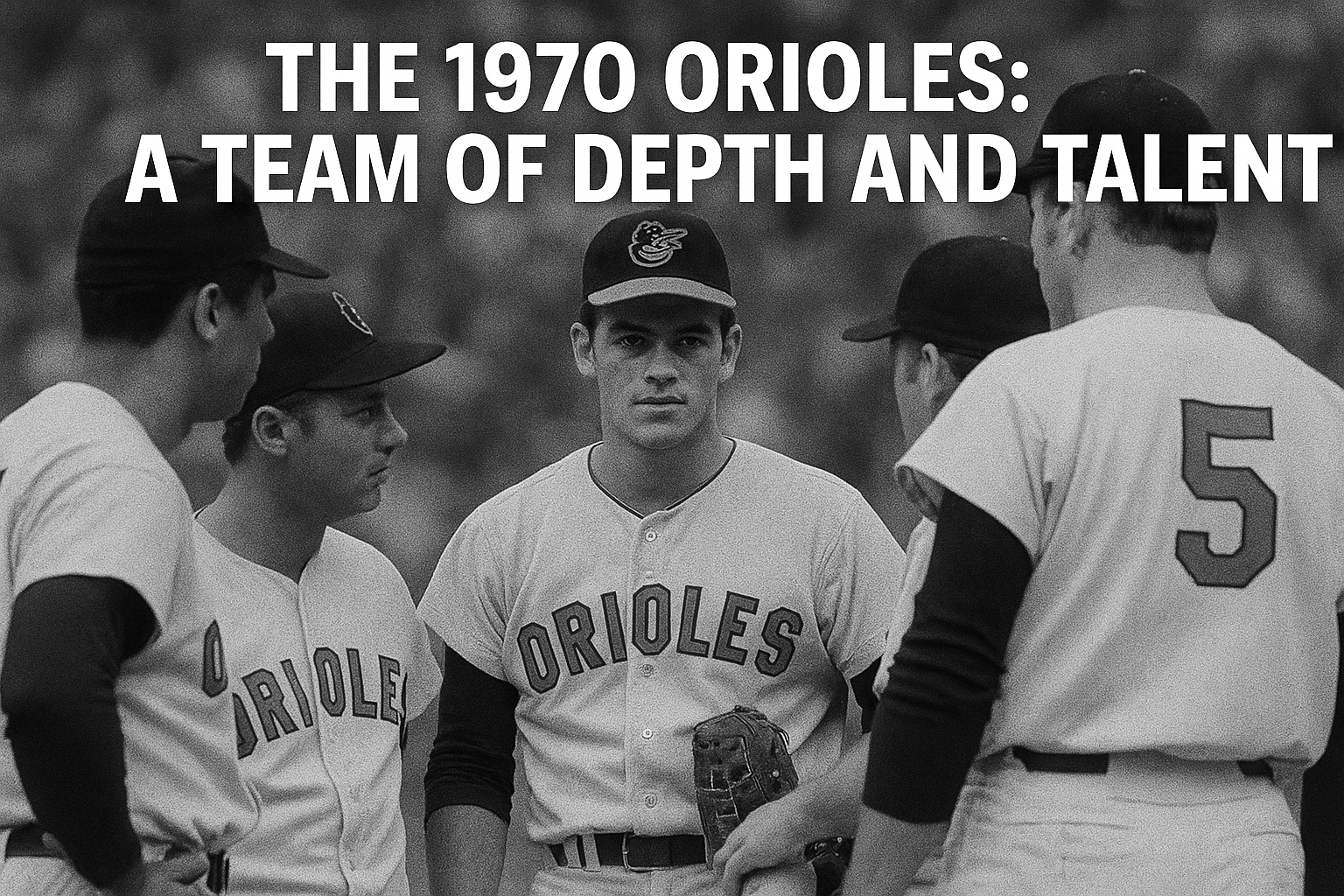
The Baltimore Orioles of 1970 was a team that stands out in the annals of Major League Baseball history. It was a team not just rich in wins but overflowing with depth and talent in every aspect of the game. From the pitching mound to the batter’s box, their lineup boasted an impressive array of stars, often leaving fans and commentators astounded by their skill. This ensemble was famed not only for clinching the World Series but for showcasing a level of teamwork and strategic prowess rarely seen. This period marked a golden era for Baltimore baseball, placing them firmly on the map as a powerhouse. The 1970 Orioles were lauded for their performance but also loved for their approach to the game, a team where every player seemed to contribute a vital piece of the puzzle. This narrative explores how the 1970 Orioles, with a balance of seasoned veterans and eager young talents, carved their status in baseball history.
Achieving glory is no mean feat, but sustaining it is a greater challenge. For Baltimore, the 1970 season was not just about the ultimate success of winning the World Series. It represented a culmination of years of strategic planning, coaching, and development. The Orioles were a reflection of Morgan’s managing genius and the vision shared by the front office. They boasted a top-notch managerial team led by the legendary Earl Weaver. Weaver’s philosophy placed great emphasis on fundamentals, pitching, defense, and the three-run homer, which became known as his hallmark strategy. Under Weaver’s leadership, the Orioles became exemplary in execution, movement, and resilience on the field. He was skilled at scrutinizing data and identifying the team’s strengths and weaknesses, ensuring that each player’s potential was maximized. Their disciplined adherence to strategy made them a virtually unstoppable force. The 1970 season was a testament to the fantastic harmony between management and players, producing electrifying results while preserving professionalism and drive.
Construction of a Winning Team
The Orioles had worked hard to assemble a team that was both balanced and deep. It began with assembling a formidable starting rotation. Mike Cuellar, Dave McNally, and Jim Palmer were the Orioles’ trio on the mound, known for their overpowering skill and composure in high-pressure situations. They provided consistent performances, making batters work for every hit. Cuellar, with his screwball, was exceptionally adept at throwing batters off balance. McNally brought sheer determination and skill, resulting in game-changing performances and winning plays. Meanwhile, youthful Jim Palmer was making a name for himself as a dominant presence with his powerful fastballs and tenacity. The rotation’s depth was a quintessential example of how the team could deluge opponents with varied styles, leaving little room for adaptation or hope from their adversaries. Their collective ERA represented the manifestation of their hard work, contributing predominantly to the team’s overall success.
Beyond pitching, the Orioles sought to have a lineup that could deliver when it mattered most. The batting lineup was a testament to diverse skill and incredible batting strength. This included stalwarts like Frank Robinson, who brought along his veteran leadership and power-hitting capabilities. In contrast, Boog Powell was a dynamic force in offense, one of the mainstays in the batting lineup. As a first baseman, Powell not only provided the much-needed muscle, but his personality and presence added to the morale of the team. Powell’s exceptional season saw him receive the American League MVP award, rewarding his dedication and excellence. Also forming the core of their offense was Brooks Robinson, whose defensive prowess at third base was equally matched by his ability with the bat. Robbie’s defining moments came during critical times when the team needed reliable run production. His clutch hits and defensive skills made him an indispensable cog in the Orioles’ machinery.
Backing them and often playing an unsung role was consistent Mark Belanger, who was pivotal in shortstop. His stellar defense earned him the nickname “The Blade”. His speed and agility on the field saved critical runs and offered leverage against opponents. For the core of their infield, Davey Johnson provided stability at second base, becoming known for his intelligence in both defensive and offensive roles. Behind the plate, catcher Elrod Hendricks held down with authority, managing the pitching staff, directing the field, and providing timely contributions with the bat. Together, these players ensured that the Orioles had both offensive firepower and star-level defense in every game they played.
Off the bench, the Orioles maintained a group of talented and versatile players who could alter the momentum of the game. Don Buford, Pat Dobson, and others gave Earl Weaver leverage in crucial moments, allowing the adaptability necessary to maneuver through adverse situations. It was such depth that was intrinsic to the Orioles’ strength, often leaving their rivals devoid of options. Their bench squad displayed proficiency that almost seamlessly matched that of the starting lineup—making opposing managers second guess every tactical decision. Having able second-string players meant the Orioles were never crippled by fatigue or adversity, ensuring consistently solid performances.
World Series Triumph
Entering the World Series, the Orioles faced off against the Cincinnati Reds. Despite the aggressive nature and skill of the Reds, the Orioles were unwavering in their confidence and readiness. In those crucial games, Orioles brought to life a blend of skill and experience that few teams have replicated since. For many, the series pitted two of MLB’s finest, with whispers around every corner, suggesting the Orioles’ capacity to dominate the Reds might be exaggerated. Nevertheless, the Orioles answered by combining finesse and power, crushing Cincinnati spirits while maintaining poise and class evident of champions.
The iconic performance of Brooks Robinson became a linchpin around which the series swayed. Robinson made several otherworldly plays at third base, leaving onlookers, and opposition star hitter Johnny Bench, stunned. The moniker “The Human Vacuum Cleaner” was earned by every dive, leap, and seamless scoop he executed, showcasing performance levels previously thought unattainable. Concurrently, Brooks’ significant contributions extended beyond defense into offense, culminating in a Series MVP award crowning his memorable efforts.
During the series, Bobby Grich, another versatile Oriole, became an unsung hero. While bearing less accolade, his role was critical in orchestrating successful double plays and assisting in outmaneuvering Reds’ batting lineups. The philosophical superiority adopted by Weaver ensured the Orioles operated with calculated aggression, making a mockery of purported weaknesses. The cohesion between pitchers and fielders, trust, and deep analysis of adversaries were factors inevitably resulting in their World Series conquest. The Orioles decisively won that series four games to one, reaffirming their dominance and leaving an indelible mark on the hearts of Baltimore’s faithful.
Their successful season exemplified a tradition of excellence and class, defined by complete synchronization between all components of the team structure, each fulfilling their role responsibly. With Earl Weaver guiding them, the Orioles epitomized not only skill and talent but an intangible understanding of how true teams should function. Even as other teams boasted individual brilliance, the Orioles epitomized one unit working in harmony. It was in such dedication to comprehensive ideals of teamwork and perseverance that the Baltimore Orioles found their essence.
Cultural Impact and Legacy
The Orioles of 1970 were not just a baseball team; they were a cultural phenomenon. They represented not just a victory on the field but a spirit of unity and resilience in the city of Baltimore. For the fans, Baltimore’s dominance through skilled strategic play generated a collective euphoria. Their victory played a historic role in inspiring generations of baseball youngsters and reinforced the belief that with the right blend of skill and determination, feats beyond imagination could be accomplished.
Furthermore, the 1970 Orioles set a precedent for future sports teams emphasizing the significance of depth, having diverse weaponry, and the subtle art of strategy, something that continues to be studied and celebrated in diamond fields across America today. Their success provided critical lessons invaluable to the tactical approach in contemporary baseball—prioritizing cohesion and exhaustive preparedness. By demonstrating the importance of resilience through their play, they became much more than mere role models. They were architects of the elegant artistry that baseball could achieve, transcending the confines of sports fandom and entering folklore.
Conclusion
The 1970 Baltimore Orioles were far more than just a successful team—they were a brilliant illustration of how effective strategy, profound depth, and incredible talent could culminate in triumph. From the leadership of Earl Weaver to the slugging prowess of Boog Powell, to the unrivaled defense of Brooks Robinson, this team was built to compete and succeed at a level many could only dream of. Their harmonious blend of strengths ensured that each game featured a new hero, often emerging from the rich vein of talent embedded throughout their roster. For fans and followers of MLB history, the Orioles of 1970 continue to stand as a benchmark for what can be achieved when a team operates in complete unison toward a shared goal.
In remembering the 1970 Orioles, one recalls not merely the champions in name but a collective so synchronously functional that their legend thrives as a testament to collaboration meeting ascent. Such a level of teamwork is rarely seen, and in their melding of diverse skills for a common cause, they penned a chapter of inspiration that continues to resonate, both within baseball and in broader cultural contexts. From memorable performances at home and across the leagues, the enduring story of the 1970 Orioles remains an inspiring epoch in the history of baseball, a testament to depth, talent, and the unfaltering spirit that is the beating heart of competitive sport.
Frequently Asked Questions
1. Who were the key players on the 1970 Orioles team?
The 1970 Baltimore Orioles were a powerhouse of talent and depth, featuring multiple stars who were pivotal in their success. The team was led by the incomparable Brooks Robinson, known as the “Human Vacuum Cleaner,” who was not only a defensive wizard at third base but also contributed significantly with his bat. Frank Robinson, a Hall of Famer, provided formidable power and leadership, augmenting the team’s offensive strength. The pitching staff was anchored by Jim Palmer, one of the most dominant pitchers of his era, supported by the likes of Dave McNally and Mike Cuellar. The Orioles’ lineup also boasted power hitters like Boog Powell, who provided crucial home runs and was a key figure in their offensive power. Their roster depth ensured that even the players coming off the bench were capable of game-changing performances, showcasing how well-rounded and talented this team truly was.
2. What made the 1970 Orioles stand out in Major League Baseball history?
The 1970 Orioles are often lauded for several reasons that made them stand out in the history of Major League Baseball. First and foremost, their teamwork and balance of skills were second to none, spanning exceptional pitching, hitting, and defense. Their ability to execute game plans with precision was a testament to their strategic savvy. This team didn’t rely on a single superstar to win games but rather thrived on the collective contributions of their entire roster. They clinched the World Series that year by displaying a remarkable blend of power at the plate and reliability on the mound, ultimately providing a well-rounded approach to baseball that justified their reputation as one of the best teams of their era.
3. How did the 1970 Orioles perform during the regular season and postseason?
During the 1970 regular season, the Baltimore Orioles were virtually unstoppable, dominating the American League with an impressive 108-54 record. This incredible performance was a result of their consistent gameplay, formidable pitching, and powerful hitting. In the postseason, the Orioles showcased their mettle by sweeping the Minnesota Twins in the American League Championship Series (ALCS), demonstrating their superiority over their competitors. They then went on to face the Cincinnati Reds in the World Series, where they claimed victory in just five games. The Orioles’ postseason success was characterized by remarkable defense, superb strategic decision-making, and explosive offensive displays that left little doubt of their claim to the championship title.
4. What impact did manager Earl Weaver have on the team’s success?
Earl Weaver, the legendary manager of the 1970 Orioles, was instrumental in the team’s success. Known for his strategic brilliance and fiery demeanor, Weaver emphasized the importance of a solid defense and intellectual approach to the game, famously adhering to the mantra of “pitching, defense, and the three-run homer.” His ability to analyze weaknesses in other teams and make real-time tactical decisions gave the Orioles a competitive edge. Weaver’s managerial style fostered a culture of winning and resilience, as he was a master at extracting the best performances from his players. This leadership played a pivotal role in the Orioles’ championship run, turning this collection of talented individuals into a cohesive, winning unit.
5. What legacy did the 1970 Orioles leave for future baseball teams?
The legacy of the 1970 Orioles is profoundly etched into the fabric of baseball history. They set a benchmark for future teams with their emphasis on depth, teamwork, and strategic acumen. The Orioles’ success underpinned the value of having a well-rounded and well-managed team rather than relying solely on star power. The formidable blend of pitching, hitting, and defense demonstrated by the Orioles served as a blueprint for future teams striving for success. Earl Weaver’s analytical approach and game-management skills were key takeaways that influenced the methodologies applied by future managers. The 1970 Orioles exemplified the notion that championship teams are built on consistent excellence across all facets of the game, thereby influencing the way teams are structured to this day.