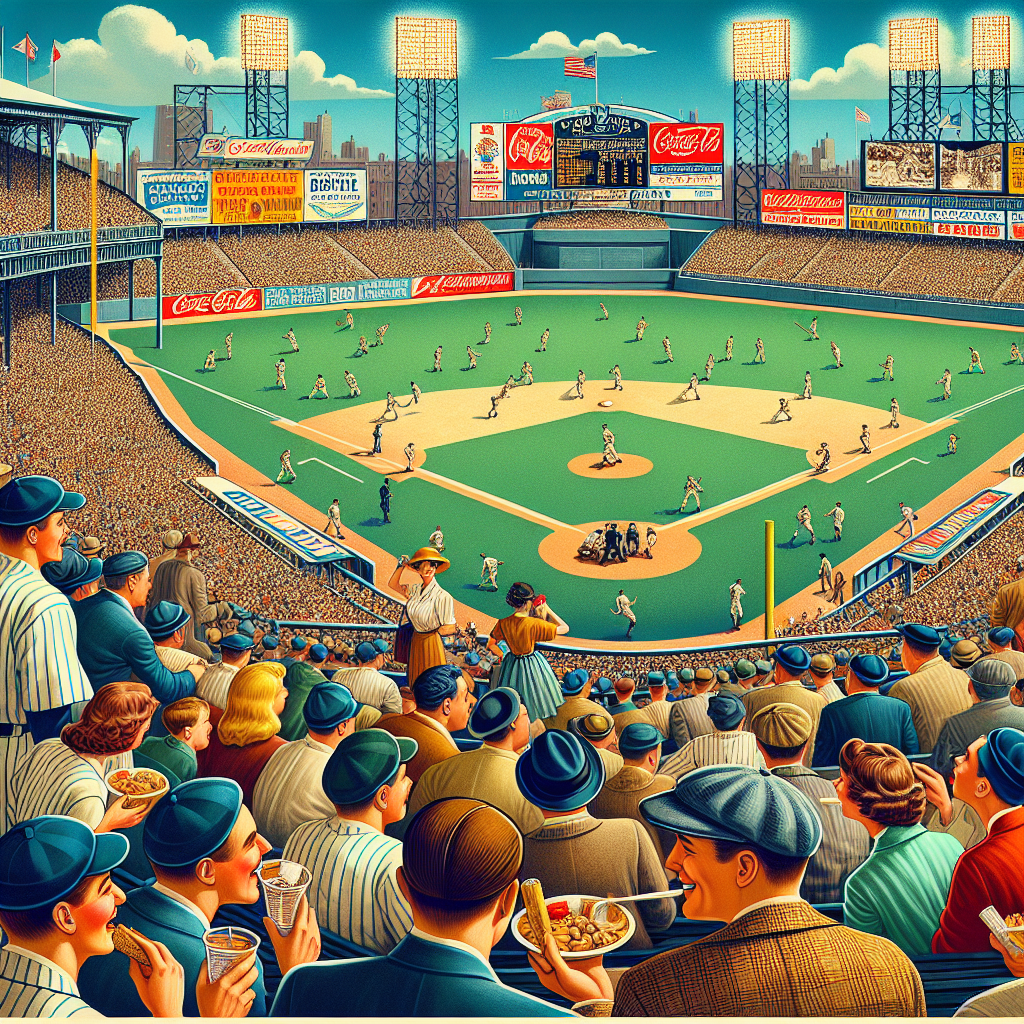
Baseball is often referred to as America’s pastime, and within its storied history lies a collection of iconic ballparks that have seen legendary moments and players pass through their gates. Among these revered coliseums of sport, Ebbets Field holds a distinctive place. Located in the heart of Brooklyn, Ebbets Field was not just a ballpark; it was a home, a community gathering spot, and a symbol of Brooklyn’s spirit. From its opening in 1913 to its final farewell in 1957, Ebbets Field saw the Brooklyn Dodgers evolve, struggle, and eventually rise to triumph, culminating in their unforgettable 1955 World Series victory.
Ebbets Field wasn’t just a venue but a magical place where legends like Jackie Robinson, Pee Wee Reese, and Duke Snider carved out their legacies. For many Brooklynites, the ballpark was an extension of their backyard, ingrained in their daily lives and collective memory. The chatter of vendors, the roars of a passionate crowd, and the captivating narrative of each game played out on its diamond made Ebbets Field more than a mere structure of steel and concrete; it was a living, breathing entity of its own.
This article dives deep into the story of Ebbets Field, celebrating its rich heritage and the lasting impact it has left on baseball and the Brooklyn community. We’ll explore the history, the architectural marvel, the unforgettable games and moments, the notable players, and the cultural significance that made Ebbets Field one of the most storied ballparks in baseball history.
The Birth and Design of Ebbets Field
Ebbets Field was the brainchild of Charles Ebbets, the Dodgers’ president, who envisioned a new home for the Brooklyn baseball team to replace the outdated and cramped Washington Park. Ebbets purchased parcels of land in the Flatbush neighborhood of Brooklyn, slowly assembling a site for his dream ballpark. The stadium began construction in 1912 and officially opened its doors on April 9, 1913, with an exhibition game against the New York Yankees.
The architectural firm Osborne Engineering designed Ebbets Field, focusing on creating an intimate setting that brought fans close to the action. The ballpark had a capacity of around 18,000 seats, which eventually expanded to over 30,000. Its signature feature was the intricate and ornate facade consisting of terracotta tiles, making it a visually stunning structure. Interestingly, the relatively small size of Ebbets Field gave it a unique charm and ambiance, fostering a tight, communal feeling among fans.
The dimensions of Ebbets Field were irregular, making it a fascinating and challenging place to play for both batters and pitchers. The right-field wall, affectionately known as “The Wall,” was only 297 feet from home plate but towered at 19 feet, often turning would-be home runs into doubles. The intimate design, combined with the visual intricacies, made Ebbets Field an architectural and cultural icon of its time.
Memorable Moments and Games
Ebbets Field was the backdrop for many unforgettable moments in baseball history. One such moment was Babe Ruth’s first home run in the World Series, which took place at Ebbets Field during the 1916 World Series. Though Ruth was a member of the Boston Red Sox at the time, his home run at Ebbets Field is still a significant milestone in baseball annals.
A shift in baseball history occurred on April 15, 1947, when Jackie Robinson broke the color barrier, becoming the first African American to play in Major League Baseball in the modern era. Wearing the Dodgers’ uniform, Robinson played his first game at Ebbets Field, making it a landmark moment not just for the Dodgers but for the entire sport. Robinson’s courage and talent left an indelible mark on Ebbets Field, and his number 42 is retired across all MLB teams in his honor.
Another cherished memory etched into Ebbets Field’s legacy is the Dodgers’ first and only World Series victory in Brooklyn. On October 4, 1955, the Dodgers defeated the New York Yankees at Yankee Stadium in Game 7 to win the World Series, but the celebrations peaked when the team returned to Ebbets Field. The victory parade and the outpouring of love and joy from Brooklynites symbolized the deep-rooted connection between the team and its fans.
Notable Players
Ebbets Field was graced by numerous baseball legends whose names are forever etched in the annals of the sport. Among them, Jackie Robinson stands out not only for his athletic prowess but also for his role in advancing civil rights in America. Robinson’s debut at Ebbets Field was a pivotal moment in baseball and American history, and his performance on the field matched his historic significance.
Duke Snider, nicknamed “The Duke of Flatbush,” was another iconic figure at Ebbets Field. As a power-hitting center fielder, Snider’s home runs energized fans and left an enduring legacy. Over his storied career with the Dodgers, Snider accumulated impressive statistics and became an eight-time All-Star.
Pee Wee Reese, the Dodgers’ longtime shortstop and captain, was renowned for his leadership both on and off the field. His supportive friendship with Jackie Robinson played a crucial role in easing racial tensions during a tumultuous period. Reese’s consistent performance, leadership qualities, and sportsmanship made him a beloved figure at Ebbets Field and beyond.
Roy Campanella, the three-time National League MVP catcher, was another Hall-of-Famer who called Ebbets Field home. Campanella was known for his powerful hitting, strong defensive skills, and remarkable ability to manage pitchers. His resilience and contribution to the Dodgers’ success endeared him to fans and solidified his place in baseball history.
The Culture and Community Impact
More than just a sports arena, Ebbets Field was a cultural landmark that mirrored the vibrant and diverse community of Brooklyn. The ballpark served as a gathering spot where fans from various backgrounds came together, unified by their love for the Dodgers. The bustling streets around Ebbets Field on game days captured the essence of Brooklyn: lively, diverse, and full of character.
The local businesses flourished on game days, with bars, restaurants, and vendors teaming with activity. Ebbets Field wasn’t only about baseball; it was about community and shared experiences. The intimate atmosphere within the stadium and the camaraderie among the fans made every game a social event, rich with the human connections that transcend the sport itself.
The Dodgers and Ebbets Field also played a significant role in the social dynamics of the time. Jackie Robinson’s integration into Major League Baseball was a monumental step towards progress and equality. The fan support for Robinson and the Dodgers highlighted Brooklyn’s progressive spirit and set a precedent for social change beyond the confines of the ballpark.
For many Brooklynites, the ballpark was a second home. Generations of families attended games, passing down their love for the Dodgers and Ebbets Field. The ballpark was a backdrop to their lives, hosting countless memories, victories, heartbreaks, and celebrations.
The Demise and Legacy of Ebbets Field
Despite its cherished status, Ebbets Field faced challenges in the post-war era. The aging infrastructure and the need for a more modern facility led the Dodgers’ owner, Walter O’Malley, to seek a new stadium. Unable to secure a deal for a new ballpark in Brooklyn, O’Malley made the controversial decision to relocate the team to Los Angeles in 1958.
The Dodgers’ move westward marked the end of an era for Brooklyn and its beloved Ebbets Field. The final game at Ebbets Field took place on September 24, 1957, with the Dodgers defeating the Pittsburgh Pirates. The departure left a void in the community, and the demolition of Ebbets Field in 1960 symbolized the end of a significant chapter in baseball history.
Though Ebbets Field no longer stands, its legacy endures. The stories, the triumphs, and the memorable moments continue to resonate with baseball fans and historians. Ebbets Field is remembered not just as a physical space but as a symbol of a vibrant era in Brooklyn’s history and baseball’s evolution.
Modern ballparks may offer advanced amenities and expansive facilities, but they often lack the intimate charm and historical significance of places like Ebbets Field. The ballpark’s spirit lives on through stories, photographs, and the enduring Brooklyn Dodgers’ legacy.
Conclusion
Ebbets Field was more than a ballpark; it was a cherished institution and an integral part of the Brooklyn community. Its rich history, architectural charm, and the unforgettable moments it hosted have etched it into the annals of baseball lore permanently. From the breaking of the color barrier by Jackie Robinson, Duke Snider’s towering home runs, to the euphoric celebration of the 1955 World Series victory, Ebbets Field was a theater of dreams for Brooklyn Dodgers fans. Its cultural impact extends beyond the game itself, reflecting the social dynamics of its time and fostering a sense of community that is still remembered fondly today.
The spirit of Ebbets Field continues to inspire and captivate baseball enthusiasts. While the physical structure may have been lost to time, the memories and legacy of Ebbets Field remain alive in the hearts and minds of those who cherish the golden era of the Brooklyn Dodgers. It stands as a testament to the profound connection between a community and its baseball team, demonstrating that a ballpark is more than just a venue—it is a symbol of heritage, pride, and an indomitable spirit.
Frequently Asked Questions
1. What was the significance of Ebbets Field to the Brooklyn community?
Ebbets Field was more than just a baseball stadium; it was the beating heart of the Brooklyn community. It stood as a symbol of pride and was a gathering place for families, friends, and fans alike. It wasn’t just a place to watch the game; it was a social hub where stories were shared, memories were made, and a sense of belonging was felt by all who entered its gates. The distinctive charm and character of the stadium embodied the essence of Brooklyn’s diverse and vibrant spirit. Ebbets Field hosted an endless parade of neighborhood kids dreaming of future glory, adults relishing in triumphs and tragedies, and everyone in between creating lasting memories that extended beyond the diamond. For many Brooklynites, the field also served as a cherished relic of the borough’s golden days, reminding them of a time when the Brooklyn Dodgers gave the locals something to root for—and indeed, something to unite them.
2. Why was Ebbets Field so iconic in baseball history?
Ebbets Field holds a legendary status in baseball history due to its distinctive architecture, memorable games, and the legendary players who graced its field. Opening in 1913, it was state-of-the-art for its time and demonstrated the possibilities for future ballparks. It was home to many historic moments, including Jackie Robinson breaking the Major League Baseball color barrier in 1947, which left an indelible mark on the sport and American society at large. The park saw legendary players such as Duke Snider, Pee Wee Reese, and Roy Campanella excel in their careers and create unforgettable memories for fans. The Dodgers’ move from Brooklyn to Los Angeles in 1957 added a layer of nostalgia to Ebbets Field, cementing its status as a celebrated and heavily mourned landmark in the annals of baseball lore.
3. How did Ebbets Field evolve over time during its operation from 1913 to 1957?
Over its 44-year operation, Ebbets Field underwent several changes and upgrades to enhance the fan experience and keep pace with the evolving game. It opened in 1913 after immense planning and construction efforts spearheaded by its namesake, Charlie Ebbets. Throughout its lifespan, various renovations expanded its seating capacity to accommodate more fans, reaching the ability to host around 32,000 attendees. Modern amenities were incorporated progressively to keep the stadium comfortable and appealing. Structures and features were regularly updated, such as the towering scoreboard and grandstands, to improve both players’ and fans’ views of the action. Despite these updates, the intimate atmosphere and distinctive quirks, like the asymmetrical outfield dimensions, elevated Ebbets Field’s unique charm. Each modification carried the stadium’s legacy forward while maintaining its historic essence. The field came to embody the ebullient spirit of baseball better than many – it was as much of a spectacle for its fans as it was for the players that fought and triumphed on its grass.
4. What led to the eventual demolition of Ebbets Field?
The demolition of Ebbets Field in 1960 was the result of a variety of factors. The post-war economic boom allowed cities and teams to envision modern-day facilities which could meet the evolving demands of both fans and teams alike. The city’s infrastructure and the practical needs of team operations also had outgrown the old park’s capabilities. Reluctance to invest and expand within Brooklyn, along with larger urban development schemes, made keeping the team there financially unfeasible. The owner of the Dodgers, Walter O’Malley, debated the merits of building a new stadium in Brooklyn. However, when efforts to secure public funding and ideal locations for a replacement fell apart, O’Malley decided on relocation to Los Angeles. The anticipated growing audiences and media opportunities of the West Coast were irresistible. Once the Dodgers moved, Ebbets Field no longer served its purpose, making way for new residential projects. Its demolition left a significant void in the hearts of Brooklynites and echoing timeless sentiments of loss and nostalgia within the baseball community.
5. Are there any remnants or memorials of Ebbets Field in Brooklyn today?
Though the physical stadium of Ebbets Field was razed, its legacy endures in the memories of those who experienced its magic firsthand and the many stories passed down through generations. Today, the site is occupied by the Jackie Robinson Apartments, a tribute to one of Ebbets Field’s most iconic players and a beacon of his legacy and impact on baseball history. A historical plaque and a mural reside at the location to commemorate what once stood there and to honor the history interwoven with the foundation of Ebbets Field. Around Brooklyn, businesses and establishments still carry the name Ebbets and continue embodying the spirit that was once centered around the old ballpark. These reminders capture a small piece of a bygone era when Ebbets Field was at the heart of baseball excitement and community in Brooklyn.