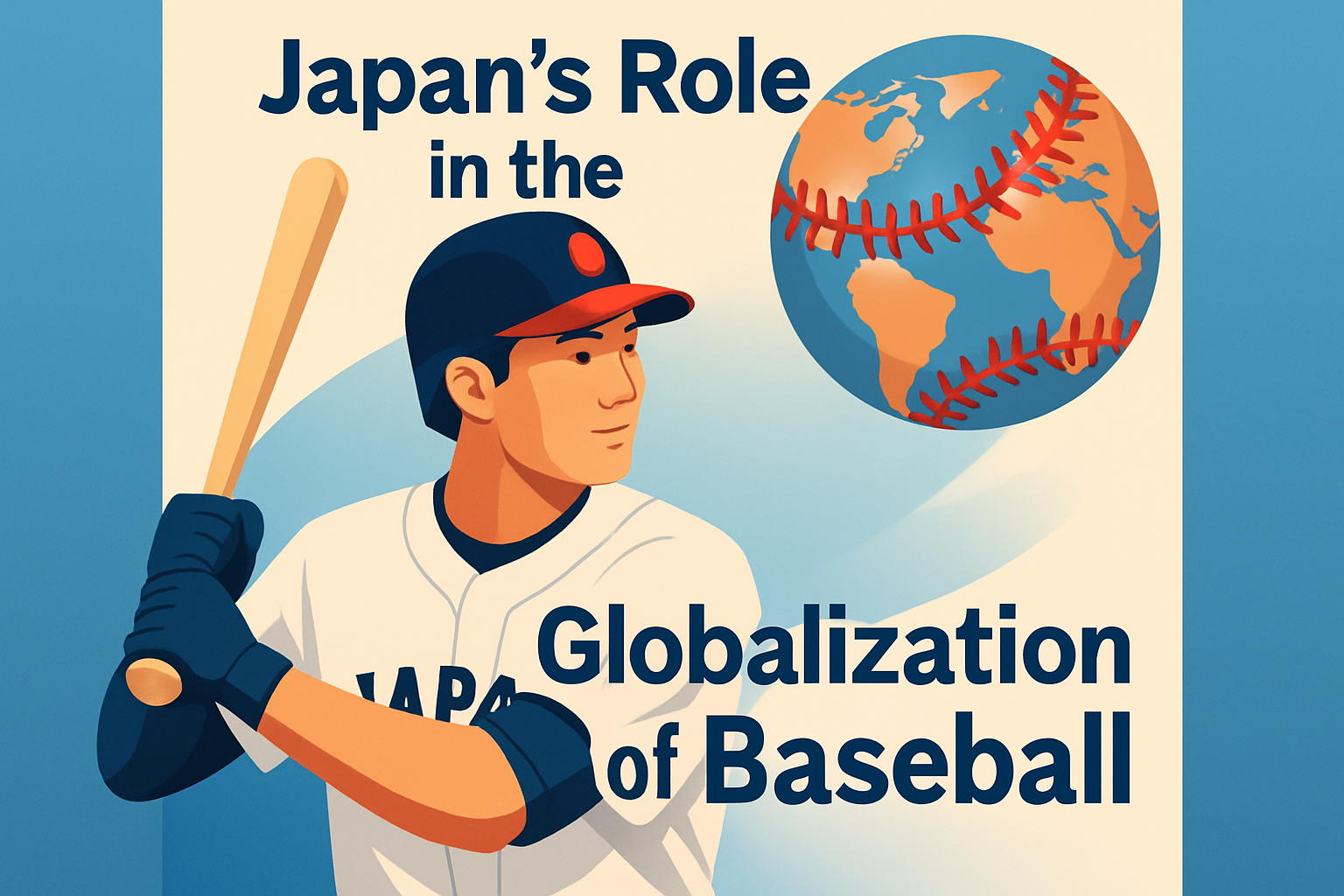
Introduction to Japan’s Influence in Baseball
Baseball, often referred to as America’s pastime, has grown beyond the borders of the United States to become a truly global sport. Among the countries that have played a pivotal role in this international expansion is Japan. The influence of Japan in the globalization of baseball is significant, not merely as a participating nation, but as a transformative force that has shaped the culture, techniques, and international appeal of the sport. This article explores Japan’s contribution to baseball’s global presence, examining how its unique approach to the game has resonated across the world. Understanding Japan’s influence is crucial as it provides insights into how cultural exchange through sports can foster global connections and enrich the game itself.
Key terms will be discussed to better appreciate the intricacies of Japan’s role. “Globalization of baseball” refers to the sport’s expansion and popularity worldwide, transcending cultural and geographical boundaries. “Nippon Professional Baseball (NPB)” is the highest level of baseball in Japan, akin to Major League Baseball (MLB) in the United States. The term “cultural exchange” highlights how baseball has become a medium for sharing and integrating different cultural practices. This topic matters because it showcases how a sport can become a bridge between diverse cultures, enhancing mutual understanding and cooperation.
The Historical Emergence of Baseball in Japan
Baseball was first introduced to Japan in the early 1870s by Horace Wilson, an American professor teaching in Tokyo. The game quickly caught on, with students embracing baseball as both a physical and cultural activity. By the 1930s, Japan had established its own professional leagues, laying the foundation for what would become Nippon Professional Baseball (NPB) in 1950. The historical roots of baseball in Japan are critical to its role in globalization, as they demonstrate how a foreign sport can be adapted and integrated into a country’s culture.
An example of this historical impact is seen in the annual High School Baseball Championship at Koshien Stadium, which is watched by millions in Japan. The event symbolizes the country’s deep connection to the sport, showcasing young talent and fostering a spirit of competition that has inspired many of Japan’s professional players who eventually make their mark on the international stage.
The Development of Nippon Professional Baseball (NPB)
Nippon Professional Baseball has been instrumental in elevating the sport’s status within Japan and abroad. By establishing a structured professional league, Japan cultivated a strong domestic base of talent that eventually attracted international attention. The NPB is known for its strategic gameplay and disciplined approach, which have provided a contrast to the power-hitting style prevalent in MLB.
One prominent example is the success of players like Ichiro Suzuki, who transitioned from NPB to MLB and became a global ambassador for Japanese baseball. Ichiro’s technique, characterized by precision and consistency, demonstrated the high caliber of training and skill development prevalent in Japan, further enhancing the international reputation of Japanese baseball.
Japanese Players in Major League Baseball (MLB)
Japanese players have become prominent figures in Major League Baseball, contributing significantly to its globalization. Players such as Hideo Nomo, Hideki Matsui, and Shohei Ohtani have not only excelled on the field but have also increased MLB’s visibility in Asia. Their success stories have highlighted the potential for cultural exchange between baseball leagues and have paved the way for future talents.
A real-world example is Shohei Ohtani, often referred to as a modern-day Babe Ruth due to his dual abilities as a pitcher and a hitter. Ohtani’s performance in MLB has captivated fans worldwide and illustrated the high level of competitive play that Japanese athletes bring to international baseball. His presence has not only fostered interest in MLB within Japan but also sparked a reciprocal curiosity about NPB among American fans and media, creating a dynamic exchange of baseball culture.
Cultural Exchange Through Baseball
The globalization of baseball through Japan extends beyond player performances. It includes a cultural exchange that has influenced both Japanese and American baseball practices. Japanese baseball culture, with its emphasis on teamwork, discipline, and meticulous preparation, offers valuable lessons on dedication and the mental aspects of sports. The American style, on the other hand, has introduced elements of entertainment and individual flair to Japanese audiences.
- Japanese Banquets: Known for tightly structured discipline and teamwork.
- American Ballparks: Known for entertainment-focused experiences and individual star power.
This exchange has led to the adoption of unique practices within both leagues. For instance, the ceremonial first pitch in NPB games has evolved to include elements of performance art, blending Japanese aesthetics with the light-heartedness often found in American stadiums.
International Competitions and Japan’s Influence
Japan has also played a significant role in raising the profile of international baseball competitions. The country’s national team, Samurai Japan, has been a dominant force in the World Baseball Classic (WBC), winning championships in 2006 and 2009. These successes have not only increased the global visibility of Japanese baseball but have also inspired other nations to invest in the sport, thereby contributing to its worldwide growth.
A key example is the 2009 WBC final, where Japan defeated South Korea in a thrilling match that captured the attention of the global audience. The event showcased the passion and skill level of Japanese players, reinforcing Japan’s position as a powerhouse in international baseball and encouraging other countries to compete at a higher level.
The Role of Japanese Fans and Media
The popularity of baseball in Japan is also significantly driven by its fan base and media coverage. Japanese fans are known for their enthusiastic support and organized cheering, which enhance the atmosphere and excitement of games. This vibrant fan culture adds a unique dimension to baseball, attracting global media interest and promoting the sport to international audiences.
For instance, Japanese media extensively covers both domestic leagues and MLB, providing comprehensive analytics and stories that engage fans. The availability of such detailed coverage fosters a deeper connection with the game, encouraging fans to follow their favorite Japanese players abroad and sustaining interest in international competitions.
Conclusion: Japan’s Enduring Impact on Global Baseball
In summary, Japan’s role in the globalization of baseball is multifaceted, encompassing historical development, player contributions, cultural exchanges, and vibrant fan involvement. The influence of Nippon Professional Baseball and iconic players like Ichiro Suzuki and Shohei Ohtani have established Japan as a key player in international baseball, demonstrating how the sport can transcend national boundaries and bring diverse cultures together.
For fans and sports enthusiasts, understanding Japan’s impact provides valuable insights into how cultural experiences can enrich a sport, offering new perspectives and enhancing overall enjoyment. For those interested in exploring this cultural phenomenon further, attending a baseball game in Japan or following Japanese players in MLB can be an excellent next step. By experiencing the game through a Japanese lens, one can appreciate the richness and complexity of baseball’s global journey.
Ultimately, Japan’s contributions continue to shape the evolution of baseball, reinforcing the sport’s ability to unite people worldwide and highlighting the power of cultural exchange through sports.
Frequently Asked Questions
1. How has Japan contributed to the globalization of baseball?
Japan’s contribution to the globalization of baseball is profound and multifaceted. First, there’s the popularity and success of the Nippon Professional Baseball (NPB) league, which has long been regarded as the highest level of professional baseball outside of the United States. The NPB has not only helped to cultivate a strong baseball culture in Japan itself but also fostered talent that has gone on to impact Major League Baseball (MLB) significantly. Japanese players like Ichiro Suzuki, Hideo Nomo, and Shohei Ohtani have made enduring impacts in the MLB, influencing fans and aspiring players worldwide, highlighting the global potential of the sport. Furthermore, Japan’s approach to baseball, with its focus on discipline, skill development, and strategic play, has influenced coaching methods and training regimes in other countries. Additionally, international competitions, such as the World Baseball Classic, have provided a platform for Japan to showcase its baseball expertise, further boosting the sport’s global appeal.
2. In what ways has Japanese baseball culture differed from that in the United States?
Baseball culture in Japan differs from the United States in several notable ways, reflecting broader cultural values and social norms. One of the key differences is the emphasis placed on teamwork and self-discipline in Japan. While American baseball often highlights individual star performances, Japanese baseball encourages a more collective, harmonious approach. This is reflected in team strategies, where bunting and executing small-ball tactics, such as hit-and-run plays, are more prevalent. The rigorous training and practice schedules in Japanese baseball, often characterized by long hours and meticulous repetition, underscore a commitment to perfecting one’s craft that is heavily emphasized within the culture. Furthermore, Japanese fans bring their distinct style to the sport, with orchestrated chants and songs that enhance the stadium atmosphere, offering a unique spectator experience that contrasts with the more freestyle cheering seen in the United States.
3. Who are some notable Japanese players that have influenced Major League Baseball?
Several Japanese players have made significant impacts in Major League Baseball (MLB) and have become icons who symbolize the globalization of the sport. One of the most prominent figures is Ichiro Suzuki, whose illustrious career in the MLB redefined what a Japanese player could achieve in the league. Known for his exceptional batting ability and speed, Ichiro amassed over 3,000 hits in MLB alone, solidifying his status as one of the greatest hitters of all time. Another pioneering figure is Hideo Nomo, whose success as a pitcher in the 1990s opened doors for many Japanese players to enter the MLB and debunked the skepticism about their potential compatibility and success in the league. Moreover, players like Shohei Ohtani have further broken barriers, showcasing the dual-threat capability as both a pitcher and hitter, an extraordinary feat that has captivated the global baseball audience and reignited interest in the traditional two-way player.
4. How has Japan’s approach to training and player development influenced other countries?
The Japanese approach to training and player development has significantly influenced baseball practices worldwide. Central to this approach is a dedication to rigorous practice and a commitment to mastering fundamentals. Japanese training programs focus extensively on honing skills through repetition, ensuring that players are technically sound and capable of executing plays with precision. This has inspired other countries to adopt similar methods, particularly in youth development programs, where the focus on fundamentals can drastically improve performance levels. Additionally, Japanese baseball emphasizes mental toughness and discipline, instilling a sense of resilience and strategic thinking in players that has been embraced by international coaches. The attention to detail in training camps, which often include intensive drills and game simulations, provides a model that has resonated with coaches globally, who seek to prepare players not just physically, but also mentally and strategically.
5. Has Japan’s influence in baseball extended beyond players and training methods?
Yes, Japan’s influence in the global baseball landscape goes beyond players and training methods. Japan has also contributed to the globalization of baseball through its technological innovations and strategic approaches within the game itself. The country has been at the forefront of utilizing high-tech advancements, such as biomechanical analysis and analytics, to enhance player performance and strategize game play, which have been adopted by baseball teams around the world. Furthermore, Japan has played a crucial role in organizing and participating in international tournaments, such as the World Baseball Classic, where the country has consistently been a strong contender, promoting intercultural exchanges and increasing the sport’s visibility and appeal on a global platform. Japan’s popularization of baseball-themed manga and anime, such as “Touch” and “Major,” has also reached international audiences, bringing cultural elements of the sport to new fans and further embedding baseball as a part of the global cultural narrative.