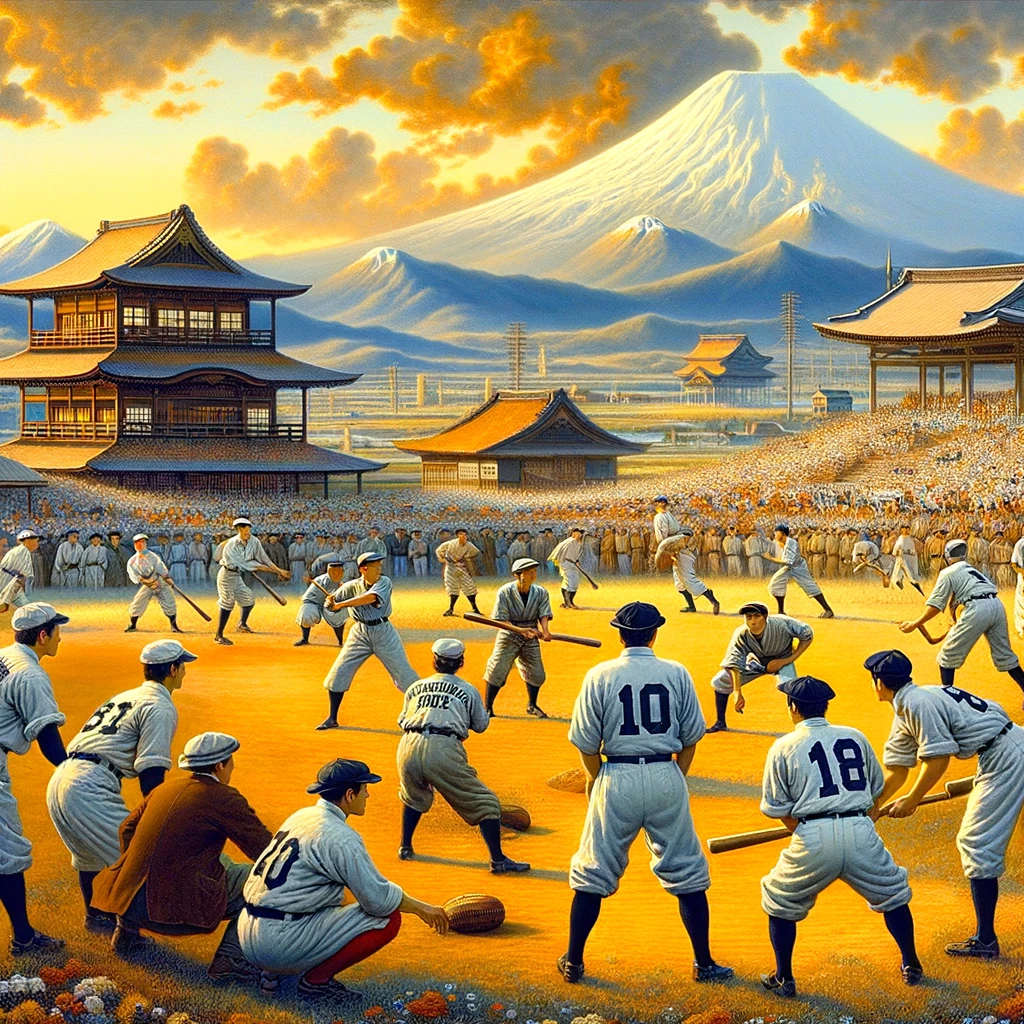
Baseball, known as “yakyū” in Japan, is more than just a sport; it’s a cultural phenomenon that intertwines with the nation’s identity. The journey of baseball in Japan is a tale of cultural exchange, passionate adoption, and unique evolution. This article delves into the historical voyage of baseball in Japan, exploring its inception, development, and impact on both Japanese culture and the global stage.
Early Beginnings: The Meiji Era Introduction
Baseball’s roots in Japan date back to the Meiji Era (1868-1912), a period marked by rapid modernization and Westernization. In 1872, Horace Wilson, an American professor teaching in Tokyo, introduced baseball to his Japanese students. The simplicity and strategic nature of the game quickly captivated the Japanese youth. By the 1880s, the sport had spread to universities and high schools, laying the foundation for its widespread popularity.
The first baseball team in Japan, the Shimbashi Athletic Club, was formed in 1878. This marked a significant milestone in establishing baseball as a structured sport in Japan. The early games were primarily played among expatriates and students who had studied abroad. However, the Japanese quickly embraced the sport, blending it with their cultural ethos and competitive spirit.
Growing Popularity: University Baseball and Beyond
The rise of university baseball played a crucial role in popularizing the sport. The fierce rivalry between Waseda and Keio universities, which began in 1903, became a national spectacle, drawing large crowds and media attention. These university matches not only showcased skill and strategy but also embodied the Japanese virtues of teamwork, perseverance, and honor.
The establishment of high school baseball, particularly the National High School Baseball Championship (commonly known as “Koshien”) in 1915, further entrenched baseball in Japanese culture. Koshien became more than a tournament; it was a stage where young players showcased their talents, representing their schools and regions with pride. The intense training, discipline, and spirit of Koshien mirrored the values of Japanese society, making baseball a symbol of youth and aspiration.
Professionalization: The Birth of Nippon Professional Baseball
The transition from amateur to professional baseball marked a new era. In 1934, Babe Ruth and a team of American all-stars toured Japan, playing exhibition games against Japanese teams. This tour was instrumental in boosting baseball’s popularity and demonstrated the potential of professional baseball in Japan.
The formation of the first professional baseball league in Japan, the Japanese Baseball League (JBL), in 1936, was a watershed moment. The league initially consisted of seven teams, and despite challenges posed by World War II, it laid the groundwork for professional baseball’s future growth. Post-war, the JBL restructured and rebranded as Nippon Professional Baseball (NPB) in 1950, mirroring the organizational style of Major League Baseball (MLB) in the United States.
Golden Age: Baseball in Post-War Japan
The post-war era was a golden age for baseball in Japan. It provided a sense of hope and normalcy in a country rebuilding from the ruins of war. Baseball games were a source of entertainment and escapism for the Japanese people, fostering a deep emotional connection with the sport.
Japanese baseball saw the rise of iconic players like Sadaharu Oh, who became a household name for his home run records and contributions to the Yomiuri Giants’ dominance in the NPB. The sport’s popularity soared, with games being broadcast on radio and television, reaching a wider audience and solidifying baseball as Japan’s national sport.
International Influence and the World Stage
Japan’s baseball evolution wasn’t confined to domestic achievements. The country’s participation in international competitions like the Olympic Games and the World Baseball Classic showcased Japanese baseball on a global stage. Japanese players began making their mark in MLB, with Hideo Nomo’s successful debut in 1995 opening the door for other Japanese players to compete in the highest echelons of baseball.
The success of Japanese players in MLB, such as Ichiro Suzuki and Shohei Ohtani, has further strengthened the ties between Japanese and American baseball. These players have not only been ambassadors of the sport but have also influenced the way baseball is played and perceived worldwide.
Modern Era: Challenges and Innovations
In recent years, Japanese baseball has faced challenges, including aging fan demographics and competition from other sports. However, the NPB and various baseball organizations have been proactive in addressing these issues through marketing strategies and technological innovations like improved broadcasting and online streaming.
Youth baseball programs and initiatives aimed at engaging younger audiences have been instrumental in nurturing the next generation of players and fans. Women’s baseball has also gained momentum, challenging gender norms and expanding the sport’s reach and inclusivity.
A Lasting Legacy
Baseball in Japan is more than a sport; it’s a reflection of the nation’s history, culture, and spirit. From its introduction in the Meiji Era to its present-day status, baseball has mirrored Japan’s societal shifts and global interactions. The game’s evolution in Japan is a testament to how sports can transcend cultural boundaries, fostering a unique identity and international camaraderie.
The legacy of baseball in Japan is evident in the fervor of its fans, the dedication of its players, and its impact on global baseball culture. As the sun continues to rise on the diamond, the future of baseball in Japan looks as bright and promising as its illustrious past.

Adapting to the Times: The Influence of Technology and Media
As we venture into the 21st century, technology and media have played pivotal roles in shaping the landscape of baseball in Japan. The advent of high-definition broadcasting, online streaming, and social media has transformed how fans engage with the sport. Games are now accessible to a global audience, and players have become international celebrities. This digital era has allowed Japanese baseball to expand its reach, connecting with fans worldwide and showcasing its unique style and talent.
The Cultural Impact: Baseball Beyond the Field
The influence of baseball in Japan extends far beyond the field. It has permeated Japanese culture, evident in literature, cinema, anime, and manga. Works like “Star of the Giants” and “Major” have captured the imagination of generations, portraying the struggles and triumphs of baseball players. These cultural representations have played a significant role in embedding baseball in the Japanese psyche, inspiring young athletes and fostering a deeper appreciation for the sport.
The Economic Aspect: A Major Contributor
Baseball is not just a cultural phenomenon in Japan; it’s also a significant economic contributor. From ticket sales and merchandise to sponsorships and broadcasting rights, the sport generates substantial revenue. The economic impact is seen in the thriving business of baseball equipment and memorabilia, as well as the boost it provides to local economies, especially during tournaments like Koshien.
The Role of International Players in NPB
The Nippon Professional Baseball league has not only been a platform for Japanese players but has also welcomed international talent. Players from the Americas, Asia, and Australia have been part of NPB teams, bringing diverse skills and styles to the league. This influx of international players has enhanced the level of play, provided cross-cultural exchanges, and contributed to the global appeal of Japanese baseball.
Challenges and the Future Outlook
Despite its popularity, Japanese baseball faces challenges such as an aging fan base and the need to continuously innovate to attract younger audiences. Moreover, balancing tradition with modernization, and maintaining the essence of Japanese baseball while adapting to global trends, are ongoing challenges.
The future of baseball in Japan looks promising with efforts to globalize the NPB, initiatives to promote youth participation, and the continued success of Japanese players abroad. The Tokyo 2020 Olympics, where baseball made a return as a sport, was a testament to Japan’s enduring love for the game and its capability to host world-class baseball events.
Conclusion: The Enduring Spirit of Yakyū
Baseball in Japan is more than just a game; it is a reflection of the nation’s resilience, adaptability, and spirit. It has evolved from a foreign import to a national obsession, intertwining with Japan’s history and culture. The story of baseball in Japan is one of passion, perseverance, and pride. As the sport continues to evolve, it will undoubtedly remain a vital part of Japan’s cultural fabric, cherished by generations to come.
As we witness the ongoing evolution of baseball in Japan, it’s clear that the sport will continue to be a significant aspect of Japanese life. The rising sun on the diamond symbolizes not just the dawn of a new day but also the enduring spirit of baseball in Japan, shining brightly as a beacon of cultural unity and international camaraderie.
This comprehensive look at the history and impact of baseball in Japan illustrates how deeply the sport is woven into the fabric of Japanese society. From its humble beginnings in the Meiji era to its current status as a beloved national pastime and a significant player on the global stage, baseball in Japan is a story of adaptation, passion, and cultural significance.
Frequently Asked Questions
1. How did baseball first make its way to Japan, and who was responsible for its introduction?
The introduction of baseball in Japan is rooted in the Meiji Era, a period marked by rapid modernization and Western influence. The game was first played in Japan in 1872, introduced by Horace Wilson, an American professor who taught at the Kaisei School in Tokyo. Wilson suggested baseball as a means to engage his students in physical activity while promoting the idea of teamwork and discipline. His efforts laid the groundwork for baseball in Japan, which quickly gained popularity among students and young professionals eager to embrace new cultural practices. By the 1880s, the sport was being played at a competitive level between schools and universities, solidifying its presence within Japanese society. Wilson’s introduction of baseball exemplifies the broader cultural exchanges during the Meiji Restoration, where Japan was eager to adopt and adapt foreign ideas as part of its national development.
2. What role did universities play in the development of baseball in Japan?
Universities were instrumental in the development and popularization of baseball in Japan. During the late 19th and early 20th centuries, universities became breeding grounds for competitive baseball, with matches often drawing large crowds. The intercollegiate matches, especially the highly anticipated rivalry between Keio University and Waseda University, were akin to cultural events, fostering school spirit and civic pride. These matches were more than just games; they were spectacles that reinforced the values of discipline, strategy, and camaraderie. As the sport grew in collegiate circles, it further solidified its place as a national pastime, eventually leading to the establishment of professional leagues. By showcasing high levels of skill and sportsmanship, universities played a crucial role in elevating baseball from a recreational activity to a respected component of Japanese cultural identity.
3. How did Japan’s baseball leagues evolve, and what is their global significance today?
Japan’s baseball leagues have undergone significant evolution since their inception. The first professional league was established in 1936, known as the Japanese Baseball League. Post World War II, in 1950, it was reorganized into Nippon Professional Baseball (NPB), which comprises two main leagues: the Central League and the Pacific League. These leagues have not only honed local talent but have also become stages for international players, contributing to the global appeal of Japanese baseball. The success of NPB has inspired talent exchanges, with many Japanese players making successful transitions to Major League Baseball (MLB) in the United States, such as Ichiro Suzuki and Shohei Ohtani. Conversely, international players also join NPB, further diversifying and enriching the playing styles. Today, Japan’s baseball is acknowledged globally for its high level of play, strategic depth, and enthusiastic fanbase, making significant cultural and commercial impacts worldwide.
4. In what ways has baseball impacted Japanese culture and society?
Baseball’s impact on Japanese culture and society is profound, beyond its role as a sport. It promotes values like teamwork, perseverance, and respect, which resonate deeply with Japanese social norms. The spirit of “wa” (harmony) is reflected in the team dynamics and collective effort synonymous with Japanese baseball. Beyond this, teams like the Yomiuri Giants and Hanshin Tigers have become cultural icons, shaping regional identities and community spirit. High school baseball tournaments, particularly Koshien, play a significant cultural role, as they are broadcast nationally and capture the aspirations of youth, symbolizing hope and determination. Furthermore, baseball has crossed borders, becoming a medium of cultural diplomacy, evident in international matches and collaborative efforts with leagues worldwide. This cultural exchange underscores baseball’s ability to transcend borders, fostering mutual appreciation and understanding.
5. How does Japan’s high school baseball tournament, Koshien, contribute to the sport’s cultural significance?
Koshien, Japan’s national high school baseball tournament, holds a unique place in the nation’s cultural landscape. Held twice a year (spring and summer), it is more than just a baseball competition; it’s a rite of passage that celebrates youth, ambition, and perseverance. The tournament garners nationwide attention, with millions tuning in to watch young athletes pursue glory on the storied Koshien field, making it one of the most-watched sporting events in Japan. For many players, Koshien is the pinnacle of their baseball dreams, encapsulating a journey of hard work, sacrifice, and teamwork. It serves as a microcosm of life lessons, preparing youth for future challenges beyond the diamond. Additionally, Koshien has a sentimental connection to national pride, often associated with stories of courage and overcoming adversity, further embedding baseball into the fabric of Japanese culture and identity.