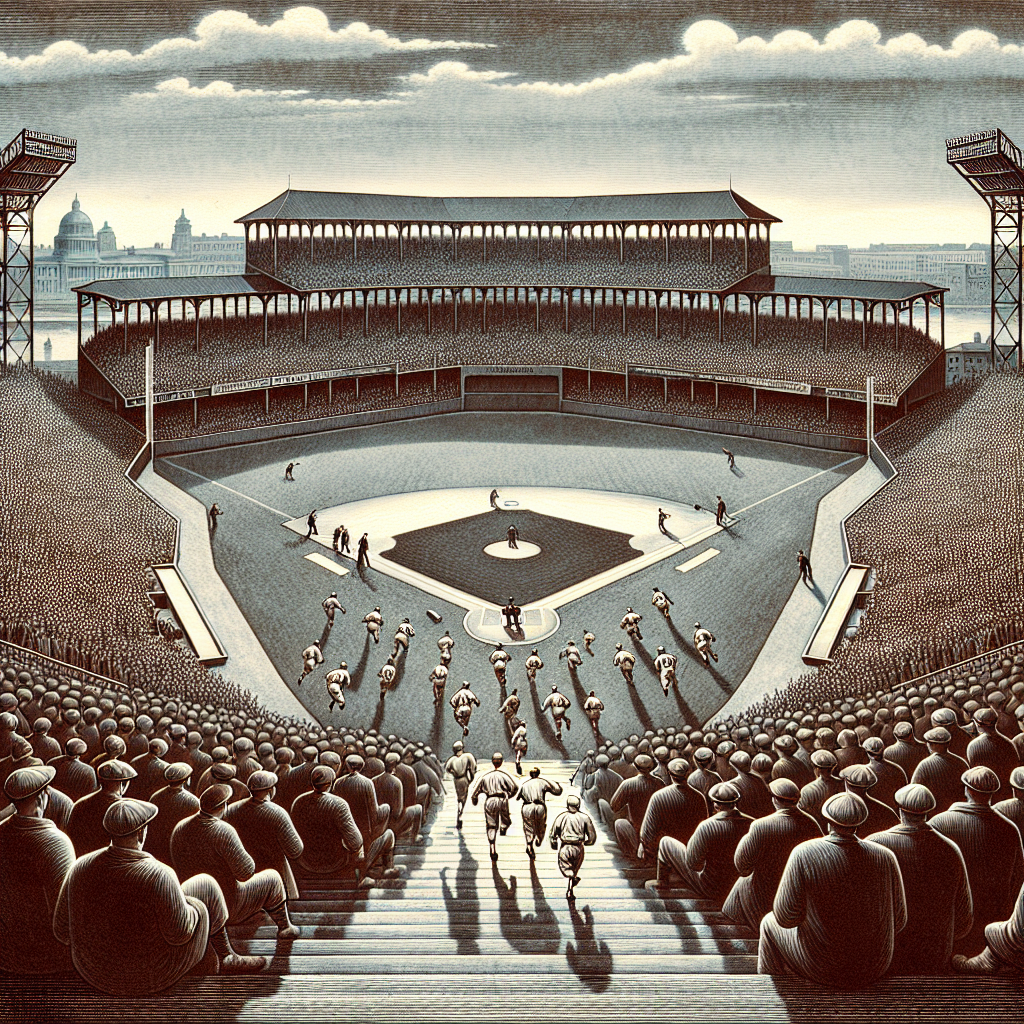
Griffith Stadium stands as a historic monument in the annals of American baseball, etching its legacy within the iconic landscape of Washington D.C. Situated in the heart of the nation’s capital, this storied ballpark witnessed decades of thrilling games and unforgettable moments. Built in 1911 and demolished in 1965, Griffith Stadium was more than just a venue for baseball; it was a gathering place for a community, a stage for sporting excellence, and a testament to the evolution of baseball in the United States.
Named after its original investor and longtime manager, Clark Griffith, the ballpark hosted various teams, most notably the Washington Senators, who made the stadium their home from its inception until the Senators’ relocation in 1960. The stadium also saw NFL action, being the field for the Washington Redskins from 1937 to 1960. Its unique design, complete with numerous idiosyncrasies such as its quirky field dimensions and the infamous “Griffith Stadium Wall,” added to the charm and challenge for the players gracing its grounds.
As we explore the rich tapestry of baseball history, Griffith Stadium’s role emerges as pivotal, not only as a sports venue but also as a cultural and social hub. From legendary games and record-breaking performances to hosting notable events beyond the diamond, Griffith Stadium’s story is multi-faceted. Its legacy extends beyond the eroding bricks and steel beams, residing in the heart of every baseball aficionado who cherishes the golden era of the game.
The Origins and Construction of Griffith Stadium
The story of Griffith Stadium begins in the early 20th century when the sport of baseball was rapidly growing in popularity. Prior to the construction of Griffith Stadium, Washington D.C. was already home to professional baseball with the Washington Senators playing at American League Park. However, a need for a more modern and spacious facility was apparent. The decision to construct Griffith Stadium was driven by the vision of Clark Griffith, who foresaw the potential for a grander arena to house the nation’s pastime.
Construction began in 1910, and the stadium opened its gates to the public on July 24, 1911. With a seating capacity of approximately 32,000, Griffith Stadium was a marvel of its time. Its architectural design featured a mix of concrete and steel, a significant departure from the wooden structures of previous ballparks. One of the most remarkable features was its asymmetrical shape dictated by the surrounding city streets, which resulted in unique outfield dimensions that challenged hitters and pitchers alike.
The inaugural game at Griffith Stadium was an event of great fanfare, with the Washington Senators taking on the Detroit Tigers. Though the Senators lost the game, the day marked the beginning of an era that would see countless historical moments unfold within its confines. The stadium embodied the spirit of early 20th-century architectural innovation and the unyielding devotion of America’s baseball fans.
Historic Moments and Legendary Games
Griffith Stadium was home to numerous historic moments that have since become part of baseball lore. One of the most memorable was the 1924 World Series, where the Washington Senators clinched their first and only title by defeating the New York Giants in a dramatic seven-game series. This victory was particularly sweet for the home crowd, as Walter Johnson, one of the greatest pitchers of all time, played a pivotal role in securing the championship for the Senators.
An additional highlight came in 1937 when the Washington Redskins played their first game at Griffith Stadium, eventually going on to win the NFL Championship. This era saw the stadium becoming not only a baseball landmark but also a central hub for American football, hosting legendary players like Sammy Baugh. Moreover, Griffith Stadium was a venue for the 1937 and 1942 All-Star Games, further cementing its place in the annals of sports history.
The stadium also bore witness to several notable individual achievements. Hall of Famer Josh Gibson, often dubbed the “Black Babe Ruth,” hit numerous home runs over its imposing walls during Negro League games, leaving an indelible mark on baseball history. Furthermore, Griffith Stadium hosted one of the most significant moments in baseball history when Jackie Robinson, the first African American to play in Major League Baseball, took the field with the Brooklyn Dodgers against the Washington Senators, symbolizing a major step toward integration in sports.
Architectural Quirks and Unique Features
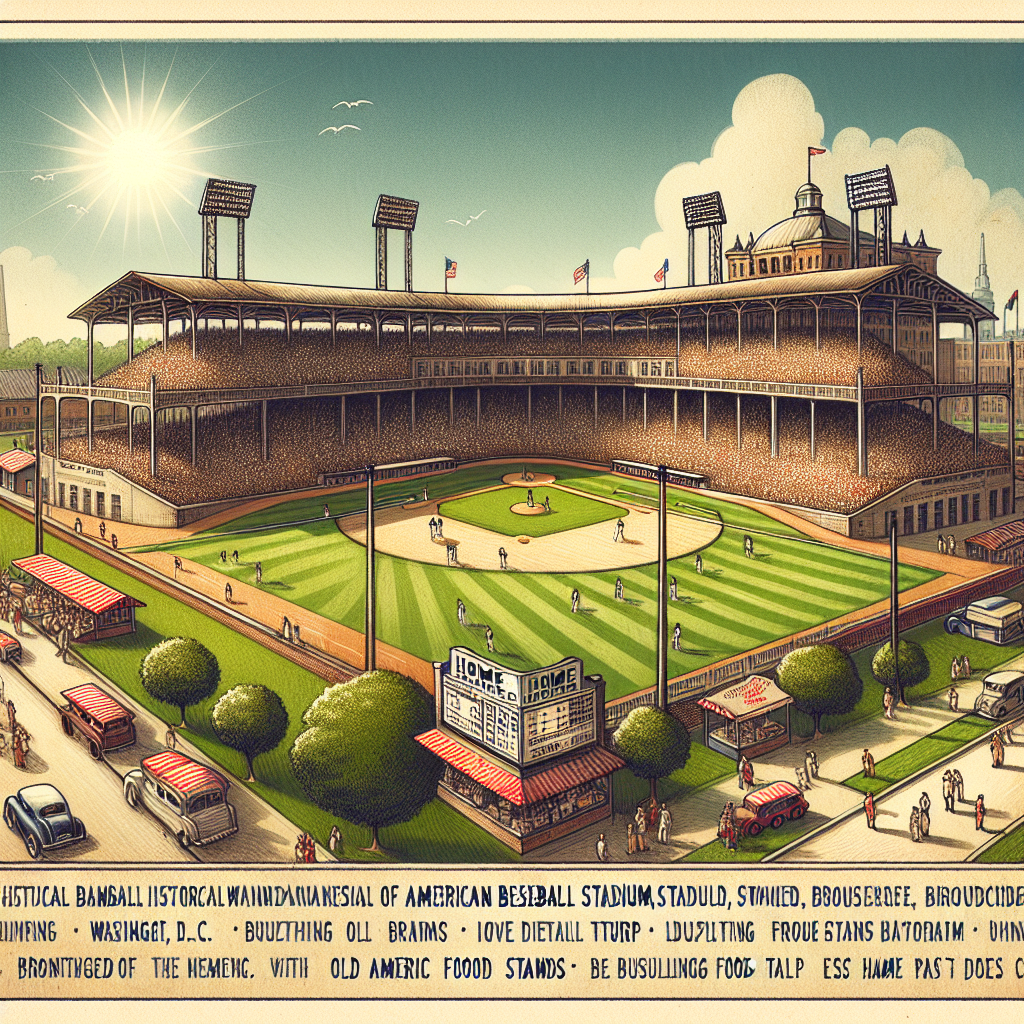
Griffith Stadium was renowned for its many unique architectural features and quirks that set it apart from other ballparks of its era. One of its most defining characteristics was its non-uniform outfield dimensions. The left-field fence stood just 405 feet away from home plate, while the center field reached a daunting distance of 421 feet. Right field, however, was a mere 320 feet away, making it an attractive target for left-handed hitters despite the height of the fence in that direction.
A particularly interesting feature was the “Griffith Stadium Wall,” a 30-foot-high and 3-foot-thick barrier in left-center field that turned many potential home runs into doubles (or even outs). This imposing structure was something of a legend among players and fans alike. Another notable quirk was the presence of a cherry tree in deep center field that was often part of the in-play area, adding a touch of natural beauty to the stadium’s otherwise urban surroundings.
Moreover, the stadium’s location influenced its architectural design. Situated in a bustling urban neighborhood, the ballpark was crafted to blend seamlessly with the city streets. This led to unique challenges and creative solutions in maintaining sightlines and maximizing seating capacity while providing a distinct character to the venue that fans and players grew to love.
Impact on the Local Community
Beyond its significance as a sports venue, Griffith Stadium played a vital role in the local community. It served as a gathering place where residents of Washington D.C. came together to share their joy, excitement, and even sorrow through a shared love of baseball and football. The stadium was the heartbeat of the neighborhood, drawing diverse crowds from various walks of life to revel in the collective experience of watching a game. Local businesses around the stadium flourished, with restaurants, bars, and shops receiving a steady stream of patrons on game days. The economic boost provided by the stadium was significant, fostering a sense of community pride and contributing to the neighborhood’s vibrancy. The stadium was more than just a place to watch sports; it became an integral part of the community’s social fabric, a landmark where memories were created and history was written.
Moreover, Griffith Stadium’s role extended beyond economics and sport. It hosted a variety of events, including political rallies and musical performances, further solidifying its status as a communal hub. The stadium was a symbol of unity, embodying the spirit of togetherness that sports can inspire, particularly during times of social and political change.
The Decline and Demise of Griffith Stadium
As the 1960s dawned, Griffith Stadium faced challenges that ultimately led to its decline and eventual demise. The aging infrastructure was becoming increasingly costly to maintain, and the stadium’s relatively small seating capacity compared to newer ballparks made it less economically viable. The Washington Senators’ move to Minnesota in 1960 marked the beginning of the end for Griffith Stadium as a baseball venue, though it continued to host the Redskins for a few more years.
In 1961, the Washington Senators were revived as an expansion team, but they played at the newly constructed D.C. Stadium (later renamed Robert F. Kennedy Memorial Stadium), marking a shift away from the historic grounds of Griffith Stadium. The game of baseball itself was evolving, with newer, more modern stadiums being built across the country, offering better amenities and larger capacities. Unfortunately, Griffith Stadium could not keep pace with these developments.
The final blow came in 1965 when Griffith Stadium was demolished. Its destruction marked the end of an era, but it also signaled a transformation in the landscape of professional sports venues. The site where Griffith Stadium once stood was repurposed for Howard University Hospital, ensuring that the land continued to serve the community in a new capacity.
Conclusion
Griffith Stadium remains a cherished memory for those who experienced its unique charm and historic moments. Although it no longer stands, its legacy endures through the stories, triumphs, and community spirit nurtured within its walls. Griffith Stadium was more than just a ballpark; it was a symbol of Washington D.C.’s rich sporting history and a testament to the enduring passion for baseball and football that resonates to this day.
From its inception to its final demolition, Griffith Stadium played host to significant events and legendary athletes, leaving an indelible mark on the sports world. Its unique architectural features, memorable games, and contributions to the local community make it a landmark worth celebrating and remembering.
As we reflect on the storied past of Griffith Stadium, we are reminded of the power of sports to bring people together, create lasting memories, and shape the cultural heritage of a place. The legacy of Griffith Stadium lives on in the hearts of fans and in the pages of baseball history, a true testament to its place as a beloved Washington D.C. landmark.