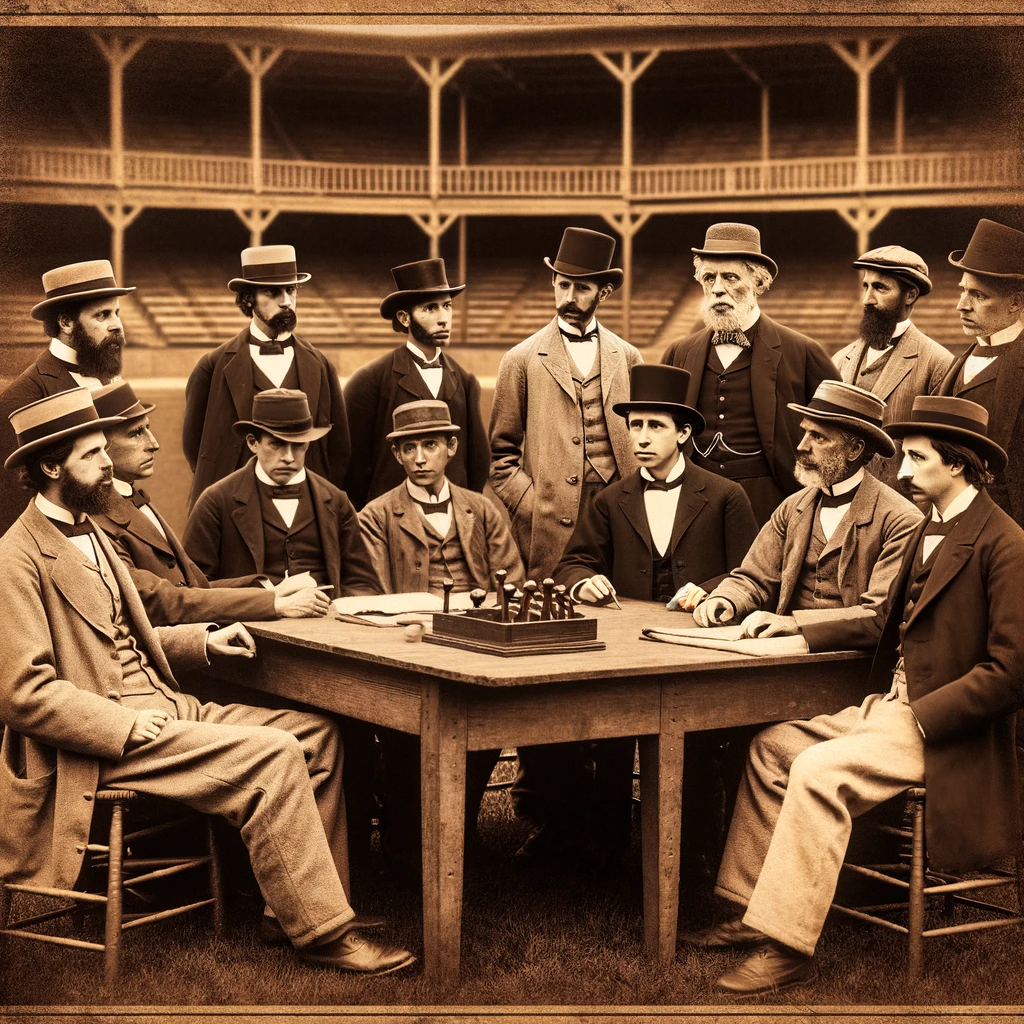
Baseball, America’s beloved pastime, has a rich and storied history. Its roots can be traced back to the mid-19th century, a time of great change and innovation in the United States. At the heart of baseball’s early development was the National Association of Base Ball Players (NABBP), the first organization to govern the sport and lay the groundwork for its future. This article explores the formation, evolution, and impact of the NABBP on the game of baseball.
The Genesis of the NABBP
The NABBP was formed in 1857, emerging from a growing interest in baseball in the northeastern United States. Prior to its formation, baseball was played in various forms and with differing rules across the country. Clubs such as the Knickerbocker Club of New York, one of the earliest and most influential clubs, played a crucial role in shaping the early rules of the game. The need for a standardized set of rules and organization for competition led to the formation of the NABBP.
Standardizing the Game
One of the NABBP’s first and most significant contributions was the establishment of a standardized set of rules. In 1858, the association adopted the Knickerbocker Rules, which laid the foundation for modern baseball. These rules set the diamond shape of the field, established nine innings as a game’s length, and defined positions and gameplay mechanics. This standardization was crucial for the sport’s growth, allowing teams from different areas to play against each other without confusion.
The Rise of Clubs and Players
The NABBP rapidly expanded in the years following its establishment. From a mere 16 member clubs in 1858, it grew to over 400 by 1867. This expansion mirrored the growing popularity of baseball across the nation. Clubs were not just teams; they were community hubs, bringing together players and fans from various social and economic backgrounds.
Notable clubs of this era included the Brooklyn Atlantics, the Cincinnati Red Stockings, and the Philadelphia Athletics. These clubs were among the first to experiment with the concept of paid players, setting the stage for professional baseball.
Challenges and Controversies
The NABBP faced several challenges and controversies during its tenure. One of the most significant was the issue of professionalism. As some clubs began to pay players, debates arose over the amateur status of the sport. This divide between amateur and professional clubs led to tensions within the association.
Additionally, the Civil War (1861-1865) had a profound impact on baseball and the NABBP. Many players and club members served in the war, leading to a temporary decline in baseball activities. However, the war also helped spread the game, as soldiers from different regions played baseball during periods of inactivity.
Impact on American Society
The NABBP and the clubs under its umbrella had a significant impact on American society. Baseball games became social events, attracting diverse crowds and fostering community spirit. The sport also mirrored societal changes, such as the push for professionalism and the struggles with inequality and exclusion, particularly regarding race and class.
Decline and Legacy
The NABBP began to decline in the early 1870s. The rise of professional clubs and leagues, which were not bound by the NABBP’s amateur regulations, drew players and fans away. In 1871, the establishment of the National Association of Professional Base Ball Players, often considered the first professional baseball league, signaled the end of the NABBP’s dominance.
Despite its decline, the NABBP’s legacy is undeniable. It laid the foundational rules and structure for baseball, a sport that would become deeply ingrained in American culture. The NABBP’s efforts in standardizing the game and promoting it across the country were crucial in transforming baseball from a pastime into a national sport.
The National Association of Base Ball Players played a pivotal role in the early history of baseball. Its efforts to standardize the game, govern competition, and promote the sport were instrumental in shaping baseball into the beloved national pastime it is today. While the NABBP itself may no longer exist, its influence is felt in every pitch, hit, and home run in modern baseball.
Expanding Horizons: Baseball Beyond the NABBP
Following the decline of the NABBP, baseball continued to evolve and expand its horizons. The late 19th century saw the sport’s professionalization and the birth of major leagues, which would eventually overshadow amateur play. However, the framework and spirit fostered by the NABBP remained at the core of baseball, guiding its transformation into a professional sport.
The Role of Media and Popular Culture
The role of media and popular culture cannot be overstated in the spread of baseball during the NABBP era. Newspapers began covering games and club activities, giving the sport a national platform. This coverage was crucial in popularizing baseball, attracting new fans, and keeping them informed about the sport’s developments.
Baseball also found its way into American popular culture. The game was celebrated in songs, theatrical plays, and literature, further embedding it into the American psyche. The NABBP era coincided with the rise of the concept of “American exceptionalism,” and baseball was often heralded as the nation’s unique contribution to the world of sports.
Inclusion and Exclusion in Early Baseball
The history of the NABBP also reflects the broader societal attitudes of the time, particularly regarding inclusion and exclusion. While baseball was becoming a unifying force in many ways, it also mirrored the prejudices and inequalities of the era. African American players, for instance, were often excluded from NABBP clubs, leading to the formation of segregated teams and leagues. This exclusion would remain a significant issue in baseball for decades to come.
Women in Early Baseball
The role of women in the early history of baseball is often overlooked. While the NABBP and its clubs were predominantly male, women were involved in the sport from its earliest days, both as players in informal games and as fans. The rise of “Bloomer Girls” teams in the late 19th century, although postdating the NABBP, can be seen as a legacy of the sport’s early growth and its ability to reach different segments of society.
The NABBP’s Enduring Influence
The dissolution of the NABBP in the 1870s did not mark the end of its influence. The rules and standards it established formed the backbone of the sport as it moved into the professional era. Many of the clubs that were part of the NABBP continued to play crucial roles in the development of professional baseball.
Moreover, the NABBP’s commitment to promoting baseball as a national sport set a precedent for future leagues and associations. The idea of baseball as a unifying, national pastime, accessible to and reflective of broader society, is a direct inheritance from the NABBP era.
Conclusion: The NABBP’s Place in Baseball History
In retrospect, the National Association of Base Ball Players was more than just the first governing body of baseball; it was a foundational force in the sport’s history. Through its efforts to standardize rules, promote competition, and integrate baseball into American culture, the NABBP played a crucial role in shaping the game we know and love today. Its legacy is a testament to the enduring power of sports in bringing people together and reflecting the society in which they are played.
The NABBP’s story is not just about the birth of a sport but about the evolution of American society and culture. Its history offers a fascinating window into the past, reminding us of how far the sport has come and how deeply it is woven into the fabric of American life.
Frequently Asked Questions
1. What was the National Association of Base Ball Players (NABBP) and why was it significant?
The National Association of Base Ball Players, or NABBP, was the first official governing body for the sport of baseball, established in 1857. This organization was instrumental in setting the foundational rules and standards for baseball, promoting its structured and formalized evolution from informal, regional competitions to a nationally recognized sport. Before the NABBP, baseball was played with varying local rules, which made matches inconsistent and confusing. By creating a standardized rule set and facilitating organized competition, the NABBP greatly contributed to baseball’s growing popularity and its eventual status as a professional sport. This pivotal body also provided a platform for communication and cooperation among the diverse baseball clubs spread across the country.
2. How did the NABBP influence the rules of baseball?
The NABBP was crucial in establishing and codifying many of the basic rules that defined baseball in its early years. One of the key influences was the reduction of inconsistent and varied rules previously used by different teams which often led to disputes during games. The NABBP standardized several fundamental rules such as the number of players on the field, the base paths’ distance, and the dimensions of the diamond. This unification under a singular, consistent set of rules was essential for the sport to be played fairly and uniformly across different states and regions. The NABBP’s rulebook also served as a foundation upon which future modifications and evolutions in the game were built, directly influencing modern baseball’s formalized rules.
3. What were some challenges faced by the NABBP during its existence?
Despite its significant contributions, the NABBP faced several challenges. One major challenge was maintaining its authority and relevance as baseball rapidly evolved. As baseball’s popularity increased, so did the diversity of the players and teams, including a mix of amateur and semi-professional clubs. By the 1860s, there was a growing trend toward professionalism, which conflicted with the NABBP’s original amateur-focused ethos. This led to internal disputes about whether players who were paid should be allowed to participate in NABBP-sanctioned events. The organization struggled with regulatory control as it lacked enforcement mechanisms to uphold its policies, leading to fragmented governance and inconsistencies. Eventually, these challenges led to the disbandment of the NABBP in 1870, paving the way for the establishment of more structured leagues that better addressed the needs of a professional sport.
4. How did the NABBP impact the overall growth and popularity of baseball in the United States?
The NABBP played a central role in propelling baseball from a series of localized games to a national pastime. By implementing standardized rules and organizing regular competitions, the NABBP brought legitimacy and appeal to the sport, which attracted both players and spectators. The organized framework provided by the NABBP was instrumental in the widespread dissemination of baseball across the United States during the late 19th century. The association also facilitated the formation of local and regional baseball clubs, driving interest and adoption in various states beyond its birthplace in New York. Additionally, by creating a platform for competition and interaction between clubs, the NABBP fostered an environment that was conducive to innovation and enhancement of the sport, contributing to baseball’s enduring popularity and evolution.
5. What ultimately led to the dissolution of the NABBP, and what was its legacy?
The dissolution of the NABBP can primarily be attributed to its inability to adapt to the rapidly changing landscape of baseball during the late 19th century. The growing professionalization of the sport, exemplified by teams starting to pay players, posed a challenge to the NABBP’s amateur-centric philosophy. Additionally, as baseball expanded, the NABBP struggled with jurisdictional control and enforcement of its regulations. The increasing influence and establishment of professional leagues, such as the National League in 1876, which could address the evolving needs of professional teams, rendered the NABBP obsolete. Despite its eventual decline, the legacy of the NABBP remains significant; it laid the foundational groundwork for baseball’s transformation into a professional sport and established many of the rudimentary rules and standards that continue to influence the game today. The organization’s efforts in organizing the sport and popularizing it nationally have left an indelible mark on baseball’s history.